
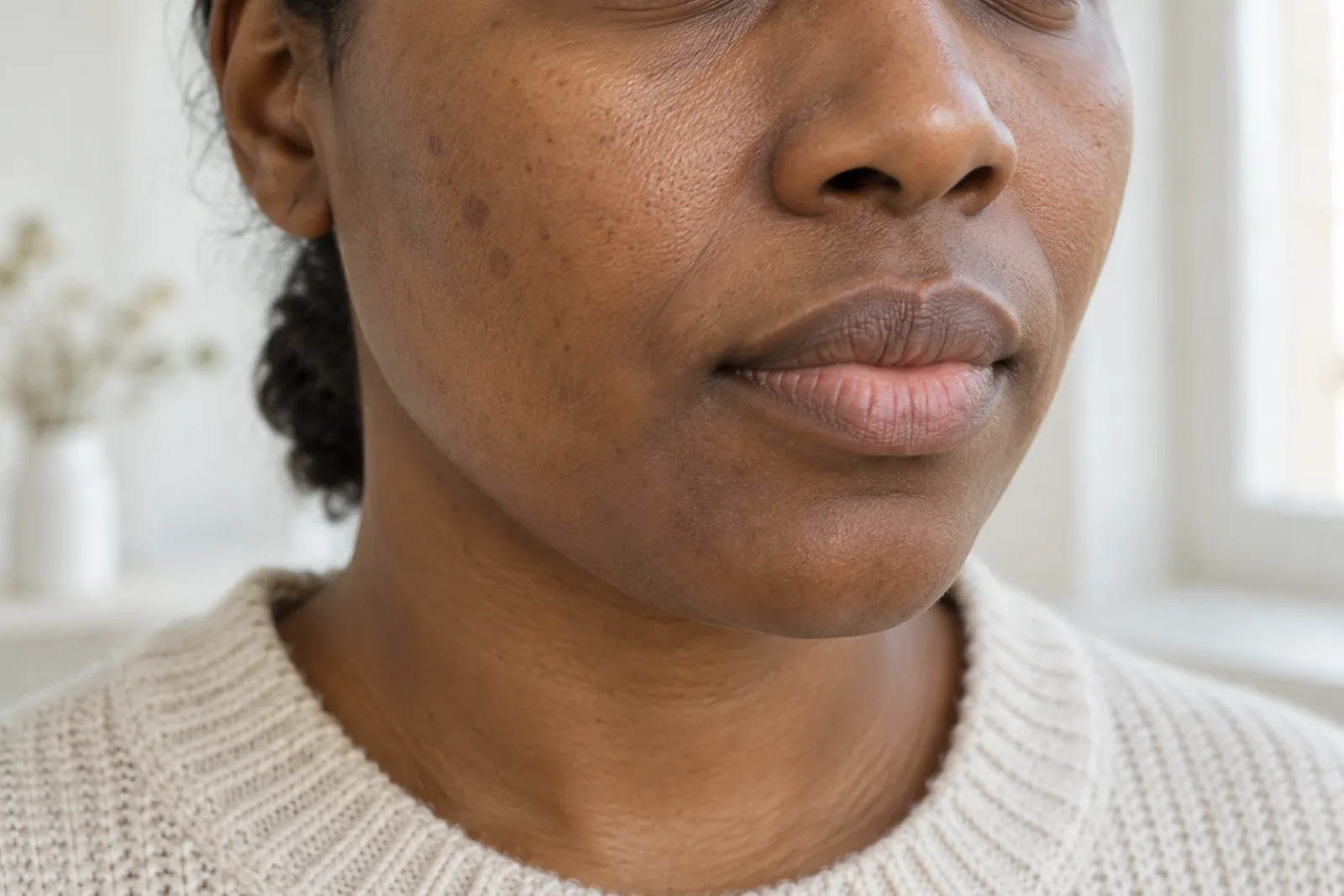
What is uneven skin tone?
It means your skin isn't the same shade all over. On dark skin there is rarely a single reason. Most of the time three layers sit on top of each other, and each one needs something different.
- Spots. Marks with a clear edge that are darker than the skin around them. Pimples, bites and scratches often leave them behind.
- Shadows. Larger areas with no sharp border, under the eyes or around the mouth for example.
- Dryness. A whitish to grey cast that makes skin look dull.
This article takes them in turn. If the spots are your only concern, our guide to hyperpigmentation on dark skin goes deeper.
[S1][S3][S4]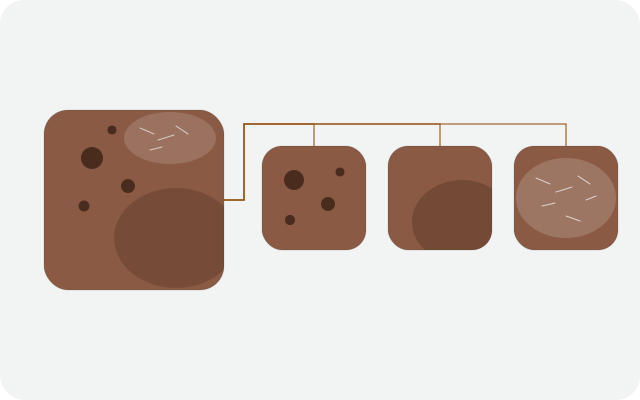 What you seeSpotsShadowsDryness
Schematic illustration
What causes dark spots on dark skin?
Doctors call them post-inflammatory hyperpigmentation, or PIH: darker marks left after inflammation. Something sets the skin off and it makes extra melanin, the pigment that gives skin its colour. The AAD's list of triggers includes a pimple clearing, a wound such as a bite or cut healing, certain medicines, irritation from skin or hair products, and hormonal shifts such as pregnancy.
According to the dermatology reference DermNet, PIH is more common in darker skin types, where the colour tends to be more intense and lasts longer. Sun can darken the marks further.
New spots keep arriving for as long as the trigger is active. So if you still get breakouts, deal with the breakouts first. For the marks they leave, read Dark spots after acne.
[S1][S2]Why are some areas darker than the rest of my face?
Under the eyes, around the mouth, at the temples: plenty of people have areas that look darker than the cheek next to them. Pigment isn't always the reason.
DermNet uses dark circles to show how much can be going on. Melanin builds up in the skin after sun, eczema or eye rubbing. Thin skin lets blood vessels show through. Fat under the eye shrinks with age and leaves a hollow that catches a shadow. DermNet adds that dark circles are more common in people from non-white backgrounds.
No serum fills a hollow or thickens thin skin, and DermNet notes that many over-the-counter products for dark circles lack evidence that they work. More in Dark circles on dark skin. And if your whole face is darker than your neck and body, see Why is my face darker than my body?
[S4]Why does dry skin look grey on dark skin?
Dry skin takes on a whitish or greyish-white look. The AAD says this shows more on darker skin than on lighter skin, and so do flaking and rough patches. Most people just call it ashy skin. The cast sits on the surface and isn't a spot, but it still makes your tone look patchy.
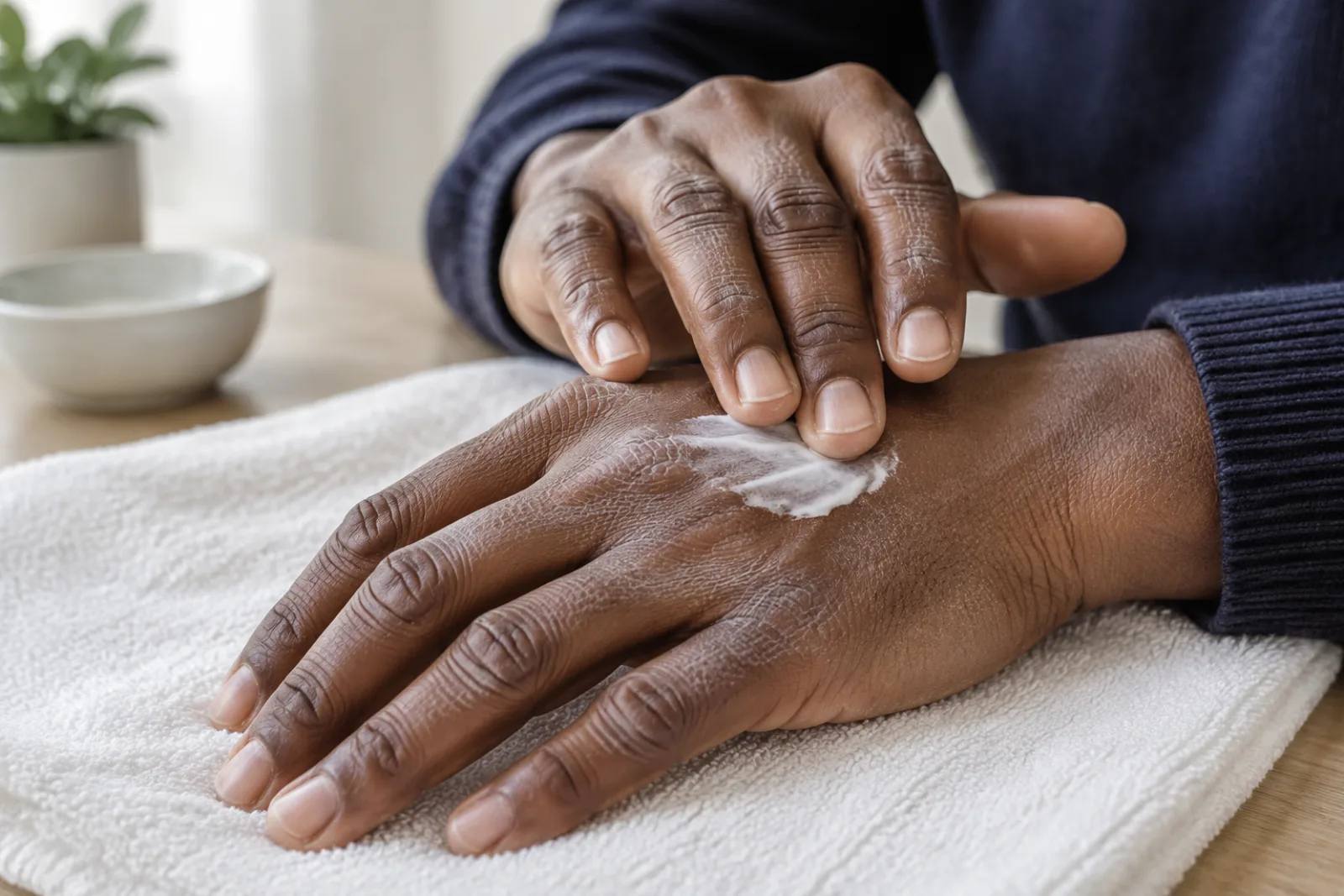
- 01Dry: a whitish-grey cast
Knuckles and the backs of the hands are often where dryness shows first.
Illustration
This is the layer that changes fastest. The AAD's advice:
- Keep showers short and warm, never hot. Five to ten minutes is enough.
- Pat your skin dry and moisturise straight away, while it is still slightly damp.
- Pick a moisturiser with ceramides. They help seal in moisture and can reduce the grey cast.
- Stay with mild, fragrance-free products. Alcohol, fragrance and deodorant soaps can irritate dry skin.
Follow these and, per the AAD, you should see some improvement within two weeks. There is more, including arms and legs, in Ashy skin.
[S3]Does evening out my skin tone make it lighter?
No. Your skin tone is the colour of the skin between the spots, and that should stay exactly where it is. Skin looks more even when the gap closes: the spots move towards your tone and the grey cast goes. The AAD measures spots against your own colour too. It talks about marks that are a few shades darker than your natural skin tone.
Products meant to lighten your whole skin are a different thing, and a risky one. The AAD reports that some imported skin products have been found to contain steroids or mercury that weren't on the label. With long-term use, steroids can thin the skin or discolour it permanently. More in Skin bleaching creams and hydroquinone: the risks.
Our products are built around the same idea: more even-looking skin, in your own tone.
[S1]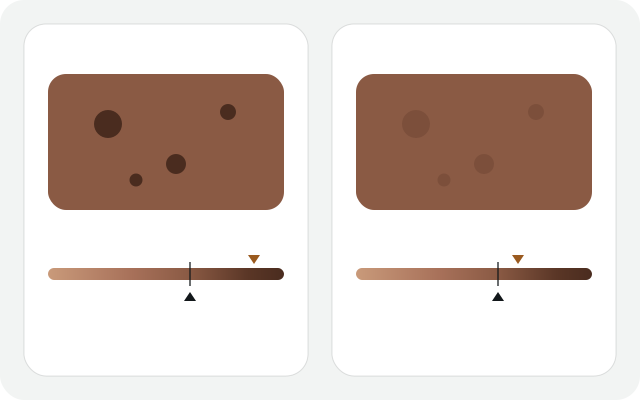 Unevenspotsyour skin tonewide gapMore evenyour skin tonespotssmall gap, same skin tone
Schematic illustration · not a before-and-after or a treatment result
How do you even out skin tone on dark skin?
Four steps, in this order. The first three need no active ingredient at all.
1. Stop the irritation
The AAD counts irritation from skincare among the causes of dark spots. Switch to gentle products, the kind labelled “fragrance-free” or “for sensitive skin”. If something burns or stings, stop using it. Once the irritation ends, new spots tend to stop forming and the old ones often fade with time.
[S1]2. Moisturise every day
A ceramide moisturiser on slightly damp skin. That takes care of the dryness layer, on your face and your body.
[S3]3. Sunscreen every morning
For dark spots, the AAD starts with sunscreen: SPF 30 or higher, broad-spectrum (UVA and UVB), water-resistant. On dark skin a tinted one is the better pick, and the next section explains why.
[S1]4. One dark spot ingredient
Only now does an active come in. Over the counter, the AAD lists azelaic acid, glycolic acid, kojic acid, retinoids such as retinol, and vitamin C. DermNet adds niacinamide. Choose one and give it time. Ours is vitamin C: the Pure Bright C7 Serum contains 3-O-ethyl ascorbic acid, a stable form of it. We don't make products with azelaic acid, retinol or tranexamic acid. If you already use one and your skin is happy, keep it. Our Barrier Cream works as the moisturiser on top.
[S1][S2][P2]A routine for a more even skin tone, in one set
The Pure Brightening Set covers these steps, sunscreen aside. It holds four products: a cleanser, the Pure Bright C7 Serum, a Booster Serum and the Barrier Lipid Shield Cream.
- Morning: cleanser, C7 Serum, Barrier Cream. Then your sunscreen.
- Night: cleanser, Booster Serum, Barrier Cream.
For the order in detail, see Skincare routine for hyperpigmentation.
[P3]Which sunscreen for uneven skin tone on dark skin?
A tinted one. Sunlight is more than UV. Visible light, the part you can actually see, can darken dark skin as well. A 2023 review in the Journal of Clinical Medicine sums up the studies: on dark skin this darkening is stronger and lasts longer than the darkening caused by long-wave UVA. Standard broad-spectrum sunscreens don't protect well enough against visible light. Tinted sunscreens with iron oxides clearly reduce it.
Iron oxides are the colour pigments that give a tinted sunscreen its shade. The AAD suggests checking the ingredient list for them and choosing a tint that blends with your skin.
We're working on a sunscreen of our own right now. If you're buying one today, make it tinted. The long version: Sunscreen for hyperpigmentation on dark skin.
[S6][S1]
- 01Tinted: the shade matches her skin
The tint comes from iron oxides. You'll find them in the ingredient list.
Illustration
What if it's melasma?
Melasma shows up as patches and spots that are darker than your skin tone, mostly on the cheeks, forehead, chin or above the upper lip. The AAD says it typically appears on both sides of the face. Women with medium to dark skin tones are the most likely to get it. The triggers the AAD names are pregnancy, starting the pill, and sun without protection.
Only a dermatologist can tell you whether your patches are melasma or something else. For daily care, the AAD recommends a tinted sunscreen with iron oxide and SPF 30 or higher every single day, plus mild, fragrance-free products.
Our Pure Bright C7 Serum fits as the vitamin C step. Our Mela Bright is still in development. If you don't see it linked here yet, it isn't online yet.
[S7][S8]How long does it take to even out skin tone?
That depends on the layer. With dry skin, the AAD says you should see some improvement within two weeks. Spots are slower. One that is a few shades darker than your natural colour usually fades within 6 to 12 months once the cause has stopped. Colour that lies deeper in the skin can take years. Those marks often look slate blue to grey, or far darker than your own tone. Treatment may speed up the fading.
Take a photo once a month, at the same window and the same time of day. The mirror won't show you the change. Two photos side by side will.
[S1][S3]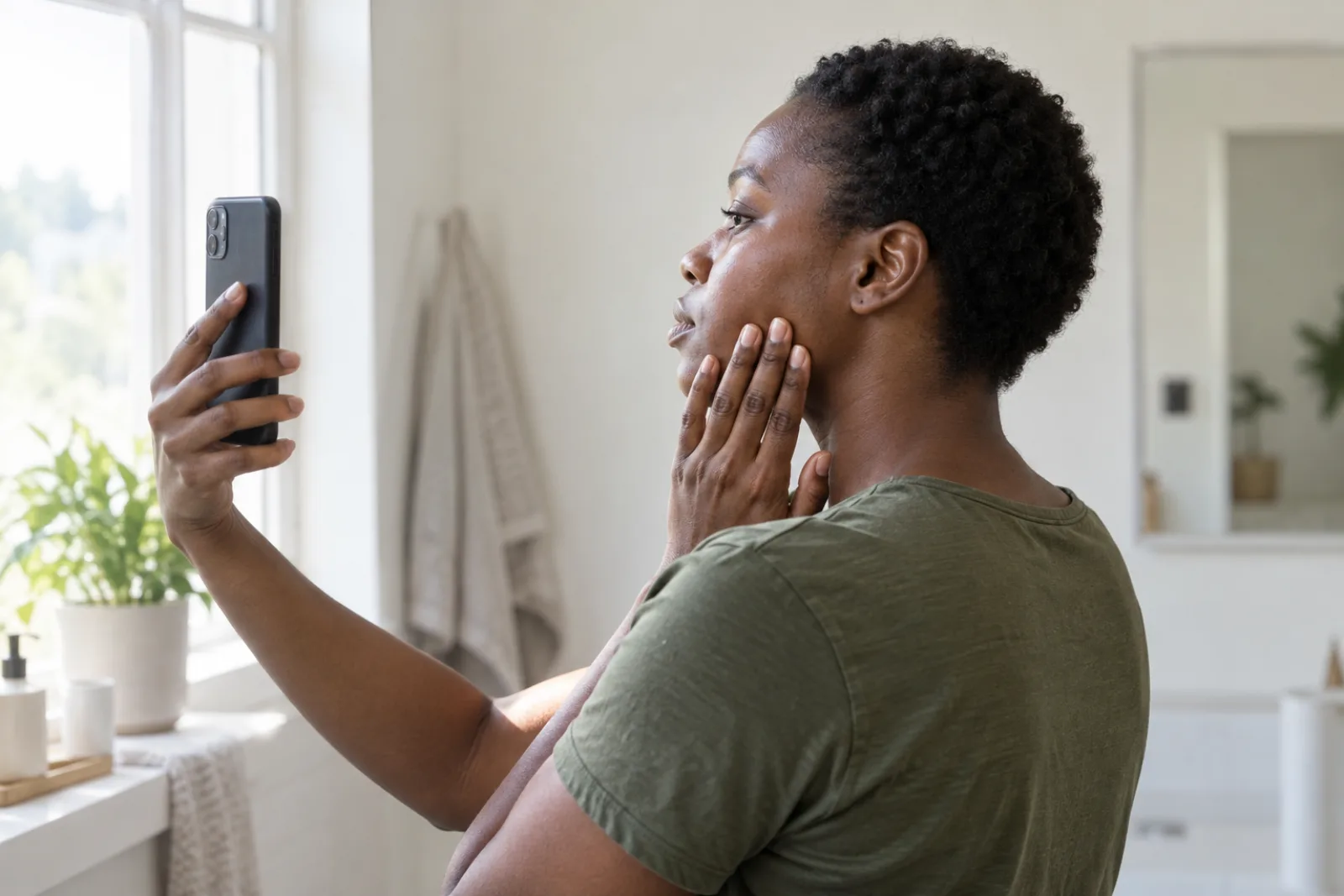
Same light, same side, same time of day. Then the photos can be compared.
Illustration
When should you see a dermatologist?
Uneven skin tone is often a skincare matter. In these cases it belongs with a doctor:
- A patch turns darker and feels velvety and thicker than the skin next to it, on the back of the neck or in the armpits for instance. That can be acanthosis nigricans. If it appears suddenly, the AAD says to see a dermatologist right away.
- Patches turn lighter or completely white. After inflammation, DermNet says this usually resolves by itself over weeks to months. It can also be a fungal infection or vitiligo, and that needs a doctor to sort out.
- You suspect a medicine is the cause. Don't stop it on your own. Ask whoever prescribed it.
- Your routine isn't giving you the results you want. According to the AAD, some spots need a prescription-strength treatment.
From the lab
The Pure Brightening Set has a single dark spot step on purpose: the C7 Serum in the morning. Everything else is cleansing and moisture.
A shelf product stays the same in every phase. Your skin doesn't. Because Anita formulates in our own lab in Bielefeld, we can adjust a product when your skin needs something different. That is what Skin Protocol is for.
Your next step
Both routes are fine. Pick the one that fits you today.
- Start with the basics: gentle cleanser, daily moisturiser, tinted sunscreen every morning.
- Then add one dark spot ingredient. Only one.
- Take a photo once a month in the same light. If a patch turns velvety, thicker or white, see a dermatologist.
Matching products from our lab:
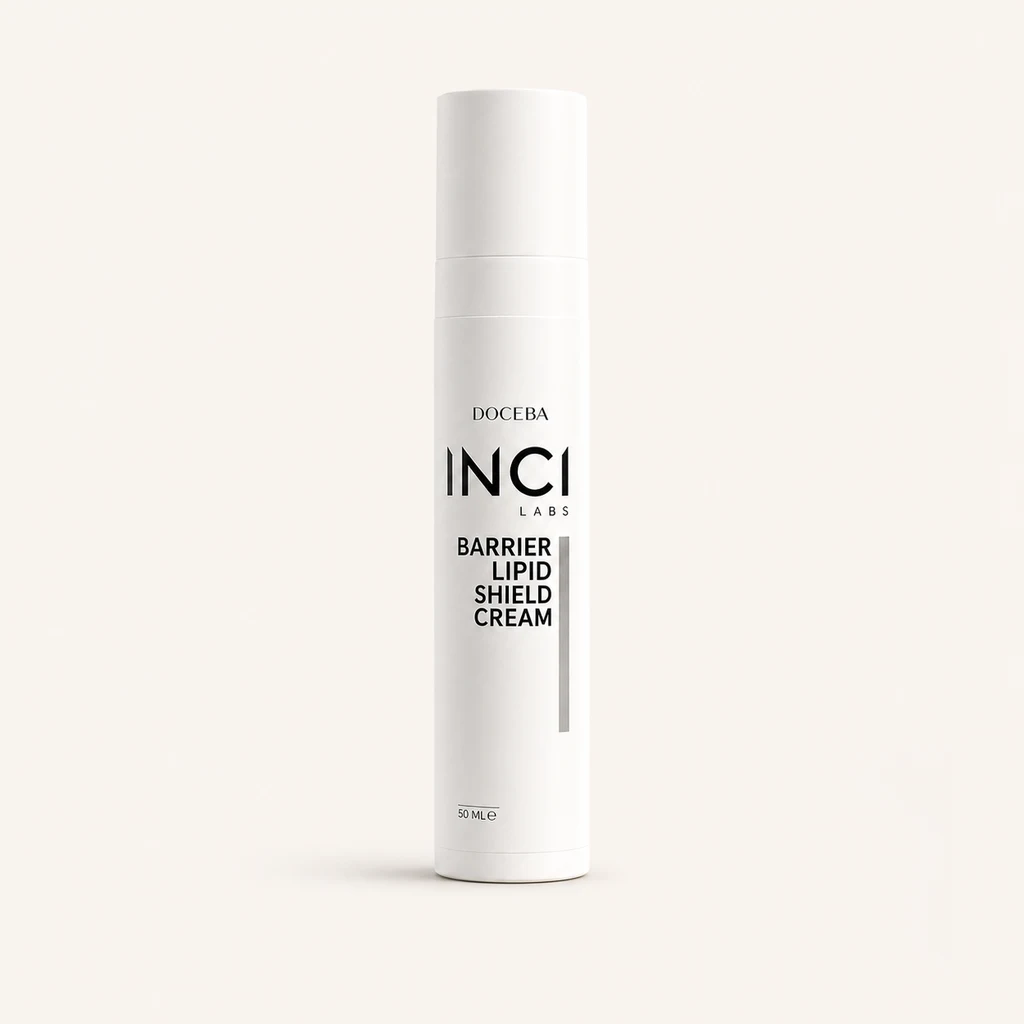

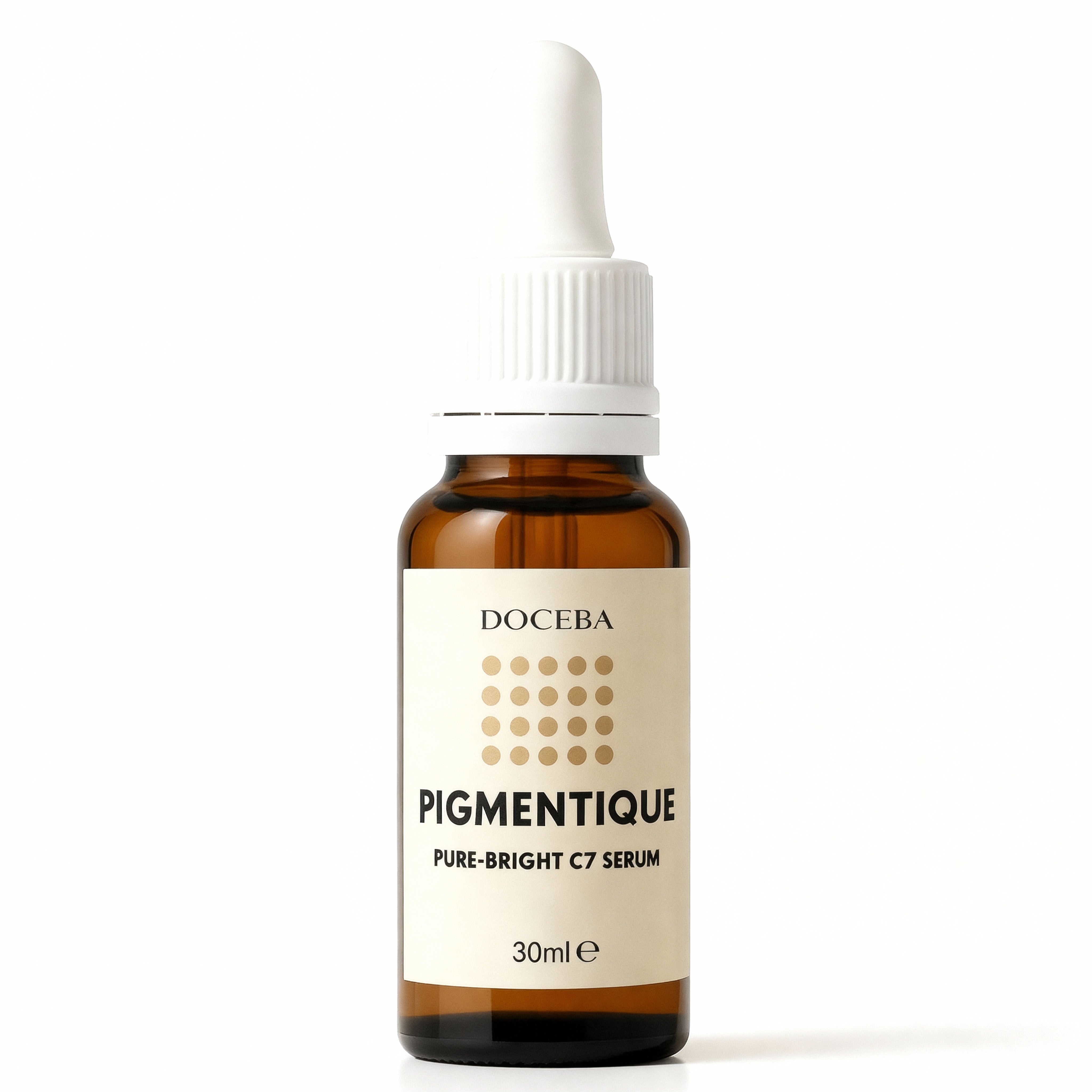
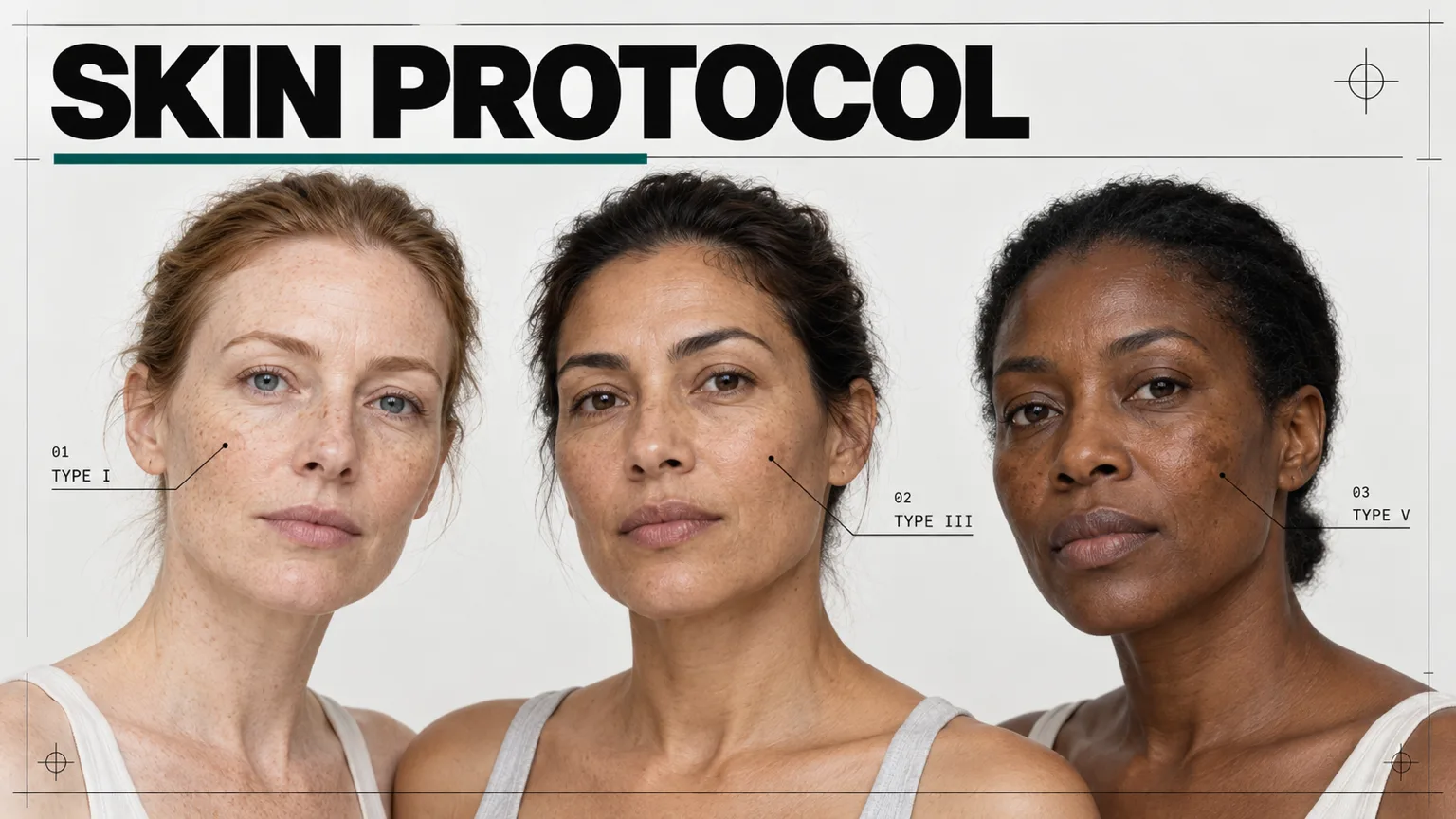
Skin Protocol: a plan for your skin and a team that adjusts it
You get a plan built around your skin and what you've already tried. We check in regularly and adjust products from Anita's lab when your skin needs something different. In English or German.
It starts with a free 20-minute call. We ring you and listen to your skin story, uneven skin tone included.
Book your free skin callCosmetic advice, not a diagnosis. If you think you have a skin condition, see a doctor first.
Questions you might still have
What is the best uneven skin tone treatment for dark skin?
Gentle, fragrance-free skincare, a moisturiser every day, a tinted sunscreen with SPF 30 or higher each morning, and one dark spot ingredient such as vitamin C. For dark spots, the AAD starts with sunscreen. [S1][S3]
How can I even out my skin tone without lightening my skin?
Work on the spots and the dryness, and leave your base tone alone. Stay away from creams meant to lighten your whole skin: the AAD reports that some imported products contained steroids or mercury that weren't on the label. [S1]
Which cream helps with uneven skin tone on the face?
For the grey cast of dry skin, the AAD recommends a fragrance-free moisturiser with ceramides, applied to slightly damp skin. Dark spots need an active on top of that, for example a vitamin C serum under your moisturiser. [S3][S1]
Does vitamin C help with uneven skin tone?
For dark spots, yes. Vitamin C is on the AAD's list of over-the-counter ingredients that can fade them. It does nothing for dryness, which is the moisturiser's job. More in Vitamin C for dark spots. [S1]
Sources
- [S1] AAD: How to fade dark spots in darker skin tones ↗
- [S2] DermNet: Postinflammatory hyperpigmentation ↗
- [S3] AAD: Dry skin remedies for darker skin tones ↗
- [S4] DermNet: Dark circles under the eyes ↗
- [S5] DermNet: Pigmentation disorders ↗
- [S6] He X et al.: The Emerging Role of Visible Light in Melanocyte Biology and Skin Pigmentary Disorders. J Clin Med 2023;12(23):7488 ↗
- [S7] AAD: Melasma: Overview ↗
- [S8] AAD: Melasma: Self-care ↗
- [S9] AAD: Acanthosis nigricans: Signs and symptoms ↗
- [P1] DOCEBA: Barrier Lipid Shield Cream ↗
- [P2] DOCEBA: Pigmentique Pure Bright C7 Serum ↗
- [P3] DOCEBA: Pure Brightening Set ↗
General skincare information, not a diagnosis or an individual treatment plan.
Your bag
Review your items before continuing.
Your bag is empty.