Maybe you've noticed the pattern. Every spot heals and leaves a souvenir. The bite from last summer is still on your ankle. You stopped picking at your chin months ago, and the marks haven't moved. Most of what you find online was written with lighter skin in mind, where the leftover is often red, not brown.
This guide covers PIH from every cause. Where acne needs more room, we link to the articles that give it that.
What is post-inflammatory hyperpigmentation?
PIH is a darker patch of skin that sits exactly where something inflamed or injured the skin before. When skin is inflamed, the pigment cells (melanocytes) make extra melanin, the pigment that gives skin its colour, and pass it to the surrounding skin cells. The inflammation heals. The extra pigment stays for a while.
Two things set PIH apart:
- It's flat. Only the colour changes, the surface stays smooth. A dip or a raised bump is a scar, which is a different thing. Our guide on how to tell an acne mark from an acne scar explains the finger test.
- It follows something. PIH needs a trigger. A dark patch that appeared out of nowhere, with no spot, bite, rash or injury before it, may be something else (more on that below).
The colour ranges from light brown to almost black. When pigment sits deeper in the skin, it can look slate blue to grey, sometimes grey-purple-brown.
[S2][S1]Why does PIH hit dark skin harder?
PIH can happen to anyone. It's more common in people with darker skin, and on darker skin the colour tends to be more intense and to stay longer. With acne, experts agree that people with darker skin types are more often left with dark marks, while people with lighter skin more often get red ones.
Melanin-rich skin is very good at protecting itself. It also answers irritation by making extra pigment. A pimple or a product that stings can be enough.
That's why so much mainstream dark-spot advice backfires on darker skin. Strong peels and harsh scrubs are meant to speed things up. On skin that answers irritation with pigment, they can leave new marks behind.
[S2][S3][S1]What causes dark marks besides acne?
Acne is the trigger most people think of first, and it has its own guide: dark spots after acne on brown or Black skin. But the American Academy of Dermatology (AAD) and DermNet list a much longer set of triggers.
| Trigger | What happens | First thing to do |
|---|---|---|
| Pimples and breakouts | Each inflamed spot can leave a mark | Treat the acne, don't squeeze |
| Eczema or psoriasis flares | Eczema can leave skin darker or lighter than the skin around it [S5] | Get the skin condition treated |
| Insect bites, scratching | Bite plus scratching means inflammation plus injury | Keep it from being scratched open |
| Cuts and burns | The healed spot darkens | Let it heal, don't pick the scab |
| Razor bumps, ingrown hairs | Inflamed bumps around the hair [S6][S8] | Change how you remove hair |
| Friction | Repeated rubbing in the same place | Find what's rubbing |
| A skin or hair product that irritates | Burning or stinging can trigger marks on its own | Stop the product |
| Some medications | Certain drugs can darken skin or darken existing PIH | Ask your doctor, never stop on your own |
| Peels and laser done too harshly | The treatment itself injures the skin | Choose someone experienced with darker skin |
The last two rows matter. Don't stop a prescribed medication because you suspect it. Ask the doctor who prescribed it whether discolouration is a known side effect. And peels and laser treatments, IPL included, can help with pigment in the upper skin layer, but they can also make it worse by injuring the skin.
Dark marks on legs, back or bikini line follow the same rules but need a slightly different routine. We'll cover them in their own article.
[S1][S2][S8]The Mark Cycle: why new marks keep turning up
There's a pattern behind it. We call it the Mark Cycle:
irritation → extra pigment → dark mark → stronger product → more irritation → new mark
A mark appears. You fight it with something harsh. The harsh thing irritates. The irritation leaves a new mark, so you go stronger again. That's why so many people with melanin-rich skin say: "It fades a little, then a new one comes."
Breaking the cycle takes the steps in a fixed order:
- Calm. First settle whatever keeps triggering new marks: breakouts, irritation, dryness, sun.
- Fade. Then gently fade the look of existing marks, without lightening your natural skin tone.
- Adjust. Your skin changes over the weeks, and your routine has to change with it.
The rest of this guide follows that order.
What helps PIH on dark skin, step by step
- Stop the trigger
- Gentle routine
- Daily sunscreen
- One fading ingredient
1. Stop what keeps causing new marks
If the trigger is still active, every fading product is working against a tap that's still running. The AAD is clear on this: with a skin condition like acne or eczema, treat the condition first. When the flare-ups stop, so does the reason for new marks.
For acne, our article on how long acne marks last explains why the clock only starts once new breakouts stop. Eczema, or anything else that keeps coming back, is a job for a dermatologist.
Hands off, too. Picking and scratching add injury to inflammation.
[S1]2. Make your routine boring
Gentle cleansing, a moisturiser, sunscreen. That's the base. If a product burns or stings, stop using it. Products labelled "fragrance-free" or "for sensitive skin" are less likely to irritate.
Before you add anything, go through what's already on your shelf. Anything that feels comfortable can stay. Anything that stings goes in a drawer, even if it was expensive.
[S1]3. Sunscreen every day, with visible light in mind
Sun makes PIH darker, and that includes visible light, not only UV. The AAD recommends a tinted sunscreen with iron oxide, because iron oxide protects against visible light. It should be at least SPF 30 and broad-spectrum. Water-resistant is better, and it has to blend with your skin tone without a white cast.
You'll find iron oxide in the list of inactive ingredients, not the active ones. Outdoors, reapply every two hours and after swimming or sweating. A wide-brimmed hat helps too.
Honestly, this is the easiest step to drop. A grey cast on dark skin is a real reason not to wear something. Pick a shade and texture you actually like. The best sunscreen for PIH is the one you put on every morning.
[S1][S2][S4]4. Then one fading ingredient, not five
Once the trigger is under control and your skin is calm, a product that fades dark spots tends to work better. The AAD lists these non-prescription ingredients for fading dark spots:
- azelaic acid
- glycolic acid
- kojic acid
- retinoids (retinol, adapalene and others)
- vitamin C
DermNet adds niacinamide and arbutin, among others, and notes that combinations are often needed.
How well a finished product works depends on the whole formula, not the name of one ingredient on the label. That's why we're giving vitamin C a whole article of its own this week.
Patch-test anything new first. The AAD suggests applying it to a small area twice a day for seven to ten days. Introduce one product at a time and write down the start date.
[S1][S2][S7]What makes PIH worse
- Rough scrubs and at-home peels. They injure the skin, and injury is a trigger.
- Product-hopping. A new product every two weeks means your skin never settles, and every switch is one more chance to irritate it.
- Bleaching products. Fading a mark is something else entirely from lightening your skin. Researchers have found steroids or mercury that weren't on the label in some imported skin care products. Liquid bleach should never go on skin.
- Skipping sunscreen on cloudy days or by a sunny window.
"Natural" isn't automatically gentle either. A DIY remedy that stings is still irritation.
[S1][S2][S9]How long does PIH take to fade?
Once the cause has stopped, a mark a few shades darker than your skin usually fades within 6 to 12 months. When the colour sits deep in the skin, often slate blue to grey or a very dark brown, fading can take years. Treatment can speed it up.
upper layerusually brownoften months
deeper layerslate blue to greycan take years
Want to see progress? One photo every four weeks, same window, no filter. The full timeline, including why some marks never seem to move, is in how long acne marks last.
[S1]Is it PIH, or something else?
Not every dark patch is PIH. See a dermatologist if:
- the patch appeared without any spot, rash, bite or injury before it
- a spot is growing, changing shape or colour, itching or bleeding
- it's sunken or raised (that points to a scar, see acne mark or acne scar)
- it's spreading, or you're dealing with a skin condition that keeps flaring
- you suspect a medication
- nothing has changed after months of a gentle routine with daily sunscreen
Some marks need prescription-strength treatment. Dark patches during pregnancy or with hormonal changes can have a different cause, so get those checked too.
[S1]From our lab, and from Anita's own skin
Anita, who founded DOCEBA, has melanin-rich skin and has struggled with it since she was a teenager. She tried a lot and spent thousands on skincare, much of it from abroad: products from Africa, and later from Germany. None of it helped.
Her husband encouraged her to make her own. She started with DIY experiments, saw her first improvements and sent what she'd made to friends. Then she decided to do it professionally. Today she's a cosmetic product developer. More than 100 formulas for other skincare brands carry her signature, and she develops and produces DOCEBA's own products in our GMP-certified lab in Bielefeld (ISO 22716). She documented her own skin herself: front, left and right, unedited.
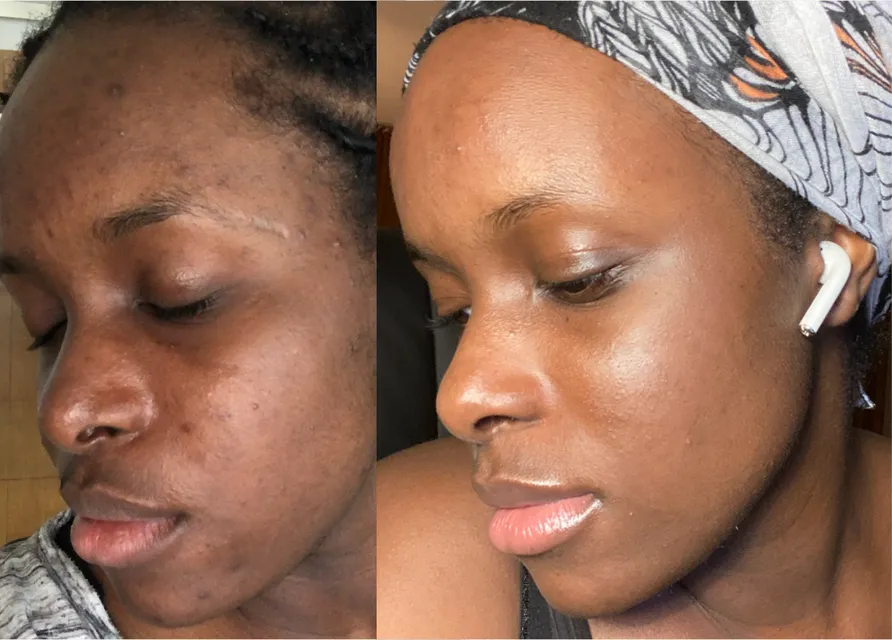
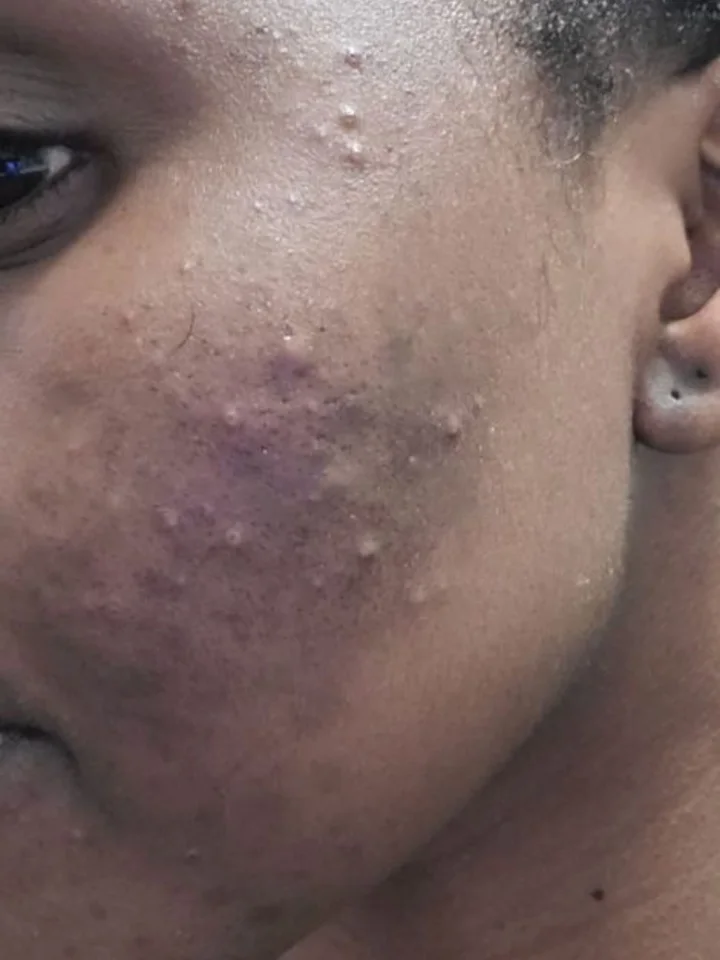
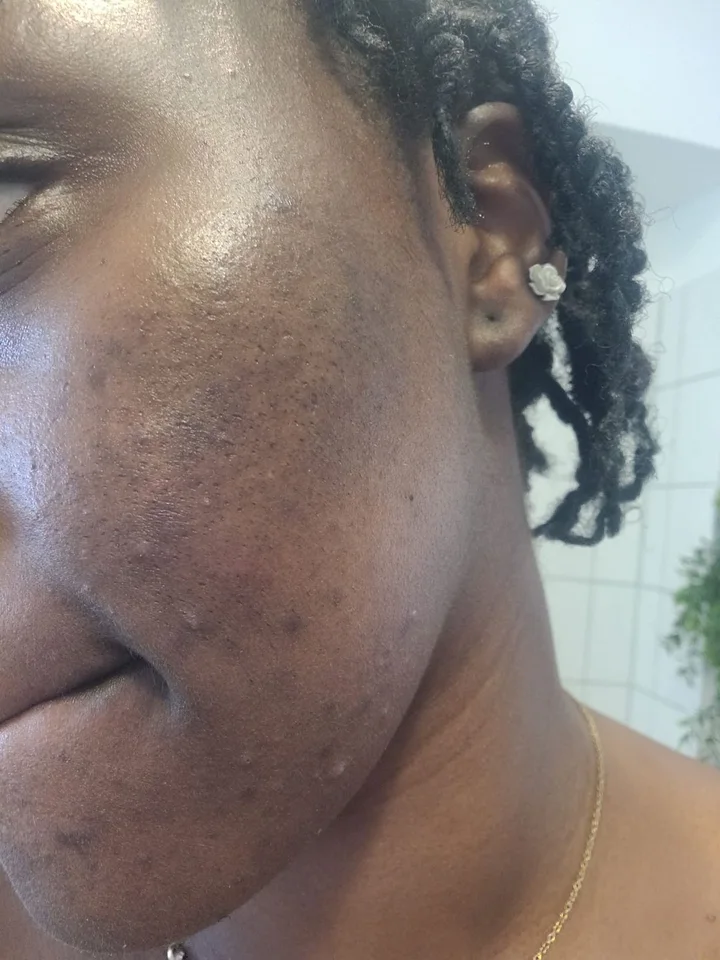
A note from the lab: pure vitamin C, ascorbic acid, is delicate and breaks down with air and light. That's why many formulas use more stable derivatives. It's one example of why the formula matters more than the ingredient name.
And the part we'd put first if we could: a product off the shelf stays the same at every stage, but your skin doesn't. Calm skin needs something different from skin that's still breaking out. Because Anita formulates in our own lab, we can change a product when your skin needs something different.
Your next step
Both routes are fine. Pick the one that fits you today.
Your plan for the next few weeks:
- Find your trigger and deal with it first.
- Strip the routine back to the base from step 2. Nothing that stings.
- After a few calm weeks, one fading ingredient, patch-tested.
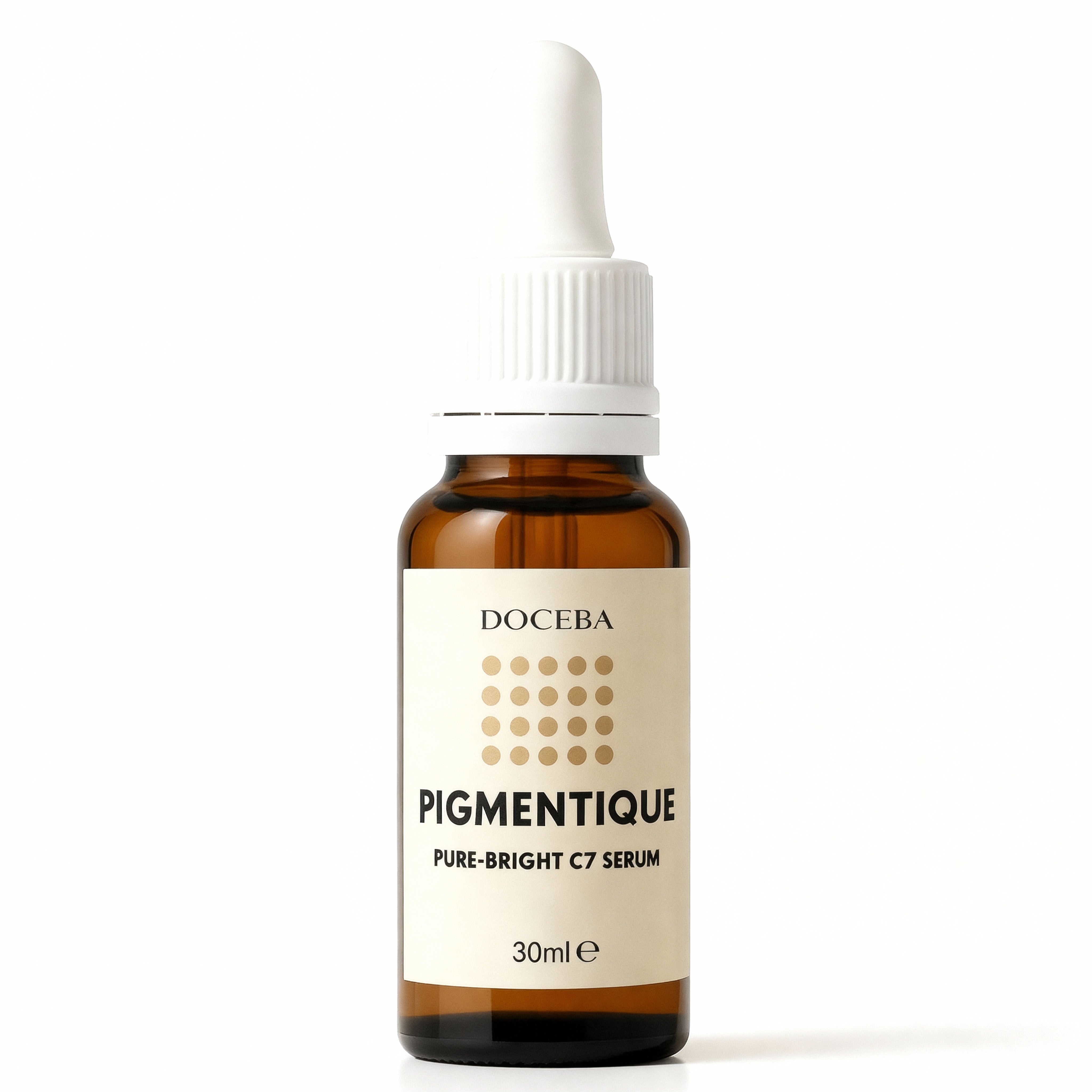
Matching products from our lab:
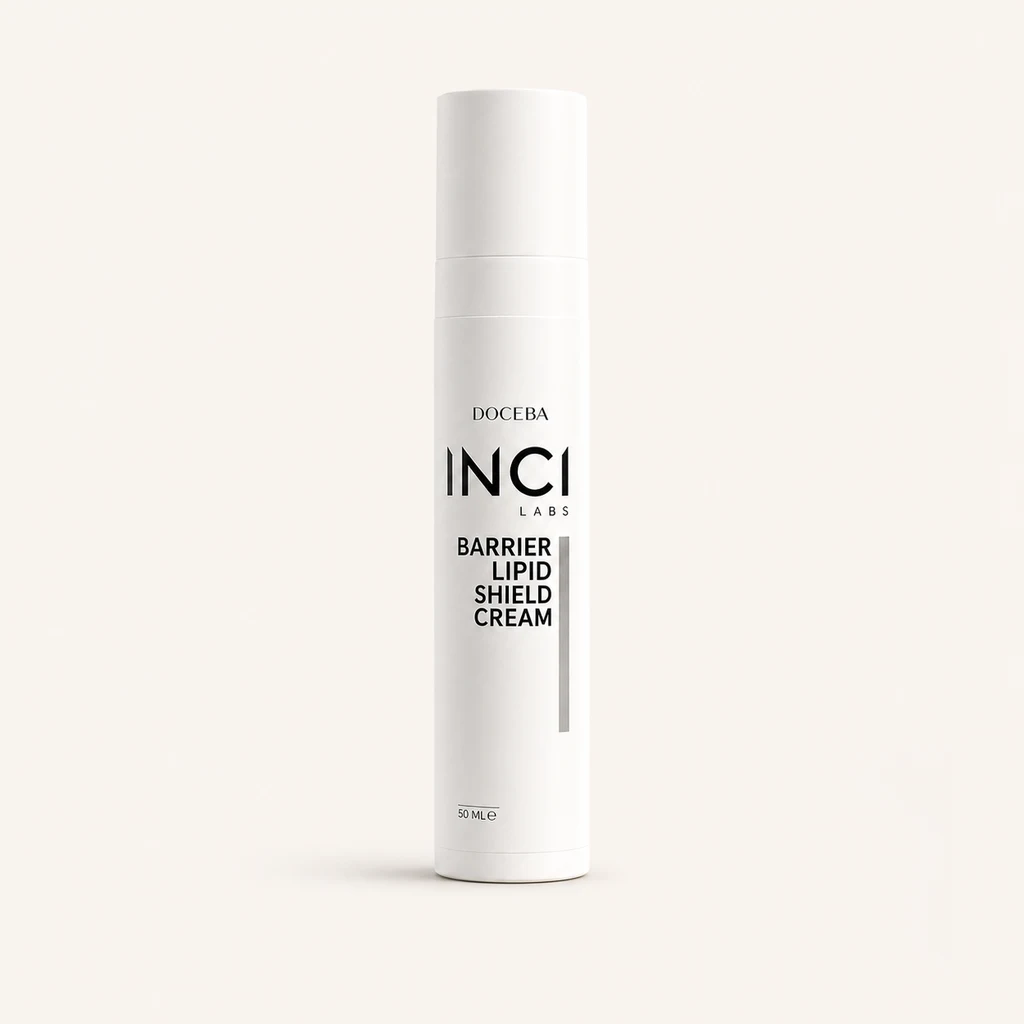
Skin Protocol: a plan for your skin, and a team that adjusts it
You get a plan built around your skin and what you've already tried. We check in regularly and adjust your products, made in Anita's lab, when your skin needs something different. In English or German.
It starts with a free 20-minute call. We call you and listen to your skin story. Then we find your Mark Cycle together: where your marks are most likely coming from, and what to stop doing right away.
Book your free skin callCosmetic guidance, no diagnosis. If a skin condition is suspected, a doctor comes first.
Questions you might still have
Will post-inflammatory hyperpigmentation go away on its own?
Often, yes, once nothing keeps triggering it. Marks a few shades darker than your skin usually fade within 6 to 12 months. Deep pigment can take years, and new inflammation resets the clock. [S1]
How do I get rid of PIH on Black skin?
In order: stop the trigger, keep your routine gentle, wear a tinted sunscreen with iron oxide every day, then add one fading ingredient such as azelaic acid or vitamin C. If nothing changes after months, a dermatologist can offer prescription options. [S1]
Can I get rid of PIH naturally?
Time and sun protection are the most natural route there is, and they do a lot of the work. Be careful with home remedies. If something stings or burns, it irritates, and irritation is a trigger in its own right. [S1]
What colour is post-inflammatory hyperpigmentation?
Anything from light brown to almost black. Pigment that sits deeper often looks slate blue to grey, sometimes grey-purple-brown. Red or purple marks after acne can be a different thing, called post-inflammatory erythema. [S1][S2][S3]
Will a product for dark marks lighten my skin?
It shouldn't. The goal is to fade the look of the mark, not to change your natural skin tone. Steer clear of bleaching products and anything with an unclear ingredient list. [S1]
Sources
- [S1] AAD: How to fade dark spots in darker skin tones ↗
- [S2] DermNet: Postinflammatory hyperpigmentation ↗
- [S3] Expert consensus on acne sequelae, JAAD International 2021 ↗
- [S4] AAD: Choosing the right sunscreen ↗
- [S5] NHS: Atopic eczema ↗
- [S6] NHS: Ingrown hairs ↗
- [S7] AAD: How to test skin care products ↗
- [S8] AAD: Razor bump remedies for men with darker skin tones ↗
- [S9] AAD: Sunscreen FAQs ↗
- [P1] DOCEBA: Barrier Lipid Shield Cream ↗
- [P2] DOCEBA: Pigmentique Pure Bright C7 Serum ↗
General skin-care information, not a diagnosis or a personalised treatment plan.
Your bag
Review your items before continuing.
Your bag is empty.