Lots of people call anything a pimple leaves behind a “scar”. That sounds permanent and is scarier than it needs to be. Often it isn't a scar at all, but a mark that can fade with time.
The difference decides what helps. A serum can support a fading mark. It does very little for the texture of a scar.
How can I tell if it's a mark or a scar?
Two quick checks. Run a fingertip over the spot: a mark feels like the skin around it, a scar dips in or stands out slightly. Then look in the mirror with light coming from the side. Shadows only appear where the surface has changed.
You can have both at once. A sunken spot can also be darker. Then care and sunscreen help with the colour, not with the dip.
[S1][S2]Why does a pimple leave a mark at all?
Because the inflammation makes your skin produce extra melanin, the pigment that gives skin its colour. When the inflammation is over, that pigment stays for a while. The medical name is post-inflammatory hyperpigmentation, or PIH. Squeezing and picking make marks more likely.
[S1]What helps acne marks fade?
Time and sunscreen do most of the work. According to the American Academy of Dermatology (AAD), a mark a few shades darker than your skin usually fades within 6 to 12 months once no new inflammation is added. If the colour sits deep, it can take years.
Daily sunscreen keeps marks from getting darker. After that, a targeted ingredient such as vitamin C or azelaic acid can help them fade. Leave out anything that burns or stings, because irritation can trigger new marks. There's more in our guide to dark spots after acne on brown and Black skin.
[S1]When should you see a dermatologist?
When scars form, when breakouts are deep and painful, or when your skin is weighing on you day to day. There are dermatological procedures for scar texture that no cream can replace. And if you're unsure what you're looking at, an assessment before your next purchase is money well spent.
[S2]How do you want to go on?
Both routes are good ones. Pick the one that fits you today.
Your plan for the next few weeks
- Do the finger test: smooth or sunken?
- For marks: sunscreen every morning, nothing that stings.
- Then one targeted ingredient, patch-tested first.
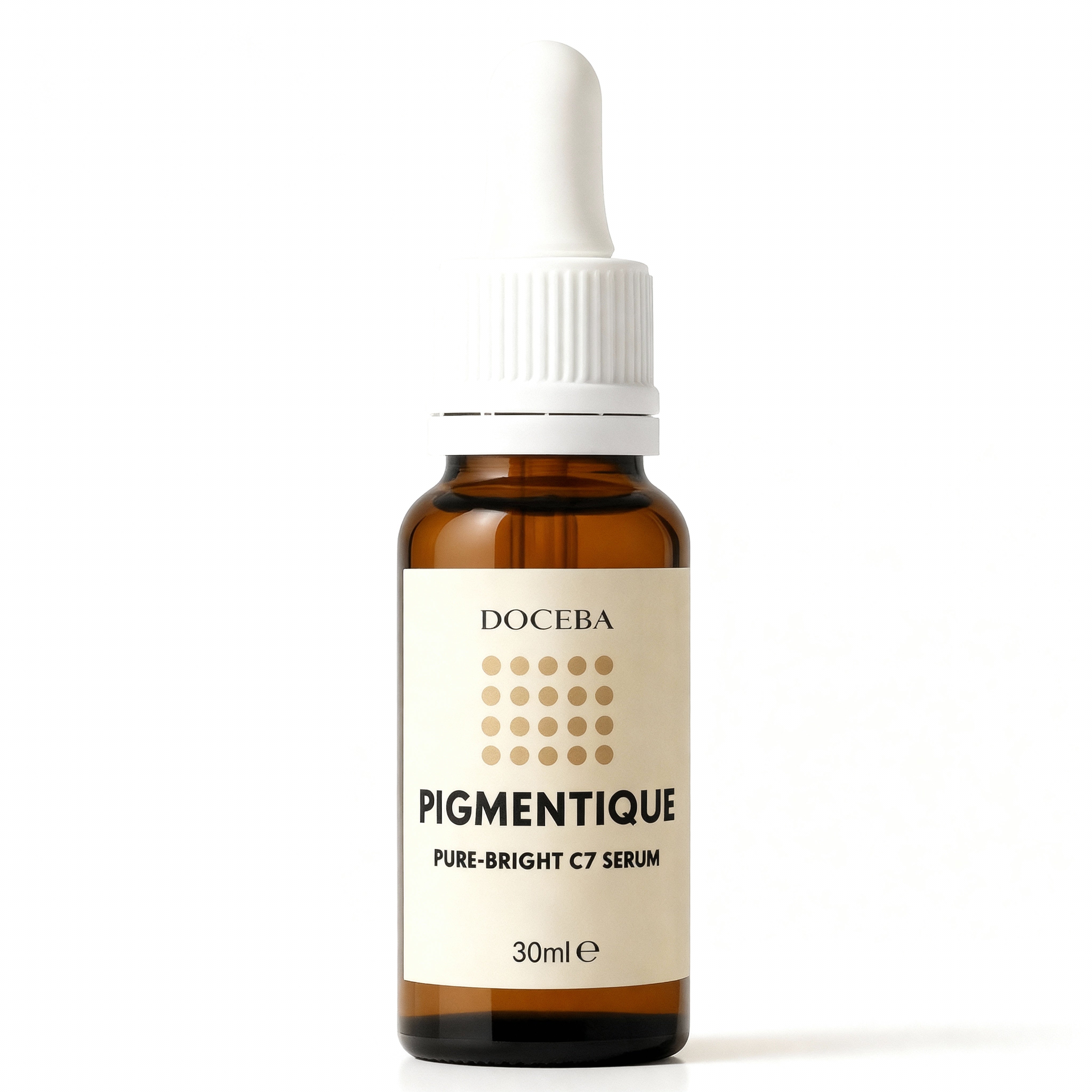
Matching products from our lab
Skin Protocol: personal support with your routine
Want help putting your routine together? Ask us whether personal support with Skin Protocol is right for you.
Ask about personal supportThrough our general contact page. We will clarify the process and scope with you. No diagnosis.
Sunken, raised or not sure? Then a dermatologist's assessment is the best first step.
Questions you might still have
Can acne marks turn into scars?
A mark is a colour change and doesn't alter the texture. Scars form during the inflammation itself, especially with deep breakouts and squeezing. That's why treating active acne early is worth it. [S1][S2]
How long until an acne mark is gone?
According to the AAD, usually 6 to 12 months if the mark is a few shades darker than your skin and no new inflammation is added. Deep pigment can take years. [S1]
Sources
General skin-care information, not a diagnosis or a personalised treatment plan.
Your bag
Review your items before continuing.
Your bag is empty.