
Is it normal for your face to be darker than your body?
Yes. A gap between your face and the skin you keep covered is not a sign of illness in itself.
Your skin has a base colour set by your genes. You can see it where light hardly ever lands, which means under your clothes. Then there is the colour skin adds in response to light: it produces more melanin, the brown pigment in skin. Researchers keep the two apart: inherited skin colour on one side, tanning on the other.
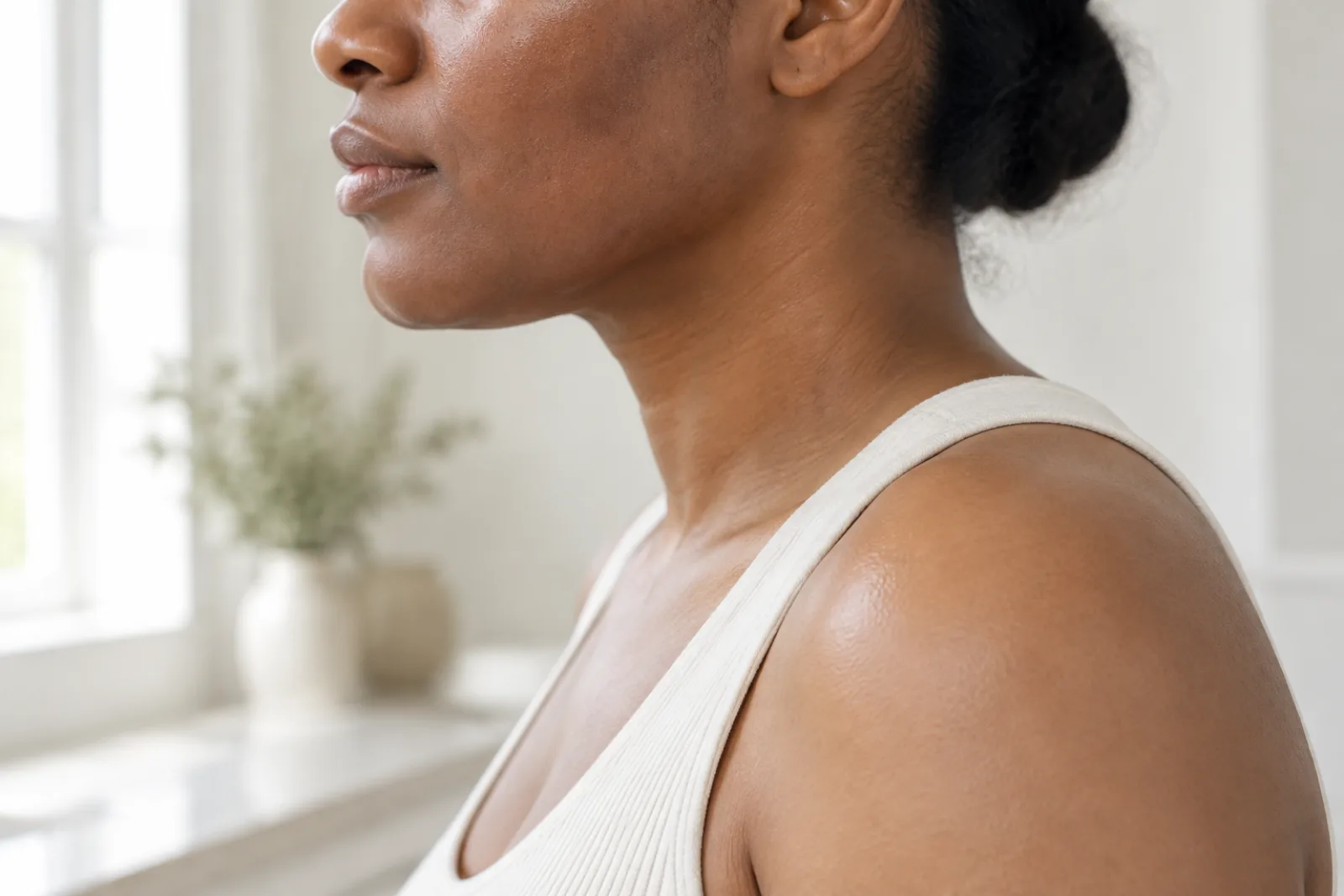
Your stomach and thighs spend most of the year under fabric. Your face is out on the commute and on the walk to the shops, in January as much as in July. That adds up over the years.

- 01Only the face is uncovered
Everything else is under fabric, and that is how most days of the year go.
Illustration
A 2020 review puts it like this: high melanin levels protect darker skin better against UV damage. Long-term sun exposure still disturbs pigmentation in every skin type, so the colour turns uneven.
[S1]Why does light darken the face more on deeper skin tones?
Sunlight carries UV radiation and visible light, the part we see as brightness.
Researchers at Henry Ford Hospital in Detroit tested the two separately and published the results in 2010. Twenty volunteers with skin types IV to VI, meaning medium brown to very dark skin, had their lower back exposed to long-wave UVA and to visible light. Both left pigment behind. The pigment from visible light was darker and stayed longer. On fair type II skin, nothing happened.
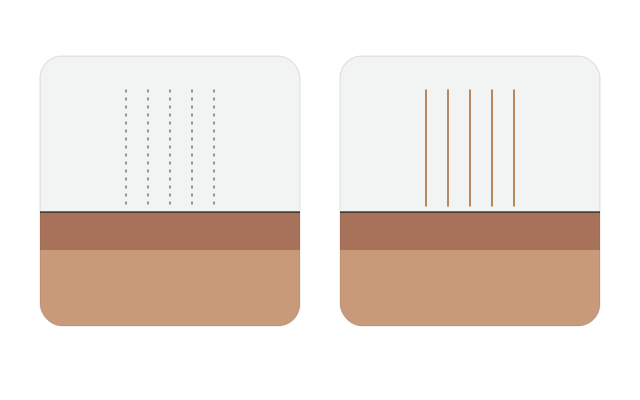 UVAVisible lightPaler, shorterDarker, lasts longer
Schematic, after Mahmoud et al. 2010 (skin types IV to VI) · not a treatment result
So your face reacts to far more than a week of holiday sun. That is why the American Academy of Dermatology (AAD) tells people with dark spots to pick a tinted sunscreen with iron oxide. Iron oxide is the pigment that gives the cream its tint, and it protects against visible light.
How to find one that suits you is covered in Sunscreen for hyperpigmentation on dark skin.
[S2][S3]What else can make the face darker?
Light explains an even difference. When single areas are darker, say the cheeks or the forehead, something else is often involved.
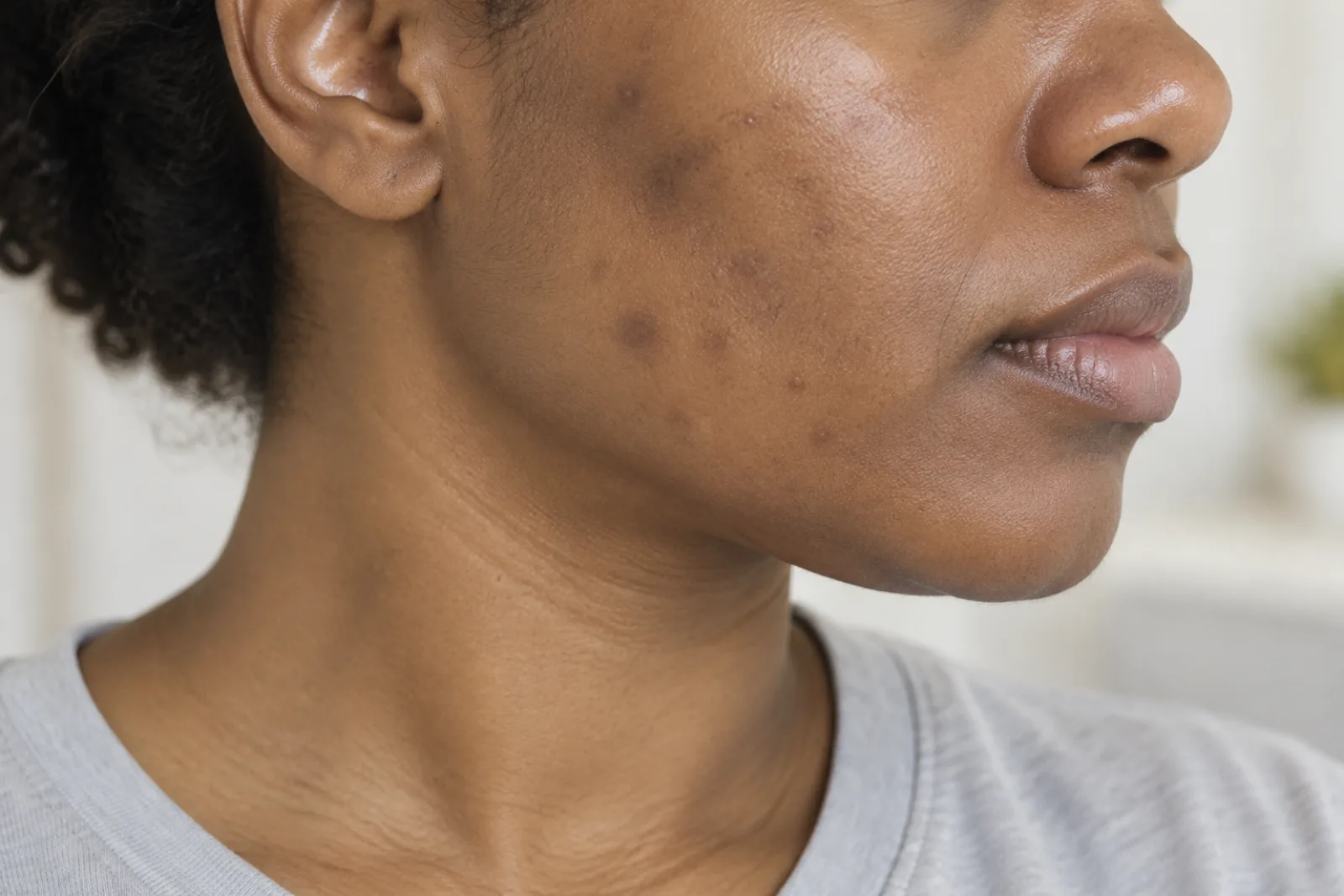
- 01Marks close together
- 02Neck: even tone
Single spots on the cheek point to acne marks more than to light alone. If in doubt, a doctor can tell you which it is.
Illustration
Acne marks and spots left by inflammation
A pimple or an eczema flare often leaves a dark mark when it heals. The name for this is post-inflammatory hyperpigmentation (PIH): inflammation pushes the pigment cells to make more melanin. DermNet says it is most common in darker skin types, where the colour is stronger and lasts longer. Sun darkens the marks further.
Enough of these marks close together and a whole cheek reads as darker. More here: Dark spots after acne.
[S4]Skincare that irritates
The AAD lists skin and hair care products that irritate the skin among the causes of dark spots. A special case is Riehl melanosis: brown-grey discolouration on the face and neck, net-like or spread out, seen mainly in people with darker skin. The presumed cause is a contact allergy, for example to fragrance or cosmetics. A dermatologist can check whether that applies to you, often with a patch test.
Be careful with lightening products of unclear origin. The AAD reports that some imported products contained undisclosed steroids or mercury, and steroids can discolour skin permanently. We cover this in Skin bleaching creams and hydroquinone.
[S3][S8]Melasma
Melasma shows as blotchy brown patches on the face that look similar on both sides. Forehead, cheeks, nose and upper lip are the most common places. It mostly affects women and often starts between 20 and 40. DermNet names sun and visible light, pregnancy, hormonal contraception and family history as triggers. It is most common in fair to olive skin that tans easily and less common in very dark skin. The AAD adds that it can be more noticeable on darker skin.
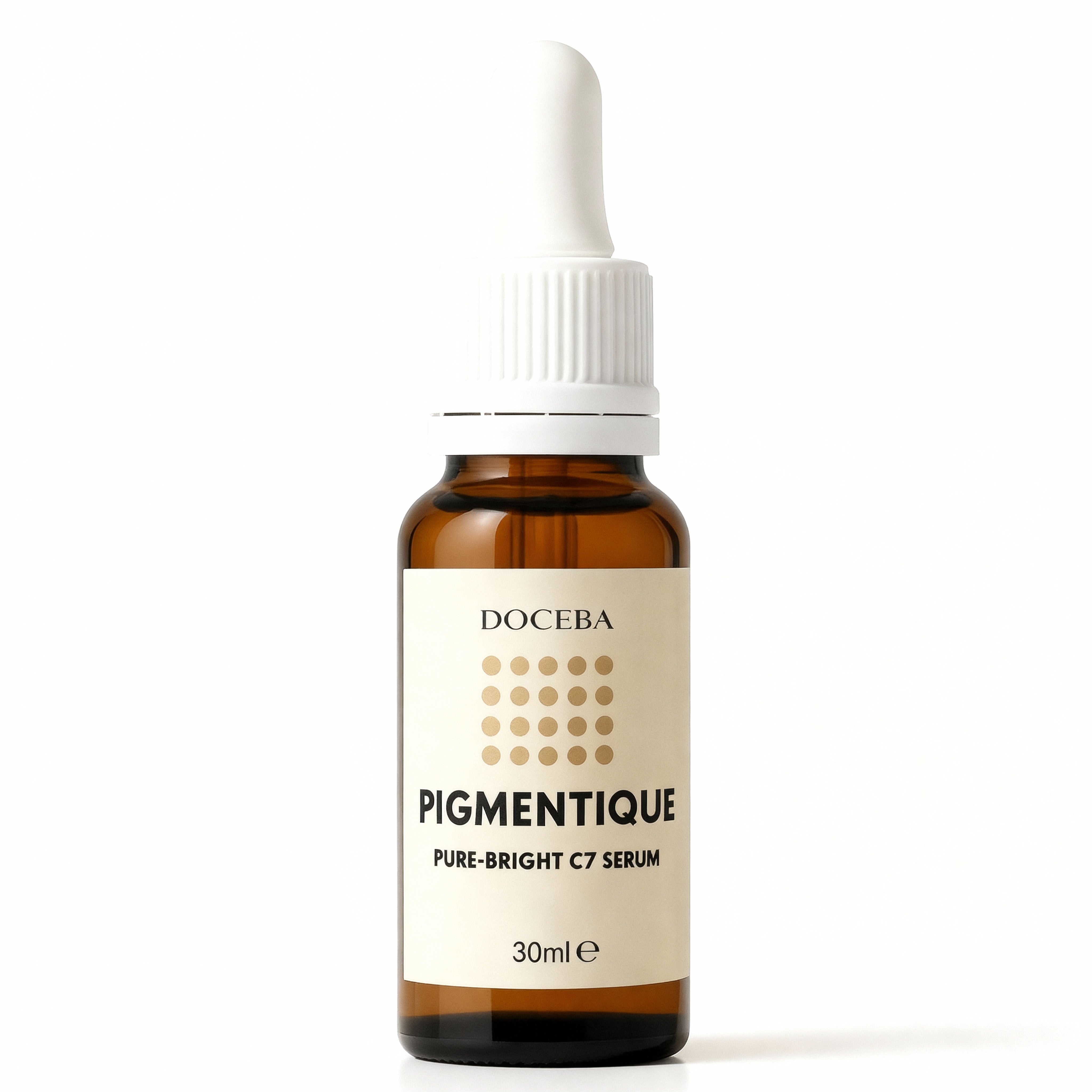
Whether it is melasma is for a doctor to say, usually from how it looks. For skincare alongside, we have the Pure Bright C7 Serum. Our Mela Bright is still in development. If you don't see it linked here yet, it isn't online yet. The upper lip has its own article: Hyperpigmentation around the mouth.
[S5][S6]When should a doctor look at a darker face?
Sometimes the cause is something skincare cannot fix.
Medicines. According to DermNet, drugs account for roughly 10 to 20% of acquired hyperpigmentation. Several of them favour skin that sees the sun, so the face and hands. DermNet's list includes antimalarials, amiodarone, tetracycline antibiotics and anticonvulsants. Never stop a prescribed medicine on your own. Ask whoever prescribed it if discoloured skin is a known side effect.
Acanthosis nigricans. Brown to black skin that feels velvety and thicker than the skin around it, often on the back of the neck and in the armpits. If it appears suddenly, the AAD says to book a dermatologist promptly. More in Dark underarms.
Get your face checked if the darkening comes on suddenly or spreads fast, if it looks blue-grey, if the skin turns velvety and thick, or if it all began shortly after a new medicine. This is a skincare guide, not a diagnosis.
[S7][S3][S9]What helps when your face is darker than your body?
1. Sunscreen every day, ideally tinted
For dark spots on darker skin, the AAD recommends a tinted sunscreen with iron oxide, SPF 30 or higher and broad-spectrum cover. Iron oxide protects against visible light. Look for it in the ingredient list; it does not count as a UV filter. Outdoors, reapply every two hours and add a wide-brimmed hat.
We are working on a sunscreen of our own right now. If you are buying one today, choose a tinted one in a shade that blends with your skin.
[S3]2. Drop anything that stings and keep the routine calm
Stop using any product that burns or stings, says the AAD. Gentler ones are often labelled "for sensitive skin" or "fragrance-free". A short routine is enough for the face: a mild cleanse, a moisturiser, and sunscreen on top in the morning. You can skip grainy scrubs and brushes.
[S3]3. Add one ingredient that targets dark spots
The AAD names azelaic acid, glycolic acid, kojic acid, retinoids and vitamin C as ingredients that may fade dark spots. We don't make a product with azelaic acid, retinol or hydroquinone. Our step here is vitamin C. If you use azelaic acid or a retinoid from the pharmacy, cleanser, moisturiser and sunscreen stay the base around it.
Start with one active and patch-test it on a small area first. More on choosing: Vitamin C for dark spots.
[S3]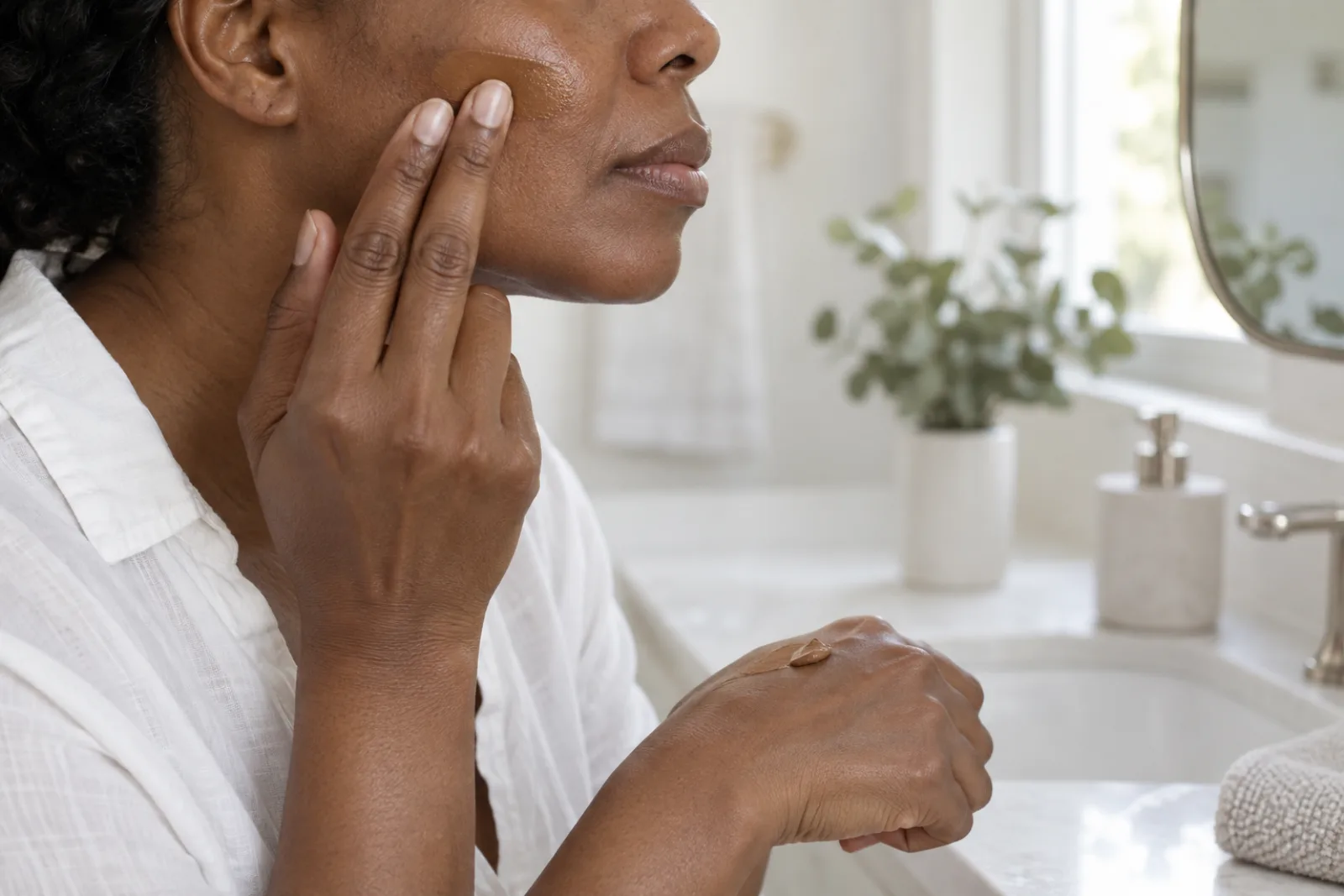
The shade should blend with your skin. Include your neck and ears when they are uncovered.
Illustration
How long does it take for the tone to even out?
Think in months. The AAD says a spot a few shades darker than your natural colour usually fades within 6 to 12 months. Deeper discolouration that looks slate blue, grey or very dark brown can take years. Melasma, according to DermNet, is slow to respond to treatment and often returns with summer sun.
Based on the AAD, not a promise. Applies to marks after inflammation (PIH), not to melasma.
Take a photo once a month in the same light. Day to day, the mirror won't show you the change.
The basics on spots in melanin-rich skin are in Hyperpigmentation on dark skin.
[S3][S5]What makes it worse?
- Sunscreen in summer only. For melasma the AAD advises protection every day, cloudy days included.
- Tanning beds and sunlamps. The AAD says they can worsen melasma.
- Scrubbing, lemon juice and anything else that burns. Inflamed melanin-rich skin makes new dark marks easily.
- Lightening products with no clear ingredient list.
- Stopping a prescribed medicine by yourself.
From the lab
No serum will make your face as light as your stomach, and it doesn't need to. As long as your face sees daylight and your stomach sits under a jumper, a small gap stays. What we care about is an even tone in your own skin colour.
A shelf product stays the same in every phase. Your skin doesn't. Because Anita formulates in our own lab in Bielefeld, we can adjust a product when your skin needs something different. That is what Skin Protocol is for.
Your next step
Both routes are fine. Pick the one that fits you today.
- For four weeks, sunscreen on your face every morning, ideally tinted.
- Leave out anything that burns or stings and keep the routine short.
- Take a photo once a month in the same light. If the darkening comes on suddenly or the skin turns velvety, see a doctor.
Matching products from our lab:

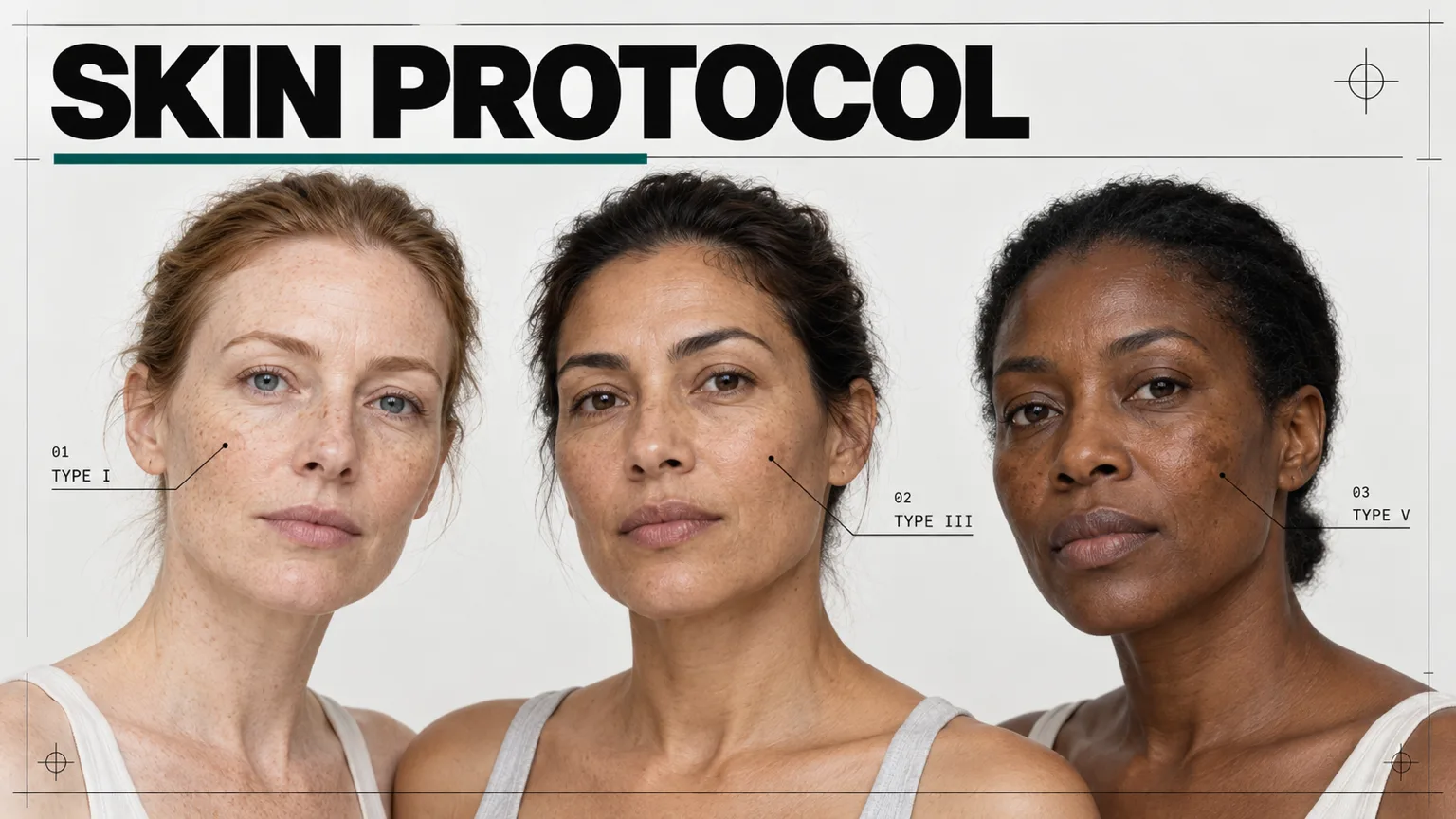
Skin Protocol: a plan for your skin and a team that adjusts it
You get a plan built around your skin and what you've already tried. We check in regularly and adjust products from Anita's lab when your skin needs something different. In English or German.
It starts with a free 20-minute call. We ring you and listen to your skin story, including a face that is darker than the rest of you.
Book your free skin callCosmetic advice, not a diagnosis. If you think you have a skin condition, see a doctor first.
Questions you might still have
Why is my face darker than the rest of my body?
Because it is almost never covered. Skin makes more melanin in response to light, and on deeper skin tones visible light adds pigment too. Acne marks or irritating skincare often come on top. [S1][S2][S3]
Why is my body darker than my face?
That happens too. Colour that comes from light sits where the light lands. If you wear sunscreen on your face and leave your arms or legs unprotected, the gap runs the other way. [S1]
Will my face match my body again?
Spots a few shades darker than your skin usually fade within 6 to 12 months, says the AAD, provided nothing new is added. A small gap to covered skin often stays for as long as your face keeps meeting daylight. [S3][S1]
Do I need sunscreen on my face if I have dark skin?
Yes. For dark spots on darker skin the AAD recommends SPF 30 or higher, ideally tinted with iron oxide. In one study, visible light left skin types IV to VI darker, and for longer, than UVA did. [S3][S2]
Sources
- [S1] Markiewicz E, Idowu OC: Melanogenic difference consideration in ethnic skin type. Clin Cosmet Investig Dermatol 2020;13:215–232 ↗
- [S2] Mahmoud BH et al.: Impact of long-wavelength UVA and visible light on melanocompetent skin. J Invest Dermatol 2010;130(8):2092–2097 ↗
- [S3] AAD: How to fade dark spots in darker skin tones ↗
- [S4] DermNet: Postinflammatory hyperpigmentation ↗
- [S5] DermNet: Melasma ↗
- [S6] AAD: Melasma: Self-care ↗
- [S7] DermNet: Drug-induced pigmentation ↗
- [S8] Sathe NC, Ben Tanfous A: Riehl Melanosis. StatPearls, 2024 ↗
- [S9] AAD: Acanthosis nigricans: Signs and symptoms ↗
- [P1] DOCEBA: Pure Brightening Set ↗
- [P2] DOCEBA: Pigmentique Pure Bright C7 Serum (V2) ↗
General skincare information, not a diagnosis or an individual treatment plan.
Your bag
Review your items before continuing.
Your bag is empty.