
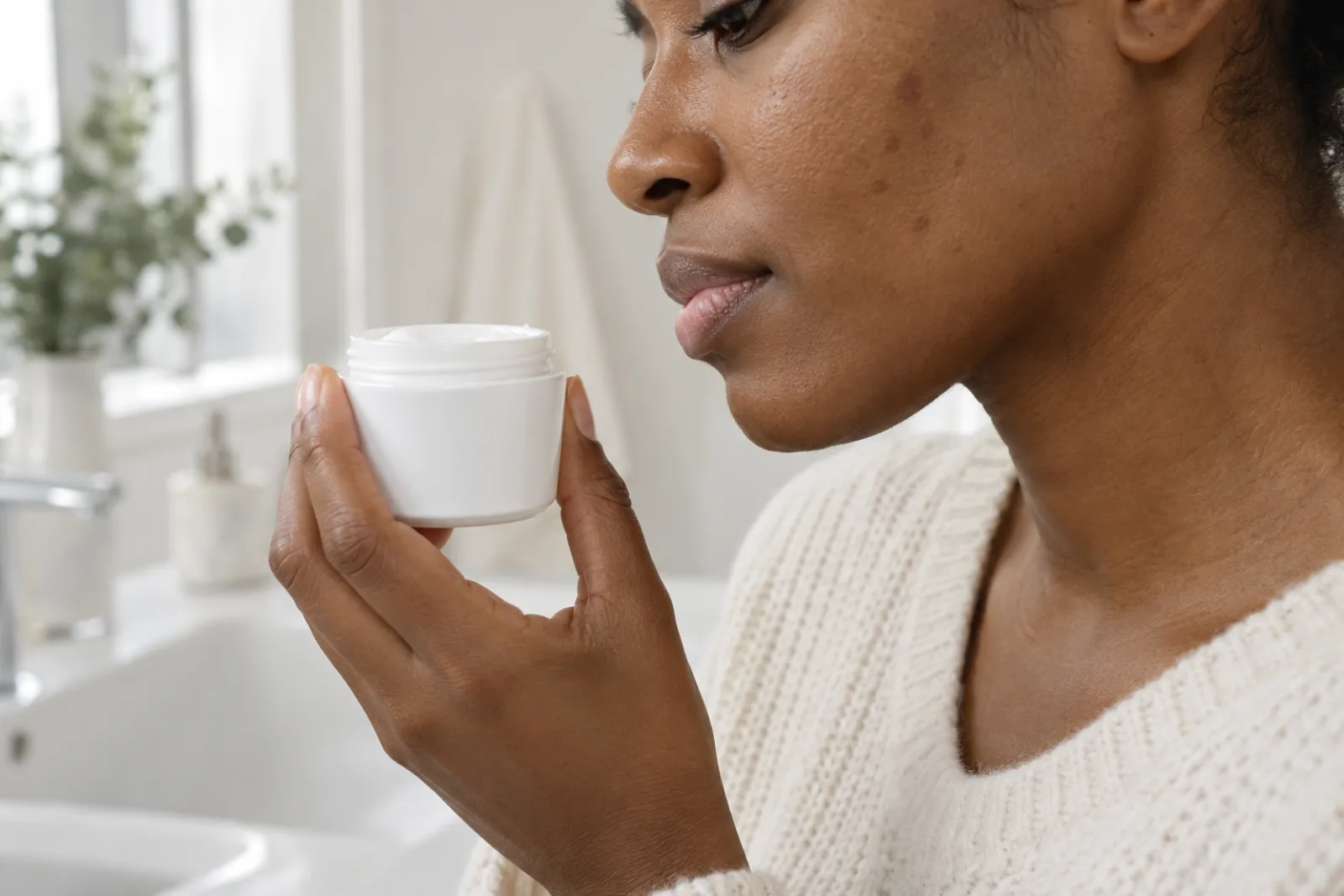
What is a skin bleaching cream, and what is in it?
The term covers creams, lotions and soaps sold to make skin lighter overall. Bavaria's health and food safety authority, the LGL, tests these products regularly and notes that they are rarely used on small areas. Packaging and advertising often suggest covering the whole body for weeks and months.
Three ingredients are behind most of the harm:
- Hydroquinone. DermNet, the reference site run by New Zealand dermatologists, calls it an effective skin lightening agent.
- Corticosteroids such as clobetasol propionate. These are anti-inflammatory medicines. Skin looks paler at first because blood vessels narrow, and the pigment cells slow down.
- Mercury. It switches off the enzyme that makes melanin, the pigment that gives your skin its colour.
Most people who pick up one of these creams want a single spot gone or a more even tone. Nobody should be shamed for that. The risk sits in the ingredients.
[S3][S5]In shortA bleaching cream is meant to change your skin colour. Dark spot care is meant to fade the spot and leave the rest alone.
| — | Bleaching cream | Dark spot care |
|---|---|---|
| Goal | make the skin lighter overall | bring single spots back to your own skin tone |
| Where it goes | often large areas, for weeks and months | on the spot or the affected zone |
| Typical ingredients | hydroquinone, corticosteroids, mercury | vitamin C, azelaic acid, retinoids, glycolic acid |
| EU cosmetics law | all three are listed in Annex II (prohibited substances) | permitted, some with maximum concentrations |
What are the side effects of hydroquinone, steroids and mercury?
Hydroquinone. The best-known risk is exogenous ochronosis. The skin darkens in the very place it was supposed to lighten, in irregular blue-black patches. DermNet calls it the main risk of excessive use and says hydroquinone should be used daily for no more than six months. The LGL also lists irritation, redness and sensitisation, mainly above 3%. Germany's Federal Institute for Risk Assessment (BfR) notes that hydroquinone is suspected of causing cancer.
A Boston team reviewed the charts of 25 people with ochronosis and published the results in 2023. Twenty-two were women, and 64% had dark to very dark skin (Fitzpatrick type V or VI). On average they had used their cream for 9.2 years, and 84% had bought it without a prescription. The cheeks were the most common site. Eight cases were misdiagnosed at first, six of them as melasma. Creams did not help once the discolouration was there. The authors describe ochronosis as rare. In their data it mainly affects people with skin of colour.
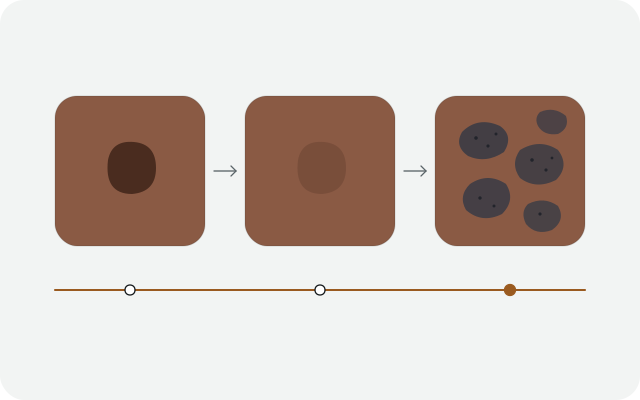 Spotlighter at firstlater blue-greyHydroquinone, daily, for years
Schematic illustration · ochronosis is rare and not an inevitable outcome
Corticosteroids. The LGL links clobetasol propionate to steroid acne and stretch marks. DermNet adds thinning skin, fungal infections that look unusual, and steroid rosacea. Used over large areas for a long time, potent steroids can also disturb the body's hormone control.
Mercury. The World Health Organization (WHO) calls mercury-containing skin lighteners hazardous to health. Mercury salts are corrosive to skin. Reported kidney effects range from protein in the urine to kidney failure, and DermNet lists nerve damage too. Over time mercury makes skin and nails darker, because it builds up in the skin.
[S5][S3][S2][S6][S7]Is hydroquinone banned in Germany and the EU?
It helps to keep three layers apart: the law, what authorities say about safety, and what is actually on sale.
The law. Cosmetics in Germany fall under the EU Cosmetics Regulation, Regulation (EC) No 1223/2009. Article 14 says cosmetic products must not contain substances listed in Annex II. The table shows where the three ingredients appear. A skin cream sold as a cosmetic may contain none of them.
| Substance | What the regulation says |
|---|---|
| Hydroquinone | Annex II, entry 1339: prohibited. One exception: artificial nail systems, professional use only, at most 0.02% (Annex III, entry 14). [S1] |
| Mercury and its compounds | Annex II, entry 221: prohibited, with narrow exceptions in Annex V. [S1] |
| Glucocorticoids (corticosteroids) | Annex II, entry 300: prohibited. [S1] |
Medicines are a separate matter. The regulation covers cosmetics only. A dermatologist can use hydroquinone or a corticosteroid as a medicine, for a clear diagnosis and a limited time. Whether that fits your case is a question for the clinic.
The safety view. In 2013 the BfR also rated arbutin as a health concern (Opinion No 007/2013), because it can release hydroquinone in the skin. That did not ban arbutin. Today the regulation allows it within limits: up to 7% in face cream, and for alpha-arbutin up to 2% in face cream and 0.5% in body lotion. Kojic acid is allowed up to 1% in face and hand products.
The market. Inspectors still find these products. In 2021/22 the LGL objected to 29 of 35 skin bleaching products, or 83%. Many objections concerned labelling, and twelve samples were judged unsafe. Nine contained hydroquinone, up to 5.262%, and others contained clobetasol propionate. In the samples it tested for mercury, the LGL found none. In 2023 it examined 23 samples and objected to 57%; the highest hydroquinone level was 2.9%. Samples mostly came from shops stocking goods from outside the EU. Every sample that passed came from regular retail.
[S1][S2][S3][S4][S5]How do you spot a risky bleaching cream?
Start with the ingredient list, often headed INCI. If you see one of these names, put the cream back:
- 01Back of the pack: the ingredient list
Turn the pack over before you buy or use it. A missing list is a warning sign in itself.
Illustration
- Hydroquinone
- Clobetasol Propionate, Betamethasone Valerate or Fluocinonide (all potent corticosteroids)
- Mercury
The list alone is not enough. The American Academy of Dermatology (AAD) reports that researchers have found steroids or mercury in imported skin care products that did not name them on the label.
So look at the rest of the pack. Cosmetics sold in Germany must carry labelling in German (the LGL cites section 4 of the German Cosmetics Ordinance), so a missing German label is a warning sign. So is a pack with no ingredient list, or a promise to lighten your whole body. The WHO adds that mercury-containing lighteners are advertised online.
If you are unsure, take the pack to a pharmacy or to a dermatologist.
[S5][S8][S3][S7]What fades dark spots without bleaching?
Many dark spots on melanin-rich skin are post-inflammatory hyperpigmentation, or PIH: colour left behind after inflammation, for example after a pimple. On darker skin it is more common, more intense and lasts longer. You do not need a bleaching agent for it. For the background, read Hyperpigmentation on dark skin.
[S9]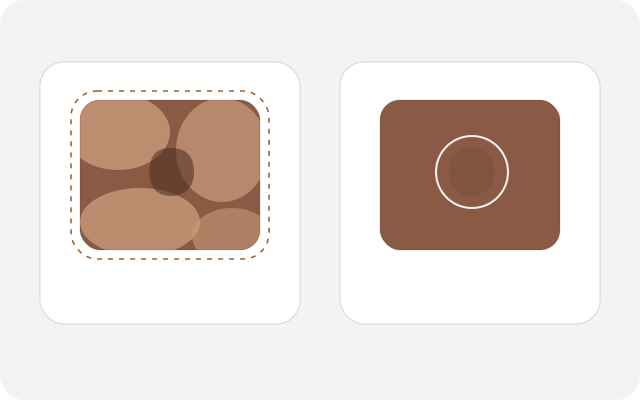 Bleaching creamDark spot carewhole areajust the spotGoal: lighter skinGoal: even tone
Schematic illustration · not a before-and-after or a treatment result
1. Sunscreen, every day
The AAD recommends SPF 30 or higher with broad-spectrum protection, and for dark spots a tinted sunscreen with iron oxide. Iron oxide protects against visible light, which can also darken spots. We are working on our own sunscreen right now. If you are buying one today, choose a tinted one. More in our guide to sunscreen for hyperpigmentation on dark skin.
[S8]2. One active for the spot
The AAD lists azelaic acid, glycolic acid, kojic acid, retinoids and vitamin C as ingredients that can fade existing dark spots. We do not make a product with azelaic acid, retinol or tranexamic acid, and none with hydroquinone. Our serums are built on vitamin C. How it works and how to start is covered in Vitamin C for dark spots. There is a separate guide to azelaic acid, and one on how to choose a dark spot corrector.
[S8]3. Nothing that burns
Inflammation tells pigment cells to make more melanin. That is why an irritated patch on dark skin can turn into a new mark. Patch-test anything new on a small area, and add one product at a time.
[S9]4. Patience and a steady routine
According to the AAD, a spot a few shades darker than your skin usually fades within 6 to 12 months once the cause has stopped. Deeper pigment can take years. A fixed sequence of cleanser, serum and cream makes it easier to stay with it that long.
[S8]Already using a bleaching cream? Here is what to do
First of all, you did nothing wrong. Many of these creams are sold like ordinary moisturisers.
Check the pack. If it lists hydroquinone or mercury, or has no ingredient list, stop using it and show it to a dermatologist. If you have used a steroid cream over large areas for a long time, ask the clinic how to come off it.
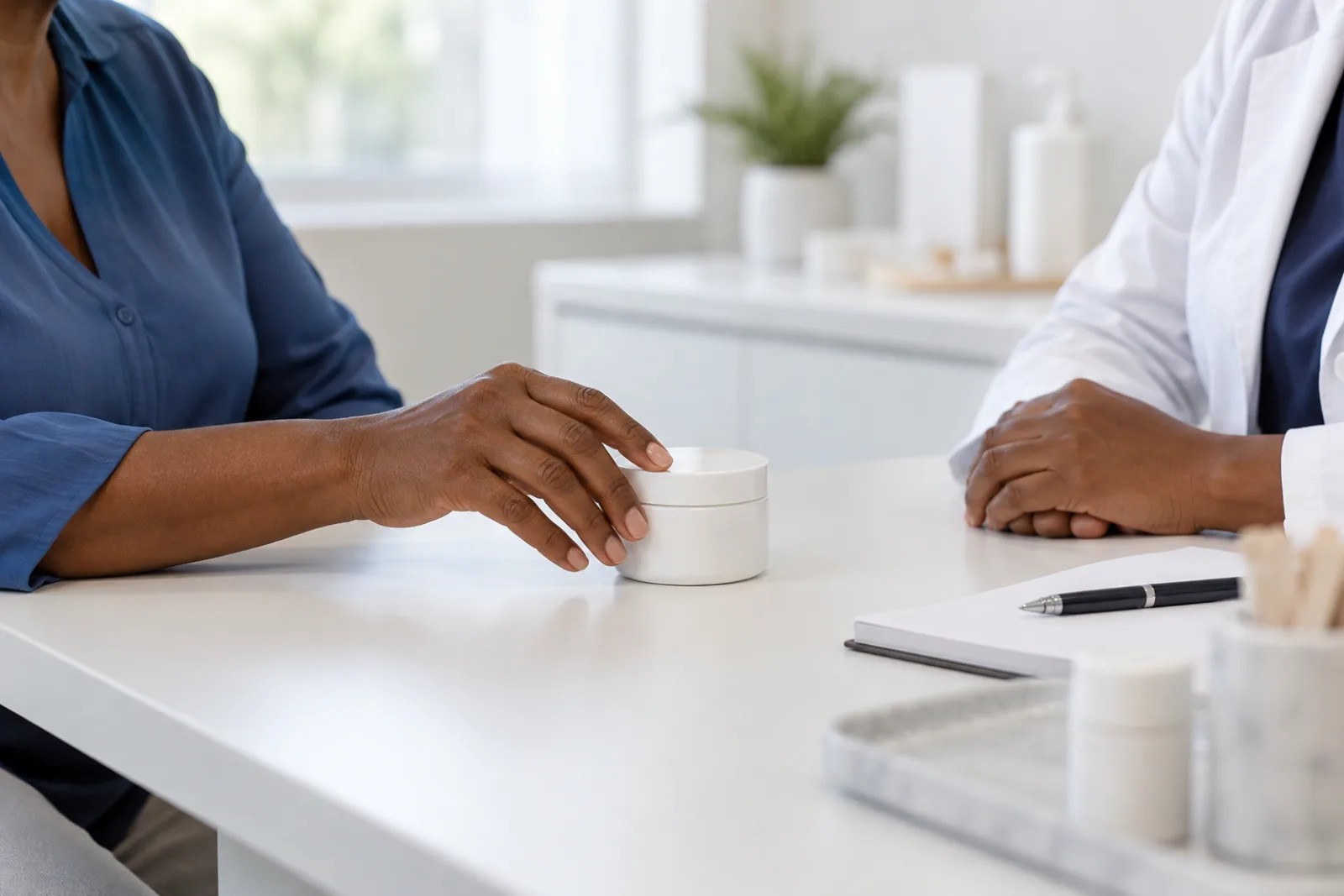
- 01Bring the cream and show it
Illustration
Book an appointment in any case if you notice blue-grey or black patches, if your skin is getting thinner or shows stretch marks, or if new pimples and rashes appear. Tell the doctor about every cream you have used. In the Boston review, ochronosis was mistaken for melasma several times.
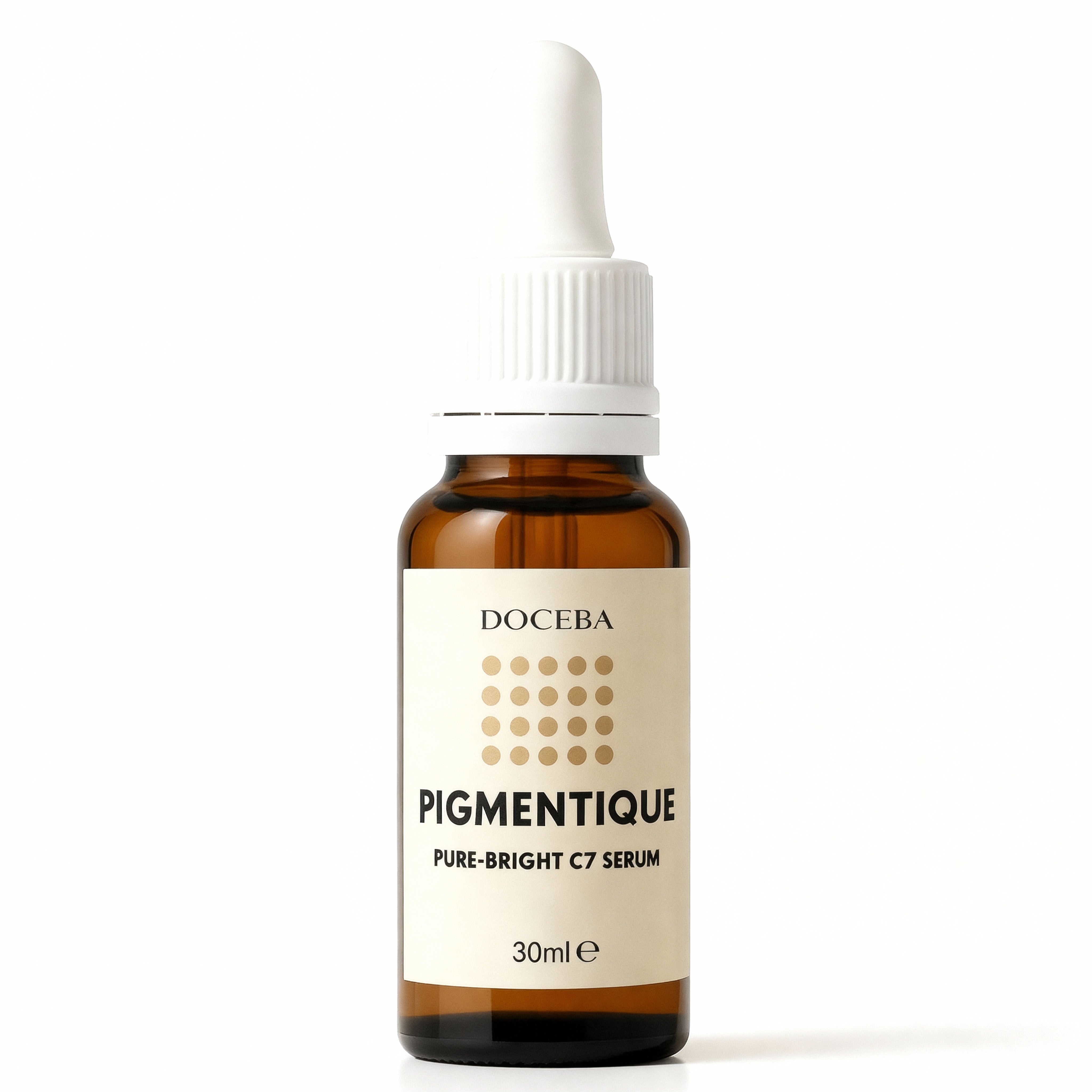
What if it is melasma? Melasma is a diagnosis of its own, and a doctor has to make it. For the skincare alongside, we have the Pure Bright C7 Serum. Our Mela Bright is still in development. If it is not linked here yet, it is not online yet.
[S5][S3][S6]From the lab
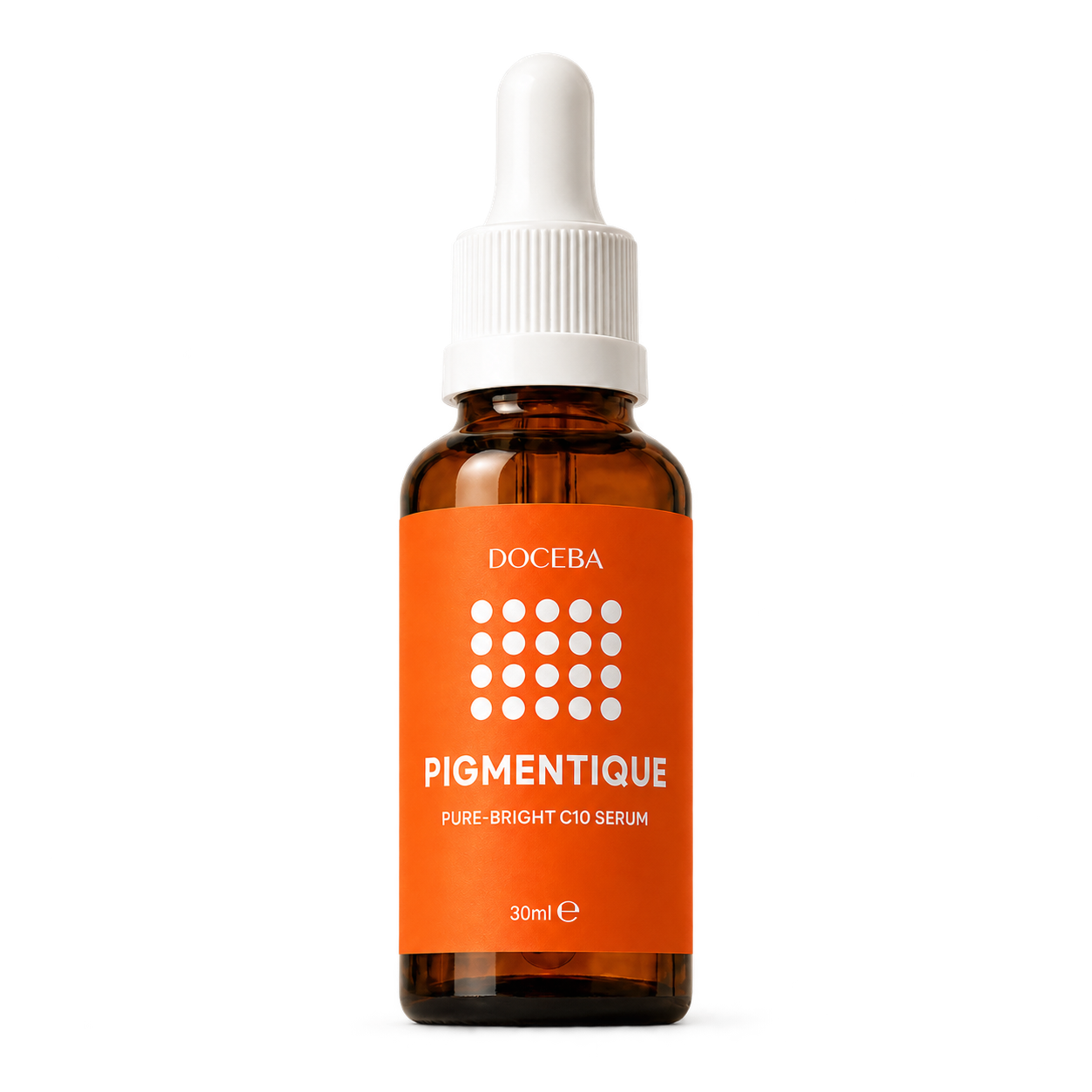
You will not find hydroquinone on the ingredient list of our Pure Bright face serums. They contain 3-O-Ethyl Ascorbic Acid, a stable vitamin C derivative, plus ferulic acid, hyaluronic acid and allantoin.
A shelf product stays the same in every phase. Your skin doesn't. Because Anita formulates in our own lab in Bielefeld, we can adjust a product when your skin needs something different. That is what Skin Protocol is for.
[P1][P2]Your next step
Both routes are fine. Pick the one that fits you today.
- Check the pack. If it lists hydroquinone, a steroid name or mercury, or has no list, show the cream to a dermatologist.
- Wear sunscreen every day, tinted if you can.
- Add one active for the spot, patch-test it first, and take a photo once a month in the same light.
Matching products from our lab:

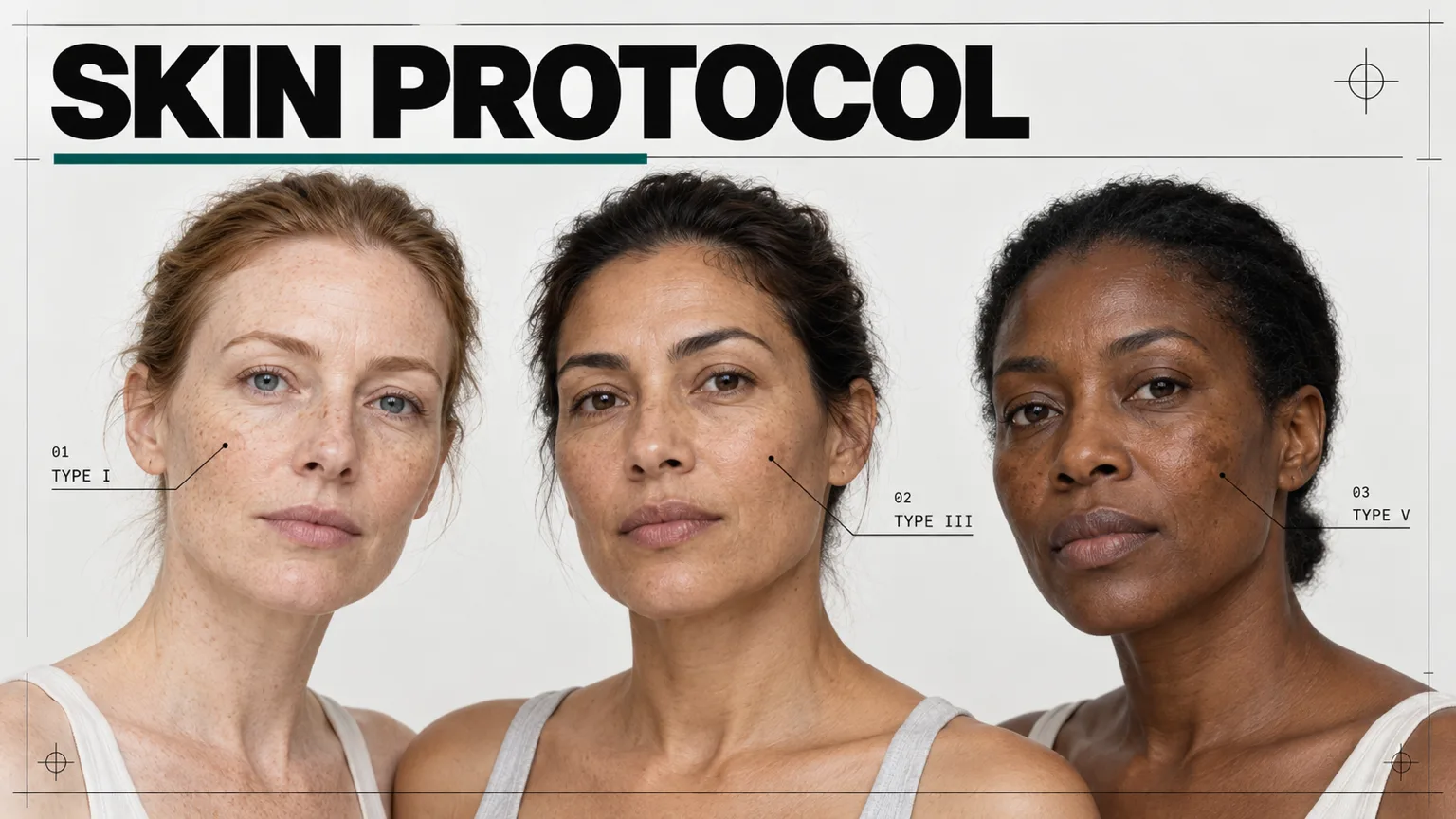
Skin Protocol: a plan for your skin and a team that adjusts it
You get a plan built around your skin and what you've already tried. We check in regularly and adjust products from Anita's lab when your skin needs something different. In English or German.
It starts with a free 20-minute call. We ring you and listen to your skin story, bleaching creams included.
Book your free skin callCosmetic advice, not a diagnosis. If you think you have a skin condition, see a doctor first.
Questions you might still have
What are the side effects of hydroquinone?
The LGL lists skin irritation and redness as well as sensitisation, mainly above 3%. With long or heavy use the skin can develop blue-black patches called exogenous ochronosis. DermNet advises daily use for no more than six months. [S3][S5]
Is hydroquinone banned in Europe?
In cosmetics, yes. Regulation (EC) No 1223/2009 lists hydroquinone in Annex II, entry 1339, as a prohibited substance; the only exception is professional artificial nail systems. Medicines are regulated separately, so a dermatologist may still use it. [S1]
Can I buy skin bleaching cream over the counter in Germany?
A cosmetic sold legally in Germany must not contain hydroquinone, corticosteroids or mercury. Such creams still turn up: Bavaria's LGL objected to 83% of the bleaching products it tested in 2021/22 and 57% in 2023. [S1][S3][S4]
Is ochronosis permanent?
It is hard to treat. In a Boston review of 25 cases, creams did not help. A few patients improved with laser treatment or microneedling. See a dermatologist early and bring the cream you have been using. [S6]
Is arbutin the same as hydroquinone?
No. Arbutin can release hydroquinone in the skin, though, which is why Germany's BfR rated it a health concern in 2013. The EU Cosmetics Regulation now allows arbutin within limits, and the hydroquinone in such products must not exceed unavoidable traces. [S2][S1]
Sources
- [S1] Regulation (EC) No 1223/2009 on cosmetic products, consolidated version of 1 Sept 2025 (Art. 14, Annex II entries 221, 300, 1339, Annex III entries 14, 375, 377, 378) ↗
- [S2] BfR (German Federal Institute for Risk Assessment): β-arbutin in skin lighteners is a health concern. Opinion No 007/2013 (in German) ↗
- [S3] LGL Bavaria (state health and food safety authority): Skin bleaching products, a risk? Tests 2021/2022 (in German) ↗
- [S4] LGL Bavaria: Skin bleaching products, still a risk? Tests 2023 (in German) ↗
- [S5] DermNet: Bleaching creams ↗
- [S6] Lazar M, De La Garza H, Vashi NA: Exogenous Ochronosis: Characterizing a Rare Disorder in Skin of Color. J Clin Med 2023;12(13):4341 ↗
- [S7] WHO: Mercury and health (fact sheet) ↗
- [S8] AAD: How to fade dark spots in darker skin tones ↗
- [S9] DermNet: Postinflammatory hyperpigmentation ↗
- [P1] DOCEBA: Pigmentique Pure Bright C7 Serum ↗
- [P2] DOCEBA: Pigmentique Pure Bright C10 Serum ↗
- [P3] DOCEBA: Pure Brightening Set ↗
General skincare information, not a diagnosis, legal advice or an individual treatment plan.
Your bag
Review your items before continuing.
Your bag is empty.