
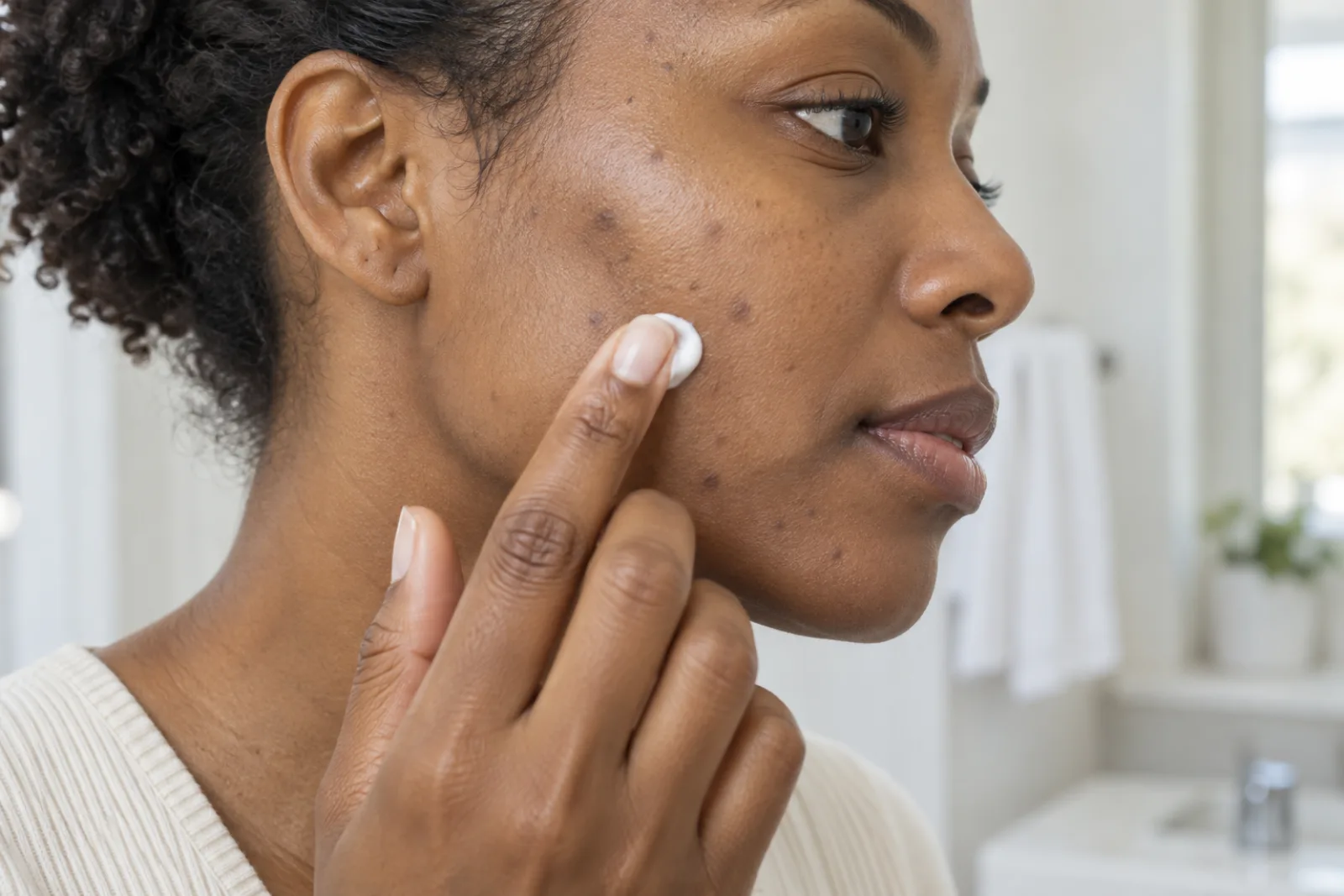
Does azelaic acid work for hyperpigmentation on dark skin?
The trial that fits this question most closely dates from 1998. It enrolled 52 people with Fitzpatrick skin types IV to VI, the darker end of the scale, who treated dark spots on the face for 24 weeks. One group used a 20% azelaic acid cream, the other the same cream with no active in it. Nobody knew which one they had. The spots lost more colour with azelaic acid, both in the investigators' ratings and in readings from a colour meter.
A 2024 trial from China tested a 15% azelaic acid gel in people with acne and analysed 60 of them. After twelve weeks, brown acne marks had gone down further in colour, size and number than with a gel that had no active. Red marks improved as well. One caveat: nearly everyone in that trial had skin type III, which is lighter than the skin this article is about.
So the evidence points the right way, but the trials are few and small. A review of post-inflammatory hyperpigmentation in skin of colour asks for larger studies in exactly this group. DermNet, the dermatology reference site, still describes azelaic acid as particularly useful for people with darker skin whose acne spots leave stubborn brown marks.
For what these marks are and why dark skin forms them so easily, see dark spots after acne.
[S4][S3][S5][S2]How does azelaic acid work on acne and dark spots?
Azelaic acid is an acid with anti-inflammatory and antioxidant properties. It also occurs in nature, as a by-product of the yeast Malassezia furfur. In your skin it acts in two places.
At the pigment cell. Azelaic acid slows down tyrosinase, the enzyme a pigment cell needs to make melanin, which gives your skin its colour. According to one review, it targets pigment cells that are behaving abnormally.
Inside the pore. There it holds back the growth of bacteria and calms inflammation. It also slows the build-up of skin cells in the outer layer.
That double action matters on dark skin. A pimple that never forms can't leave a mark behind.
[S2][S3]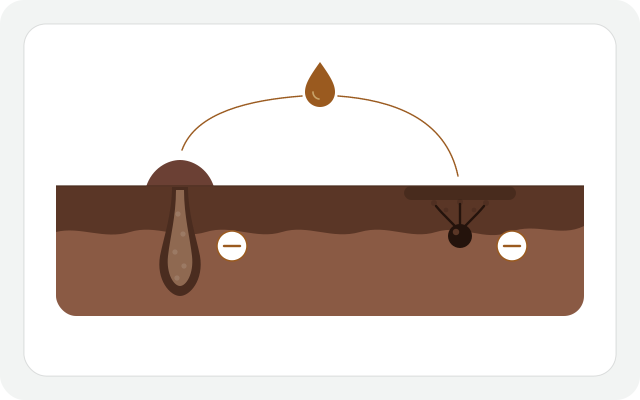 Azelaic acidPore: bacteria held backPigment cell: less melanin
Schematic · not a before-and-after or a treatment result
Do you need a prescription for azelaic acid?
As a medicine, azelaic acid comes in two strengths: a 20% cream and a 15% gel. According to one review, the cream is used for acne, melasma and post-inflammatory hyperpigmentation. The gel is mainly a rosacea treatment, and in some European countries an acne treatment too.
In Germany, azelaic acid is listed in Annex 1 of the Prescription Drug Ordinance (AMVV), with no exemption for particular strengths. That means any azelaic acid medicine needs a prescription and comes from a pharmacy.
Cosmetic products with azelaic acid exist alongside the medicines. The AAD includes it in its list of ingredients to look for in products you can buy without a prescription. Keep one thing in mind: the trials above used 15% and 20%, the medicinal strengths. They don't tell you whether a weaker cosmetic product does the same job.
If an over-the-counter product doesn't deliver, the AAD suggests seeing a dermatologist. Some dark spots need a prescription-strength treatment.
[S2][S3][S6][S1]
In Germany, 20% azelaic acid cream and 15% gel are available on prescription only.
Illustration
How do you use azelaic acid without irritating your skin?
On dark skin, tolerance decides everything. When a product irritates your skin, that irritation can cause new dark spots, the AAD warns. The review on post-inflammatory hyperpigmentation says the same about treatments in general. Here is a careful way in:
- Patch test first. Apply the product twice a day to a coin-sized spot, for example on your inner arm, for seven to ten days. If the skin stays calm, go ahead.
- Build up slowly. For the prescription cream, DermNet describes once a day after cleansing at first, then twice a day if your skin tolerates it. If you have a prescription, follow what your doctor told you.
- Know what tingling means. In the 2024 trial, 20 of the 30 people using azelaic acid gel reported mild redness, tingling, dryness, itching or peeling. It usually settled within about a week. If a product properly burns or stings, stop using it. For severe redness, scaling or itching, DermNet advises getting medical advice.
- Watch for light patches. DermNet notes that azelaic acid may lighten skin more than intended, and that this shows more on darker skin tones. If an area turns lighter than your normal skin, stop and have it looked at.
- Sunscreen in the morning. Azelaic acid doesn't make skin more sensitive to light, according to DermNet. UV can still make post-inflammatory marks worse. The AAD recommends a tinted sunscreen with iron oxide and SPF 30 or higher, because iron oxide also protects against visible light.
We are working on a sunscreen of our own. If you are buying one now, choose a tinted one. There is more in sunscreen for hyperpigmentation on dark skin.
DermNet advises caution if you have very sensitive skin or eczema, because irritation is more likely. Worsening of asthma has occasionally been reported. In either case, check with your doctor before you start.
[S1][S3][S9][S2][S5]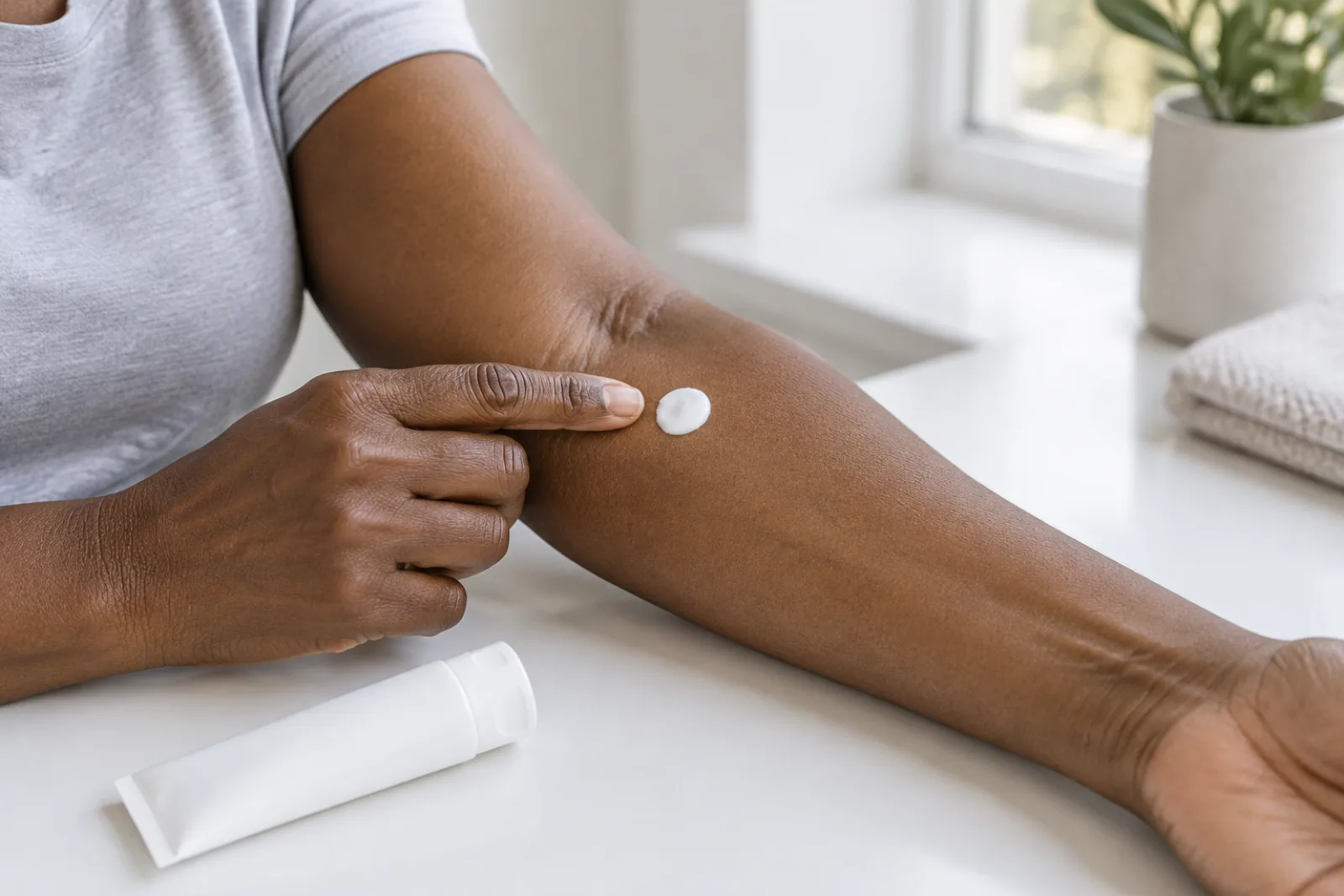
- 01Test spot: twice a day for 7 to 10 days
Illustration
How long does azelaic acid take to fade dark spots?
Think in months. In the trial of the 15% gel, acne marks pulled ahead of the comparison gel at week eight and again at week twelve. The trial in darker skin ran for 24 weeks. For acne, DermNet says some improvement should show after a month, with the best results after six months of continuous use.
For comparison: the AAD says a spot a few shades darker than your natural skin colour will usually fade within 6 to 12 months once its cause is gone. If the colour sits deep in the skin, fading can take years.
[S5][S4][S2][S1]Trial durations, not a promise for your skin.
Azelaic acid vs vitamin C: which one for dark spots?
Both are on the AAD's list of ingredients that can fade dark spots, and both slow down tyrosinase. Where they part ways is in what else they do and in how well they have been studied.
| Azelaic acid | Vitamin C | |
|---|---|---|
| Effect on pigment | Slows tyrosinase, targeting pigment cells that behave abnormally [S3][S7] | Slows tyrosinase and works as an antioxidant |
| Effect on breakouts | Yes: holds back bacteria in the pore and calms inflammation [S2] | Not described as an acne treatment in our sources |
| Studies in dark skin | 52 people, skin types IV to VI, 20% cream, 24 weeks [S4][S3] | Most studies looked at melasma, not post-inflammatory marks |
| How you get it | 15% and 20% on prescription in Germany, plus cosmetic products [S6][S1][S3] | Cosmetic, no prescription, typically 5 to 10% |
| What to watch | Tingling or redness early on, occasionally patches that turn too light [S5][S2][S7] | Pure vitamin C is unstable. Above 20% adds no benefit and may irritate |
A rule of thumb: if you are still breaking out, azelaic acid has the stronger case, since it works on the pimples and the marks at once. If the acne has cleared and only the spots are left, a vitamin C serum is the simpler start, with no prescription and no appointment.
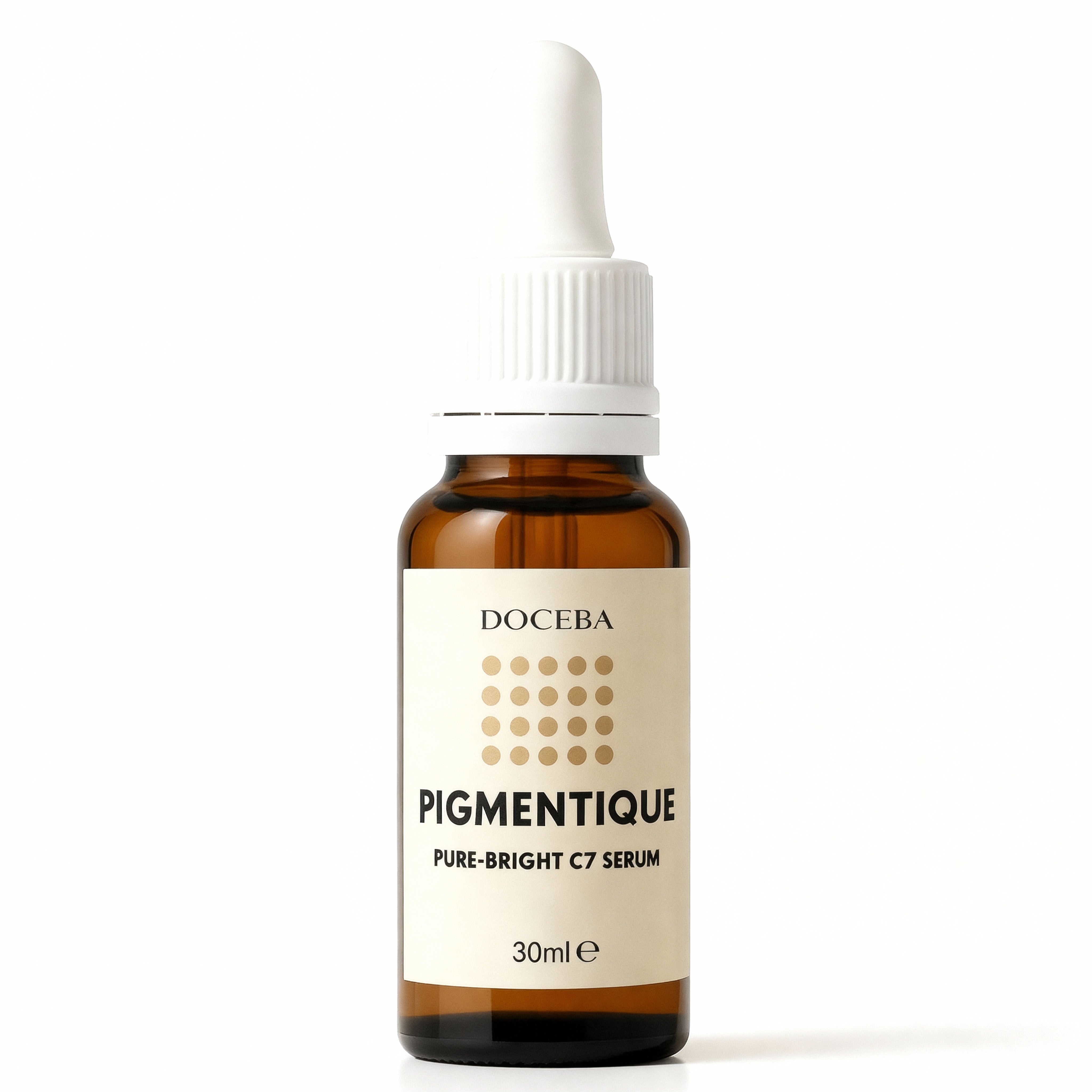
To be upfront: DOCEBA has no product with azelaic acid. Our active for dark spots is vitamin C. The Pure Bright C7 Serum is our face serum for that, and the Pure Bright C10 Serum has 10% vitamin C if you want more.
What about using both? We found no study on the combination. If you want both, introduce them one after the other, a few weeks apart. Otherwise you won't know which one caused a reaction. If your azelaic acid is prescribed, ask your doctor before adding anything.
More on the alternatives: vitamin C for dark spots, niacinamide vs vitamin C and tranexamic acid for hyperpigmentation.
[S1][S3][S7][P3]Where does azelaic acid go in your routine?
DermNet describes applying it straight after cleansing. Around it you need very little: a mild cleanser, a moisturiser, and sunscreen in the morning. For dark spots, the AAD specifically recommends gentler products. The full order for morning and evening is in our skincare routine for hyperpigmentation.
If you aren't using azelaic acid and would like a routine that is already put together, we suggest the Pure Brightening Set. It contains a cleanser, a booster serum, the Pure Bright C7 Serum and the Barrier Lipid Shield Cream. The step aimed at dark spots is the C7 Serum. Sunscreen is not included.
[S2][S1][P2]Does azelaic acid help with melasma?
Melasma is its own kind of dark patch. Whether yours is melasma is for a dermatologist to say. The AAD notes that a close look at your face and neck is often enough.
The AAD names azelaic acid as one of the gentler medications dermatologists prescribe for melasma, next to kojic acid and vitamin C. Results usually take 3 to 12 months. Sunscreen is part of the plan, and if the white cast puts you off, the AAD suggests a tinted one.
For the vitamin C step, our Pure Bright C7 Serum fits. Our Mela Bright is still in development. If you don't see it linked here yet, it isn't online yet.
[S8][S3]When to see a dermatologist
- You want the medicinal strengths. In Germany, the 20% cream and the 15% gel are prescription-only.
- Nothing has changed after several months on an over-the-counter product. The AAD says some spots need a prescription-strength treatment.
- Your skin turns very red, scales, itches or burns.
- A treated area becomes lighter than your normal skin.
Your next step
Both routes are fine. Pick the one that fits you today.
- Patch test every new product on a small spot for seven to ten days.
- Stay with one dark spot active and wear a tinted sunscreen in the morning.
- Take a photo once a month in the same light. If nothing changes, or you want prescription strength, book a dermatologist.
Matching products from our lab:

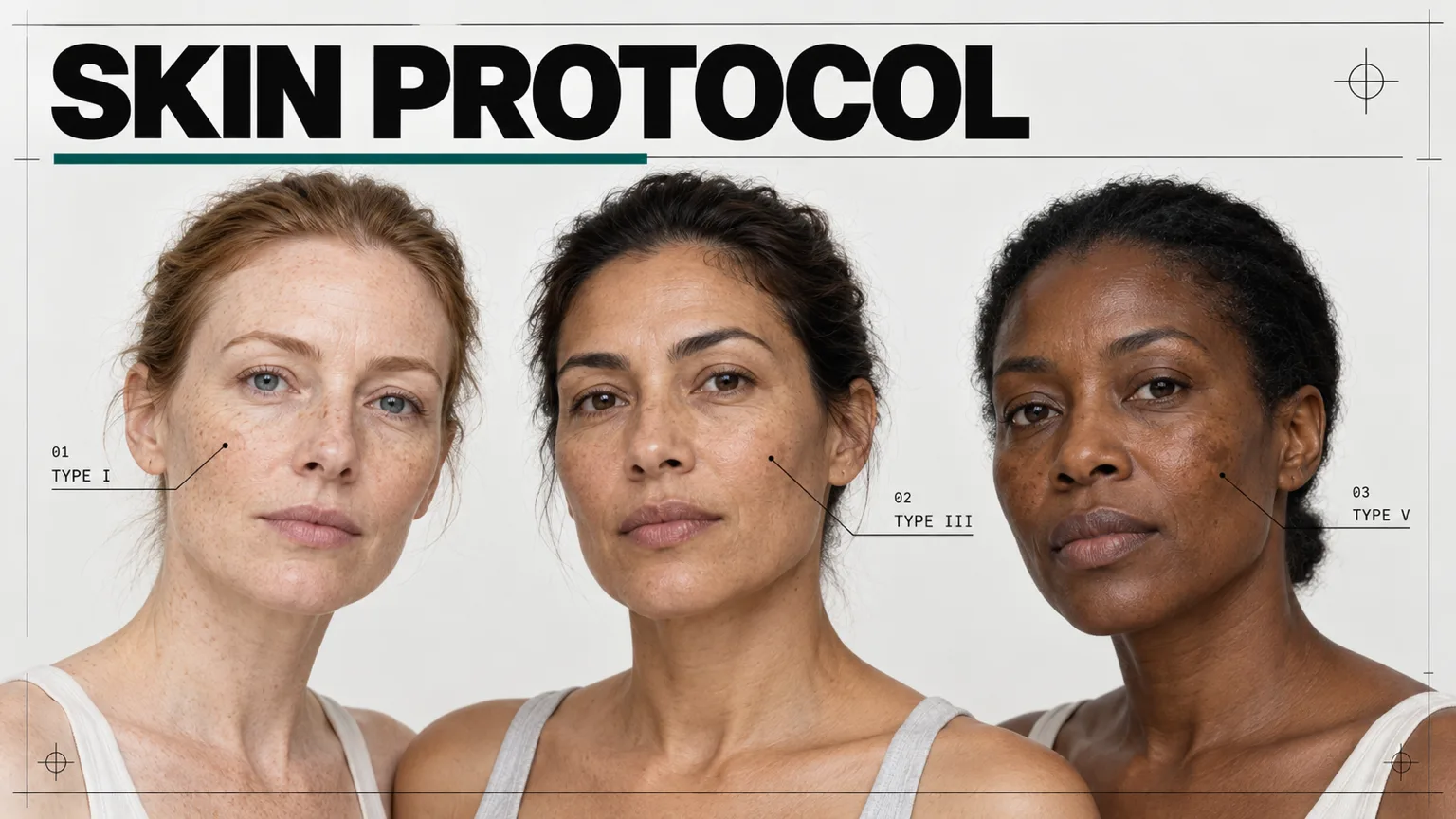
Skin Protocol: a plan for your skin and a team that adjusts it
You get a plan built around your skin and what you've already tried. We check in regularly and adjust products from Anita's lab when your skin needs something different. In English or German.
It starts with a free 20-minute call. We ring you and listen to your skin story, including azelaic acid and hyperpigmentation.
Book your free skin callCosmetic advice, not a diagnosis. If you think you have a skin condition, see a doctor first.
Questions you might still have
Does azelaic acid fade dark spots from acne?
Trials suggest it does. In 2024, brown and red acne marks improved more after twelve weeks with a 15% azelaic acid gel than with a gel that had no active. DermNet calls it particularly useful for darker skin when acne leaves brown marks. [S5][S2]
Can you buy azelaic acid without a prescription in Germany?
Not as a medicine. Germany's Prescription Drug Ordinance lists azelaic acid with no exemption, so the 20% cream and the 15% gel are prescription-only. Cosmetic products with azelaic acid are sold without one. [S6][S2][S1]
Azelaic acid vs vitamin C: which is better for hyperpigmentation?
It depends on your skin. If you still get pimples, azelaic acid has the stronger case because it also treats acne. If only the marks are left, vitamin C is the simpler start and needs no prescription. We found no head-to-head comparison of the two in dark skin. [S2][S1]
Can azelaic acid lighten dark skin too much?
It can happen. DermNet lists skin lightening as a possible side effect that is more apparent in darker skin tones. If an area turns lighter than your normal skin, stop the product and see a doctor. [S2]
Sources
- [S1] AAD: How to fade dark spots in darker skin tones ↗
- [S2] DermNet: Azelaic acid ↗
- [S3] Davis EC, Callender VD: Postinflammatory Hyperpigmentation: A Review of the Epidemiology, Clinical Features, and Treatment Options in Skin of Color. J Clin Aesthet Dermatol 2010;3(7):20–31 ↗
- [S4] Lowe NJ, Rizk D, Grimes P, Billips M, Pincus S: Azelaic acid 20% cream in the treatment of facial hyperpigmentation in darker-skinned patients. Clin Ther 1998;20(5):945–959 ↗
- [S5] Shucheng H et al.: Effects of 15% Azelaic Acid Gel in the Management of Post-Inflammatory Erythema and Post-Inflammatory Hyperpigmentation in Acne Vulgaris. Dermatol Ther (Heidelb) 2024;14(5):1293–1314 ↗
- [S6] German Prescription Drug Ordinance (AMVV), Annex 1: entry "Azelainsäure" (azelaic acid) ↗
- [S7] Al-Niaimi F, Chiang NYZ: Topical Vitamin C and the Skin: Mechanisms of Action and Clinical Applications. J Clin Aesthet Dermatol 2017;10(7):14–17 ↗
- [S8] AAD: Melasma: Diagnosis and treatment ↗
- [S9] AAD: How to test skin care products ↗
- [P1] DOCEBA: Pigmentique Pure Bright C7 Serum ↗
- [P2] DOCEBA: Pure Brightening Set ↗
- [P3] DOCEBA: Pigmentique Pure Bright C10 Serum ↗
General skincare information, not a diagnosis or an individual treatment plan.
Your bag
Review your items before continuing.
Your bag is empty.