
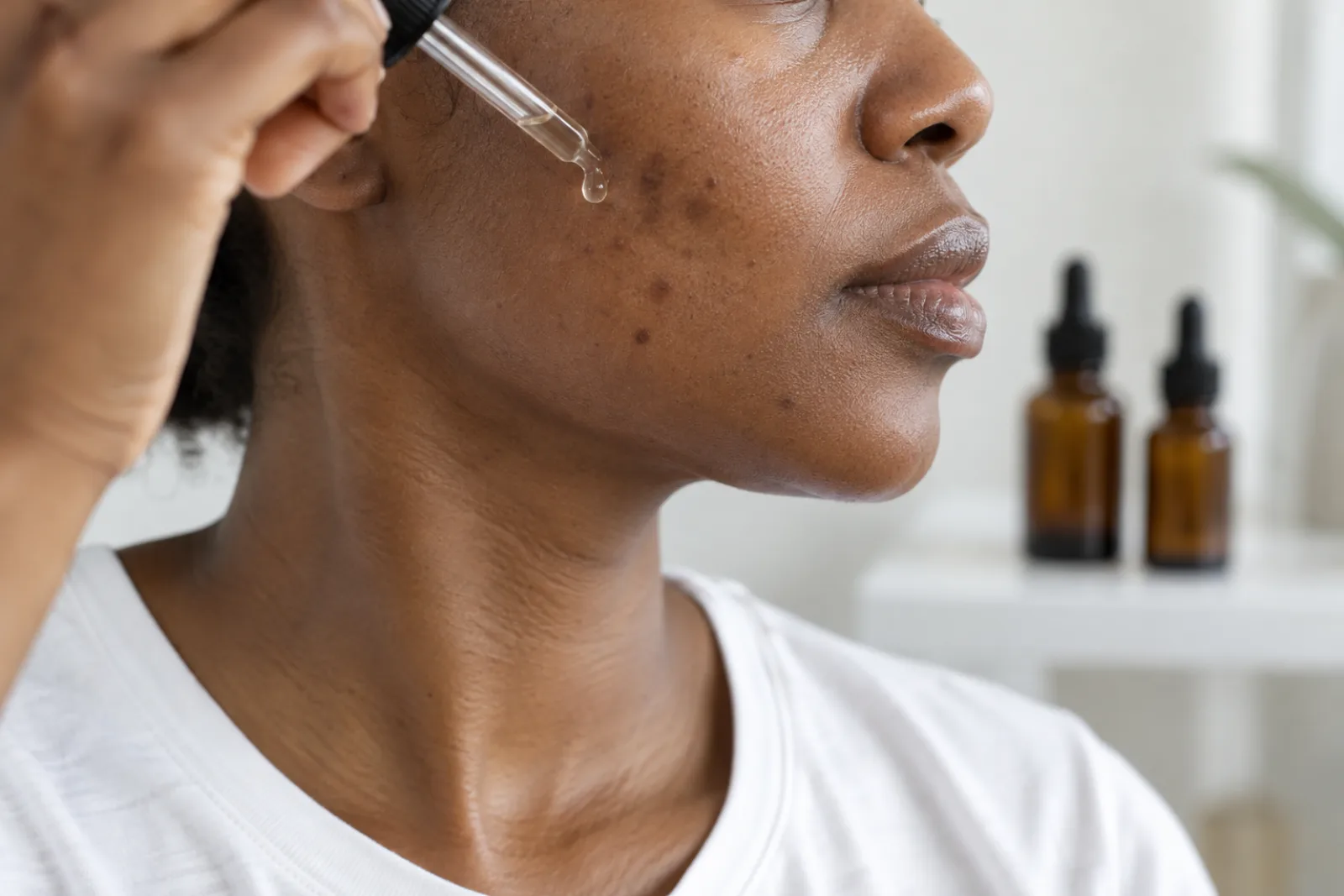
How do niacinamide and vitamin C work on dark spots?
A dark spot is built in two steps. Pigment cells (melanocytes) at the base of the epidermis make the pigment melanin. They pack it into tiny parcels called melanosomes and hand those to the skin cells next door. Only then does the colour show up as a spot.
Vitamin C works on step one. To make melanin, the pigment cell needs an enzyme called tyrosinase, and that enzyme runs on copper. According to a 2017 review by Al-Niaimi and Chiang, vitamin C interacts with the copper at the enzyme, which inhibits tyrosinase and lowers melanin formation.
Niacinamide works on step two. Niacinamide is a form of vitamin B3. In 2002, Hakozaki and colleagues found it had no effect on tyrosinase at all. What it did do, in a cell model, was cut the transfer of pigment parcels by 35 to 68%. A newer review (Boo, 2021) describes the same pattern and adds that the exact mechanism still has to be worked out.
Neither one is a bleach. They slow down the pigment that is still on its way, which is why both of them need time.
[S2][S3][S5] Pigment cellVitamin C: productionNiacinamide: handoverLess pigment on top
Schematic illustration · not a before-and-after or a treatment result
Niacinamide or vitamin C for hyperpigmentation: which works better?
Nobody can tell you for certain right now. While researching this article we did not find a single trial that puts the two against each other on the same people. What exists is research on each one separately.
Niacinamide. In the Hakozaki paper, 18 women with hyperpigmentation used a moisturiser with 5% niacinamide and, for comparison, the same moisturiser without it. After four weeks, hyperpigmentation had dropped measurably with niacinamide.
Vitamin C. The American Academy of Dermatology (AAD) lists vitamin C among the ingredients that can fade dark spots in darker skin tones. Niacinamide is not on that list. Al-Niaimi and Chiang also point out that vitamin C may be less effective in practice than products containing hydroquinone.
Two specialist overviews of marks left by inflammation name both ingredients side by side: DermNet, and a review by Davis and Callender that focuses on skin of colour. DermNet adds that it usually takes a combination of treatments to see a significant improvement.
In shortTwo brakes at different points, no proven winner.
| — | Niacinamide | Vitamin C |
|---|---|---|
| What it is | a form of vitamin B3 | ascorbic acid and its derivatives |
| Where it acts | handover of pigment to skin cells | melanin production (the enzyme tyrosinase) |
| Evidence | fewer spots after 4 weeks at 5% (18 women) | on the AAD list for fading dark spots |
| Watch out for | considered well tolerated at usual strengths | pure ascorbic acid is unstable, above 20% may irritate |
| In DOCEBA serums | no | yes, as 3-O-Ethyl Ascorbic Acid |
So "which one is stronger" gets you less far than "which one will I put on every day without my skin stinging".
[S1][S2][S3][S5][S6][S8]What does this mean for Black and brown skin?
The awkward part first. The niacinamide trials in this article were run with Japanese women (Hakozaki) and at a dermatology department in Mexico (Navarrete-Solís). None of them looked only at very dark skin. Anyone quoting you an exact success rate for Black skin is guessing.
Something else is well documented. Marks left after inflammation, known as post-inflammatory hyperpigmentation (PIH), tend to be more intense on darker skin and stay longer, according to DermNet. And in their review of PIH in skin of colour, Davis and Callender give a clear warning: use caution with every treatment, so that irritation does not make the hyperpigmentation worse.
A serum that stings is a step backwards, whatever the label says. The AAD advice is to stop any product that burns or stings. With vitamin C, a higher percentage is not automatically better either. Al-Niaimi and Chiang write that going above 20% adds nothing and may irritate.
Niacinamide is considered well tolerated at the strengths normally used. DermNet notes it can improve the skin barrier by cutting water loss through the skin. If it dries you out, DermNet suggests applying it less often.
Start low, patch-test, and only step up once your skin stays quiet. For how marks form on deeper skin tones in the first place, read dark spots after acne and our overview of hyperpigmentation on dark skin.
[S1][S2][S3][S4][S5][S6][S7][S8]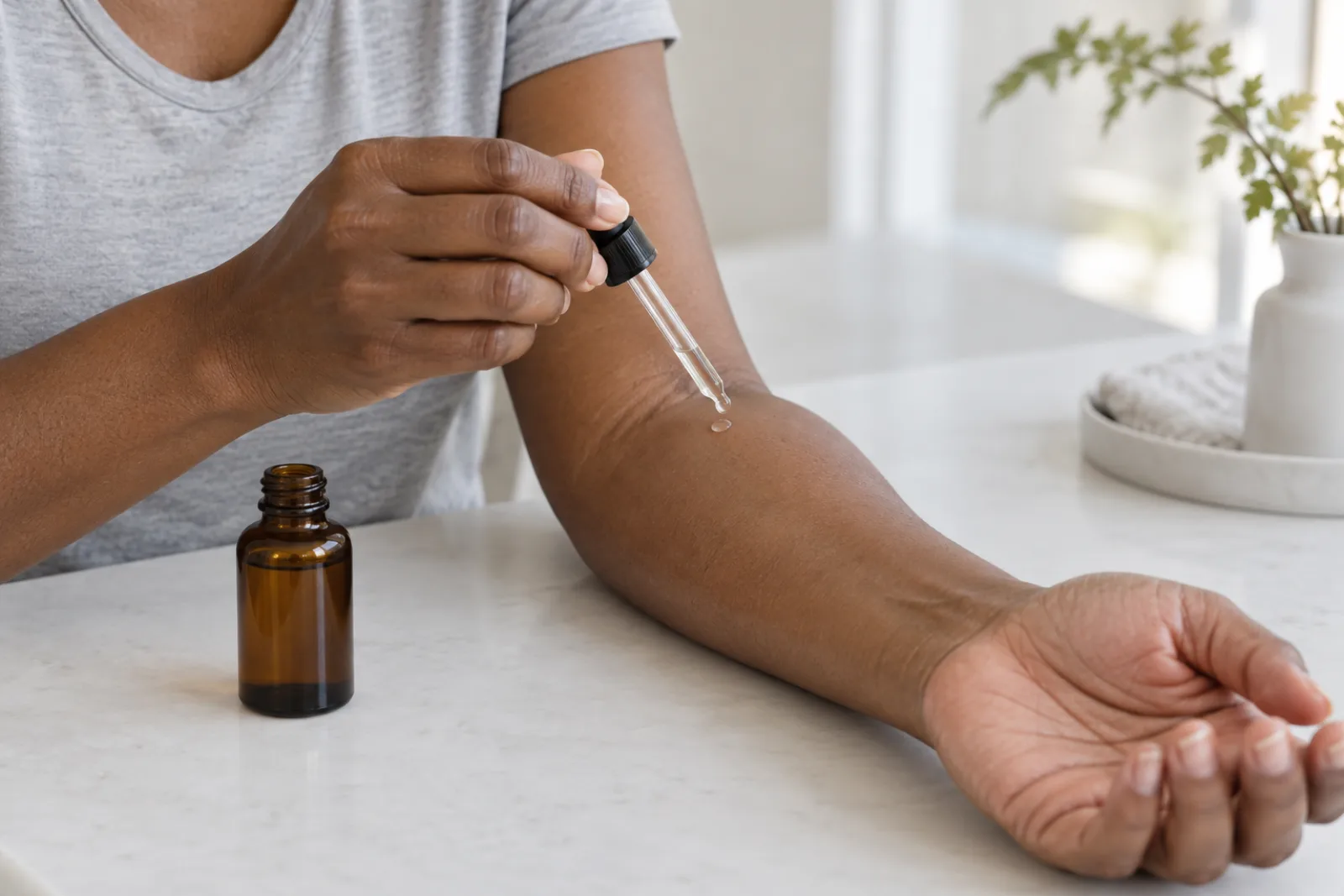
One drop on a small patch of skin. If it burns or stings there, it does not go on your face.
Illustration
Can you use niacinamide and vitamin C together?
Yes. You will read online that the two cancel each other out or turn your face red. We found nothing in the sources for this article to back that up.
What we did find points the other way: researchers put both into one product. In 2006, Hakozaki and colleagues tested a gel with niacinamide and ascorbyl glucoside, a vitamin C derivative, on 60 women with hyperpigmentation. Used with ultrasound, it reduced dark spots after four weeks more than the gel alone. A study like that cannot tell you how much each ingredient contributed, a point Boo also makes about combination products.
The redness people warn about belongs to nicotinic acid, a different form of vitamin B3. Niacinamide does not cause that flushing, says DermNet. Boo cites a test where people felt no stinging or flushing with 10% niacinamide on their skin.
Two ways to do it, both fine:
- Together. One product with both, or two serums one after the other. Saves time.
- Apart. Vitamin C in the morning under sunscreen, niacinamide at night. If something stings, you know straight away which product it was.
There is no set time of day for either one. If you are starting from scratch, bring the products in one at a time, not both in the same week. For everything else that goes around them, see our routine for hyperpigmentation on dark skin. Retinol is its own question: vitamin C and retinol.
[S5][S7][S9]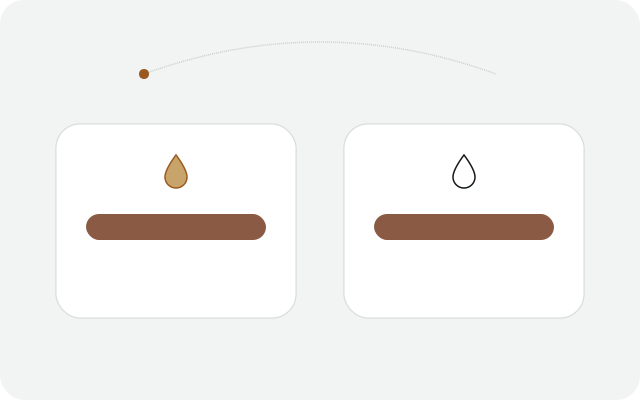 MorningVitamin C + SPFNightNiacinamideOr both together
Schematic illustration · not a before-and-after or a treatment result
Niacinamide or vitamin C serum: which one suits you?
- Flat dark marks after spots, bites or shaving, and skin that copes with actives: vitamin C is a sound first step. It is on the AAD list.
- Skin that stings easily or runs dry: take the gentler route. That can be niacinamide, or a vitamin C serum at a low strength.
- Oily skin that breaks out a lot: niacinamide brings a bonus here. DermNet cites studies in which it reduced sebum production, and a 4% gel did as well against acne as an antibiotic gel. Fewer breakouts also means fewer new marks.
- You want both: fine. Bring in one first, then the other.
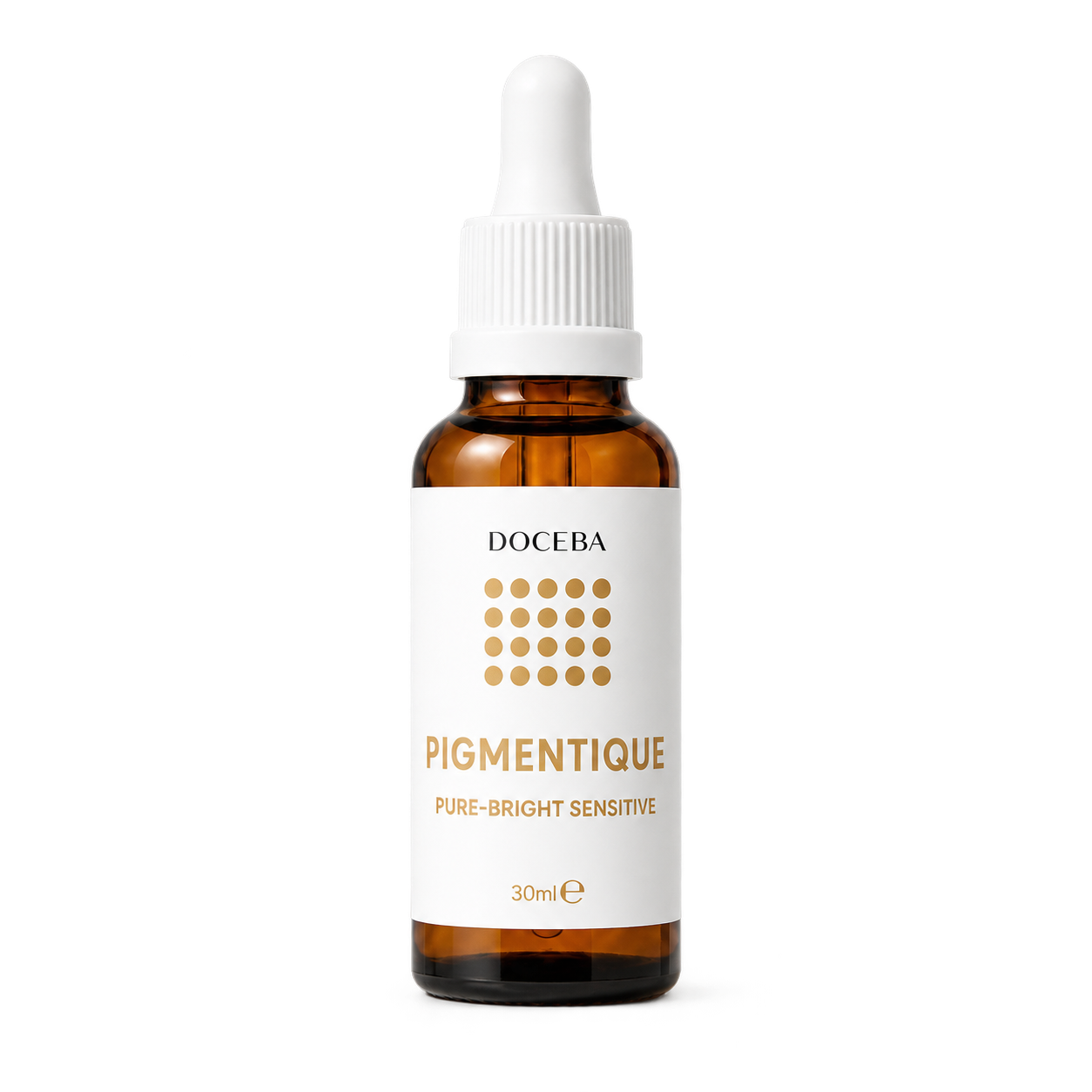
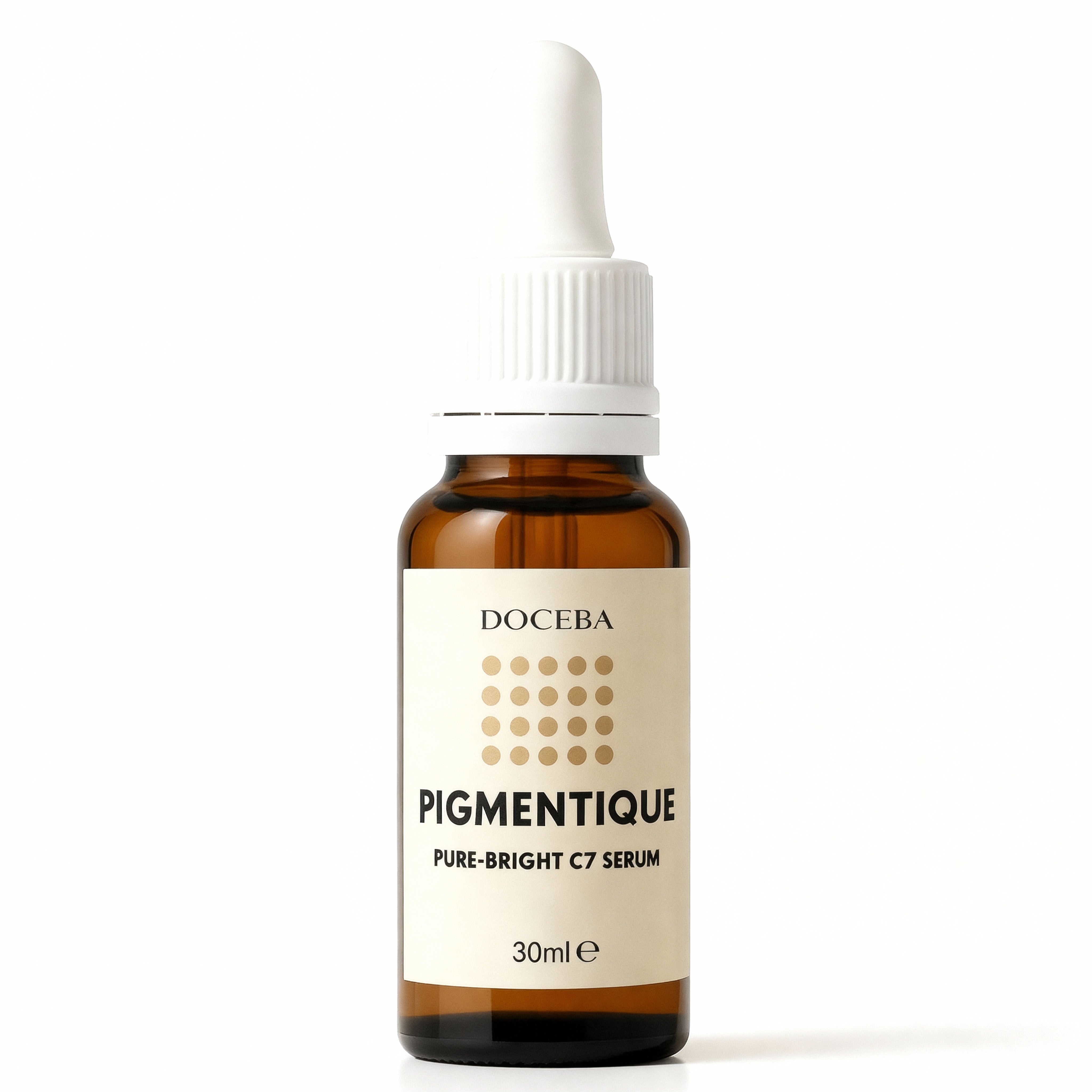
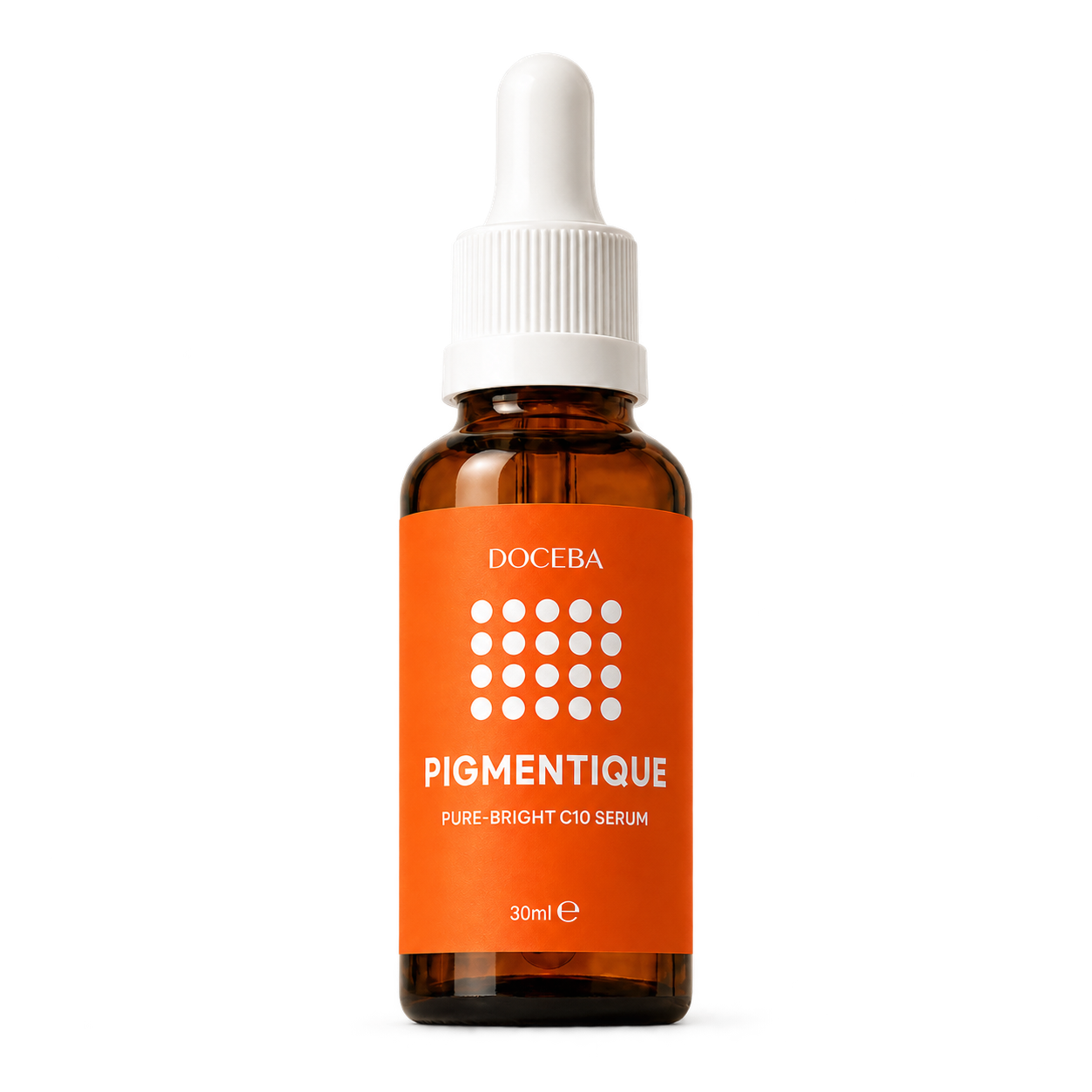
Now our own products, straight up: there is no niacinamide in our Pure Bright serums, and right now we do not sell a product that lists niacinamide as an active. Our serums sit on the vitamin C side. According to the ingredient list they contain 3-O-Ethyl Ascorbic Acid, a vitamin C derivative, plus ferulic acid, hyaluronic acid and allantoin.
If you want niacinamide in your routine, use one from another brand at night and our serum in the morning. Why we chose this form of vitamin C is explained in vitamin C for dark spots.
[S1][S7][P2]Why neither does much without sunscreen
Sun darkens marks again, no matter what you apply at night. DermNet calls daily sunscreen important to limit the darkening caused by UV. For darker skin tones the AAD recommends a tinted sunscreen with iron oxide, broad-spectrum protection and SPF 30 or higher. Iron oxide, the AAD says, also protects against visible light, which causes dark spots too.
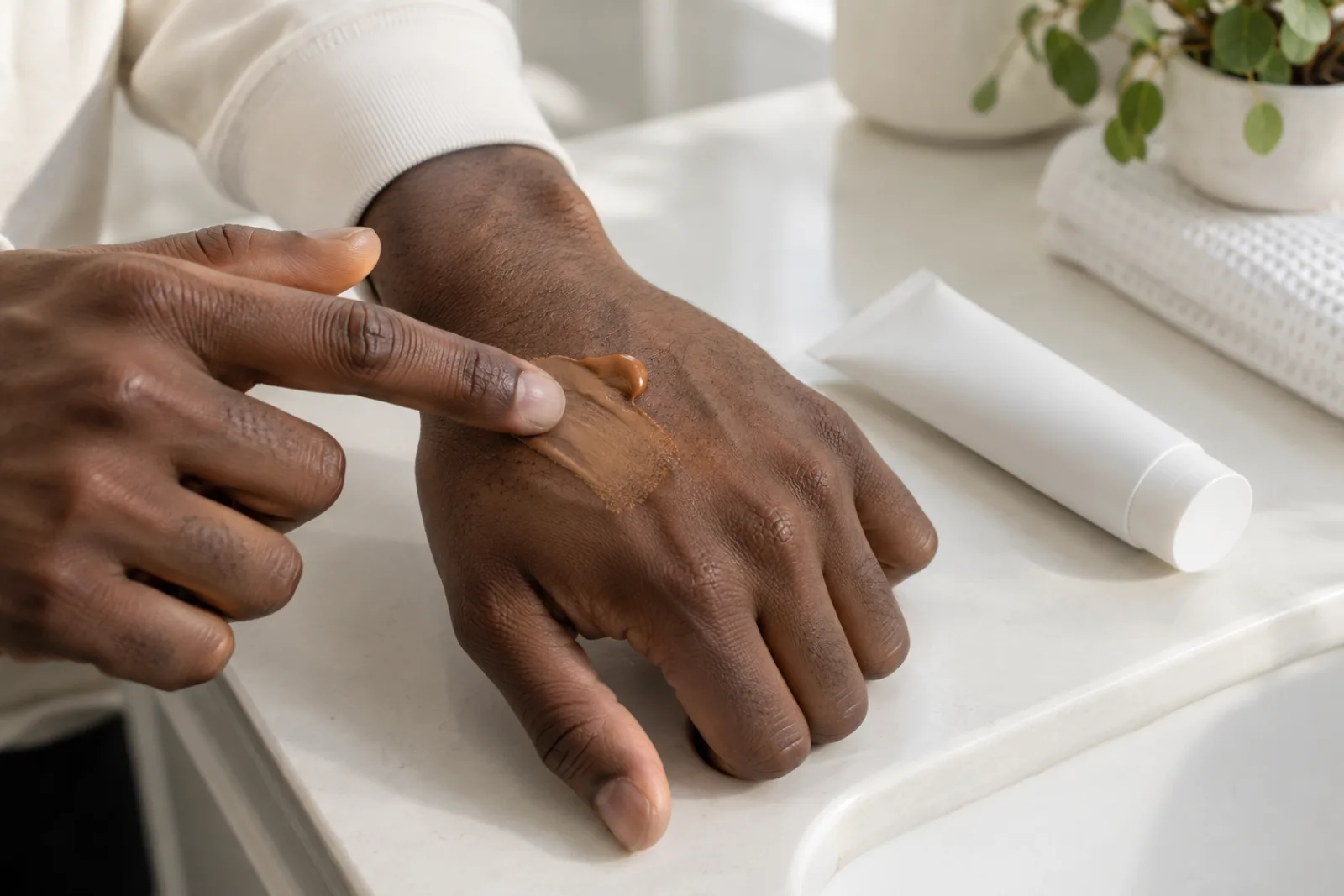
The AAD says to look for iron oxide in the ingredient list. Pick a shade that blends into your skin.
Illustration
We are working on a sunscreen of our own. If you are buying one now, pick a tinted one. More in sunscreen for hyperpigmentation on dark skin.
And think in months. The AAD says a spot a few shades darker than your skin usually fades within 6 to 12 months. Deeper discolouration can take years.
[S1][S8]Niacinamide or vitamin C for melasma?
Melasma is its own kind of facial hyperpigmentation. Whether your patches are melasma is a question for a dermatologist. You cannot reliably tell on your own.
For niacinamide there is one small comparison trial. 27 people with melasma applied a 4% niacinamide cream to one side of the face and a 4% hydroquinone cream to the other for eight weeks, with sunscreen throughout. Both sides got lighter. The researchers rated the improvement good to excellent in 44% with niacinamide and 55% with hydroquinone. Side effects showed up in 18% versus 29%. We do not sell a hydroquinone product.
For vitamin C, Al-Niaimi and Chiang mention a study in which a 25% vitamin C formula significantly reduced melasma pigmentation after 16 weeks.
From our range, the Pure Bright C7 Serum fits here as a cosmetic vitamin C step. Our Mela Bright is still in development. If you do not see it linked here yet, it is not online yet.
[S2][S4]From the lab
"Niacinamide vs. vitamin C" sounds like you have to pick a team. After everything we read for this article, you do not. They act at different points, and nothing we found speaks against using both. For the Pure Bright serums we went with vitamin C, and we would rather tell you plainly that there is no niacinamide in them.
A shelf product stays the same in every phase. Your skin does not. Because Anita formulates in our own lab in Bielefeld, we can adjust a product when your skin needs something different. That is what Skin Protocol is for.
Your next step
Both routes are fine. Pick the one that fits you today.
- Pick one of the two ingredients and patch-test it. If it stings, stop.
- If your skin stays calm, you can add the second: vitamin C in the morning, niacinamide at night.
- Tinted sunscreen every morning. One photo a month in the same light.
Matching products from our lab:
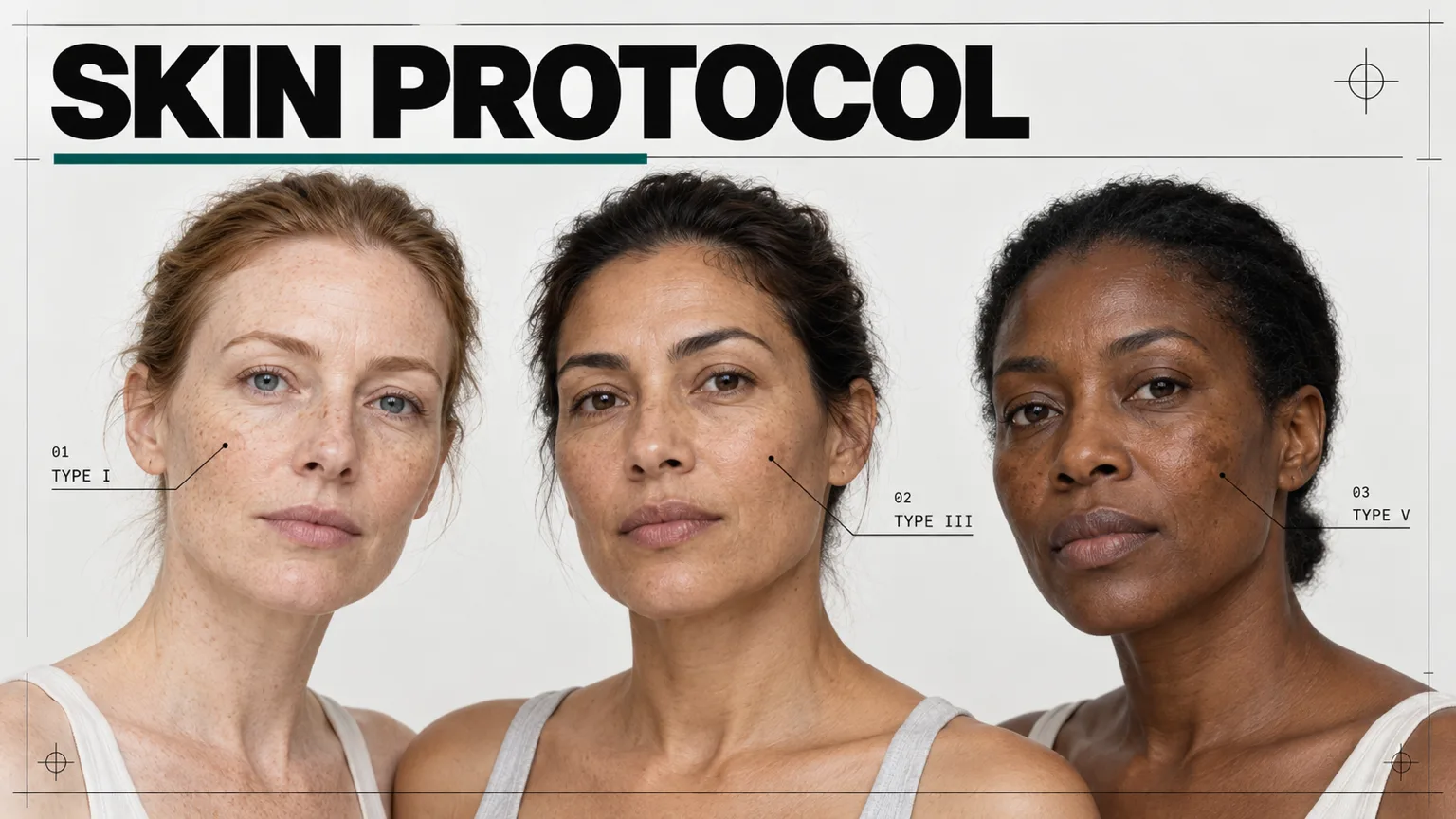
Skin Protocol: a plan for your skin and a team that adjusts it
You get a plan built around your skin and what you've already tried. We check in regularly and adjust products from Anita's lab when your skin needs something different. In English or German.
It starts with a free 20-minute call. We ring you and listen to your skin story, including the list of serums you have already been through.
Book your free skin callCosmetic advice, not a diagnosis. If you think you have a skin condition, see a doctor first.
Questions you might still have
Is niacinamide or vitamin C better for dark spots?
There is no proof either way. Vitamin C slows melanin production and niacinamide slows its handover to skin cells. We found no trial comparing the two directly. Go with the one your skin tolerates without stinging. [S2][S3]
Can I use niacinamide and vitamin C together?
Yes. A 2006 study used niacinamide and a vitamin C derivative in the same gel. If you are unsure, split them: vitamin C in the morning, niacinamide at night. [S9]
Does niacinamide work for dark spots?
In a study of 18 women, a moisturiser with 5% niacinamide measurably reduced hyperpigmentation after four weeks compared with the same moisturiser without it. The participants were Japanese. We know of no separate study on very dark skin. [S3]
Which goes first, niacinamide or vitamin C serum?
We did not find an evidence-based order. In practice, put the thinner product on first and the thicker one after. Or keep them apart, one in the morning and one at night.
Does niacinamide lighten dark skin?
It is not a bleach. In the lab niacinamide did not stop pigment production. It only slowed the handover to skin cells. A 2021 review describes the effect as reversible. [S3][S5]
Sources
- [S1] AAD: How to fade dark spots in darker skin tones ↗
- [S2] Al-Niaimi F, Chiang NYZ: Topical Vitamin C and the Skin: Mechanisms of Action and Clinical Applications. J Clin Aesthet Dermatol 2017;10(7):14–17 ↗
- [S3] Hakozaki T et al.: The effect of niacinamide on reducing cutaneous pigmentation and suppression of melanosome transfer. Br J Dermatol 2002;147(1):20–31 ↗
- [S4] Navarrete-Solís J et al.: A Double-Blind, Randomized Clinical Trial of Niacinamide 4% versus Hydroquinone 4% in the Treatment of Melasma. Dermatol Res Pract 2011;2011:379173 ↗
- [S5] Boo YC: Mechanistic Basis and Clinical Evidence for the Applications of Nicotinamide (Niacinamide) to Control Skin Aging and Pigmentation. Antioxidants 2021;10(8):1315 ↗
- [S6] Davis EC, Callender VD: Postinflammatory Hyperpigmentation: A Review of the Epidemiology, Clinical Features, and Treatment Options in Skin of Color. J Clin Aesthet Dermatol 2010;3(7):20–31 ↗
- [S7] DermNet: Nicotinamide ↗
- [S8] DermNet: Postinflammatory hyperpigmentation ↗
- [S9] Hakozaki T et al.: Ultrasound enhanced skin-lightening effect of vitamin C and niacinamide. Skin Res Technol 2006;12(2):105–113 ↗
- [P2] DOCEBA: Pigmentique Pure Bright C7 Serum ↗
- [P3] DOCEBA: Pigmentique Pure Bright C10 Serum ↗
- [P4] DOCEBA: Pigmentique Pure Bright Sensitive Serum ↗
General skincare information, not a diagnosis or an individual treatment plan.
Your bag
Review your items before continuing.
Your bag is empty.