
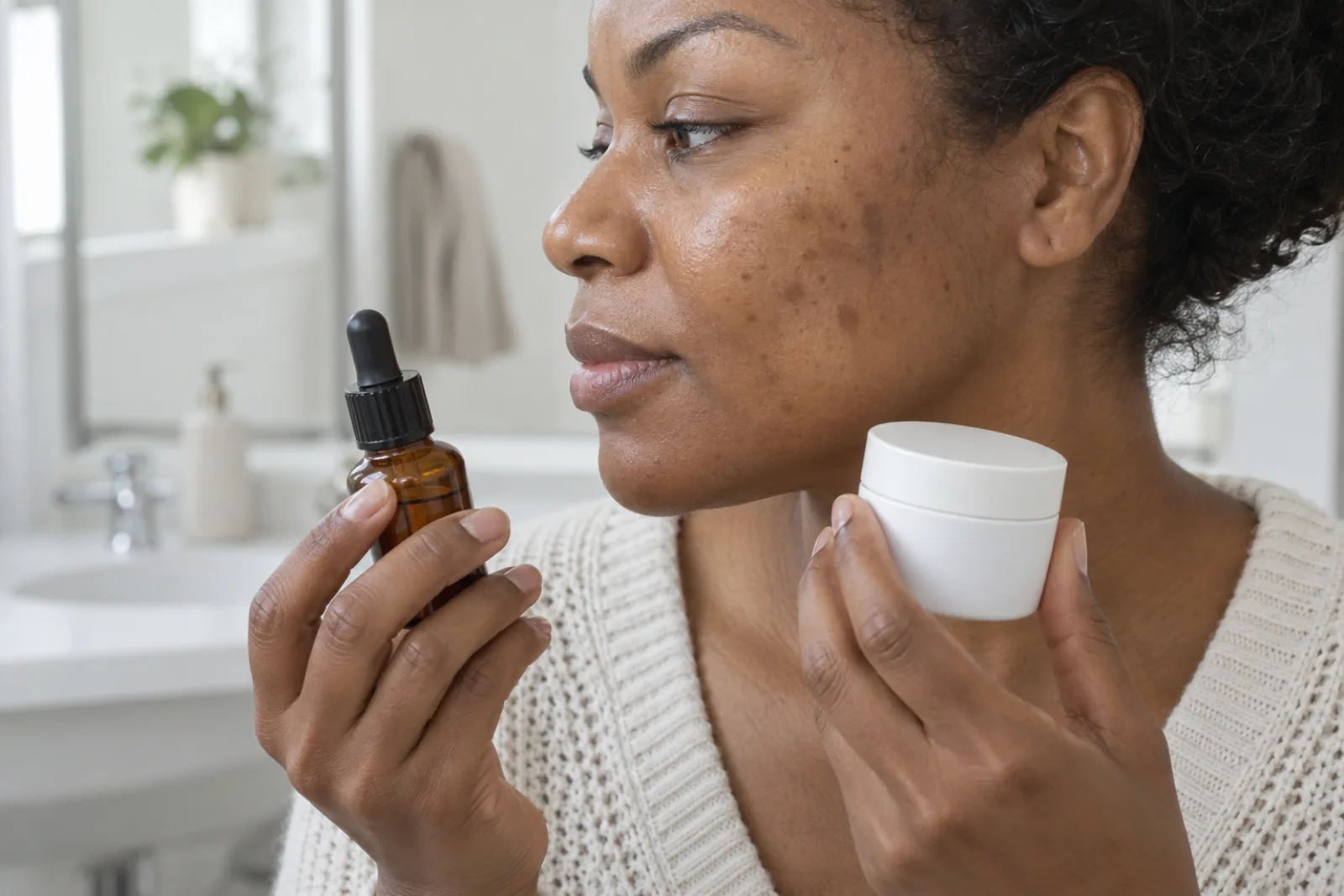
What makes a good dark spot corrector for dark skin?
You won't find a ranking here. We make skincare ourselves, so we don't score other brands. What you get is a set of checks you can run on any product, ours included.
- Active. The pack names an ingredient with evidence for fading dark spots.
- Format. Serum or cream depends on where you apply it and what else you use.
- Packaging. Vitamin C breaks down in light. The bottle should keep light out.
- No bleaching agents. Hydroquinone, steroids and mercury have no place in a cosmetic cream.
- Label. A full ingredient list and a manufacturer's address are required by law. If they're missing, leave it on the shelf.
Dark skin adds a sixth check: the product has to be gentle. The section on dark skin below explains why.
[S1][S3]Which ingredients fade dark spots?
The American Academy of Dermatology (AAD) lists five ingredients to look for in products you can buy without a prescription: azelaic acid, glycolic acid, kojic acid, retinoids such as retinol, and vitamin C. DermNet, the New Zealand dermatology reference, also names niacinamide. If none of these appears on the pack, you're paying for a moisturiser with a big promise.
Vitamin C slows tyrosinase, the enzyme your skin needs to make melanin. Melanin is the pigment that makes a spot dark. Pure ascorbic acid is unstable, though. A 2017 review puts good products in the 10 to 20 percent range. Going above 20 percent adds no benefit according to that review, and it may irritate. A higher number on the box is no advantage past that point.
That's why vitamin C derivatives exist. One of them is 3-O-ethyl ascorbic acid, where an ethyl group shields the molecule from oxidation. It's the form in our face serums. Our guide to vitamin C for dark spots covers the ingredient in depth. Torn between two actives? See niacinamide vs. vitamin C.
To be straight with you: we don't make a product with azelaic acid, retinol, tranexamic acid or hydroquinone. If a doctor put you on one of those and your skin tolerates it, keep going. Our products cover the vitamin C step.
[S1][S2][S5][S7]Is a serum or a cream better for dark spots?
Neither wins by default. The AAD list names ingredients and says nothing about formats. The format decides how the product fits into your day.
A serum is thin and goes on straight after cleansing. That's where the AAD places treatments, with moisturiser on top. A cream carries oils and butters along with the active. That helps on areas that run dry anyway, like knees and elbows.
For the body we make two products of their own. The Pure Bright Body Spot Cream is meant for single dark patches, and the Pure Bright C7 Body Serum is a spray for larger areas. The face serum is made for the face.
[S1][S9][P4][P5]In shortCheck the active first, then pick the format that suits the area and your routine.
| — | Serum | Cream |
|---|---|---|
| Texture | thin, watery | richer, with oils and butters |
| Place in the routine | straight after cleansing, under moisturiser | after a serum, or as the only step |
| Handy for | the face, also under sunscreen | dry areas and the body |
| At DOCEBA | C7 and C10 Serum (face), C7 Body Serum | Body Spot Cream (body) |
How do I read the ingredient list (INCI)?
INCI is the standard naming system for cosmetic ingredients. The EU Cosmetics Regulation sets the format of the list. Three rules are enough to read it:
- The list sits under the heading “Ingredients”. It may be printed on the outer box only, so read the box before you bin it.
- Ingredients appear in descending order of weight. Whatever comes first makes up the largest share.
- Anything below 1 percent may follow at the end in any order.
 Ingredientsfirst: the mostactive1 %below: any order
Schematic. Bar lengths are examples and don't describe a real product.
Find the ingredient from the front of the pack in that list. Near the top means a meaningful amount. At the very end, behind preservatives and fragrance, means very little. The list won't give you the exact percentage. Reputable brands often state it for their actives.
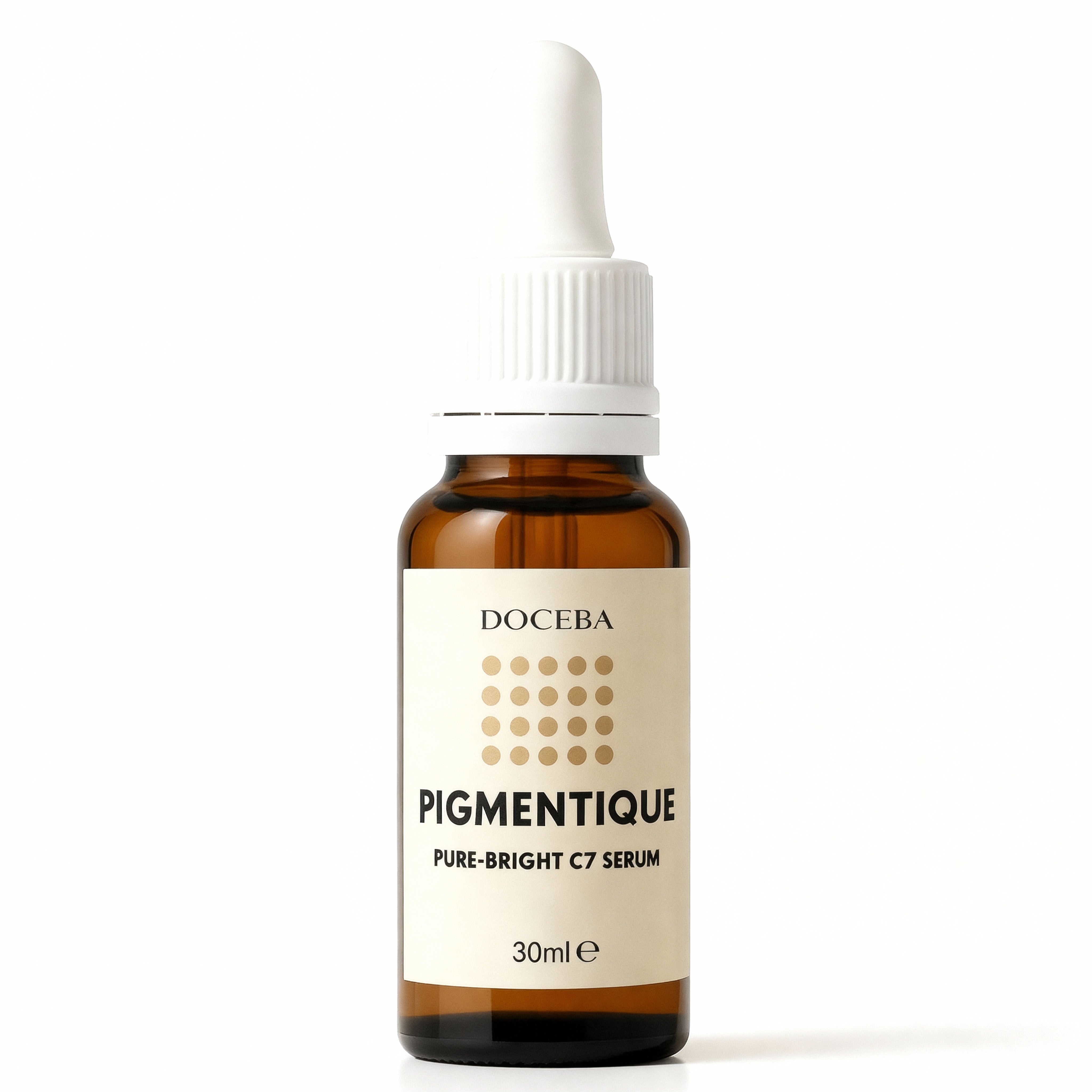
An example from our lab: the list for the Pure Bright C7 Serum starts with Aqua, Propanediol, 3-O-Ethyl Ascorbic Acid. The vitamin C sits in third place out of eight ingredients.
The container must also show the name and address of the responsible company and a batch number. A product with no address or no ingredient list can't legally be sold like that in the EU.
[S3][P1]What packaging should a vitamin C serum come in?
One that blocks light. Pure ascorbic acid is unstable, especially in light. It oxidises to dehydroascorbic acid, and the serum turns yellow. That's how a paper in the Indian Dermatology Online Journal describes it.
In the shop, dark or opaque packaging is a good sign for vitamin C. At home, a cupboard beats the windowsill. Remember what the serum looked like on day one. If it grows clearly darker over time, the vitamin C has changed.
[S6]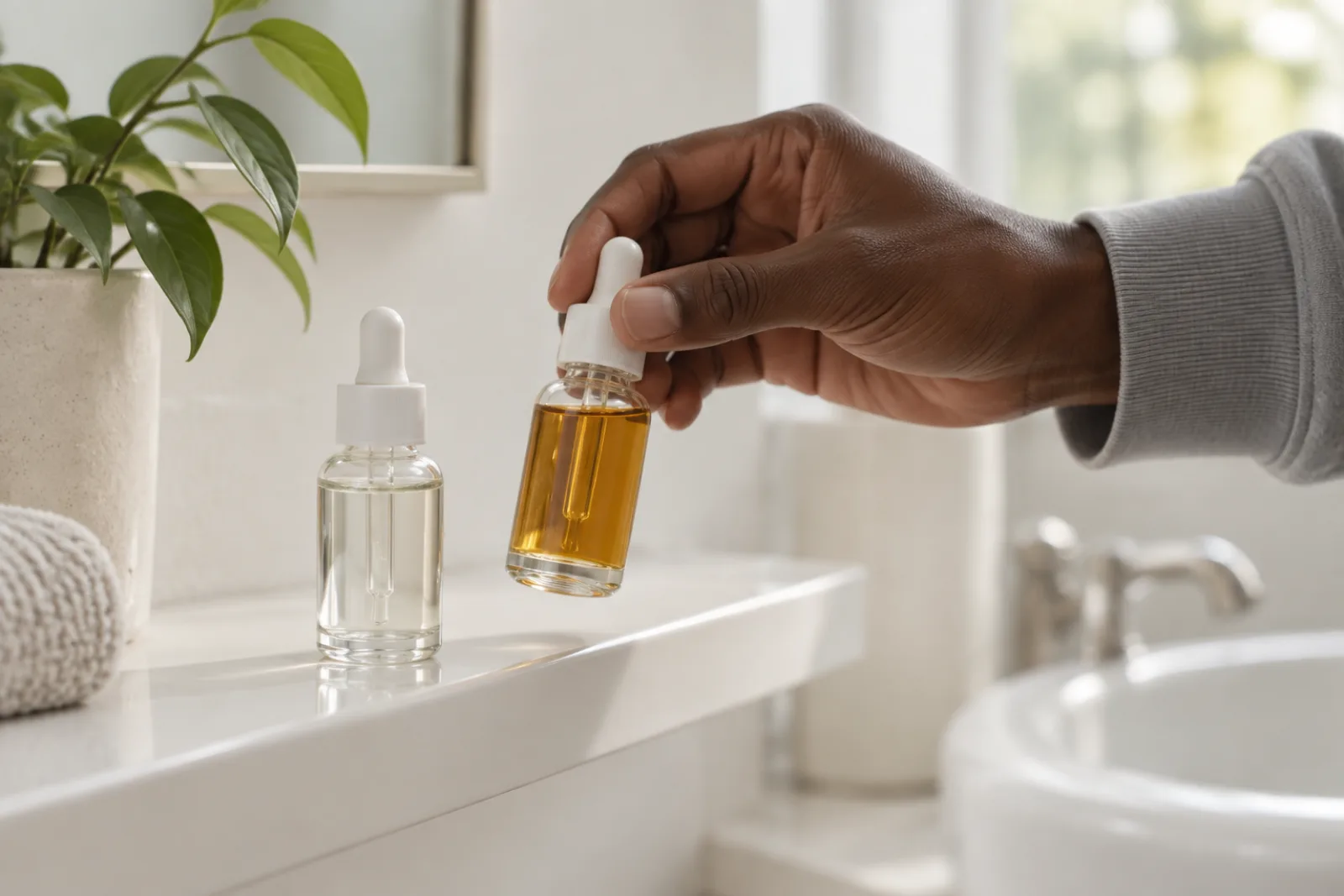
Light oxidises pure ascorbic acid and the serum turns yellow. Clear glass offers no protection.
Illustration
What should a dark spot corrector not contain?
Three substances are banned in cosmetic creams in the EU and still turn up in lightening creams: hydroquinone, steroids (glucocorticoids) and mercury.
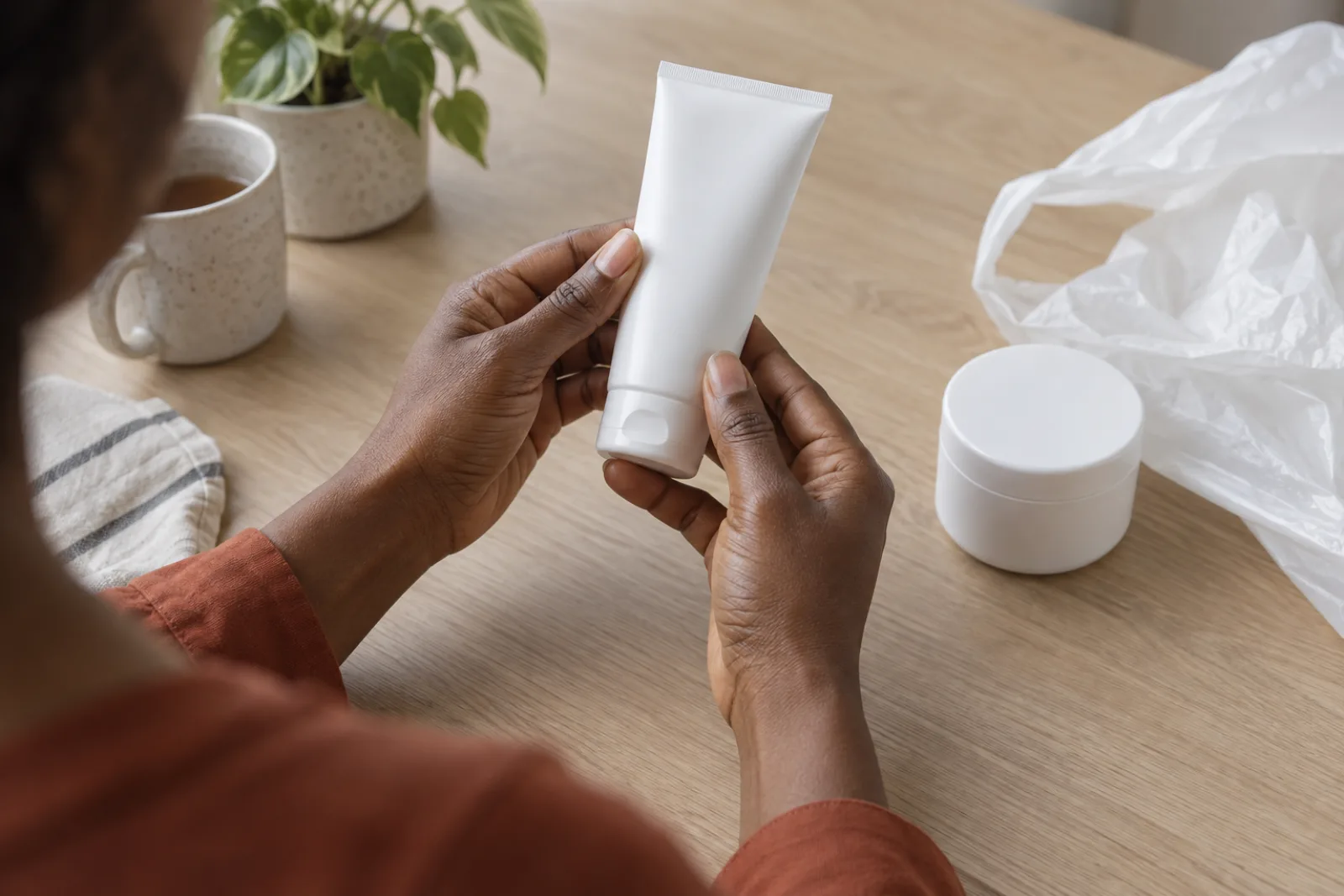
Without an ingredient list and an address, you can't know what you're putting on your skin.
Illustration
Bavaria's food and health safety authority, the LGL, tested 23 skin lightening products in 2023 and objected to 57 percent of them. It found hydroquinone at up to 2.9 percent. In 2021 and 2022, six samples contained clobetasol propionate, a potent steroid. The samples came mostly from shops that mainly sell goods from outside the EU. Every sample without a problem came from regular retail.
The AAD reports the same pattern. Researchers found steroids and mercury in imported products, and neither was listed on the label. With long-term use, steroids can leave skin thin and fragile or permanently discoloured.
Amount matters for permitted ingredients too. Kojic acid is on the AAD list. The LGL still objected to products with up to 3.1 percent, because the EU's scientific committee rates 1 percent as the safe maximum.
The simple rule: no ingredient list and no manufacturer's address means no purchase. The full story is in Skin bleaching creams and hydroquinone: the risks.
[S3][S4][S1]What matters most on dark skin?
Irritation. DermNet notes that dark marks after inflammation are more common in darker skin, and that the colour tends to be more intense and to last longer. A product that burns can cause the very thing you're trying to fade. The AAD recommends gentle products, often labelled “fragrance-free” or “for sensitive skin”. Its advice on burning or stinging is blunt: stop using the product.
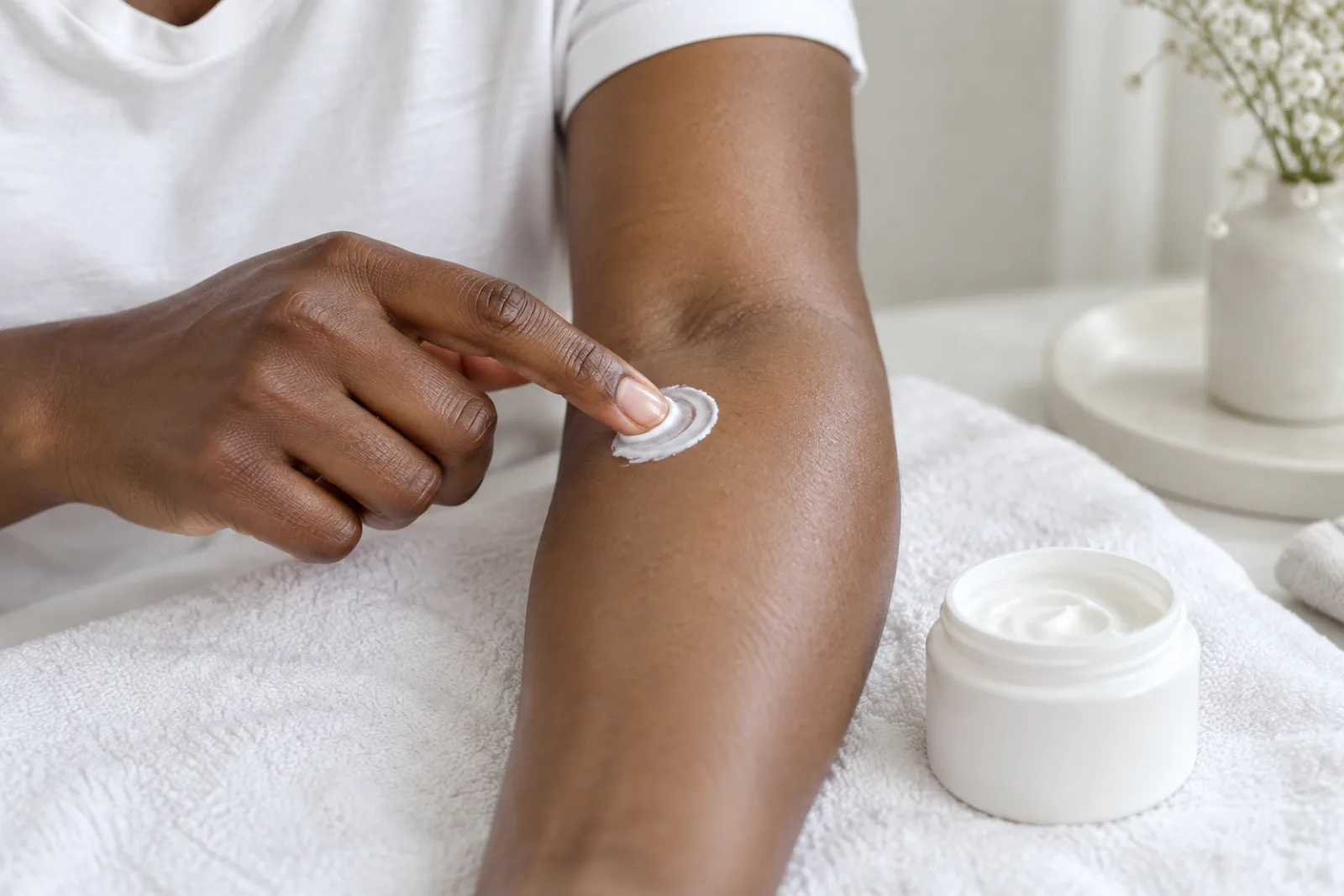
Twice a day, seven to ten days, always the same spot.
Illustration
Patch-test anything new before it touches your face. The AAD describes it like this:
- Apply the product to a spot the size of a quarter, for example on the inside of your arm.
- Repeat twice a day for seven to ten days.
- If your skin stays calm, go ahead. If it turns red, itches or swells, wash the product off and drop it.
Bring in one new product at a time. The AAD warns that using too many products may irritate the skin. To see how the steps fit together, read the skincare routine for hyperpigmentation.
No dark spot product works without sunscreen. For darker skin tones the AAD recommends a tinted one with iron oxide, because it also protects against visible light, at SPF 30 or higher. We're working on our own sunscreen right now. If you're buying one today, pick a tinted one.
[S2][S1][S8][S9]One product or a whole routine?
A dark spot serum never works alone. Cleansing comes before it, moisturiser and sunscreen come after. If you have none of that yet, a set is the shorter route. Our Pure Brightening Set holds four products: cleanser, Booster Serum, Pure Bright C7 Serum and Barrier Lipid Shield Cream. It has exactly one dark spot step, the C7 Serum.
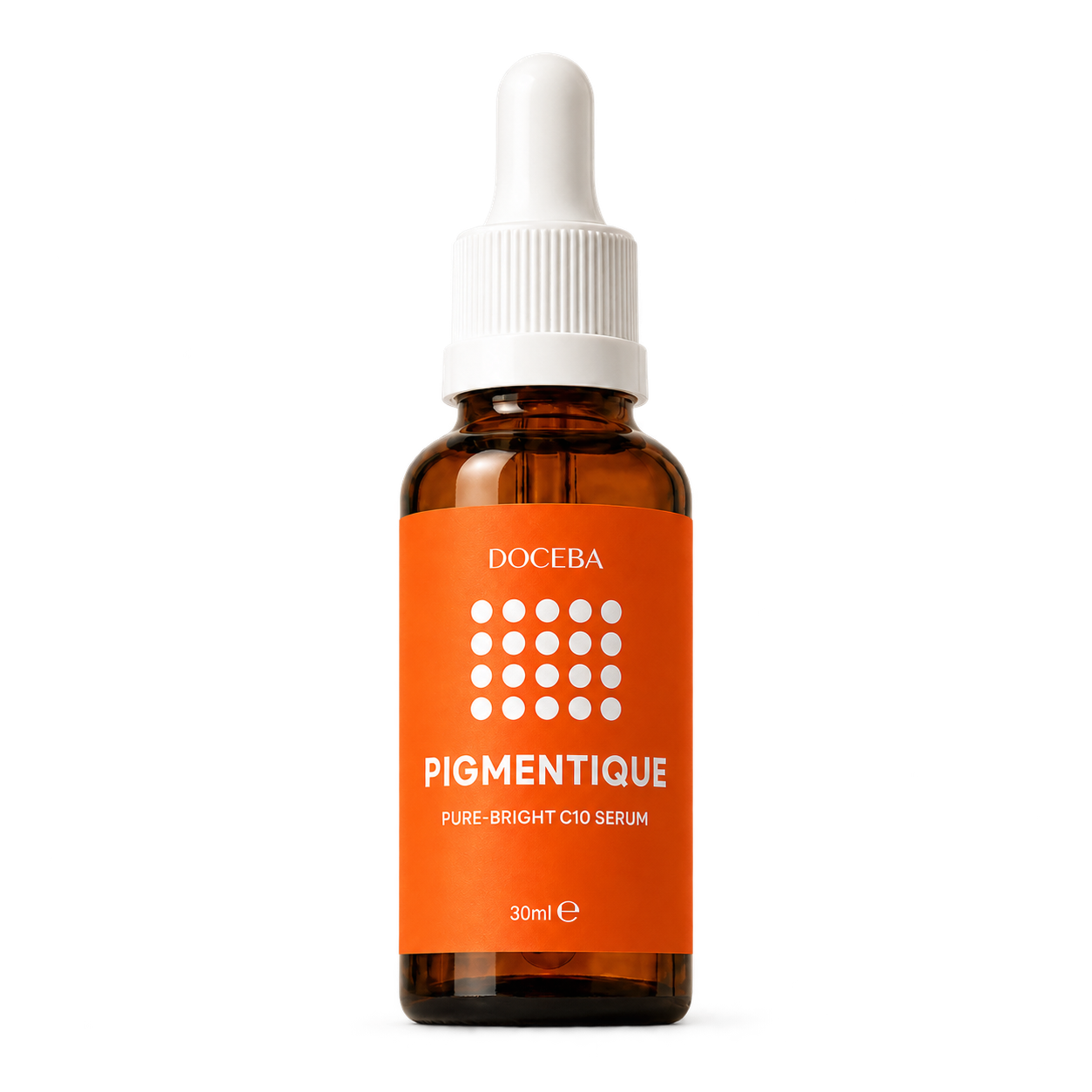
If you already own a cleanser and a moisturiser your skin likes, the serum on its own will do. The C7 is the starting point. The C10 contains 10 percent vitamin C in the same form and suits skin that already knows vitamin C.
[P3][P1][P2]How long does a dark spot corrector take to work?
Think in months. The AAD gives a rough guide: a spot a few shades darker than your skin usually fades within 6 to 12 months once the cause has stopped. Colour that sits deeper in the skin can take years. Treatment can speed up fading.
Be wary of any product that promises results in days. A monthly photo in the same light tells you more than the mirror does. If nothing changes over a longer stretch, or new spots keep appearing, see a dermatologist. According to the AAD, some spots need a prescription-strength treatment.
[S1]From the lab
Our face serums have eight ingredients. We keep the list short so you can read it, and so there's less in the bottle that could irritate. There's no fragrance on it.
A product off the shelf stays the same in every phase, and your skin doesn't. Because Anita formulates in our own lab in Bielefeld, we can adjust a product when your skin needs something different. That's what Skin Protocol is for.
[P1][P2]Your next step
Both routes are fine. Pick the one that fits you today.
- Turn the pack over: check the active, the ingredient list and the manufacturer's address.
- Patch-test the new product for seven to ten days.
- Tinted sunscreen on top every morning. If nothing changes over a longer stretch, see a dermatologist.
Matching products from our lab:

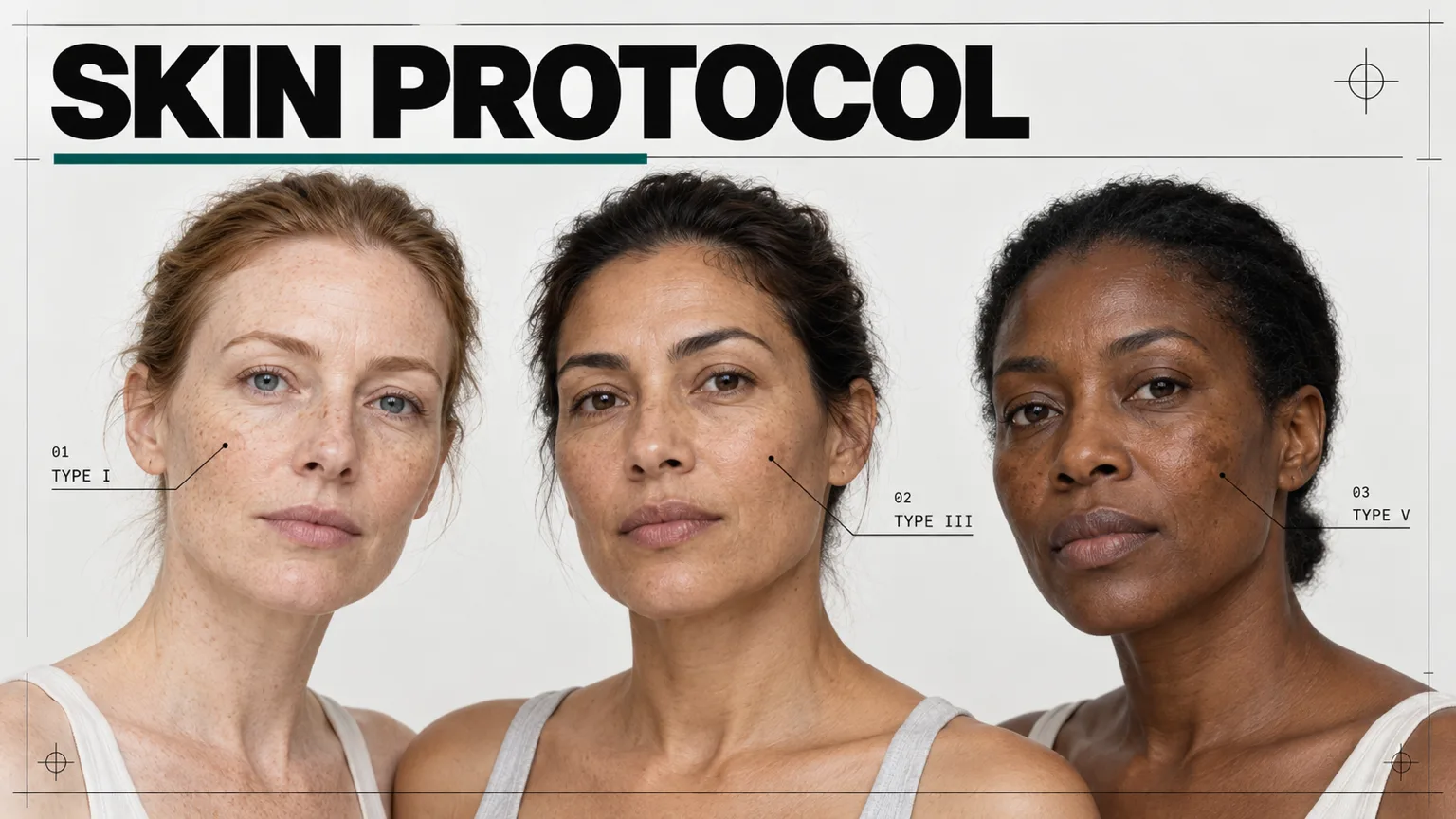
Skin Protocol: a plan for your skin and a team that adjusts it
You get a plan built around your skin and what you've already tried. We check in regularly and adjust products from Anita's lab when your skin needs something different. In English or German.
It starts with a free 20-minute call. We ring you and listen to your skin story, including the creams and serums you've already been through.
Book your free skin callCosmetic advice, not a diagnosis. If you think you have a skin condition, see a doctor first.
Questions you might still have
What is the best dark spot corrector for black skin?
We don't rank products or score other brands. Look for a proven active such as vitamin C, azelaic acid, kojic acid, glycolic acid or a retinoid, a full ingredient list, and a gentle formula. Then wear sunscreen every day. [S1]
Do dark spot correctors work on dark skin?
They can. The AAD says products with azelaic acid, glycolic acid, kojic acid, retinoids or vitamin C can fade existing dark spots in darker skin tones. They need daily sun protection alongside, and they must not irritate. [S1]
Is a serum better than a hyperpigmentation cream for dark skin?
No. The active matters more than the format. A serum suits the face because it sits under moisturiser and sunscreen straight after cleansing. A cream is handy on dry areas of the body. [S1][S9]
Is hydroquinone legal in Germany and the EU?
Hydroquinone is banned in cosmetic creams and lotions under the EU Cosmetics Regulation. Bavaria's LGL still finds it in skin lightening products. Whether a medicine is an option for you is a question for a dermatologist. [S4]
Can I use my face serum on my body?
Our face serums are made for the face. For the body we make the Pure Bright Body Spot Cream for single patches and the Pure Bright C7 Body Serum for larger areas. [P4][P5]
How long do I need to use a dark spot corrector?
Months. According to the AAD, a spot a few shades darker than your skin usually fades within 6 to 12 months once the cause has stopped. Treatment can speed that up. [S1]
Sources
- [S1] AAD: How to fade dark spots in darker skin tones ↗
- [S2] DermNet: Postinflammatory hyperpigmentation ↗
- [S3] Verordnung (EG) Nr. 1223/2009 über kosmetische Mittel, konsolidierte Fassung vom 1.9.2025 (Art. 19, Anhang II Nr. 221 und 300) ↗
- [S4] LGL Bayern: Hautbleichmittel – weiterhin ein Risiko? (Untersuchungen 2023) ↗
- [S5] Al-Niaimi F, Chiang NYZ: Topical Vitamin C and the Skin: Mechanisms of Action and Clinical Applications. J Clin Aesthet Dermatol 2017;10(7):14–17 ↗
- [S6] Telang PS: Vitamin C in dermatology. Indian Dermatol Online J 2013;4(2):143–146 ↗
- [S7] Iliopoulos F et al.: 3-O-ethyl-l-ascorbic acid: characterisation and investigation of single solvent systems for delivery to the skin. Int J Pharm X 2019;1:100025 ↗
- [S8] AAD: How to test skin care products ↗
- [S9] AAD: Should I apply my skin care products in a certain order? ↗
- [P1] DOCEBA: Pigmentique Pure Bright C7 Serum ↗
- [P2] DOCEBA: Pigmentique Pure Bright C10 Serum ↗
- [P3] DOCEBA: Pure Brightening Set ↗
- [P4] DOCEBA: Pure Bright Body Spot Cream ↗
- [P5] DOCEBA: Pure Bright C7 Body Serum ↗
General skincare information, not a diagnosis or an individual treatment plan.
Your bag
Review your items before continuing.
Your bag is empty.