
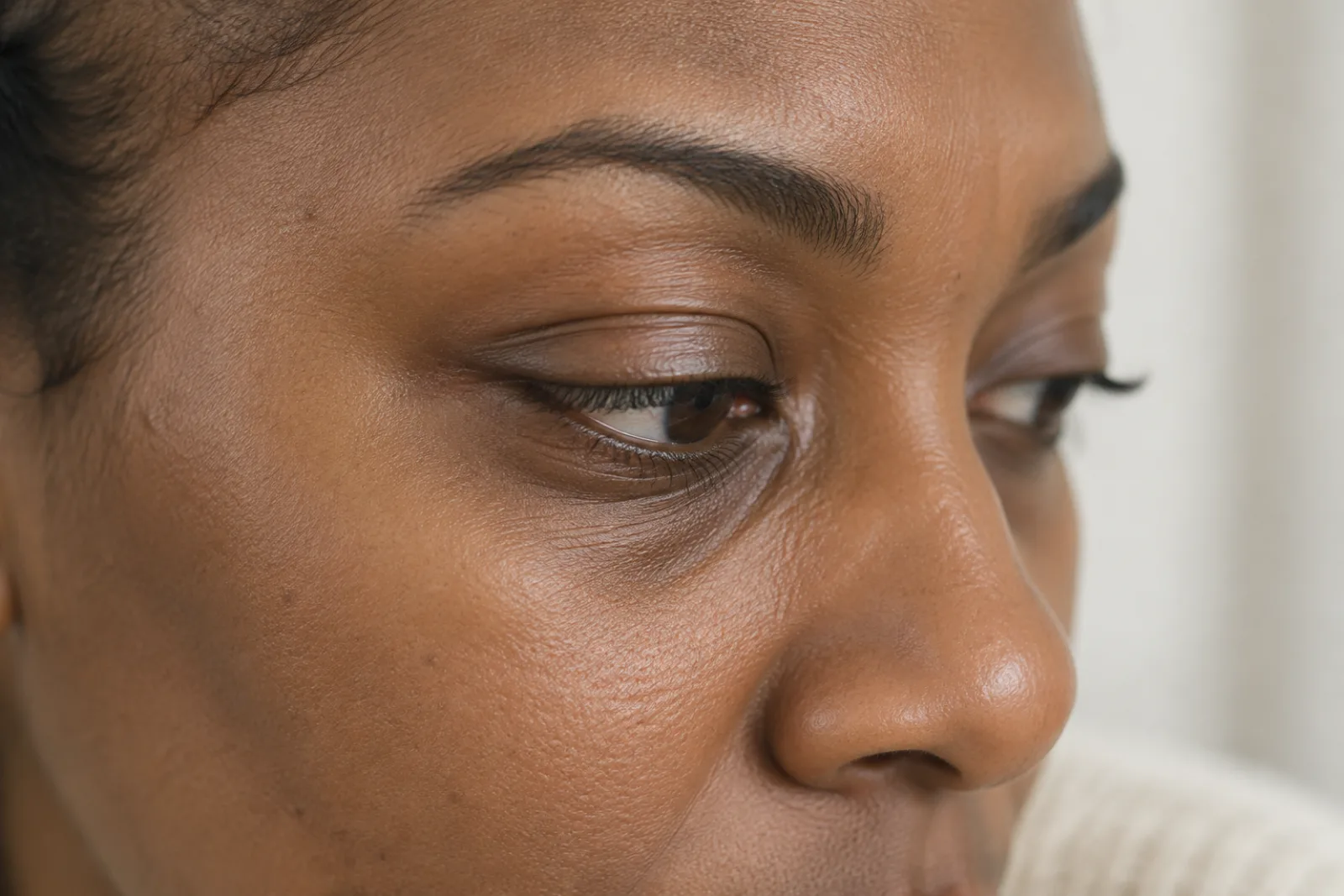
You sleep enough and still look like you were up all night? On dark skin that is a familiar picture. The Cleveland Clinic names people with darker skin tones as a group where dark circles are more common, and describes the colour as blue, purple, brown or black depending on your skin tone.
This article sorts it out. You will learn which three causes exist, how to tell them apart and why rubbing can make things worse. And we are honest about where our products stop: for the eye area we do not recommend any of our serums.
Why do I have dark circles even though I sleep enough?
A review in the Journal of Cutaneous and Aesthetic Surgery calls dark circles a multifactorial challenge. Daily life mostly comes down to these: pigment, plus shadow, plus vessels showing through. Often several act together. That explains why a tip works for one friend and not for you: if shadow is your main cause, a lightening cream does little, and if pigment is, a cooling pad does little too. Good help therefore starts with the question of the cause.
With pigment, the colour sits in the skin. Melanin, the skin's own pigment, is increased there. With shadow, the skin is not darker at all, but the shape of the eye area casts a shadow. With visible vessels, the skin on the lower lid is so thin that the network of vessels underneath shows.
The Cleveland Clinic also lists lack of sleep, genetics, allergies, eczema, sun and dehydration. More sleep is always worth it, but it does not explain every dark circle. The clinic gives about seven hours a night as a guide.
[S1][S2]How do I know it is pigment?
The review names sun, hormonal changes, melasma and skin inflammation among the triggers. Melasma means larger darker patches, mostly triggered by sun, pregnancy or medicines such as the pill. Whether you have it can only be decided by a dermatologist.
Eczema and contact allergies play in as well. According to the review, the inflammation they cause can lead to pigment. That fits what DermNet writes about marks after inflammation: inflammation tells the pigment cells to make more melanin. On dark skin this is more common, the colour is stronger and lasts longer, says DermNet. Specialists call it post-inflammatory hyperpigmentation, PIH for short.
From the outside, pigment cannot be told reliably from the other causes, because the causes often mix. The review identifies the cause by examining the eye area, not through a self-test. Your look in the mirror is a hint, nothing more. The Cleveland Clinic also advises asking a doctor if there is a dark circle or swelling under just one eye, because something else may be behind it. Sun strengthens pigment, so protection from it belongs to every form.
For more on colour that is not even, read our article on uneven skin tone on dark skin. If your face looks darker overall than your body, face darker than body helps.
[S1][S2][S3]Could it just be shadows and vessels?
With age, skin and fat under the eye get thinner and the bone underneath shows. Hollows form, called the tear trough. The review describes that such hollows cast shadows, that light from above makes them stronger and direct light can mask them. A spot that looks dark by the window and light in a flash photo can point to shadow. It is not certain.
Vessels showing through come from the thin skin on the lower lid. According to the review, the network of vessels shows there. Eczema and contact dermatitis can widen the vessels further, writes the Cleveland Clinic..
Fluid belongs to the shadows too. The review writes that swelling under the eye can be stronger after salty food or in the morning. That is a reason to compare the area at different times of day in the same light. If it looks worse in the morning and better at noon, fluid probably plays a part. Write that down and bring it along if you go to a practice. The doctor can then ask and examine more precisely.
[S1][S2]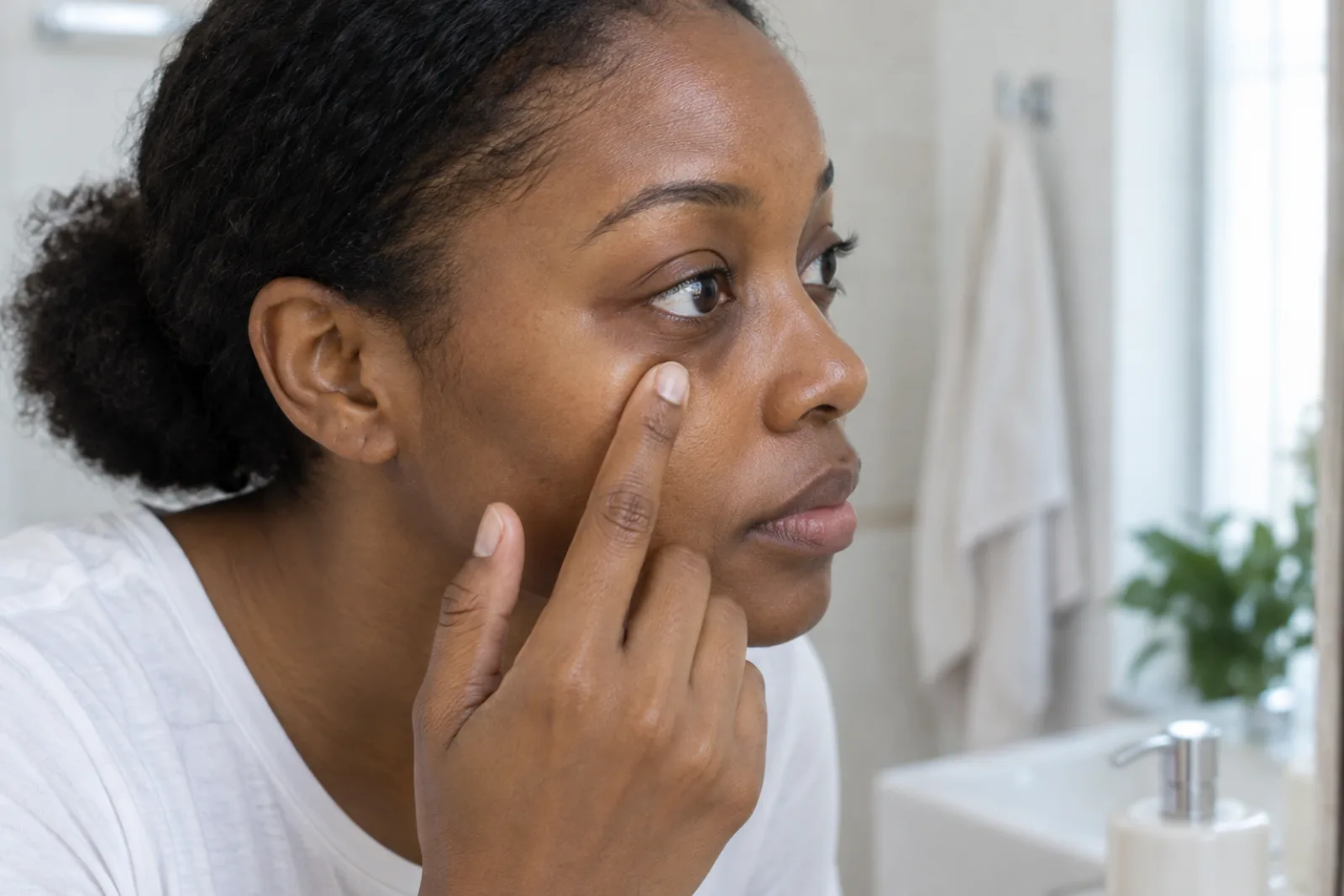
- 01This is where a practice checks the cause
What the cause looks like is in the end judged by a dermatology practice.
Illustration
Can rubbing make dark circles worse?
Quite possibly. The Cleveland Clinic writes that rubbing and scratching your eyes can make the skin underneath swell and vessels break. On top comes what you know from PIH: an irritated spot can turn into a mark on dark skin. If you wipe over the lower lid every day because of hay fever, tiredness or smudged mascara, you irritate skin that is thin anyway.
What you can do: do not wipe make-up off dry, use a soft damp cloth, pat instead of rub, and talk to a doctor about allergies if your eyes itch all the time. Start with the friction before you buy anything new. New products irritate the skin around the eye quickly, and any irritation can leave colour behind on dark skin. That is why we would rather not recommend anything here that we cannot document.
Some medicines can strengthen pigment under the eye. The review names the pill and certain eye drops, among others. Never stop such a thing on your own. Talk to the practice that prescribed it.
[S1][S2][S3]
- 01Rubbing: swelling, broken vessels
Rubbing and scratching can make the skin under the eye swell.
Illustration
What helps with dark circles, and what does not?
Honestly up front: for the eye area we have no product whose use there we have documented. Our serums and creams are meant for the rest of the face, not the lower lid. So we do not recommend anything from our range for this spot.
What the sources name is surprisingly unspectacular. The Cleveland Clinic advises sunscreen and sunglasses, because sun stirs up melanin. We are working on our own sunscreen. If you buy one now, pick a tinted one, as the AAD also advises for dark spots. Cold compresses can calm swelling and widened vessels, and a raised head while you sleep can reduce fluid in the face.
Lightening options exist in a practice too. The Cleveland Clinic lists creams with vitamin C and bleaching agents such as hydroquinone, chemical peels, lasers, fillers and surgery. Cosmetic creams may not contain hydroquinone in the EU. And the review warns that peels carry a higher risk of pigment problems on more pigmented skin. The AAD asks for a dermatologist experienced in darker skin tones for peels on dark skin.
Warning signs: dark circles or swelling on one eye only, sudden changes, or circles that stay despite everything belong in a practice.
For the rest of your face we build a simple routine: cleanse gently, vitamin C in the morning, always a fragrance-free cream, tinted sunscreen by day. That applies to forehead, cheeks and chin, not the lower lid.
[S2][S4][S5][S6][S1]How do you want to continue?
You can narrow down the cause yourself or get a plan.
- Stop rubbing and wiping. Pat when you remove make-up.
- Compare the area at different times of day in the same light and take a photo every four weeks.
- Wear sunscreen and sunglasses. If nothing changes or only one eye is affected: book a dermatology visit.
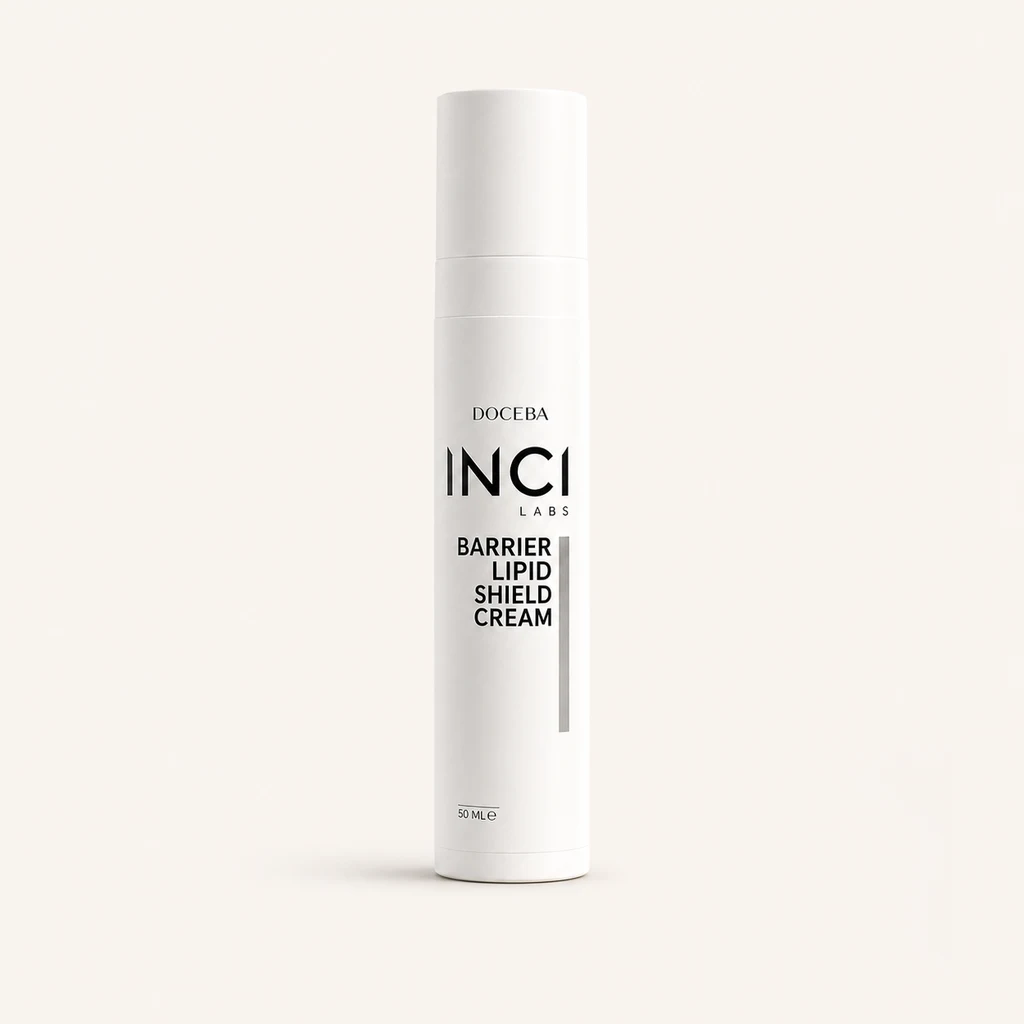
Matching products for the rest of your face:

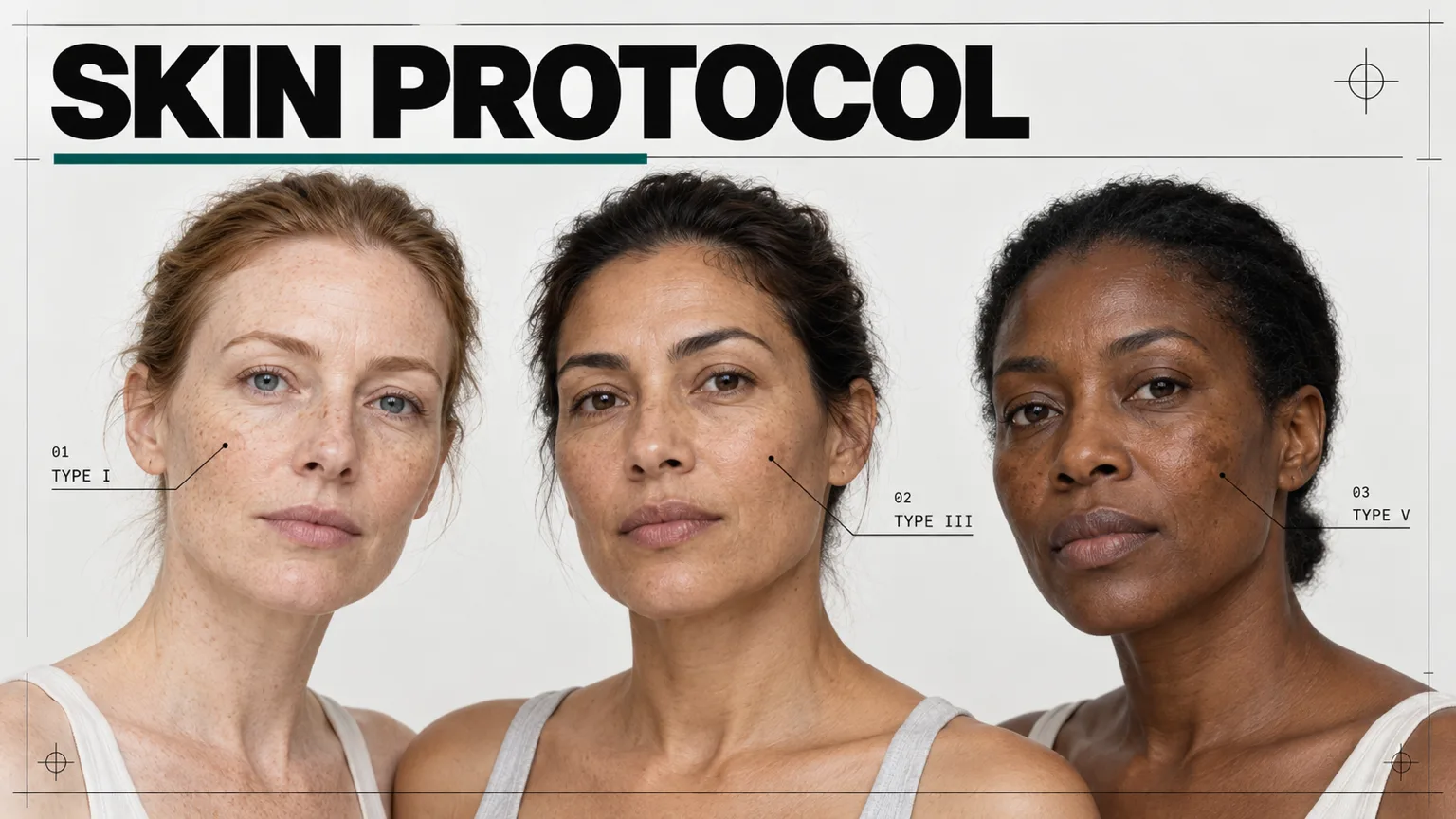
Skin Protocol: a plan for your skin and a team that adjusts it
You get a plan built around your skin and what you've already tried. We check in regularly and adjust products from Anita's lab when your skin needs something different. In English or German.
It starts with a free 20-minute call. We ring you and listen to your skin story, including your routine for dark spots.
Book your free skin callCosmetic advice, not a diagnosis. If you think you have a skin condition, see a doctor first.
Questions you might still have
Are dark circles normal on dark skin?
They are common. The Cleveland Clinic names people with darker skin tones as a group where they occur more often. As a rule there is nothing medical behind them. Have a dark circle or swelling under just one eye checked by a doctor. [S2]
Do dark circles go away with more sleep?
With some causes sleep helps, with others it does not. The Cleveland Clinic lists lack of sleep as one of several causes and advises about seven hours. Pigment, genetics and shadow from the shape of the eye area do not disappear with it. [S2][S1]
Which cream for dark circles is suitable for dark skin?
We have none documented for the eye area, so we do not recommend any of our serums for it. Cosmetic creams with hydroquinone are banned in the EU. If one is offered to you without a prescription, leave it. A practice can tell you what is an option for you. [S6][S2]
Sources
- [S1] Infraorbital Dark Circles: A Review of the Pathogenesis, Evaluation and Treatment. J Cutan Aesthet Surg 2016 ↗
- [S2] Cleveland Clinic: Dark Circles Under Eyes ↗
- [S3] DermNet: Postinflammatory hyperpigmentation ↗
- [S4] AAD: How to fade dark spots in darker skin tones ↗
- [S5] AAD: Chemical peels: FAQs ↗
- [S6] Verordnung (EG) Nr. 1223/2009 über kosmetische Mittel (Anhang II Nr. 1339) ↗
- [P1] DOCEBA: Barrier Lipid Shield Cream ↗
- [P2] DOCEBA: Pure Brightening Set ↗
General skincare information, not a diagnosis or an individual treatment plan.
Your bag
Review your items before continuing.
Your bag is empty.