
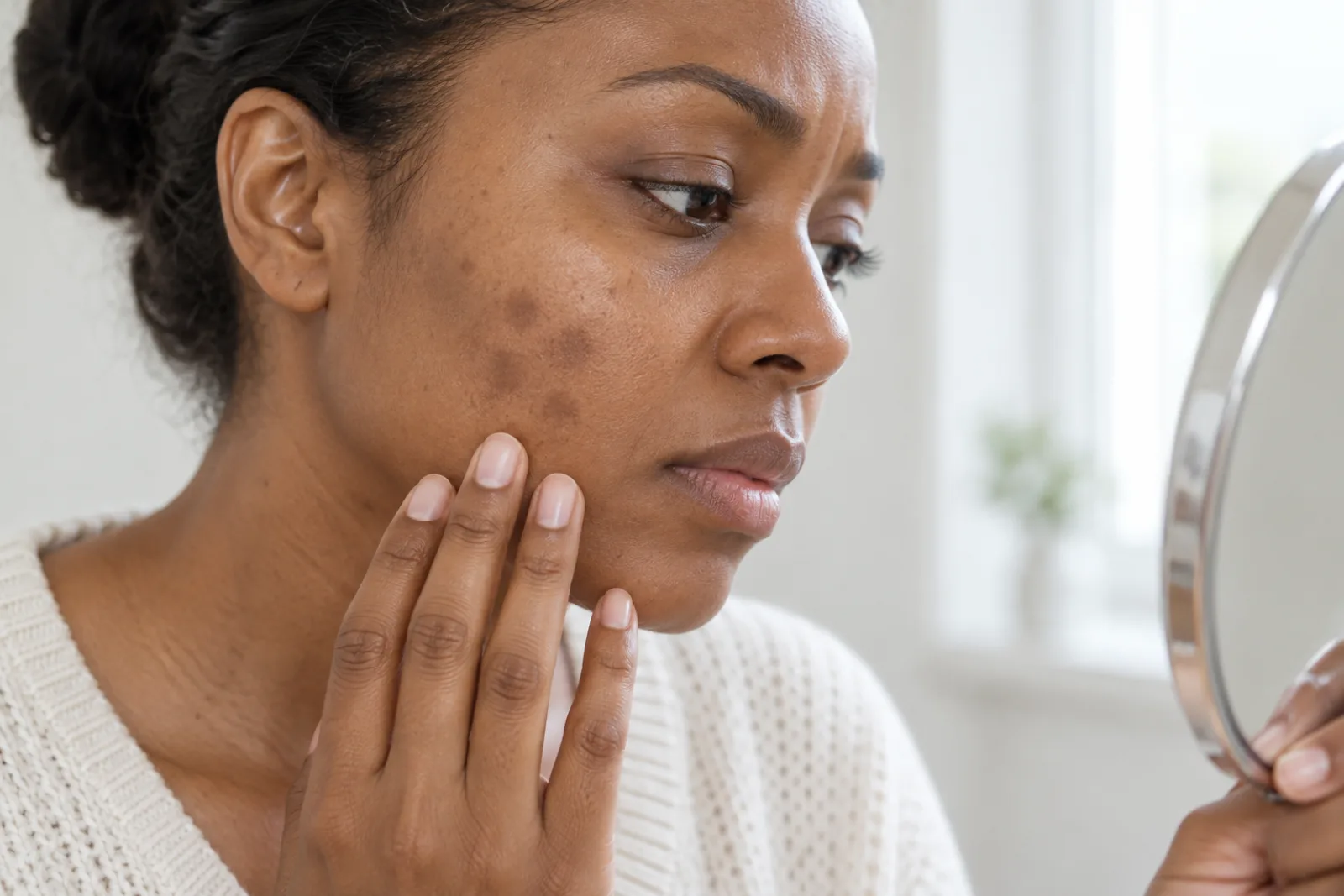
Why are my dark spots getting darker instead of lighter?
A dark spot is a patch where your skin has made extra melanin, the pigment that gives skin its colour. The AAD puts it simply: dark spots appear when something triggers the skin to make extra melanin. As long as that trigger keeps going, the spot keeps getting topped up.
On dark skin this shows more. DermNet, the reference site run by New Zealand dermatologists, says that in darker skin the colour of marks left by inflammation tends to be more intense and to last longer than in lighter skin.
These are the reasons the medical sources give for spots darkening:
- Sunlight and daylight reach the spot.
- A product or a treatment is irritating your skin.
- You pick, squeeze or rub the area.
- The cause is still running: acne, eczema or a medication.
- It's melasma, which is its own kind of hyperpigmentation.
Each one has its own section below. Whether spots fade without any help is covered in Does hyperpigmentation go away on its own?.
[S1][S2]Does the sun make dark spots darker?
Yes. DermNet notes that marks left by inflammation may become darker when sunlight hits them. Doctors call these marks post-inflammatory hyperpigmentation, PIH for short. It's the colour a pimple, a bite or an eczema patch leaves behind.
Dark skin has an extra problem here, and few people have heard of it. Visible light darkens spots too. That's the part of sunlight you can see. A 2023 review in the Journal of Clinical Medicine sums up the studies: on dark skin, visible light causes pigmentation that is stronger and longer-lasting than the pigmentation from long-wave UVA. Standard broad-spectrum sunscreens don't block enough of it. Tinted sunscreen with iron oxides significantly reduces this darkening.
So the AAD recommends a tinted sunscreen with iron oxide, SPF 30 or higher and broad-spectrum protection. Iron oxides are the colour pigments that give the cream its shade.
We're working on our own sunscreen right now. If you're buying one today, pick a tinted one. There's more in Sunscreen for hyperpigmentation on dark skin.
[S2][S3][S1]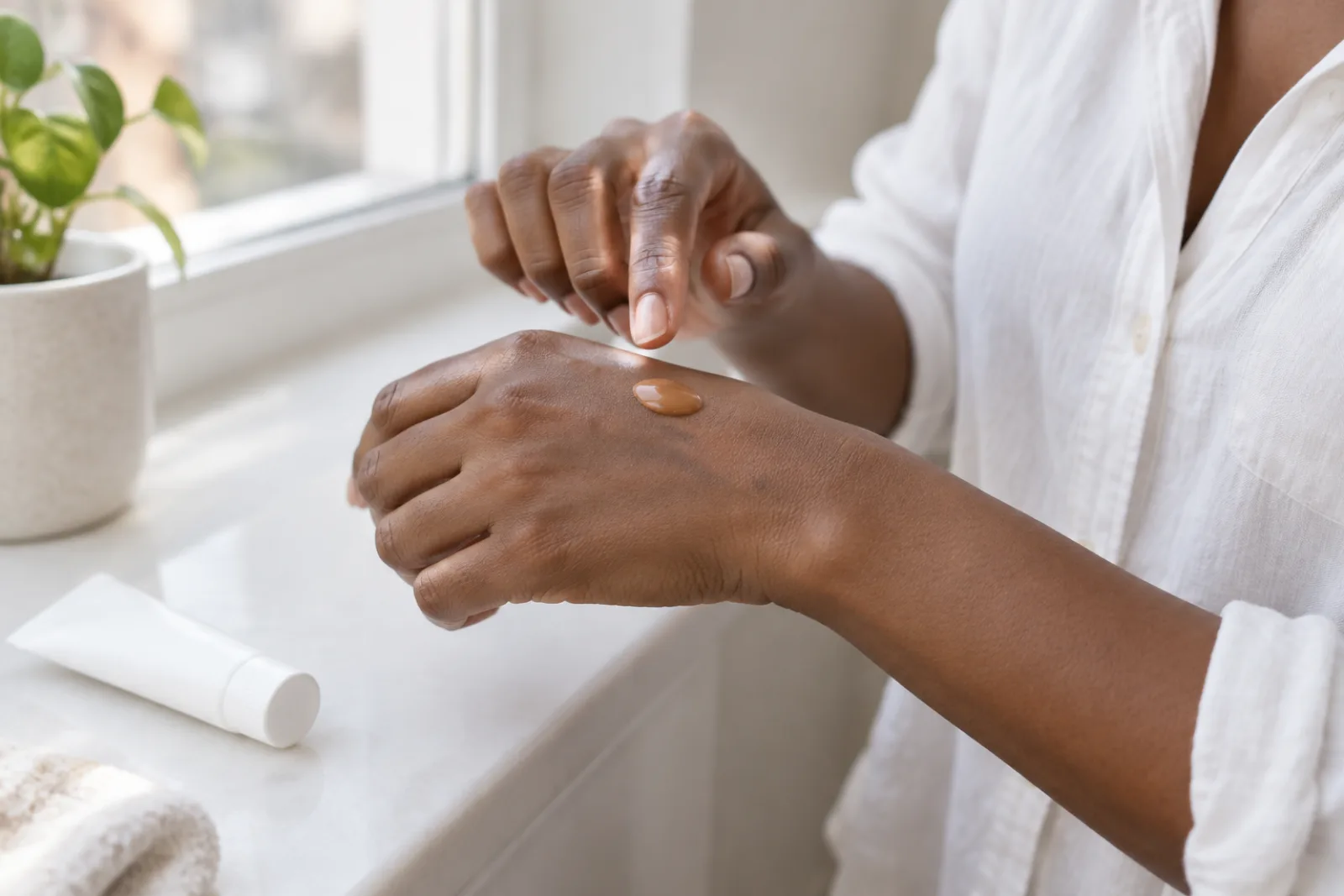
Check the ingredient list for iron oxides. They're what gives the sunscreen its tint.
Illustration
Why is my hyperpigmentation getting darker with skincare?
Because something in the routine is irritating your skin. The AAD lists irritating skin and hair care products among the triggers of dark spots. Its melasma advice has one line worth remembering: if a product burns or stings, it's irritating your skin, and that may darken dark spots.
It's easy to get stuck in a loop. The spot bothers you, so you add another product. Your skin stings and makes more pigment. The spot gets darker, and you reach for the next thing.
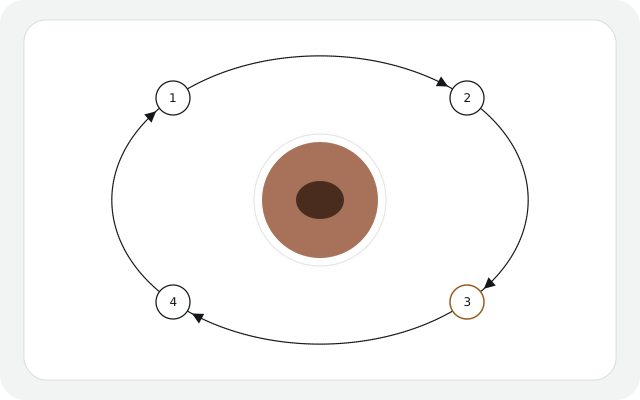 Spot bothers youAnother productSkin stingsMore pigmentSpot gets darker
Schematic · not a before-and-after or a treatment result
Salon and clinic treatments carry the same risk. Chemical peels and lasers can lighten spots, says DermNet, but they may also make them worse by injuring the top layer of skin. The AAD tells people with darker skin to see a dermatologist before a peel, microdermabrasion or laser. Read more in Laser, peels and microneedling on dark skin.
Be careful with bleaching creams of unclear origin. The AAD warns that some imported products contain steroids or mercury that aren't on the label. Steroids can thin the skin and leave it permanently discoloured. The background is in Skin bleaching creams and hydroquinone.
What about vitamin C? Plenty of people search for whether it makes spots darker. We answer that in Vitamin C for dark spots.
The fix is boring: go back to a few gentle products. The AAD suggests ones made for sensitive skin and free of fragrance. When the irritation stops, new spots tend to stop as well.
[S1][S5][S2][S6]Does picking or scratching make dark spots darker?
Every new injury can bring new colour. DermNet explains why: inflammation in the top layer of skin pushes the pigment cells to make more melanin. And the AAD says spots left by a skin injury fade as long as the skin there isn't injured again.
Scratch open an old mosquito bite or squeeze a pimple and you injure that exact place a second time. Pimples come with another risk. Pick, pop or squeeze acne and you raise your chance of a scar, according to the AAD.
So, hands off. If the itch is so strong that you can't stop, the itch itself needs a doctor. How acne marks form and what helps them is in Dark spots after acne on dark skin.
[S2][S1][S6]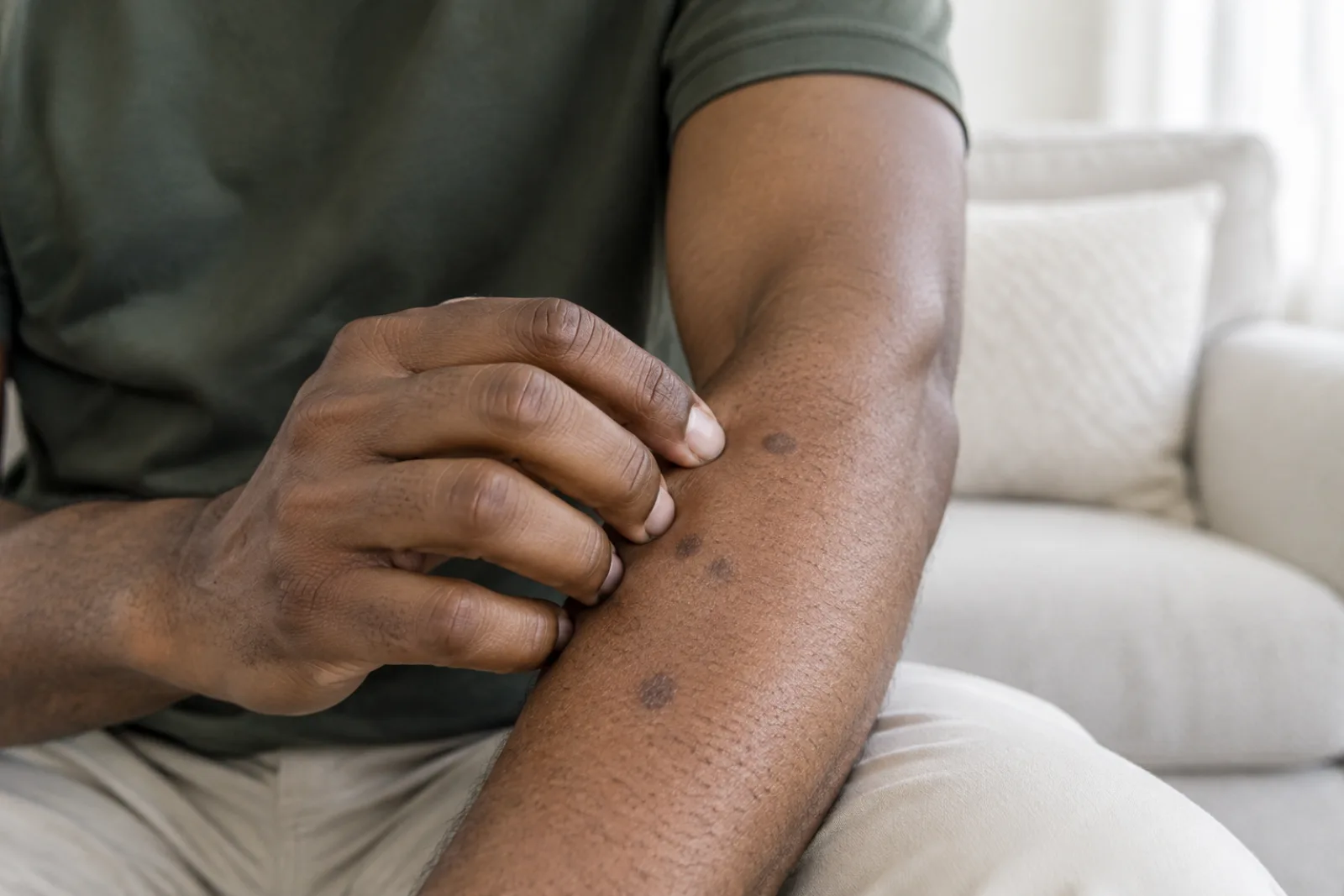
- 01Old bites: don't scratch them open
Leave old bites and pimples alone. Otherwise the mark starts over.
Illustration
Why do I keep getting more dark spots?
If new spots keep arriving, look for a cause that is still active. The AAD is blunt about it: when a skin condition such as acne, eczema or psoriasis is behind the spots, the condition has to be treated effectively first. For acne, dermatologists recommend treating the acne and the dark spots at the same time.
Medication can cause spots too. Never stop a prescribed medicine by yourself. Ask whoever prescribed it whether you can switch. That's the AAD's advice.
Once the cause has stopped, treatment can speed up the fading. This is where a vitamin C serum fits into your routine.
[S1][S6]What if it's melasma?
Melasma shows up as darker patches, often on the face. The AAD says it is much more common in women than in men, and more common in people with medium or dark skin tones. The triggers it names include sunlight, the hormone shift in pregnancy and medicines such as birth control pills. Only a dermatologist can tell you whether your patches are melasma.
Melasma darkens easily. Visible light makes it worse, especially on darker skin tones. Tanning beds can worsen it too and keep treatment from working. The AAD's advice is protection every day, cloudy days included: a tinted sunscreen with iron oxide and SPF 30 or higher. Add gentle, fragrance-free skincare.
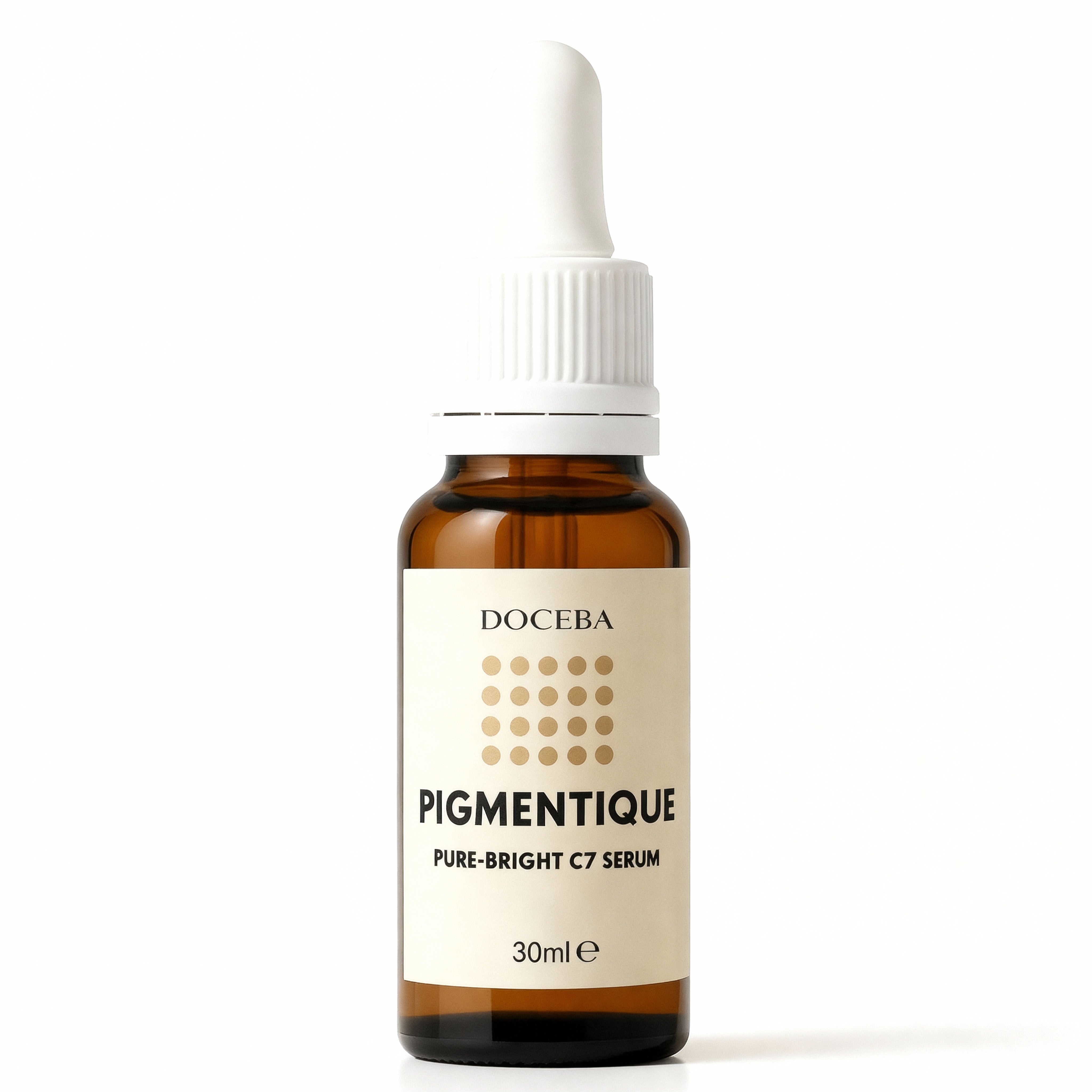
Our Pure Bright C7 Serum fits as the vitamin C step. Our Mela Bright is still in development. If you don't see it linked here yet, it isn't online yet.
[S4][S5]What to do when dark spots get darker
Work through these steps in order:
- Drop anything that burns or stings. Go back to a mild cleanser and a fragrance-free moisturiser.
- Put on tinted sunscreen with iron oxide every morning, SPF 30 or higher. Outdoors, reapply every two hours.
- Leave pimples and bites alone. Scabs too.
- Get the cause treated if acne or eczema is still active.
- Only then add a product for the spots.
After that it takes patience. A spot a few shades darker than your skin usually fades within 6 to 12 months once the cause has stopped, says the AAD. Colour that sits deeper in the skin can take years.
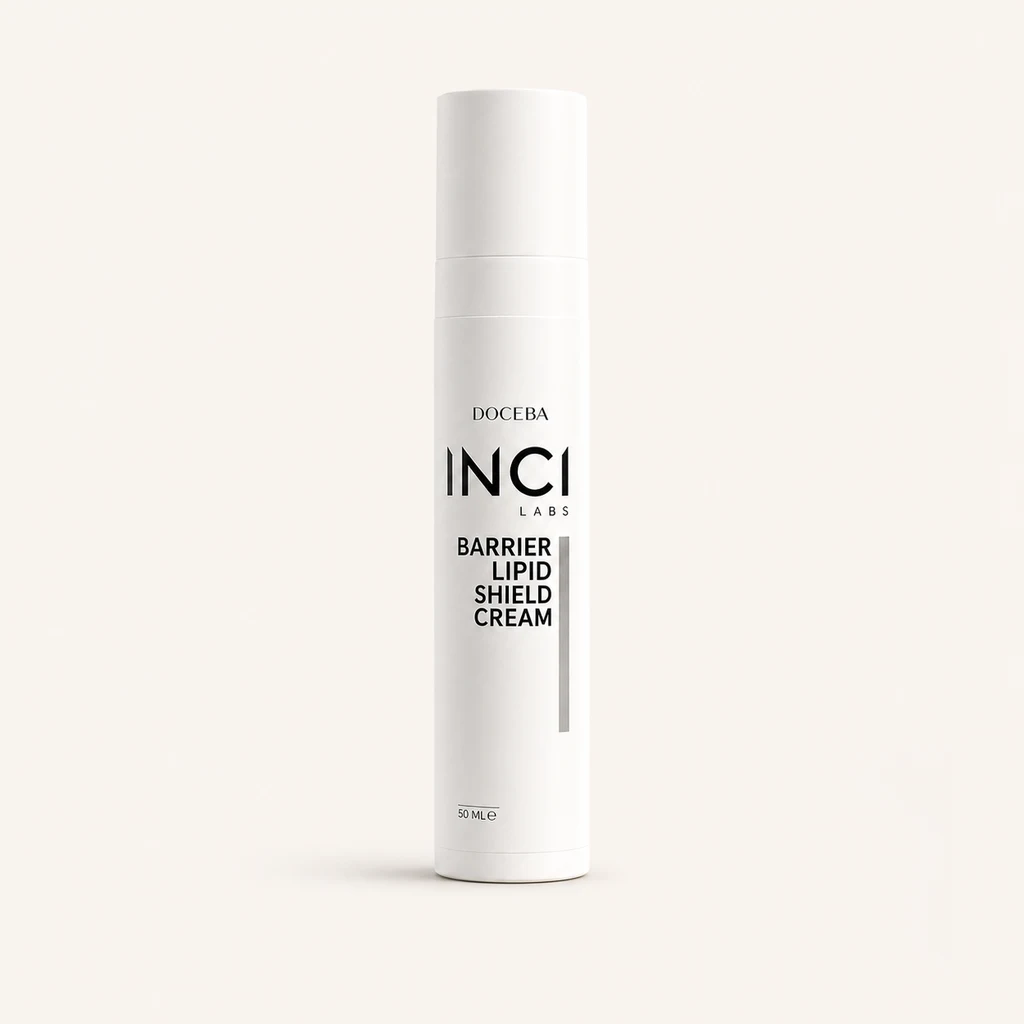
Don't want to piece a routine together from single products? Our Pure Brightening Set has a cleanser, the Booster Serum, the Pure Bright C7 Serum and the Barrier Lipid Shield Cream. Sunscreen isn't included. The order for morning and night is in Skincare routine for hyperpigmentation on dark skin.
[S1][S5]A guide based on the AAD, not a promise.
When should you show a darkening spot to a doctor?
This article can't tell you what your spot is, and neither can we from a distance. Some changes always belong in a doctor's office, though. The NHS, the UK's health service, says to see a doctor if you have:
- a mole that has changed size, shape or colour
- a mole that is painful or itchy
- a mole that is inflamed, bleeding or crusty
- a new or unusual mark on your skin that hasn't gone away after a few weeks, including on your palms or soles
- a dark area under a nail that wasn't caused by an injury
The last two matter most for dark skin. According to the AAD, skin cancer in darker skin tones can develop where little sun reaches: the palms, soles, fingers, toes, nails or inside the mouth. The signs it lists include a spot that is growing, bleeding, itching or changing in any way, and a dark line in a nail.
When skin cancer is found in darker skin, the AAD says, it is often already advanced. So don't wait and see. When you book, say straight away that you've noticed a spot that is changing.
An appointment is also worth it without warning signs, if your treatment isn't giving you the results you hoped for. Some spots need prescription-strength treatment, the AAD notes.
[S7][S8][S1]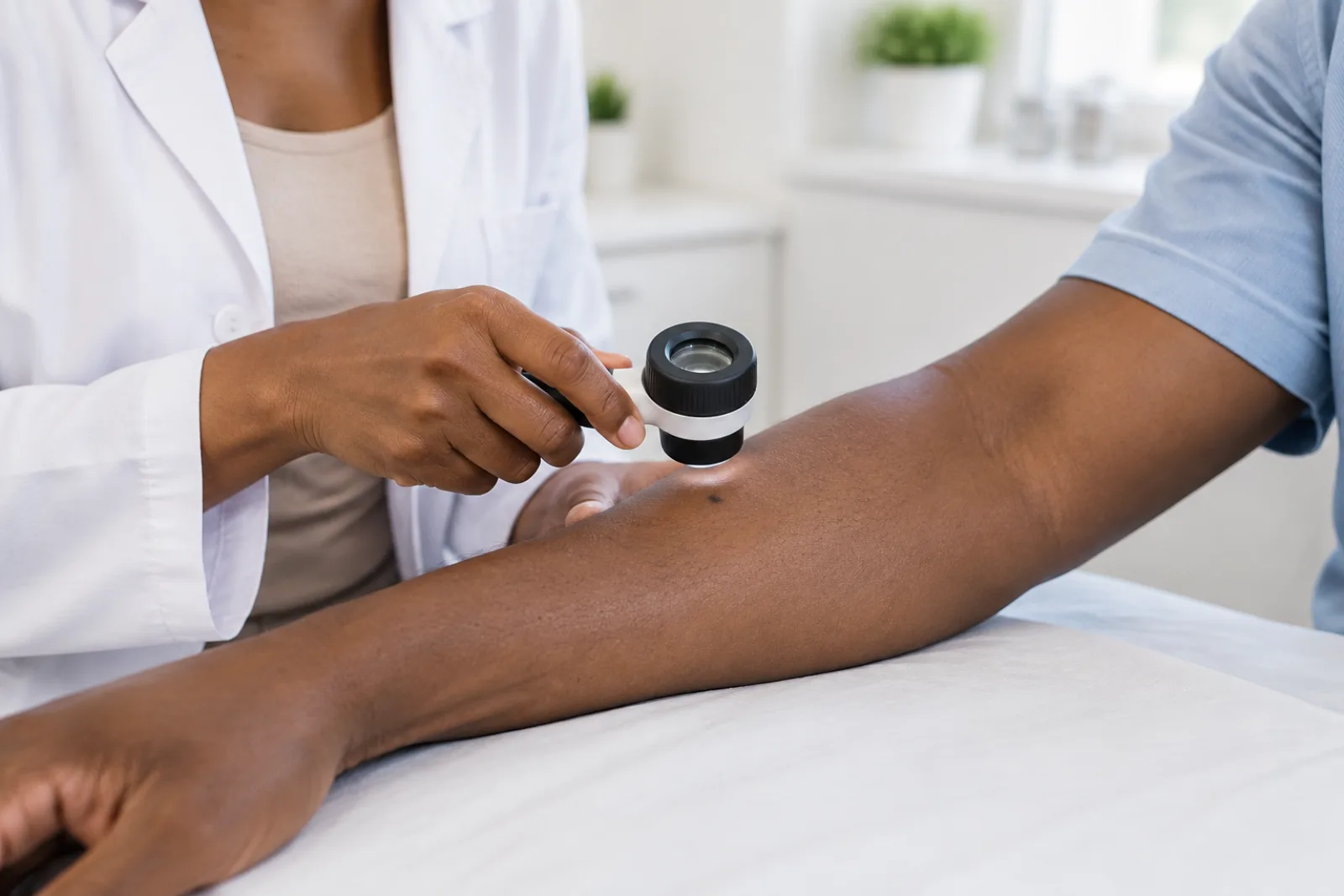
The check with the magnifier doesn't hurt.
Illustration
Your next step
Both routes are fine. Pick the one that fits you today.
- Drop whatever stings and wear tinted sunscreen every morning.
- When your skin is calm, add one product for the spots. Patch-test it first.
- Take a photo once a month in the same light. If a spot changes in shape, colour or size, see a dermatologist.
Matching products from our lab:

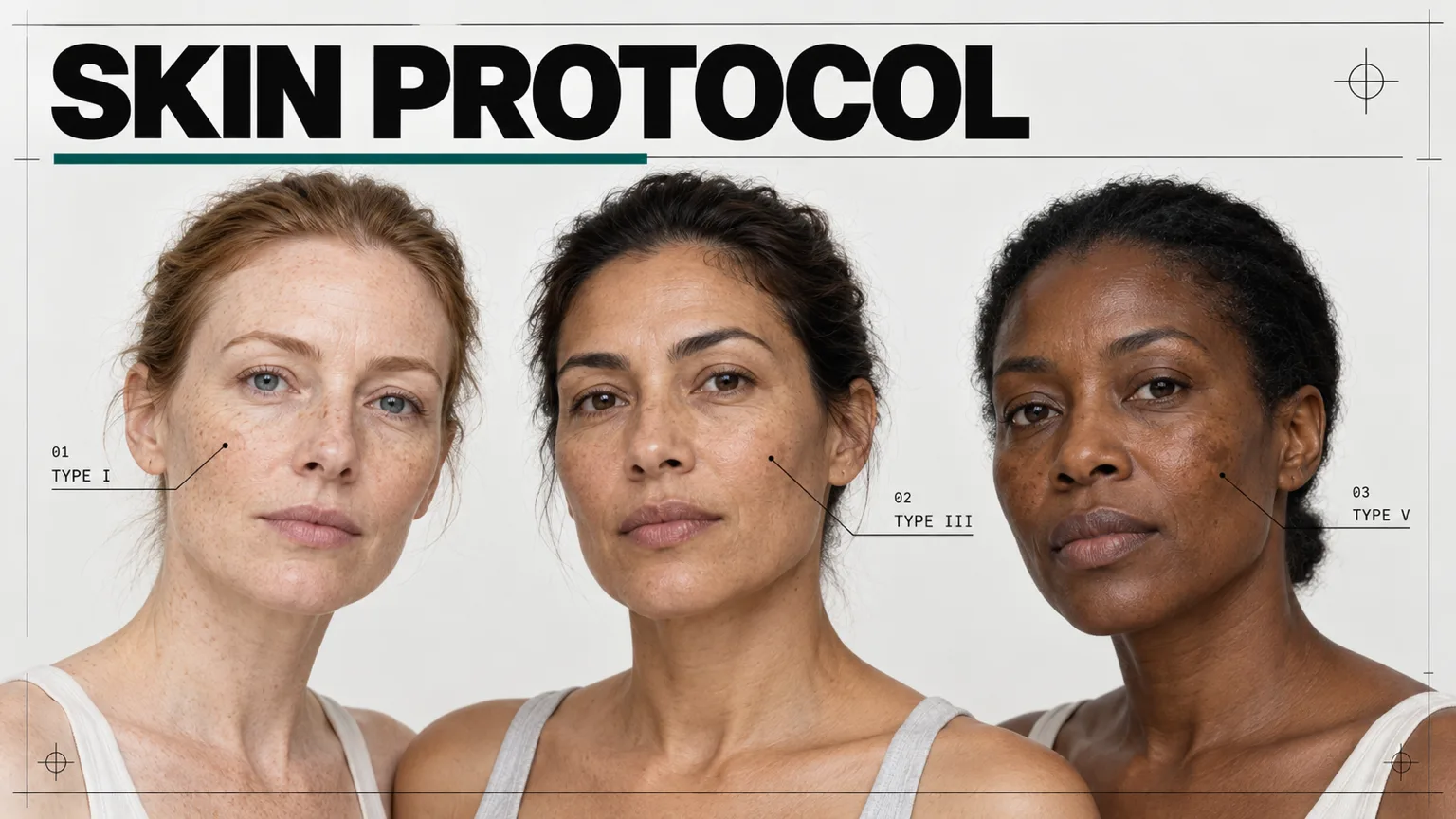
Skin Protocol: a plan for your skin and a team that adjusts it
You get a plan built around your skin and what you've already tried. We check in regularly and adjust products from Anita's lab when your skin needs something different. In English or German.
It starts with a free 20-minute call. We ring you and listen to your skin story, including the spots that have got darker.
Book your free skin callCosmetic advice, not a diagnosis. If you think you have a skin condition, see a doctor first.
Questions you might still have
Do dark spots get darker before they get lighter?
The sources we opened for this article (AAD and DermNet) don't describe a phase like that. In them, darkening has a cause: sun, irritation or a trigger that is still active. If a spot darkens under a new product and your skin stings, stop using it. [S1][S2][S5]
Does the sun make dark spots darker?
Yes. DermNet says marks left by inflammation may become darker when exposed to sunlight. On dark skin, visible light darkens them as well, which is why the AAD recommends tinted sunscreen with iron oxide. [S2][S3][S1]
Does vitamin C make dark spots darker?
The full answer is in our article Vitamin C for dark spots. For any serum, the AAD's line applies: if a product burns or stings, it's irritating your skin, and that may darken spots. Stop using it. [S5]
Can hormones make dark spots darker?
With melasma, yes. The AAD names the hormone changes of pregnancy and birth control pills as possible triggers. The diagnosis is a job for a dermatologist. [S4]
Why do I keep getting new dark spots?
Often the cause is still active. If acne, eczema or psoriasis is behind the spots, the AAD says the skin condition has to be treated first. A product that irritates your skin can trigger new spots too. [S1]
How long does a spot that got darker take to fade?
The AAD says a spot a few shades darker than your skin usually fades within 6 to 12 months once the cause has stopped. Colour that sits deeper can take years. [S1]
Sources
- [S1] AAD: How to fade dark spots in darker skin tones ↗
- [S2] DermNet: Postinflammatory hyperpigmentation ↗
- [S3] He X et al.: The Emerging Role of Visible Light in Melanocyte Biology and Skin Pigmentary Disorders: Friend or Foe? J Clin Med 2023;12(23):7488 ↗
- [S4] AAD: Melasma: Causes ↗
- [S5] AAD: Melasma: Self-care ↗
- [S6] AAD: 10 tips for clearing acne in darker skin tones ↗
- [S7] NHS: Symptoms of melanoma skin cancer ↗
- [S8] AAD: Finding skin cancer in darker skin tones ↗
- [P1] DOCEBA: Barrier Lipid Shield Cream ↗
- [P2] DOCEBA: Pigmentique Pure Bright C7 Serum ↗
- [P3] DOCEBA: Pure Brightening Set ↗
General skincare information, not a diagnosis or an individual treatment plan.
Your bag
Review your items before continuing.
Your bag is empty.