
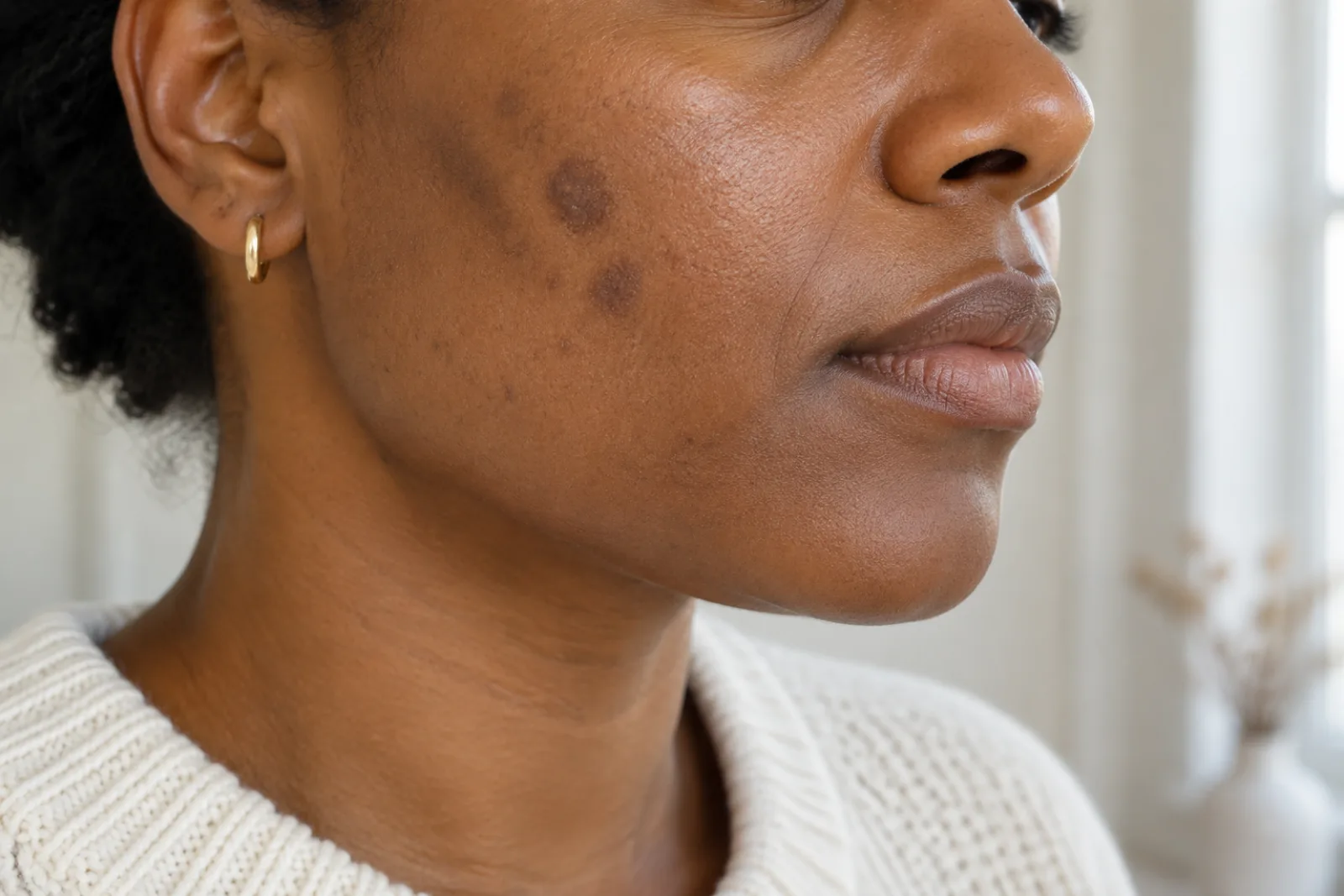
Which dark spots fade on their own, and which don't?
"Hyperpigmentation" covers several different things, and each one behaves in its own way. So before asking whether your spot will go, ask where it came from.
- Marks after inflammation. The medical name is post-inflammatory hyperpigmentation, or PIH. The skin was irritated or injured and made extra pigment (melanin) while it healed. The AAD lists clearing acne and psoriasis, wounds such as insect bites, cuts and burns, some medications, and skin or hair products that irritate. These marks usually fade without help.
- Darkening from friction. On elbows and knees dermatologists have described this as its own pattern. Less rubbing and a cream with lactic acid or urea can help there. While the rubbing goes on, the patch stays dark.
- Age spots (sun spots). These build up over years of UV exposure. DermNet says they stay visible all year and may get slightly darker in summer. Freckles are different, since they fade a lot in winter.
- Melasma. Blotchy brown patches on the face, often on both sides. It can clear by itself. It can also last for years.
On brown and black skin the first group is by far the most common. DermNet notes that PIH happens more often in darker skin, comes up more intense and persists longer. If your marks are all from breakouts, we have a separate guide: How long do acne marks last?
[S1][S2][S4][S5][S8]Why is my hyperpigmentation not going away? Often the trigger is still there
A mark can only fade once nothing new is being added. It sounds obvious, and it is still the thing people miss most. The AAD puts it like this: spots from an injury fade if you don't re-injure the skin. If a product was irritating your skin, the spots often clear once the irritation stops.
Here is how that plays out day to day:
- Shaving. Razor bumps form when cut hairs curl back into the skin. DermNet says this mainly affects men of African ancestry with tightly curled hair, and dark marks are a known after-effect. Take a break from shaving and the bumps usually settle within about 4 to 6 weeks. Only then do the marks get their chance. More in Dark spots from shaving.
- Friction. Leaning, kneeling, tight clothes. For joints, see Dark knees and elbows.
- Skincare that burns. The AAD says to stop any product that burns or stings. Irritated skin makes new marks, and you end up treating in circles.
Davis and Callender's review of PIH in skin of colour makes the same point from the clinic: treatment starts with the inflammation that causes the marks, and PIH can get worse when that inflammation persists or keeps coming back. If you still get new breakouts or eczema flares most weeks, deal with those first, ideally with a dermatologist.
[S1][S3][S7]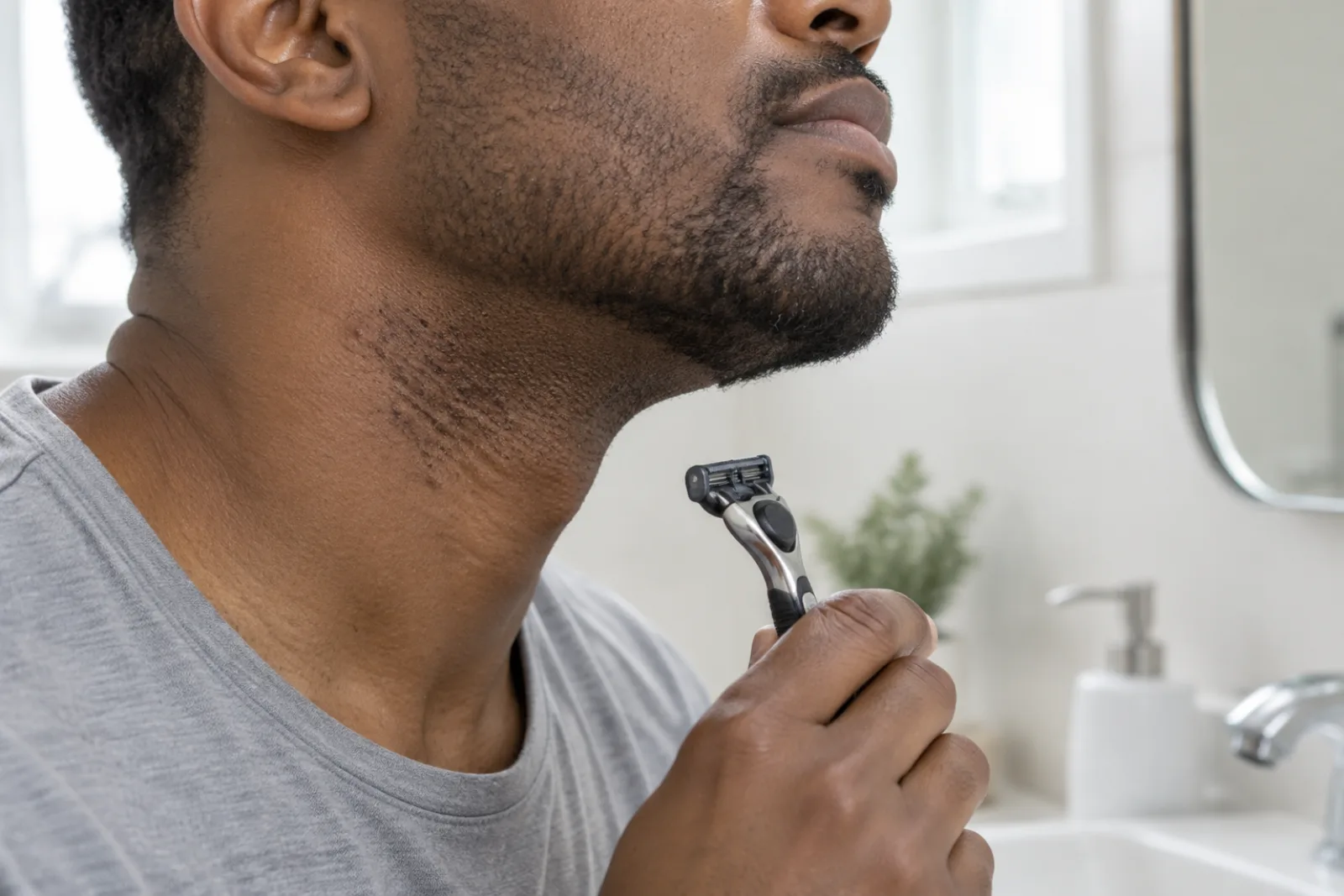
- 01Shaved hairs grow back into the skin here
The neck under the jaw is the classic spot. Marks only get a chance to fade once it has calmed down.
Illustration
How long does hyperpigmentation take to fade?
After the trigger, depth is what counts. Skin has an outer layer, the epidermis, and the dermis underneath. DermNet describes two situations. In the first, the epidermis makes more melanin after inflammation and passes it to the surrounding skin cells. The mark is light brown to black. In the second, the bottom row of epidermal cells was damaged. Pigment drops into the dermis, where scavenger cells hold on to it. A mark like that looks grey, purple or grey-brown.
The epidermis keeps renewing itself. New cells form at the bottom, travel up and reach the surface after about a month, where they shed. So colour in the epidermis has a way out. The dermis offers none. In their review of PIH in skin of colour, Davis and Callender write that epidermal marks may take months to years to resolve without treatment, while dermal pigment may be permanent or clear only over a very long time.
The AAD adds a rule of thumb. A spot a few shades darker than your skin usually fades in 6 to 12 months. Deep pigment often looks slate blue to grey, or far darker than your natural tone, and fading can take years.
 Colour in the epidermisColour in the dermisusually 6–12 monthsyears
Time frames from the AAD, as a guide and not a promise. Schematic illustration · not a before-and-after or a treatment result
That is why two marks on the same face can move at different speeds. It is also why creams tend to disappoint on grey marks: the same review says topical products mostly work on colour in the epidermis.
[S2][S6][S3][S1]Do sun spots fade on their own?
Two separate things are going on here. One is age spots, which UV light caused in the first place. Those mostly stay. DermNet says strict sun protection can prevent new ones and may lighten existing ones a little. Age spots are most common in lighter skin and harder to recognise in darker skin. Dermatologists treat them with freezing, lasers or creams. Those procedures can leave pale or dark patches of their own, so on dark skin they belong with someone experienced.
The other is the sun making existing marks worse. Any mark left by inflammation can darken with UV exposure. On darker skin, visible light matters too. In a study by Mahmoud and colleagues, volunteers with darker skin types developed pigmentation after visible light that was darker and lasted longer than after long-wave UVA. Fair skin (type II) showed no pigmentation.
This is why the AAD recommends a tinted sunscreen with iron oxide for dark spots, SPF 30 or higher and broad-spectrum. Iron oxide is the pigment in the tint, and it blocks visible light. We're working on a sunscreen of our own. If you're buying one now, pick a tinted one. What to look for is in Sunscreen for hyperpigmentation on dark skin.
[S4][S2][S9][S1]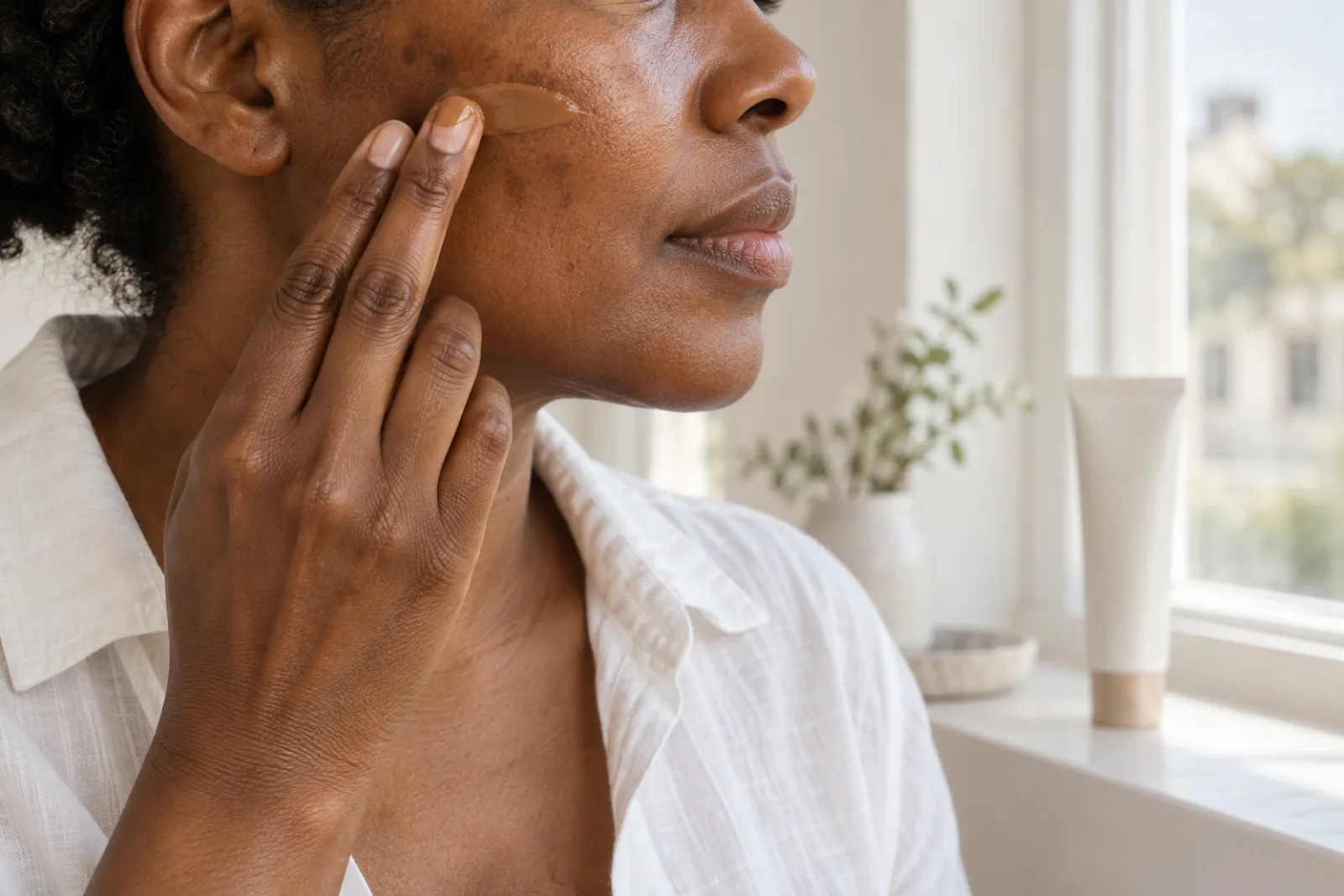
- 01Tinted: with iron oxide pigment
Every morning, winter included. The tint blocks visible light.
Illustration
Does hyperpigmentation from pregnancy go away?
Patches that show up during pregnancy or on birth control pills are often melasma. The AAD describes patches and spots darker than your natural skin tone, usually on the cheeks, forehead, chin and above the upper lip. Women with medium to dark skin tones are the most likely to get it.
The honest answer is: sometimes. The AAD says melasma fades for some women after they give birth or stop the pill. It can also last for years. Many people find it darker in summer and lighter in winter, and it often returns without sun protection. Dermatologists advise treating it early, because long-standing melasma is harder to shift.
Only a dermatologist can tell you whether it is melasma. PIH and age spots can look alike. Don't stop the pill or any medication by yourself; raise it at your appointment.
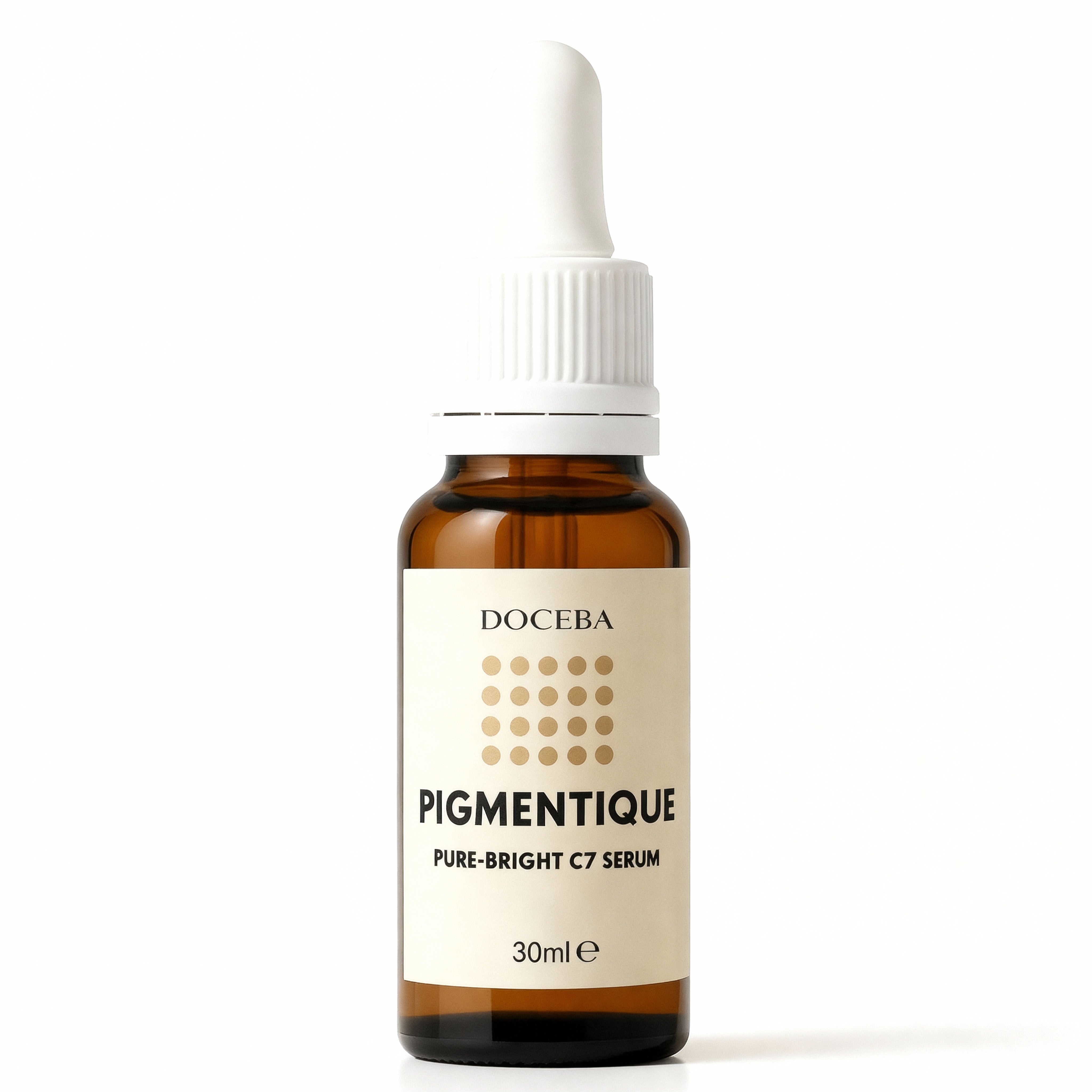
For skincare alongside, we make the Pure Bright C7 Serum, a vitamin C serum for the face. Our Mela Bright is still in development. If you don't see it linked here yet, it isn't online yet.
[S5][S1]How can you help hyperpigmentation fade faster?
The order matters more than any single product.
1. Switch off the trigger
Hands off spots, change how you shave, cut down friction, drop anything that burns. As long as new marks keep arriving you are chasing them.
[S1][S3]2. Sunscreen every day
In winter too, and yes, on dark skin. For PIH, DermNet recommends a broad-spectrum sunscreen daily so the marks don't darken.
[S2][S1]3. One active your skin gets on with
The AAD says treatment can speed up fading and lists azelaic acid, glycolic acid, kojic acid, retinoids and vitamin C among over-the-counter options. We don't make a product with azelaic acid, retinol or hydroquinone. Our active is vitamin C. How it is used on dark skin is covered in Vitamin C for dark spots.
If you already use something a doctor prescribed, that stays the base. A vitamin C serum can go on in the morning if your skin is happy with it.
[S1]4. A calm routine around it
Gentle cleanse, active, moisturiser, sunscreen in the morning. You rarely need more. For the order morning and night, see Skincare routine for hyperpigmentation on dark skin.
 Trigger still there?yesnoStop the triggerSunscreen every day?noyesSunscreen firstTime plus an active
A guide for care at home, not a diagnosis.
When should a doctor look at a dark spot?
Most dark spots are harmless. A few situations still belong in a clinic:
- A single spot with more than one colour in it, or one you are unsure about. Age spots can resemble an early melanoma, so dermatologists check them with a dermatoscope and take a biopsy when in doubt.
- Spots that appear with no obvious trigger. The AAD lists medications among the causes. Don't stop a prescribed medicine by yourself; ask whether there is an alternative.
- Grey or blue-grey marks, and anything that hasn't budged after a year of good care.
- Marks that followed a cream from abroad with no clear ingredient list. The AAD warns that some imported products have been found to contain undisclosed steroids or mercury.
For the full picture on causes and ingredients, read Hyperpigmentation on dark skin.
[S4][S1]Your next step
Both routes are fine. Pick the one that fits you today.
- Write down where the spot came from and whether the trigger is still around. If it is, start there.
- Sunscreen every morning, tinted if you can. Add one active your skin tolerates.
- Take a photo once a month in the same light. If nothing has changed after a year, or the mark looks grey, see a doctor.
Matching products from our lab:

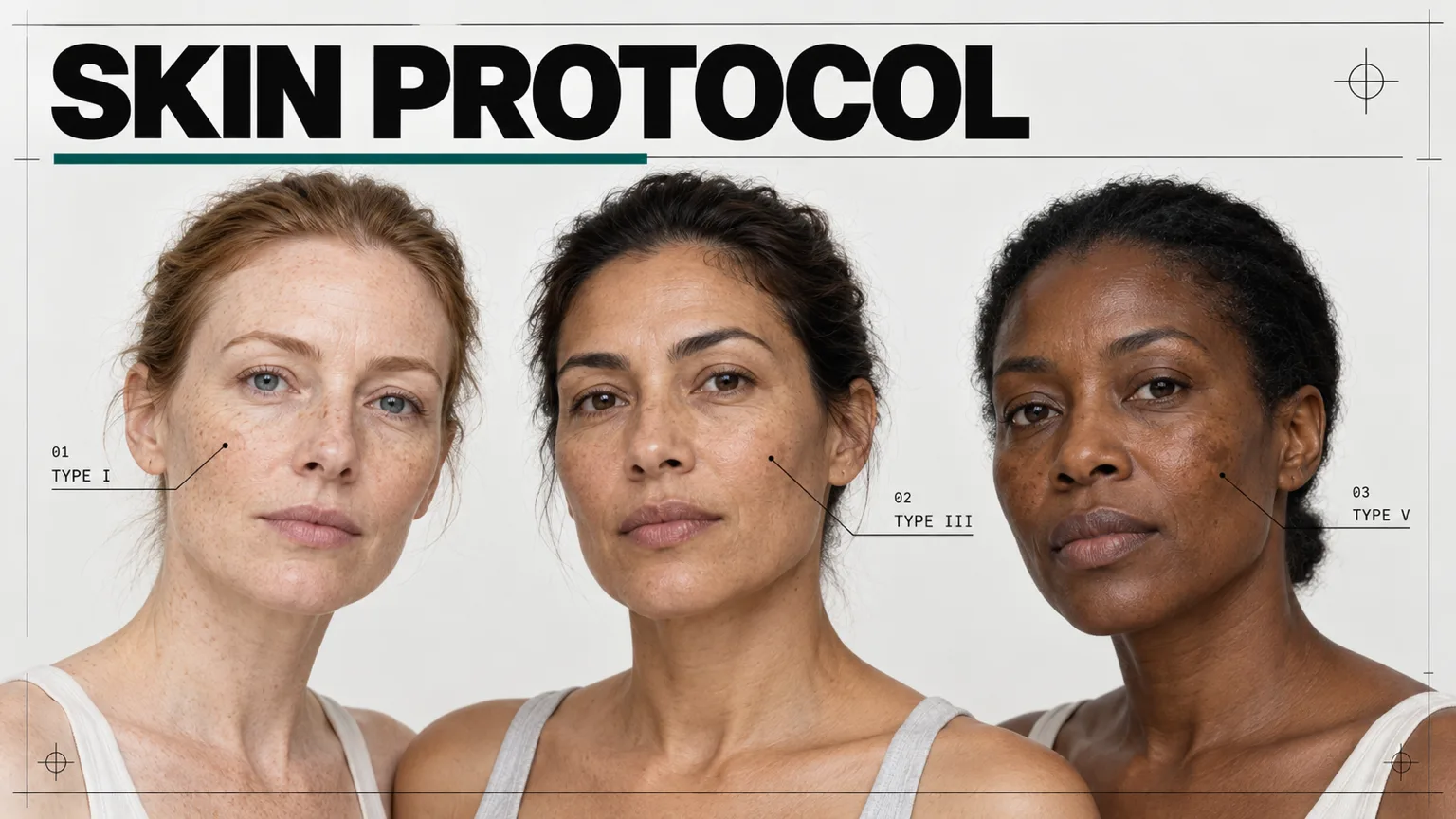
Skin Protocol: a plan for your skin and a team that adjusts it
You get a plan built around your skin and what you've already tried. We check in regularly and adjust products from Anita's lab when your skin needs something different. In English or German.
It starts with a free 20-minute call. We ring you and listen to your skin story, including marks that refuse to fade.
Book your free skin callCosmetic advice, not a diagnosis. If you think you have a skin condition, see a doctor first.
Questions you might still have
Does hyperpigmentation go away on its own?
Marks left by inflammation usually do once the cause stops. Age spots from the sun generally stay. Melasma can clear, though it sometimes lasts for years. [S1][S4][S5]
How long does it take for hyperpigmentation to go away?
The AAD gives 6 to 12 months for a spot a few shades darker than your natural skin colour. Colour that sits deep in the skin can take years. Treatment can speed up fading. [S1]
Is hyperpigmentation permanent on dark skin?
Mostly not. DermNet describes PIH as temporary, although on darker skin it is more intense and persists longer. Pigment deep in the dermis can need years and in some cases stays. [S2][S1][S3]
Does pregnancy hyperpigmentation go away after birth?
For some women, yes. The AAD says melasma can fade after delivery, and it can also last for years. Sun protection helps stop it coming back. A dermatologist makes the diagnosis. [S5]
Do dark spots fade in winter?
Freckles fade a lot in winter and melasma eases for many people. Age spots stay all year. For marks after inflammation, winter is a good window because there is less UV to darken them. More in Treating dark spots in winter. [S4][S5][S2]
Sources
- [S1] AAD: How to fade dark spots in darker skin tones ↗
- [S2] DermNet: Postinflammatory hyperpigmentation ↗
- [S3] Davis EC, Callender VD: Postinflammatory hyperpigmentation: a review of the epidemiology, clinical features, and treatment options in skin of color. J Clin Aesthet Dermatol 2010;3(7):20–31 ↗
- [S4] DermNet: Solar lentigo ↗
- [S5] AAD: Melasma: Overview ↗
- [S6] Cleveland Clinic: Epidermis ↗
- [S7] DermNet: Pseudofolliculitis barbae ↗
- [S8] Krishnamurthy S, Sigdel S, Brodell RT: Frictional asymptomatic darkening of the extensor surfaces. Cutis 2005;75(6):349–355 ↗
- [S9] Mahmoud BH et al.: Impact of long-wavelength UVA and visible light on melanocompetent skin. J Invest Dermatol 2010;130(8):2092–2097 ↗
- [P1] DOCEBA: Pigmentique Pure Bright C7 Serum ↗
- [P2] DOCEBA: Pure Brightening Set ↗
General skincare information, not a diagnosis or an individual treatment plan.
Your bag
Review your items before continuing.
Your bag is empty.