
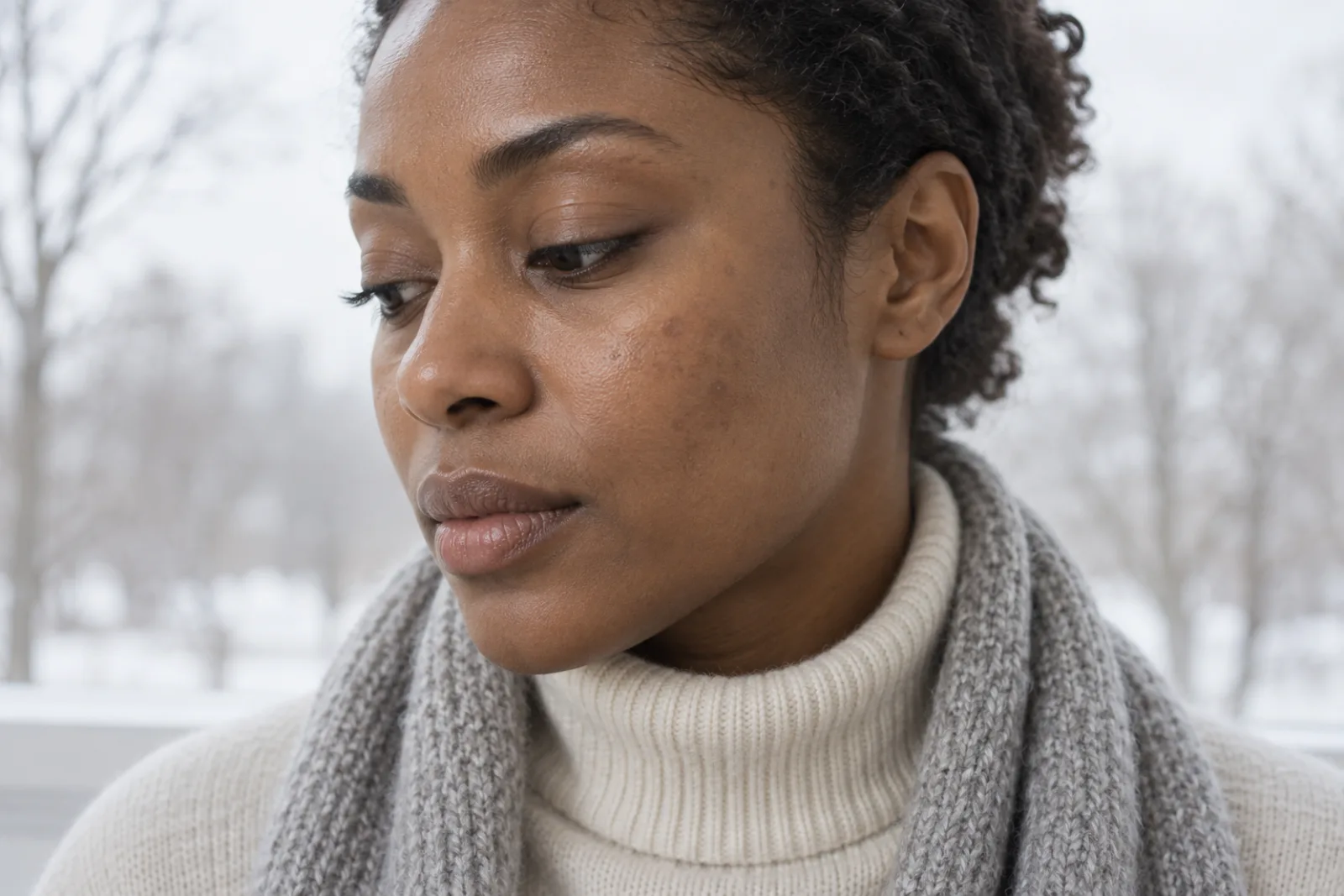
Is winter a good time to treat dark spots?
A dark spot is a patch where your skin has stored more melanin than the skin around it. Melanin is the pigment that gives skin its colour. On melanin-rich skin, these spots tend to follow inflammation: a breakout, a scratch, an eczema flare. Dermatologists call it post-inflammatory hyperpigmentation, PIH for short. DermNet notes that it is more common in darker skin types and that the colour tends to be more intense.
Sun is the thing working against you. According to DermNet, the patches can get darker when they are exposed to sunlight. So in July you put on a serum in the morning and then walk through the very light that darkens the spot again at lunch.
In winter that opponent is weak. The UV index is the scale for the UV radiation that causes sunburn. Germany's Federal Office for Radiation Protection (BfS) publishes typical values for Berlin on the 21st of each month: October 1, November 1, December 0, January 1, February 1. June and July are at 7, and for Germany as a whole the BfS gives summer values of 8 to 9. The agency says protection is required from a UV index of 3.
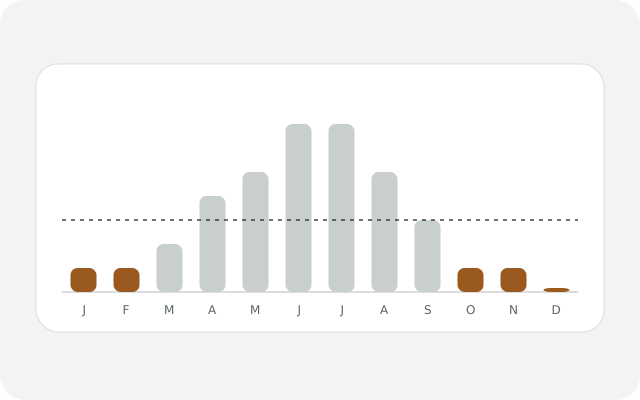 Typical UV index in Berlin, month by month3 and up: protectOct to Feb: 0 to 1
Values: German Federal Office for Radiation Protection (BfS), typical UV index on the 21st of each month (model calculation, guide values).
What that means for your spots: between October and February, very little gets added from outside. Whatever routine you build now doesn't have to fight the midday sun every single day. And you'll have it down before the numbers climb again. For Berlin, the BfS table shows 2 in March and already 4 in April.
[S2][S4][S5]Do dark spots fade in winter?
It depends on the kind of spot.
Marks left by breakouts, scratches or eczema (PIH). These fade once nothing new is added, whatever the season. The American Academy of Dermatology (AAD) puts it like this: a spot a few shades darker than your natural skin colour will usually fade within 6 to 12 months. If the colour sits deep in the skin, fading can take years. One winter is often not enough, then. It's still a good head start, because the light barely pushes back.
Melasma. These are darker patches and spots, usually on the face. The AAD says women with medium to dark skin tones are most likely to develop it, and that many people with melasma find the patches more noticeable in summer and fainter in winter. Without protection, it commonly returns the next time you spend time in the sun. Only a dermatologist can tell you whether what you have is melasma.
For daily care on the face we make the Pure Bright C7 Serum. Our Mela Bright is still in development. If you don't see it linked here yet, it isn't online yet.
Based on the AAD, not a promise. If the colour sits deep in the skin, fading can take years.
What decides how long it takes is covered in Does hyperpigmentation go away on its own?.
[S1][S6]Why do new dark spots show up in winter?
Winter takes the light away and hands you dry air instead. A 2016 review in the Journal of the European Academy of Dermatology and Venereology (Engebretsen and colleagues) concluded that low humidity and low temperatures reduce skin barrier function. The barrier is the outermost layer of your skin, the one that keeps water in and irritants out. When it is weaker, the review found, skin reacts more strongly to irritants and allergens, and people with atopic eczema flare more often in cold, dry weather.
On melanin-rich skin this has a knock-on effect that is easy to miss. PIH follows inflammation and injury, and DermNet lists eczema among the causes. Put a strong serum on dry, itchy winter skin and, at worst, you swap old spots for new ones.
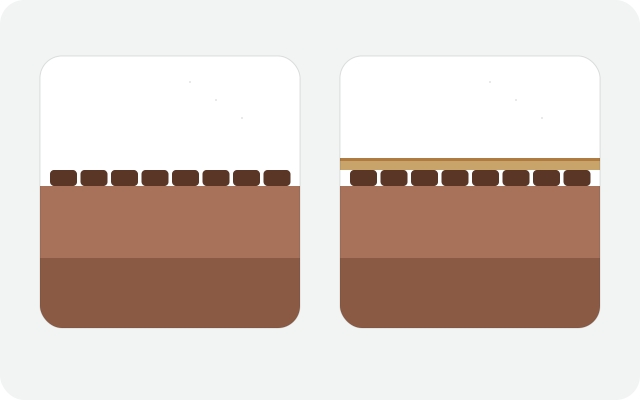 Cold, no creamCold, with creamBarrier stays sealedGap, irritation, new spot
Schematic illustration · not a before-and-after or a treatment result
The fix is unglamorous. For dry skin, the AAD recommends keeping showers to five to ten minutes in warm water and putting moisturiser on while your skin is still damp. Ointments and creams do more than lotions, and dermatologists recommend fragrance-free products. For outdoors, the AAD mentions gloves to protect skin from cold, dry air. We go into more detail in our guide to ashy, dry skin in winter.
[S8][S2][S9]Do you need sunscreen in winter for hyperpigmentation?
For sunburn in everyday German life, no. The BfS states that UV exposure in Germany is so low in winter that you don't need sun protection for day-to-day activities.
Dark spots change the picture in two ways. First, visible light. The UV index only covers the radiation that burns, so visible light isn't part of that number. In a study of 20 volunteers with skin types IV to VI, visible light produced pigmentation that was darker and lasted longer than pigmentation from long-wave UVA. Skin type II showed none. The AAD calls visible light a cause of dark spots, which is why it recommends tinted sunscreen with iron oxide and SPF 30 or higher.
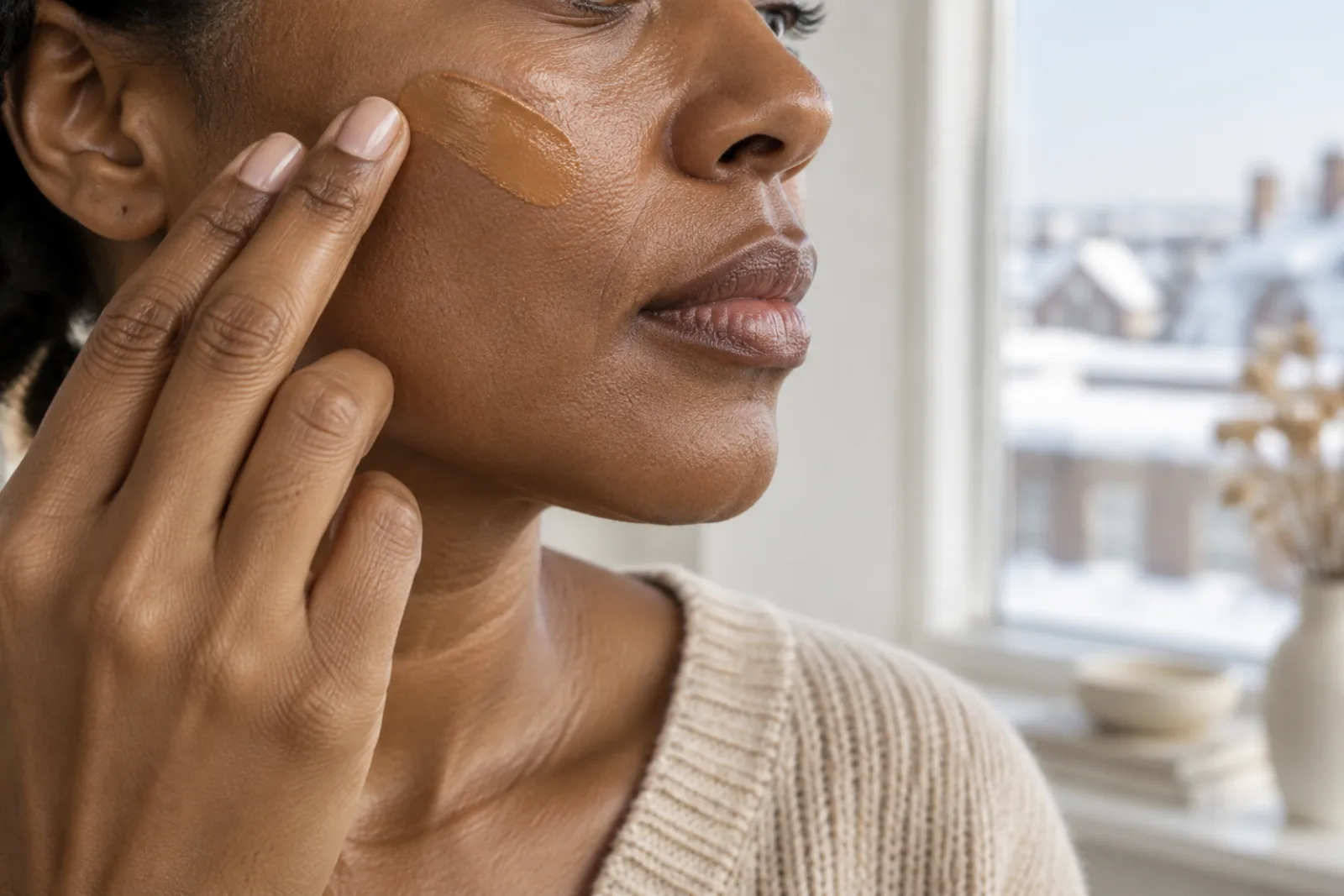
- 01Tinted: iron oxide against visible light
On bright days and in snow, it goes on your face in the morning.
Illustration
Second, snow, mountains and long-haul trips. Fresh snow reflects up to 90 percent of UV radiation, according to the BfS, and UV rises by roughly 10 percent per 1,000 metres of altitude. On a ski holiday or a trip south, summer rules apply.
Here is how we read it. On a grey December day in Bielefeld, the sun is not your main problem. On bright days, in snow, and from spring at the latest, tinted sunscreen goes on your face in the morning. How much visible light a German winter day delivers, and what that does to dark spots, is something we could not find a solid number for. So we won't give you one.
We are working on our own sunscreen right now. If you buy one today, choose a tinted one. What to look for is in Sunscreen for hyperpigmentation on dark skin.
[S3][S5][S7][S1]A winter routine for dark spots: where to start
Four steps. None of them is complicated.
1. Cleanse gently
Keep it short, use warm water, and skip the scrubbing. For dry skin, the AAD recommends fragrance-free products.
[S9]2. One active for the spots
The AAD lists five ingredients that can fade existing dark spots. Vitamin C is one of them, and it is the one we work with. Retinoids are on the list as well, along with azelaic acid and two more acids, glycolic and kojic. We don't make anything with azelaic acid, retinol or hydroquinone. If you already use one of those, or have a prescription, the other steps here stay the same.
Start with one active and give your skin time. If a product burns or stings, stop using it. That is the AAD's advice, and it counts double on melanin-rich skin, where irritation makes new spots. Our guide to vitamin C for dark spots explains how to use it.
[S1][S2]3. Moisturise, every day
In winter, moisturiser is not an optional extra. It backs up the barrier so your active doesn't land on irritated skin. Apply it to damp skin, and more than once on cold days.
[S9][S8]4. Keep an eye on the light
On bright days, in snow and from spring onwards, add tinted sunscreen in the morning. Take a photo once a month in the same light, too. Spots fade so slowly that the mirror won't show you.
For the exact morning and evening order, see Skincare routine for hyperpigmentation on dark skin.
[S1][S3]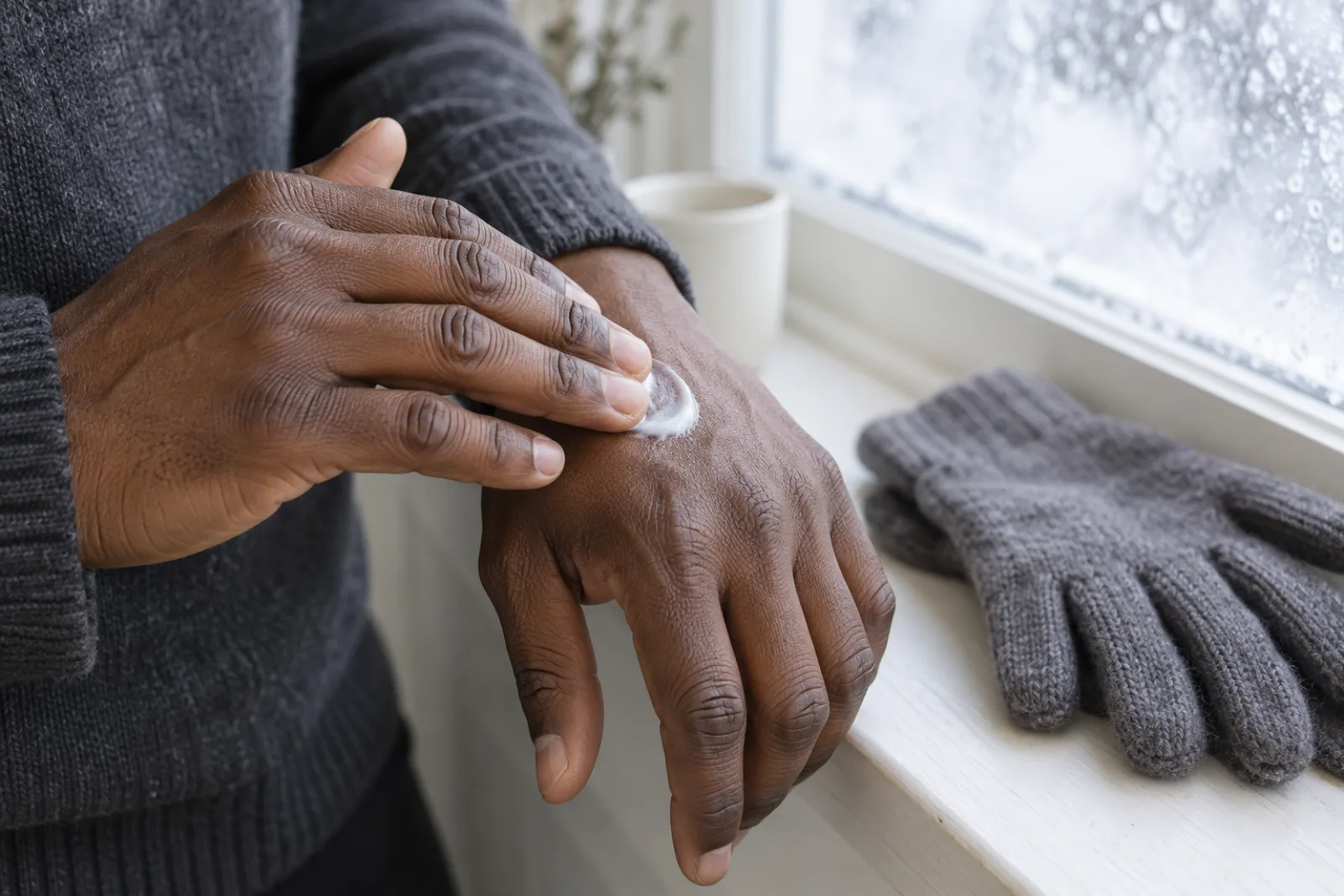
- 01Cream: more than once on cold days
- 02Gloves against cold, dry air
Illustration
From the lab
We would start in November, not in April. Begin in spring and you have rising UV against you from week one. Begin now and by then you know your routine and what your skin puts up with.
A shelf product stays the same in every phase. Your skin doesn't. Because Anita formulates in our own lab in Bielefeld, we can adjust a product when your skin needs something different. That is what Skin Protocol is for.
Your next step
Both routes are fine. Pick the one that fits you today.
- Start this week: gentle cleanser, one active for the spots, moisturiser every day.
- Drop anything that burns or stings. Calm dry, irritated areas first.
- Take a photo once a month in the same light. From spring, add tinted sunscreen in the morning.
Matching products from our lab:

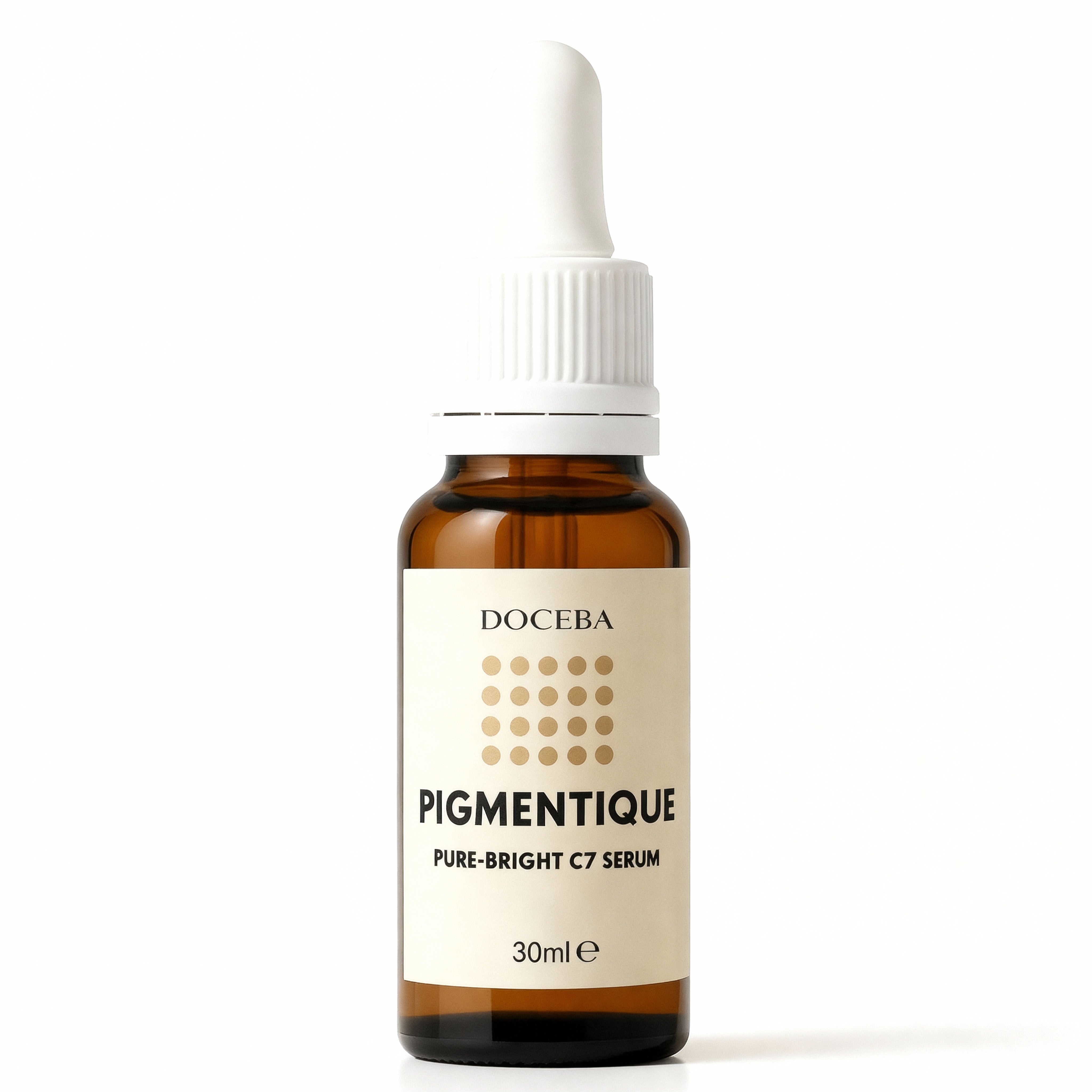
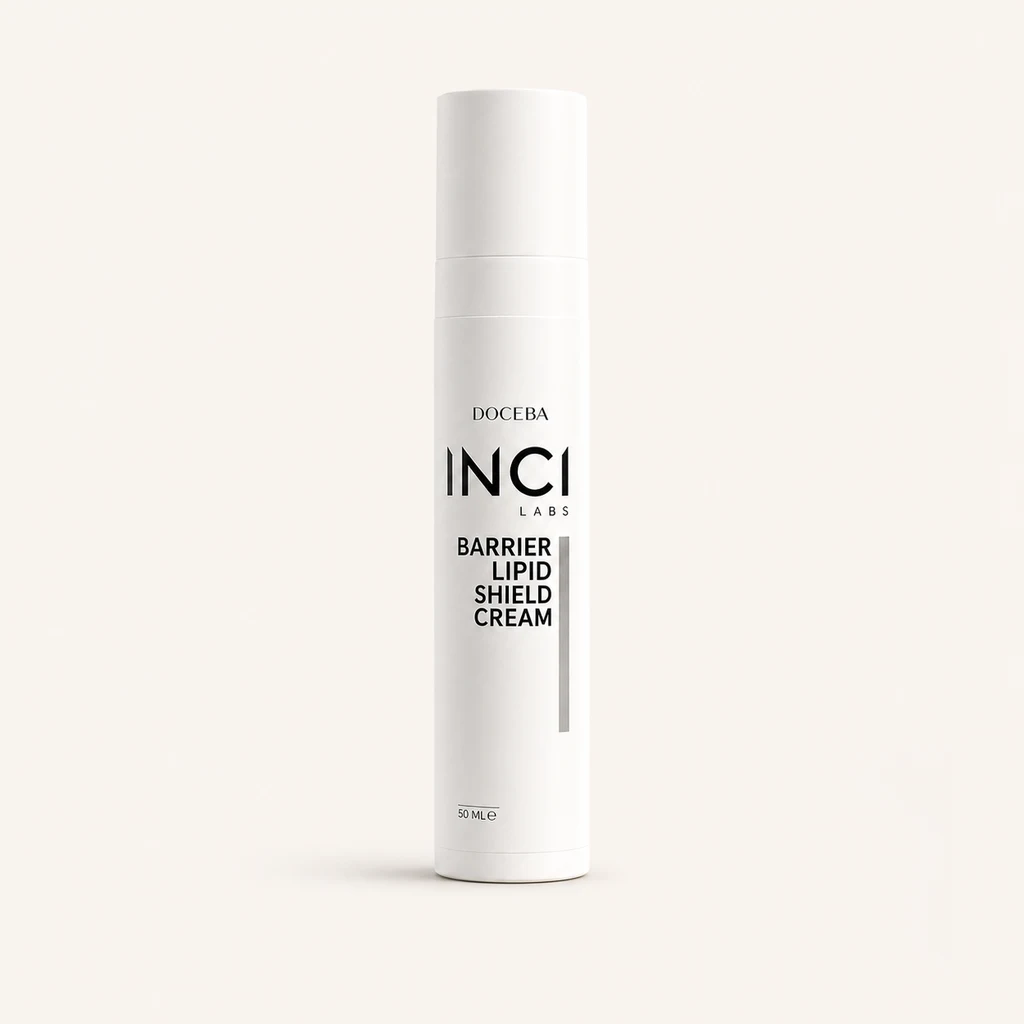
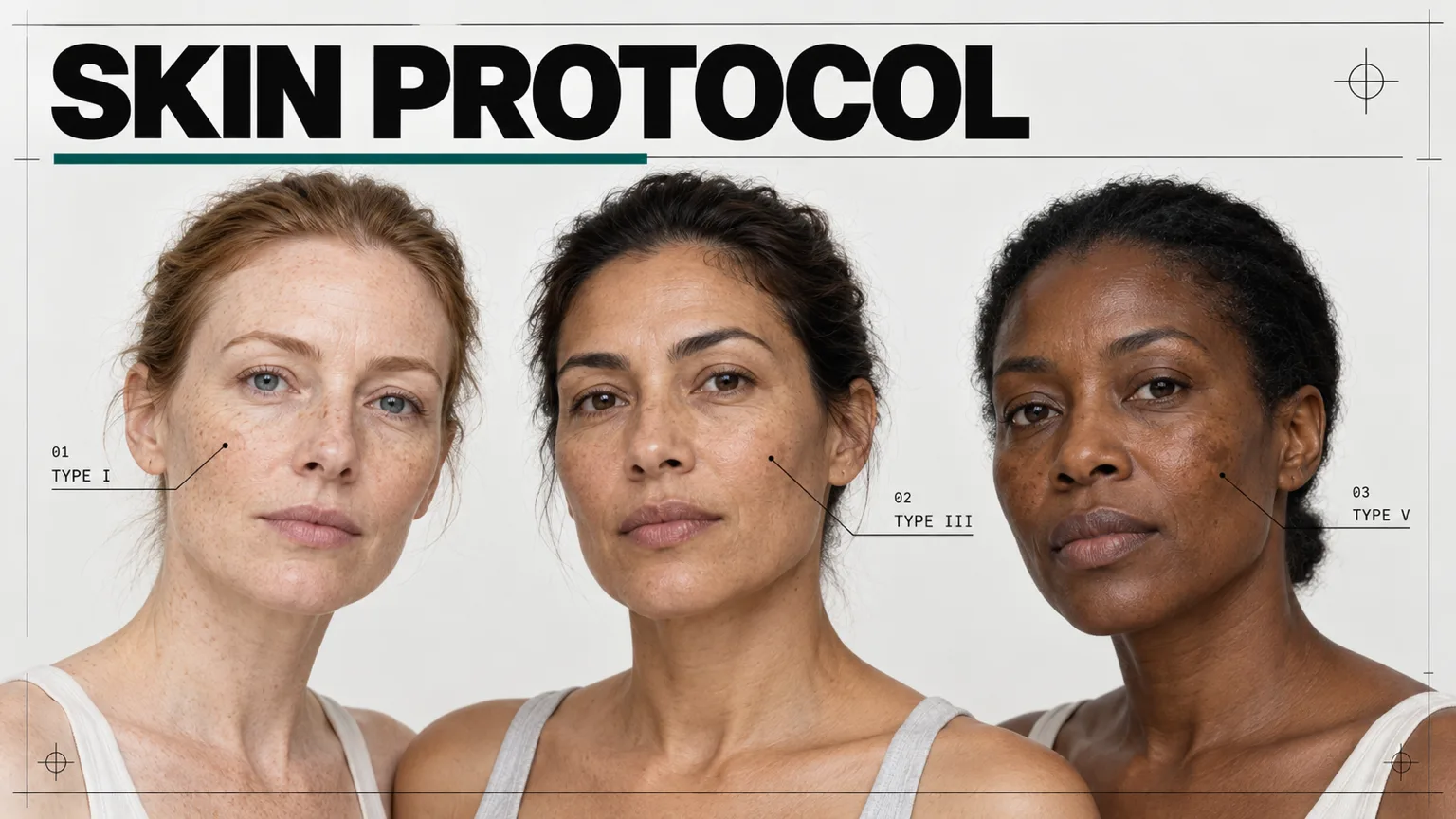
Skin Protocol: a plan for your skin and a team that adjusts it
You get a plan built around your skin and what you've already tried. We check in regularly and adjust products from Anita's lab when your skin needs something different. In English or German.
It starts with a free 20-minute call. We ring you and listen to your skin story, including the dark spots you want to tackle this winter.
Book your free skin callCosmetic advice, not a diagnosis. If you think you have a skin condition, see a doctor first.
Questions you might still have
Do dark spots go away in winter?
Rarely all the way without help. According to the AAD, marks left by inflammation usually fade within 6 to 12 months, and deeper ones take longer. Winter helps because Germany gets very little UV then. [S1][S3]
Why do I get dark spots on my face in winter?
Dry, irritated skin is one possible reason. Cold, dry air weakens the skin barrier, and on melanin-rich skin inflammation can leave a mark behind. Check whether any of your products sting, and moisturise daily. [S8][S2][S1]
Why do I get dark spots on my hands in winter?
Hands face the cold air directly and get washed a lot. If the skin cracks or becomes inflamed, melanin-rich skin can keep a dark mark. Gloves and a cream after washing help. If a spot changes or appears for no clear reason, have a doctor look at it. [S9][S8][S2]
Should I wear sunscreen in winter if I have hyperpigmentation?
For everyday life in Germany, the BfS says winter sun protection isn't needed, but it is in snow, in the mountains and on trips to sunny places. For dark spots, the AAD recommends tinted sunscreen with iron oxide because it also protects against visible light. [S3][S1]
Does melasma get better in winter?
The AAD reports that many people with melasma see their patches become more noticeable in summer and fade in winter. It can return with sun exposure, so see a dermatologist for the diagnosis and a plan. [S6]
Can I start a vitamin C serum in winter?
Yes. The AAD includes vitamin C among the ingredients that can fade existing dark spots. Patch-test it on a small area first and stop if it burns or stings. [S1]
Is winter the right time for a peel or laser?
That is a decision for your dermatologist. DermNet points out that such procedures can also make PIH worse when they injure the top layer of skin, so on melanin-rich skin, raise it at every consultation. [S2]
Sources
- [S1] AAD: How to fade dark spots in darker skin tones ↗
- [S2] DermNet: Postinflammatory hyperpigmentation ↗
- [S3] Bundesamt für Strahlenschutz (BfS): UV-Schutz im Winter ↗
- [S4] Bundesamt für Strahlenschutz (BfS): UV-Index weltweit ↗
- [S5] Bundesamt für Strahlenschutz (BfS): Was ist der UV-Index? ↗
- [S6] AAD: Melasma: Overview ↗
- [S7] Mahmoud BH, Ruvolo E, Hexsel CL et al.: Impact of long-wavelength UVA and visible light on melanocompetent skin. J Invest Dermatol 2010;130(8):2092–2097 ↗
- [S8] Engebretsen KA, Johansen JD, Kezic S, Linneberg A, Thyssen JP: The effect of environmental humidity and temperature on skin barrier function and dermatitis. J Eur Acad Dermatol Venereol 2016;30(2):223–249 ↗
- [S9] AAD: Dermatologists' top tips for relieving dry skin ↗
- [P1] DOCEBA: Barrier Lipid Shield Cream ↗
- [P2] DOCEBA: Pigmentique Pure Bright C7 Serum ↗
- [P3] DOCEBA: Pure Brightening Set ↗
General skincare information, not a diagnosis or an individual treatment plan.
Your bag
Review your items before continuing.
Your bag is empty.