
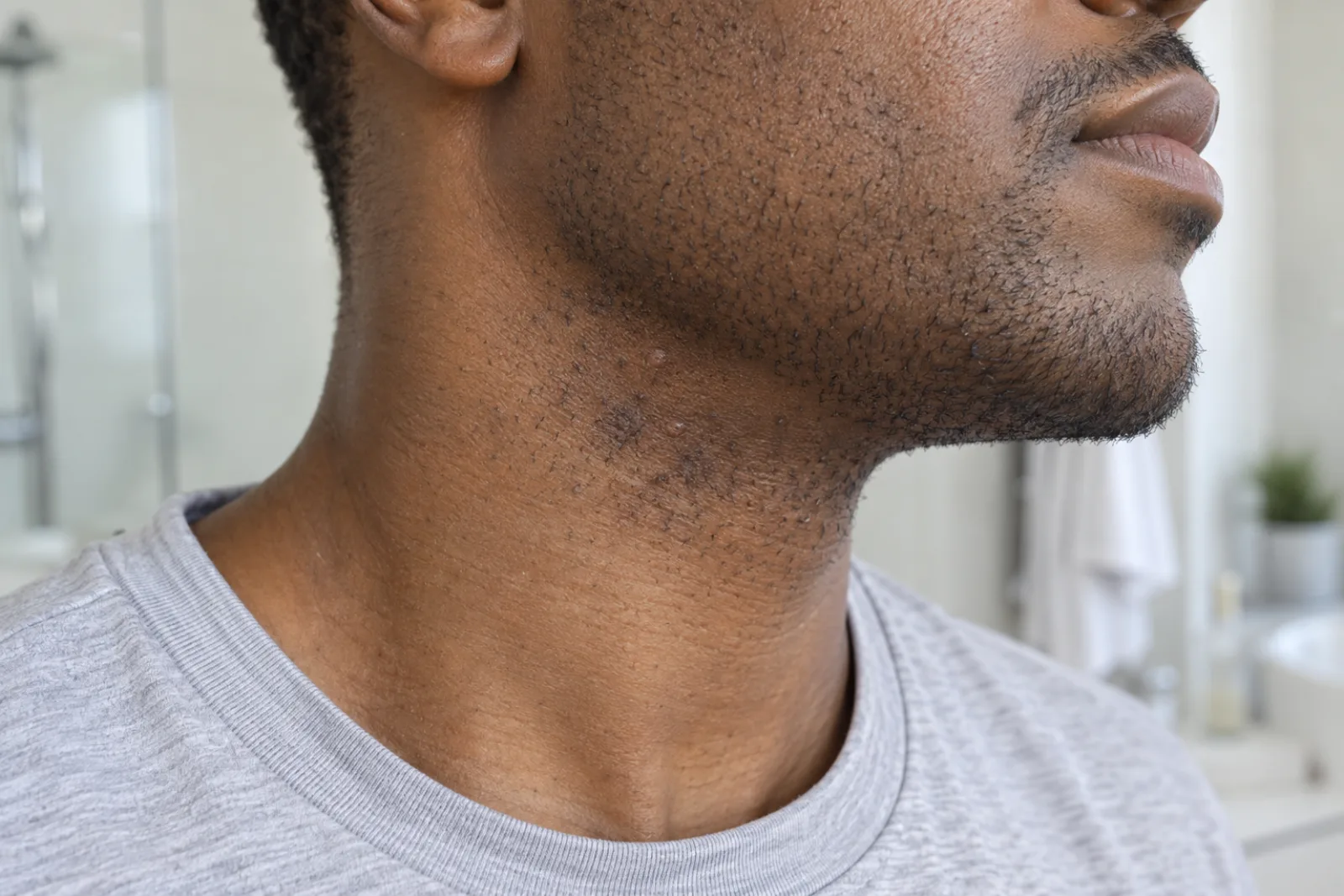
Why do I get dark spots after shaving?
The medical name is pseudofolliculitis barbae. Most people call it razor bumps. The UK's Primary Care Dermatology Society (PCDS) calls it a recurring inflammatory reaction that is usually not caused by infection.
A razor cuts the hair short and leaves it with a sharp tip. Coarse, curly hair doesn't grow straight back out. A 2019 review by Ogunbiyi describes two routes back into the skin. On the first, the hair leaves the pore, then bends and pierces the skin a few millimetres away. On the second, the tip slips below the surface after a very close shave and pushes through the wall of the hair canal from the inside. Stretching the skin or shaving against the grain makes that more likely.
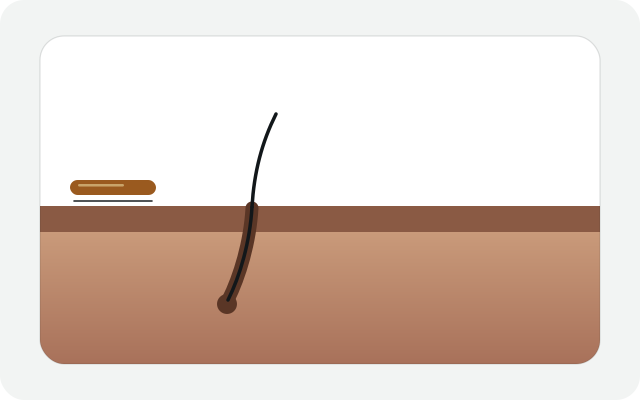 Shaved closeHair curls back into the skinInflammationA dark spot stays
Schematic illustration · not a before-and-after or a treatment result
Your skin treats the hair tip like a splinter and becomes inflamed. Firm bumps or small pus-filled spots form. PCDS notes that itching or burning can begin within 24 to 48 hours of a shave.
The spot comes after the bump. Inflammation pushes pigment cells to make more melanin, the substance that colours skin. On darker skin this discolouration tends to be more intense and to last longer. That is post-inflammatory hyperpigmentation. More in our overview of hyperpigmentation on dark skin.
[S3][S5][S2][S7]Who gets razor bump marks, and why is it so often men?
Anyone who shaves can get ingrown hairs. The NHS says people with coarse or curly hair are more likely to. DermNet says the condition mainly affects men of African ancestry and puts the prevalence at roughly 45 to 80%. Those figures are old, and current ones are missing.
Men are affected more often because they shave their faces. The classic site is under the jawline and on the neck. Women who remove hair on the chin or upper lip see the same thing. Other causes in that area: hyperpigmentation around the mouth.
On dark skin the bumps often don't look red. The NHS describes them on black or brown skin as bumps in a different colour from the skin around them.
Shaved legs and underarms have their own guides: dark spots on legs and dark underarms.
[S4][S2][S5][S3]Blade or trimmer: which is better for your beard?
The shorter the hair, the easier it is for the tip to end up under the skin. So the advice from several sources is the same: don't shave too close. The NHS suggests leaving at least 1 mm of stubble, PCDS says 0.5 to 1 mm, and Ogunbiyi's review says a minimum of 1 mm.
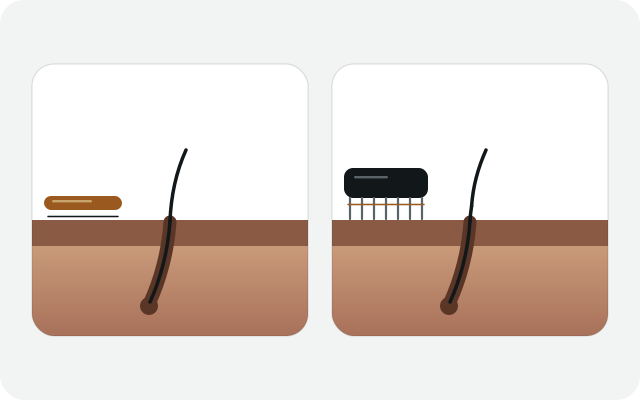 Blade, very closeGuarded trimmerTip slips under the skin1 mm stays above
Schematic illustration · not a before-and-after or a treatment result
Clippers with an adjustable guard make that easy, and Ogunbiyi reports fewer razor bumps with them. The AAD recommends a sharp single-blade razor or an electric razor.
Growing a beard is the most reliable fix. The AAD says you should see fewer bumps within one month and none after three. If your job requires a clean shave, PCDS notes that a letter from your GP may support a request not to shave.
[S4][S3][S5][S1]How do I shave without getting new dark spots?
If you keep using a blade, technique matters. The AAD has a sequence for men with darker skin tones:
- Cleanse. Use a gentle cleanser and warm water.
- Soften. Hold a warm washcloth on your beard for five minutes, or shave after your shower.
- Shaving cream or gel. Apply it and leave it on for one to two minutes. Never dry shave, even with an electric razor.
- Sharp blade. Replace a single blade after five to seven shaves.
- With the grain. Short strokes in the direction the hair grows, twice over each area at most. Don't stretch the skin.
- Rinse and cool. Remove all the cream with warm water, then hold a cool cloth on the skin for five minutes.
- Soothe. Use an aftershave made for skin that gets razor bumps. If it burns or stings, stop using it.
Don't pluck a hair out of a bump. The AAD warns that this causes new ones. Scratching and squeezing can damage the skin and lead to infection, says the NHS.
On how often to shave, the sources disagree. The NHS and PCDS say to avoid shaving every day. Ogunbiyi argues that after long gaps the hair has reached the length at which it pierces the skin. They all agree on leaving about 1 mm.
Skin needs moisture after a shave. DermNet lists moisturising among its general measures for razor bumps.
[S1][S4][S3][S5][S2]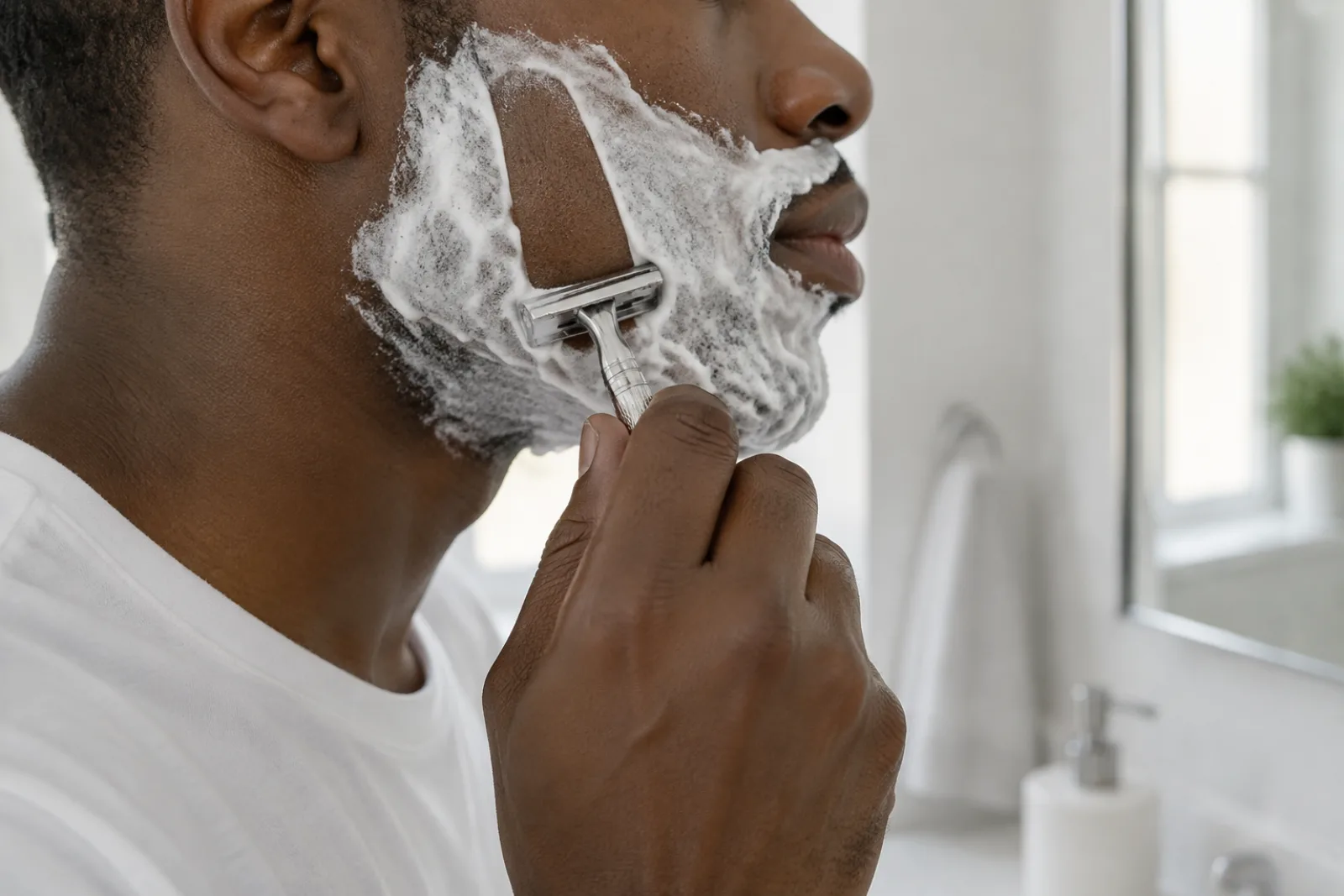
Foam on, one sharp blade, short strokes in the direction the hair grows. The free hand doesn't stretch the skin.
Illustration
How do I fade dark spots from shaving?
The AAD puts one condition before everything else: the cause has to stop. While every shave sets off fresh inflammation, your skin keeps adding colour in the same place.
Sunscreen is the second part. Sun exposure can make existing patches darker, DermNet writes. For darker skin tones the AAD recommends a tinted sunscreen with iron oxide and SPF 30 or higher. Iron oxide also protects against visible light, which the AAD names as a cause of dark spots. We are working on our own sunscreen at the moment. If you are buying one now, choose a tinted one. There is more in sunscreen for hyperpigmentation on dark skin.
Active ingredients are the third part. For dark spots the AAD lists five: azelaic acid, glycolic acid, kojic acid, retinoids, vitamin C. PCDS mentions superficial peels with salicylic or glycolic acid for both bumps and marks.
We don't make a product with azelaic acid, glycolic acid, salicylic acid, retinoids or hydroquinone. Vitamin C is where we come in. Pure Bright C7 Serum is a face serum with a vitamin C derivative that helps dark spots look less visible. If a doctor prescribes you something, ask whether the serum fits alongside it. Apply it to calm skin, not straight after a shave. The AAD says to stop any product that burns or stings.
[S6][S7][S3]How long do razor bump marks take to fade?
There are two phases. First the bumps settle. PCDS and DermNet say the skin often calms down 4 to 6 weeks after you stop shaving close.
Then the mark fades. If it is a few shades darker than your skin, the AAD says it usually fades within 6 to 12 months once the cause has stopped. Deeper pigment can take years. Those marks look slate blue to grey, or much darker brown than your natural tone.
[S3][S2][S1][S6]Based on the AAD, not a promise. The clock only starts once new razor bumps stop appearing.
What routine works for your face and beard area?
In the morning, cleanse gently, put the vitamin C serum on the spots, moisturise and finish with tinted sunscreen. At night you only need the cleanser and the cream. On shaving days, skip the serum if your skin stings.
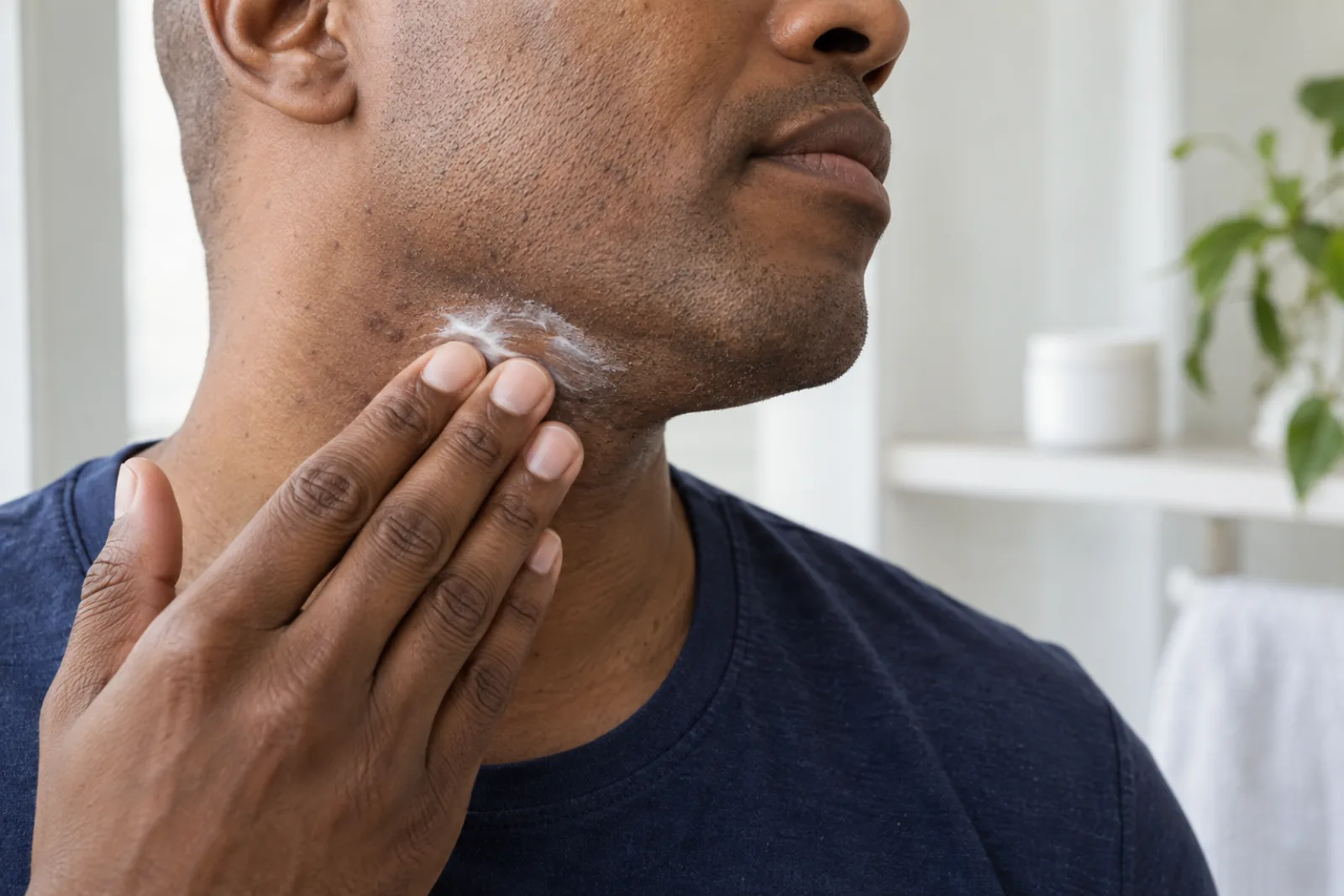
Press it in gently, don't rub. If a cream stings on freshly shaved skin, stop using it.
Illustration
Our Pure Brightening Set brings four products for this: a cleanser, a booster serum, Pure Bright C7 Serum and Barrier Lipid Shield Cream. You add the sunscreen yourself for now. Step by step: routine for hyperpigmentation on dark skin.
[S6]When should you see a doctor?
These situations call for a doctor:
- The area is very painful, hot or swollen, or you have a high temperature (NHS).
- The bumps keep coming back even with a new technique. The AAD warns of permanent deep grooves and raised scars on the face.
- Thick, raised scars (keloids) are forming. PCDS mentions steroid injections as a treatment for thick scars.
- You aren't sure these are razor bumps. DermNet names bacterial folliculitis, a fungal beard infection and acne as look-alikes.
Laser hair removal reduces hair density, though it can occasionally lighten or darken the surrounding skin. More on that: laser and peels on dark skin. This page is a skincare guide and does not replace a diagnosis.
[S4][S1][S3][S2]From the lab
For marks in the beard area we wouldn't start with a serum, not even our own. While shaving keeps setting off new inflammation, any active ingredient is working against your routine. Fix the shave first. Care and serum come after.
A shelf product stays the same in every phase. Your skin doesn't. Because Anita formulates in our own lab in Bielefeld, we can adjust a product when your skin needs something different. That is what Skin Protocol is for.
Your next step
Both routes are fine. Pick the one that fits you today.
- For four weeks, stop shaving skin-close: use a trimmer with a guard and leave about 1 mm.
- Cool and moisturise after every shave, and wear tinted sunscreen in the morning.
- Once new bumps stop, start a vitamin C serum on the marks. Take a photo once a month in the same light.
Matching products from our lab:
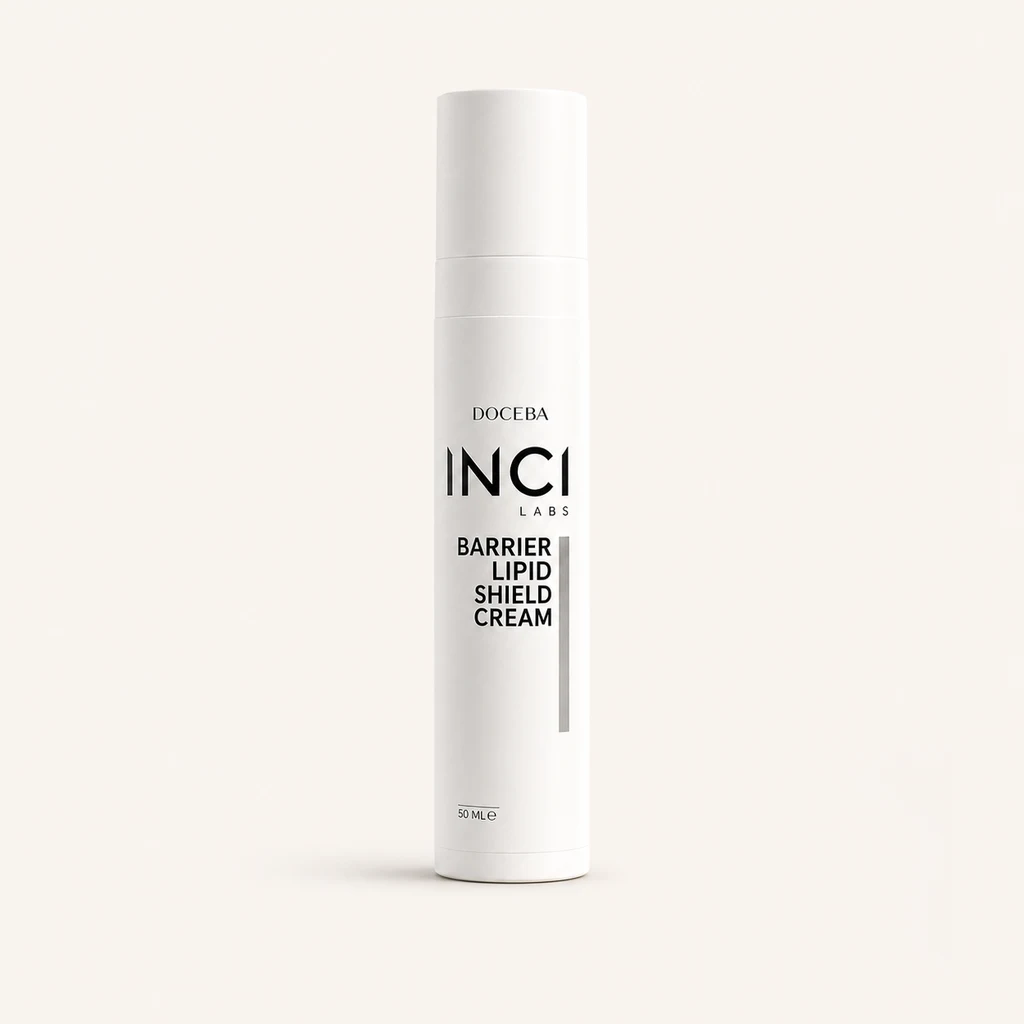
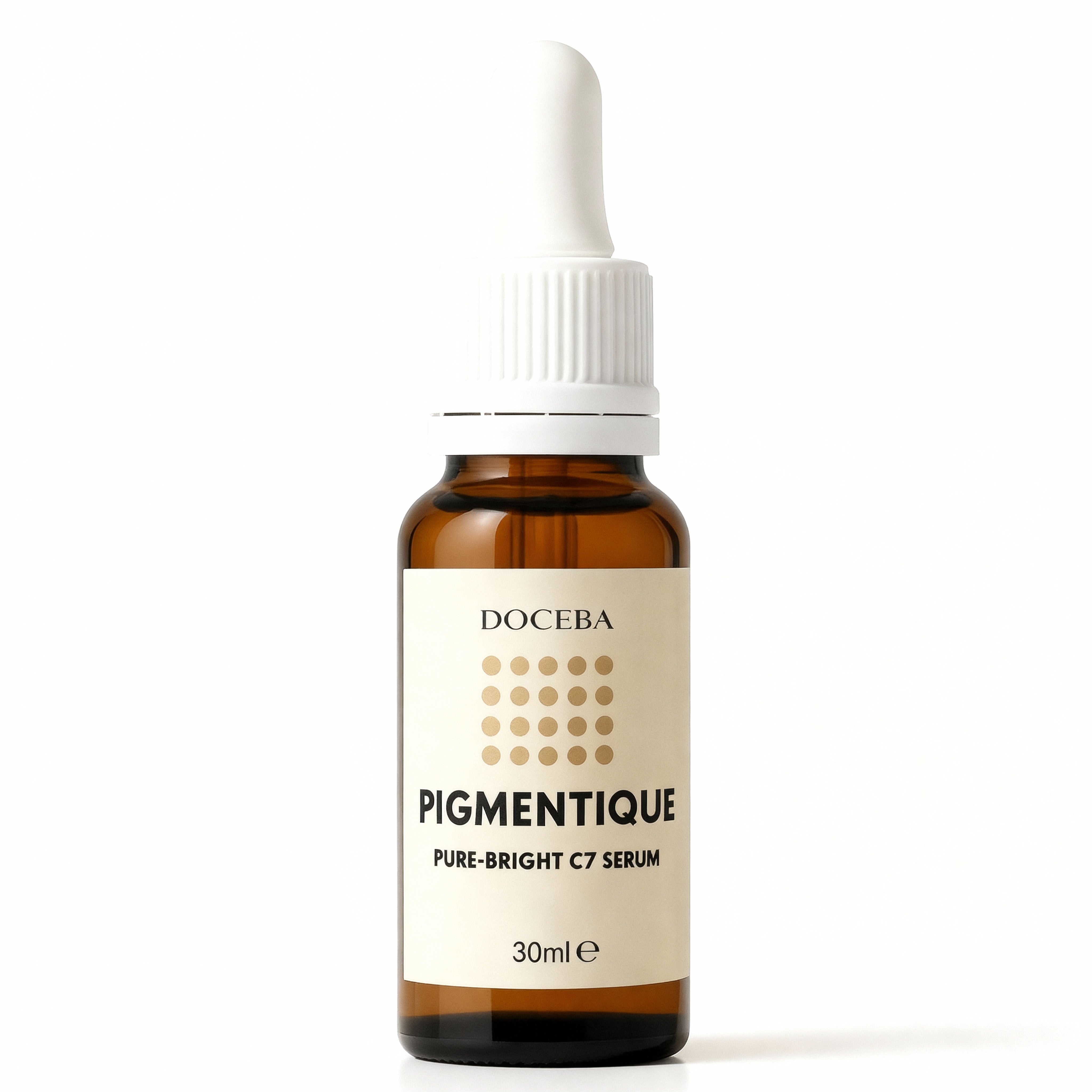

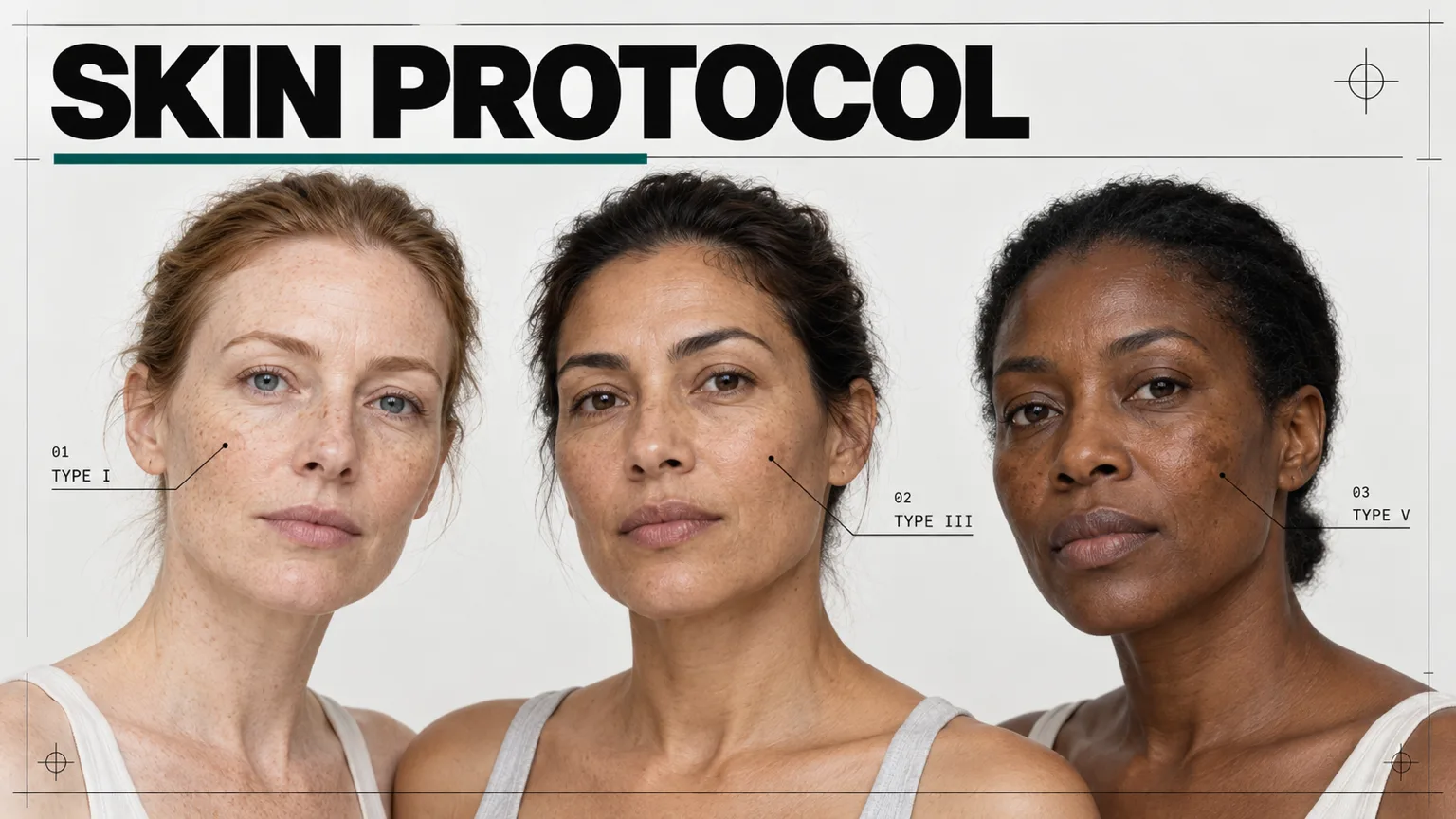
Skin Protocol: a plan for your skin and a team that adjusts it
You get a plan built around your skin and what you've already tried. We check in regularly and adjust products from Anita's lab when your skin needs something different. In English or German.
It starts with a free 20-minute call. We ring you and listen to your skin story, including marks in the beard area.
Book your free skin callCosmetic advice, not a diagnosis. If you think you have a skin condition, see a doctor first.
Questions you might still have
Do dark spots from shaving go away?
Usually, yes, as long as no new inflammation is added. The AAD says a spot a few shades darker than your skin usually fades within 6 to 12 months. Deeper pigment can take years. [S6]
How do I prevent razor bumps on dark skin?
Don't shave skin-close. Leave about 1 mm, which is easiest with a trimmer and a guard. Go with the grain and don't stretch the skin. Growing a beard is the most reliable option. [S1][S3][S4]
Sources
- [S1] AAD: Razor bump remedies for men with darker skin tones ↗
- [S2] DermNet: Pseudofolliculitis barbae ↗
- [S3] Primary Care Dermatology Society (PCDS): Pseudofolliculitis, patient information leaflet ↗
- [S4] NHS: Ingrown hairs ↗
- [S5] Ogunbiyi A: Pseudofolliculitis barbae; current treatment options. Clin Cosmet Investig Dermatol 2019;12:241–247 ↗
- [S6] AAD: How to fade dark spots in darker skin tones ↗
- [S7] DermNet: Postinflammatory hyperpigmentation ↗
- [P1] DOCEBA: Barrier Lipid Shield Cream ↗
- [P2] DOCEBA: Pigmentique Pure Bright C7 Serum (V2) ↗
- [P3] DOCEBA: Pure Brightening Set ↗
General skincare information, not a diagnosis or an individual treatment plan.
Your bag
Review your items before continuing.
Your bag is empty.