
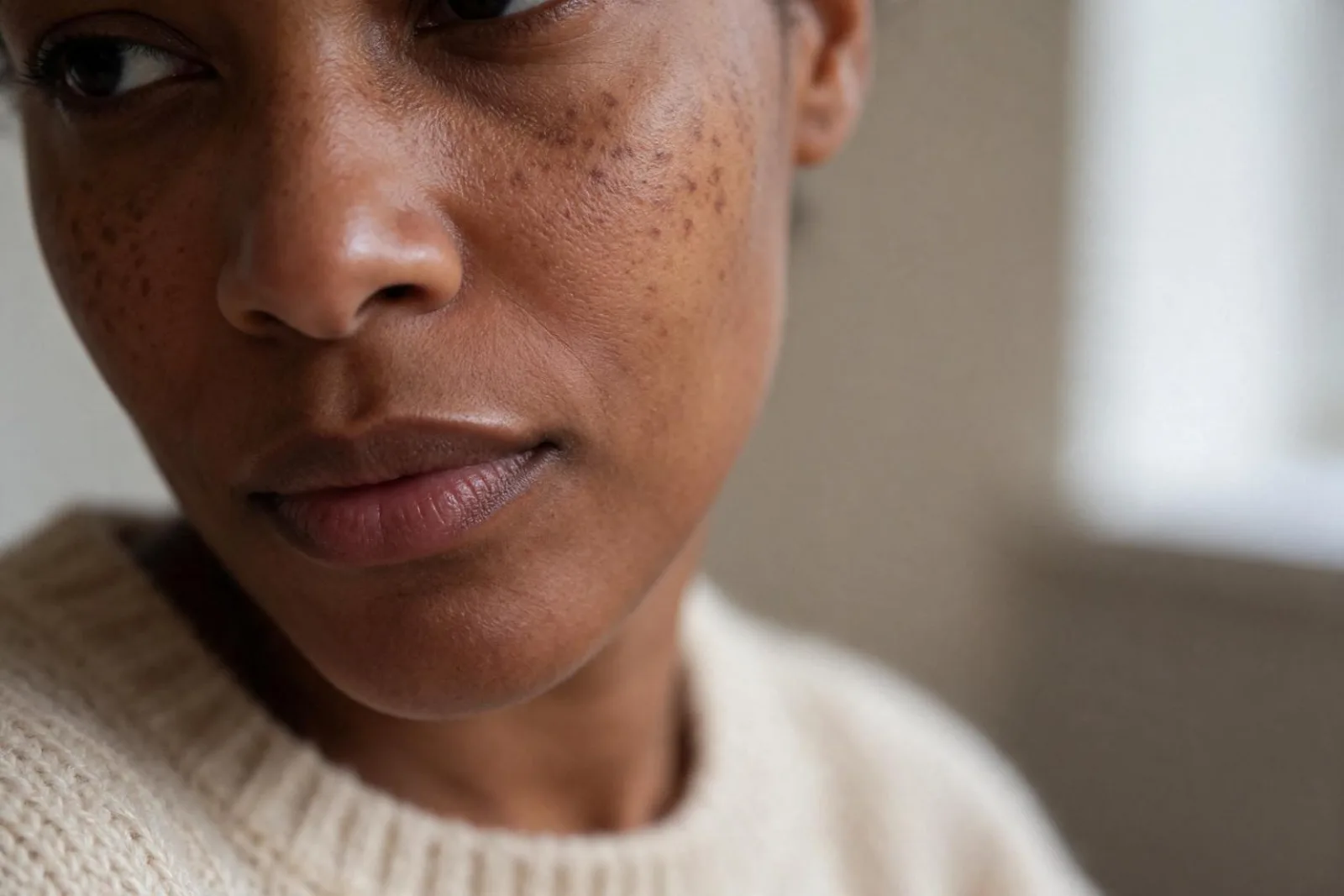
Dark patches on your face can wear you down, especially when they stay no matter what you put on them. Look for an explanation and you soon meet three words, hyperpigmentation, PIH and melasma, and often end up more confused than before.
Let me sort them out. Hyperpigmentation is the umbrella term for skin that is darker than the area around it. PIH is a dark mark that stays after inflammation, for example after a pimple. Melasma is its own form with its own triggers, and that is what this guide is about.
I will show you how to check with four questions whether your patches fit melasma, and what to do after that.
Is it melasma? How to do the self-check
Melasma happens when your skin makes more melanin, the pigment behind your skin colour, in certain areas. It shows up as brownish spots or patches on the face, typically on the cheeks, forehead, nose and chin or above the upper lip. It is not contagious.
Stand in front of a mirror in daylight and answer these four questions:
- Are the patches on your face, and do both sides look similar, almost like a mirror image?
- Do they get darker in summer or after days in the sun?
- Did they appear during a pregnancy or after you started the pill?
- Does anyone else in your family have patches like these?
The more questions you answer with yes, the better the picture fits melasma.
Then check for the opposite sign. A single spot exactly where a pimple or a small wound used to be points more towards PIH. How to tell the two apart in more detail is in melasma vs. hyperpigmentation.
If you are unsure, a visit to a dermatologist is a good idea. A close look is usually all it takes, sometimes with a special lamp (a Wood lamp) or a lit skin magnifier.
[S1][S4][S7]
Melasma often shows as patches on both cheeks, the forehead and the upper lip.
Illustration
Why melasma on dark skin is so common
Women with medium to dark skin tones are the most likely to get melasma. On the Fitzpatrick scale, which groups skin from type I (very fair) to type VI (very dark), it mostly affects types III and IV.
On very dark skin melasma is less common, but it does happen. Women get it far more often than men, and it usually starts between 20 and 40.
If your skin tone is medium to dark and several answers from the self-check fit, it is worth protecting your skin carefully from today.
[S1][S4]What triggers melasma, and what makes it darker?
Light is a main trigger. UV rays and visible light both push melanin production, and on darker skin tones visible light in particular can make melasma worse. Tanning beds make it worse and can keep a treatment from working.
Hormones are another trigger. For some women melasma starts during a pregnancy or with the pill, and in about a quarter of affected women hormonal factors like these play a part.
Family matters too. Around 60 percent of people with melasma have relatives who have it.
Irritated skin can darken the patches further. If a product burns or stings on your face, stop using it.
[S1][S3][S4][S6]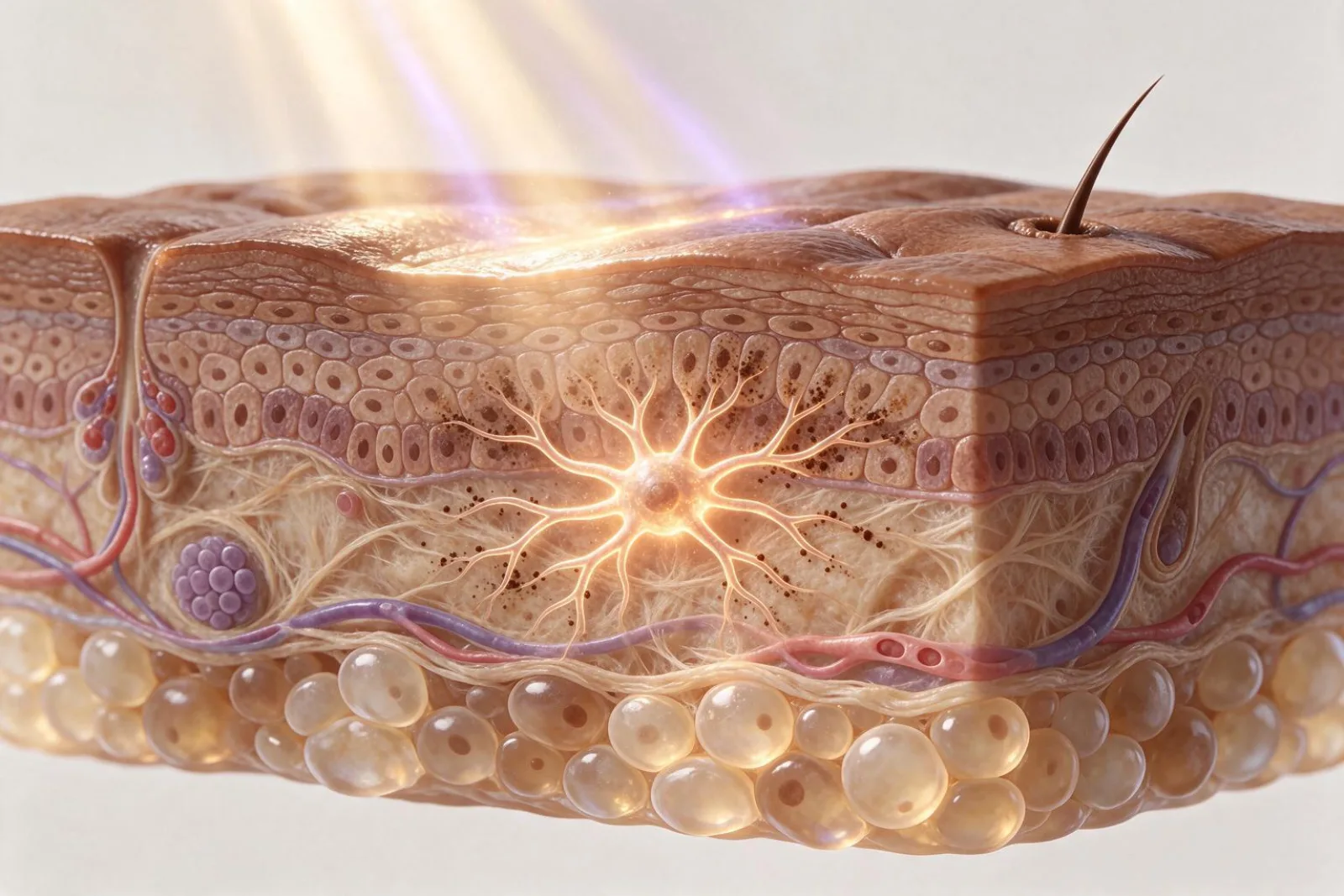
- 01UV and visible light
- 02Pigment cell makes more melanin
UV and visible light stimulate melanin production.
Simplified illustration
How do you protect skin with melasma every day?
Sun protection is the base everything else builds on. These four steps cover it:
- Use a tinted, water-resistant sunscreen with iron oxides, broad-spectrum (so it covers UVA and UVB rays), and SPF 30 or higher every day, also when it is cloudy.
- Apply it 15 minutes before you go outside.
- Reapply at least every two hours while you are outdoors.
- Add a wide-brimmed hat, ideally one with a UPF number on the label, which is a sun protection rating for fabric.
The tint matters for melasma, because its iron oxides also protect against visible light.
Keep going even when the patches get lighter. Melasma often returns as soon as your skin gets sun without protection, sometimes after a single summer.
We are working on our own sunscreen right now. If you buy one now, choose a tinted one. What to look for is covered in sunscreen for dark skin.
[S3][S4]
Illustration
Which treatments can a dermatologist offer?
If sunscreen alone is not enough and the melasma bothers you, a dermatologist can make a plan for you. It is based on your skin tone, how deep the pigment sits and your triggers. Expect 3 to 12 months before you see results, and longer for melasma you have had for years.
Hydroquinone is a well-known active against melasma. In the EU it is banned in skin and face creams, and in the US it is only available on prescription now. We do not carry it. More in skin bleaching risks.
Tretinoin is another option, often combined with a mild corticosteroid, as are gentler actives such as azelaic acid, kojic acid and vitamin C. We do not carry azelaic acid, kojic acid or retinoids.
If none of these work, tranexamic acid as a tablet may be an option, usually twice a day. Your doctor will ask about any past blood clots first. We do not carry tranexamic acid. More in tranexamic acid for hyperpigmentation.
Chemical peels, microneedling and lasers belong in a dermatologist's hands. Peels and lasers can also make melasma worse.
A product of our own for melasma is in the works. Our Mela Bright is still in development. If it is not linked here yet, it is not online yet.
[S2][S4][S5]What you can do yourself, and what our C7 Serum is for
Choose gentle, fragrance-free skin care and skip tanning beds. If you want to cover the patches, use camouflage makeup or a concealer as the last step, after your skin care and sunscreen.
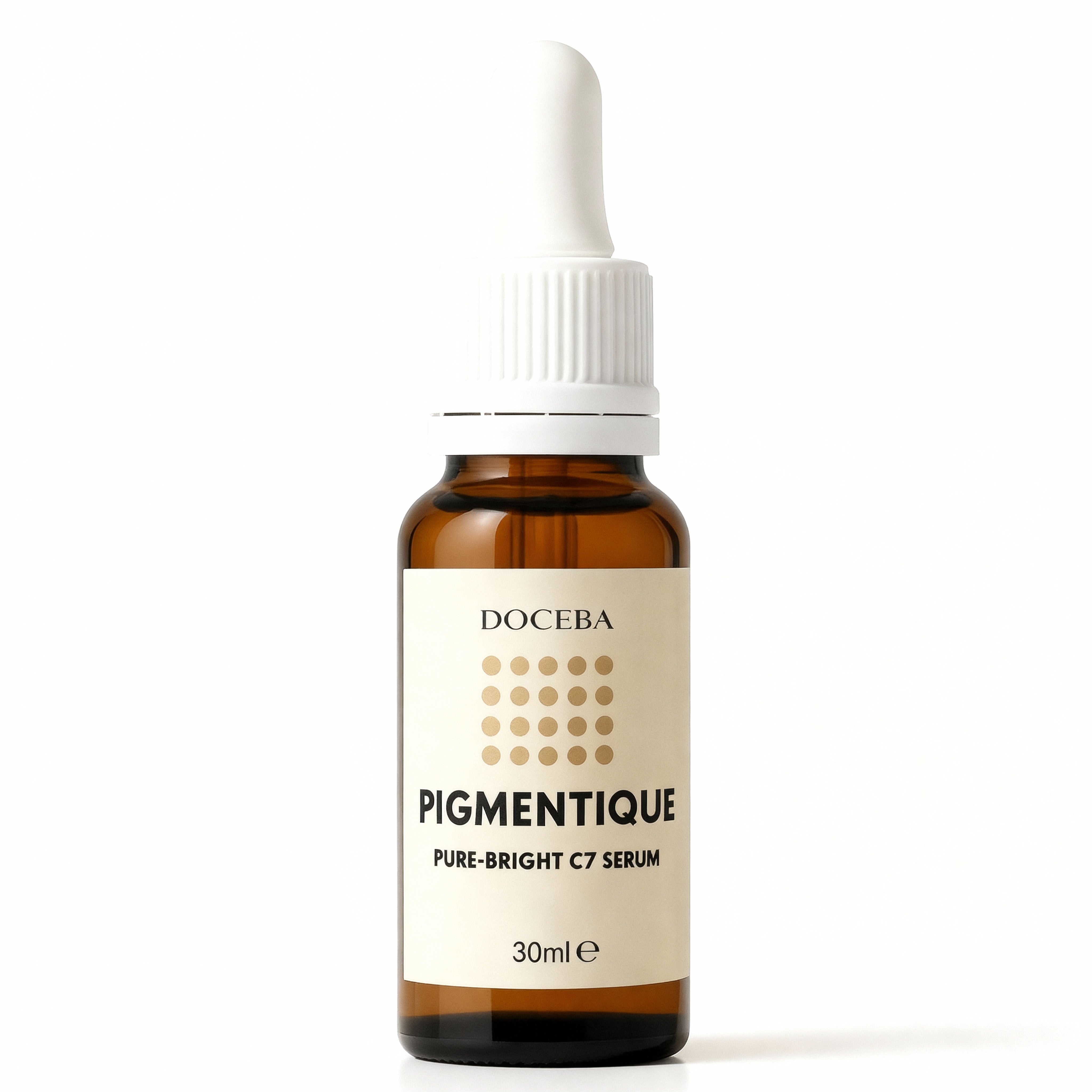
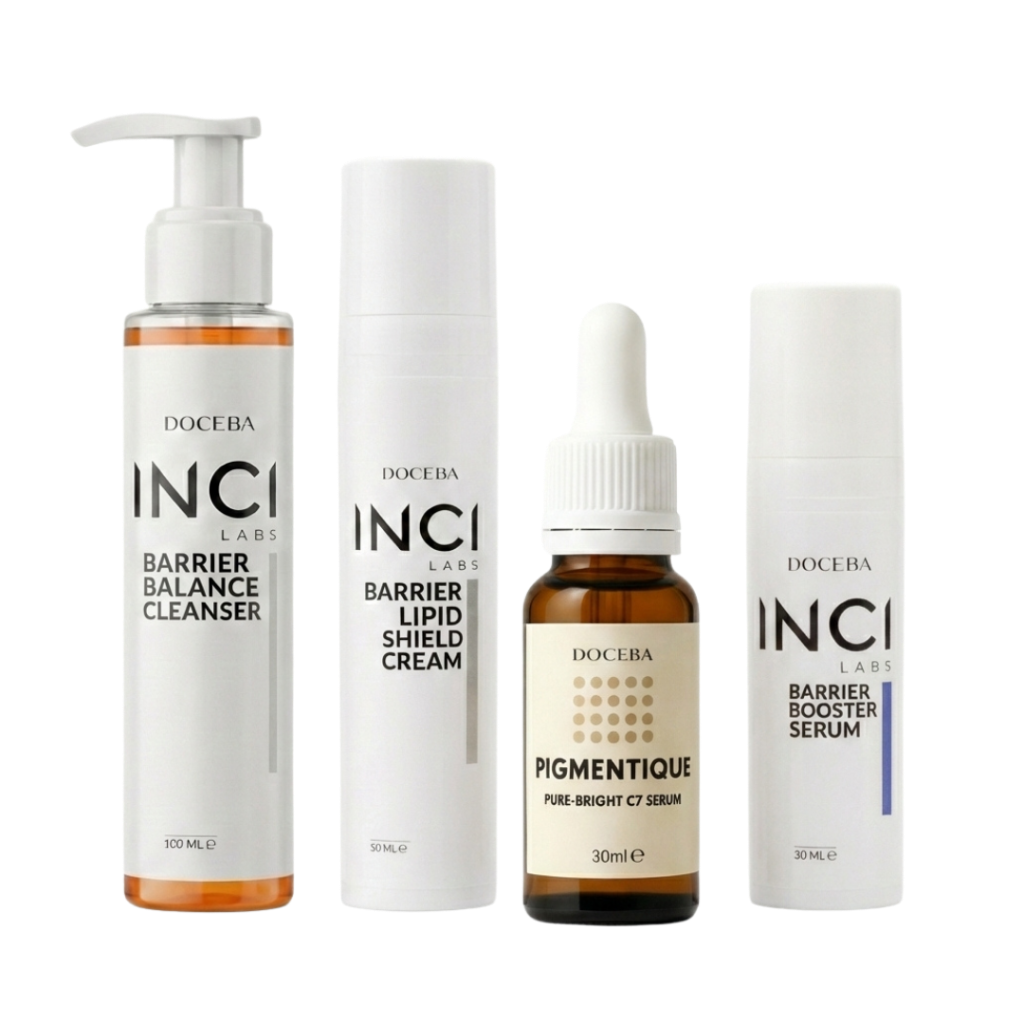
For dark spots on the face, we developed the Pure Bright C7 Serum in our lab. It contains 3-O-Ethyl Ascorbic Acid, a form of vitamin C, plus ferulic acid and hyaluronic acid, and makes dark spots fade visibly. With melasma, it cares for your skin and can make the patches look lighter, but it does not treat the melasma itself. It is a cosmetic and does not replace medical treatment. If you already use a prescribed melasma cream, talk to your dermatologist first.
If you want a fixed order, the Pure Brightening Set brings together a cleanser, Booster Serum, C7 Serum and the Barrier Lipid Shield Cream. Add a tinted sunscreen yourself.
Start with the self-check today and wear a tinted sunscreen every day from tomorrow.
[S2][S3]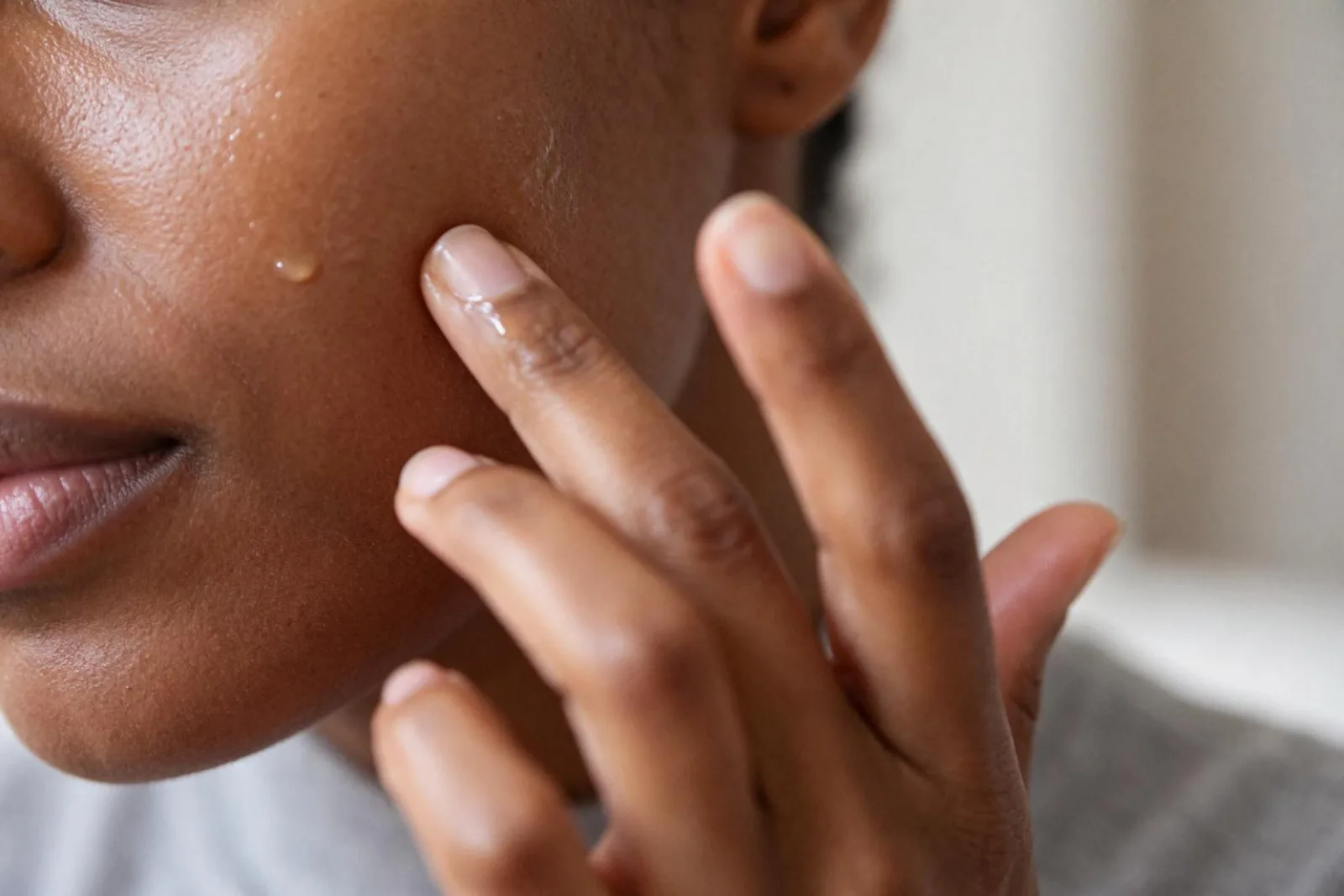
Illustration
How do you want to go on?
With melasma, patience and sunscreen count most. You can take it on alone or get support.
- Do the four-question self-check. If you are unsure, a visit to a dermatologist is a good idea.
- Wear a tinted sunscreen with iron oxides and SPF 30 or higher every day and reapply it every two hours outdoors.
- Choose gentle, fragrance-free care and stop any product that burns or stings.
Matching products from our lab:
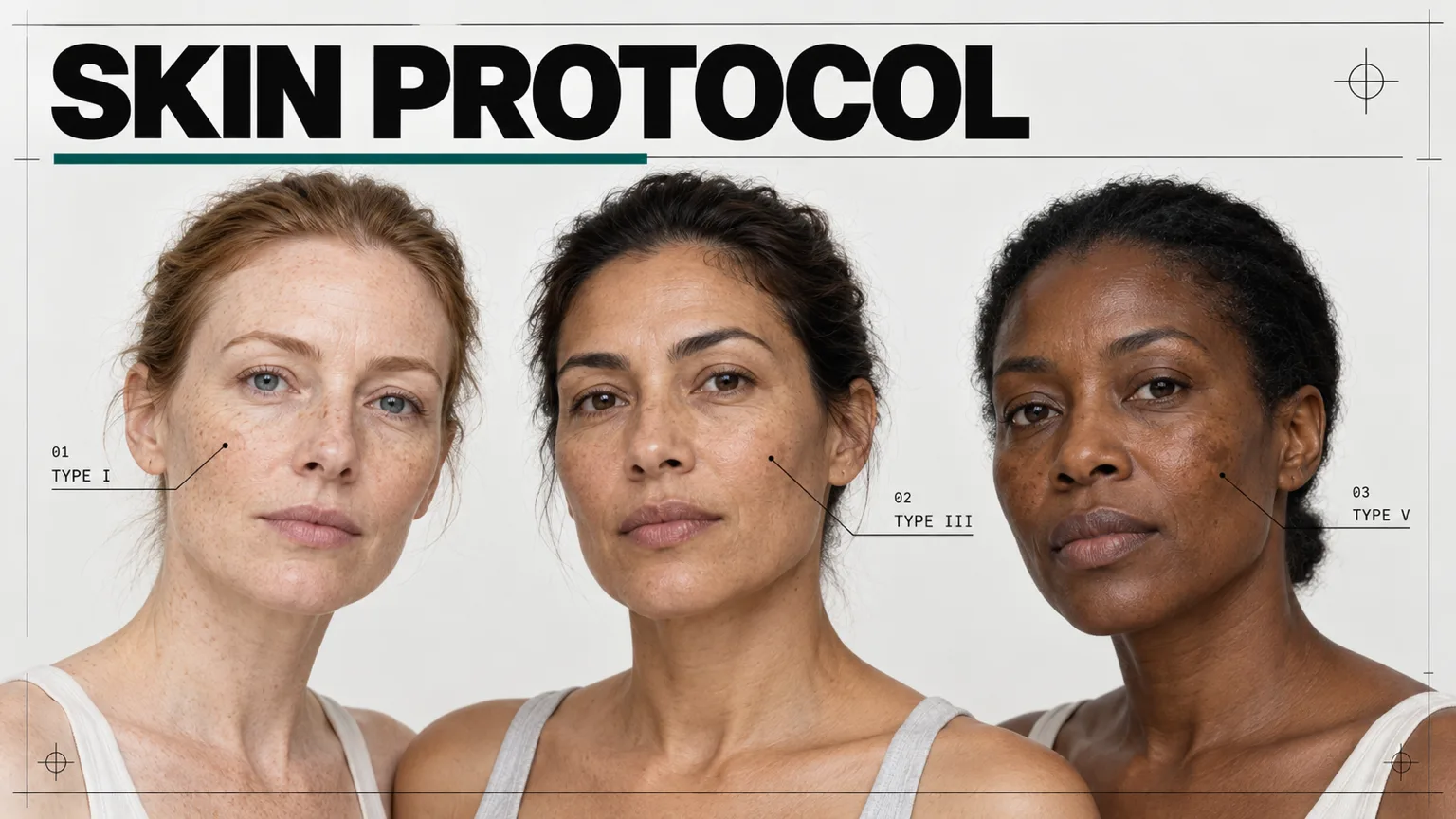
Skin Protocol: a plan for your skin and a team that adjusts it
You get a plan built around your skin and what you've already tried. We check in regularly and adjust products from Anita's lab when your skin needs something different. In English or German.
It starts with a free 20-minute call. We ring you and listen to your skin story, including your routine for dark spots.
Book your free skin callCosmetic advice, not a diagnosis. If you think you have a skin condition, see a doctor first.
Frequently asked questions
How do I recognise melasma on my face?
Look for brownish spots or patches that are spread similarly on both sides of your face and get darker in the sun. If you are unsure, a visit to a dermatologist is a good idea. [S1][S4]
What is the difference between melasma and PIH?
PIH is a dark mark in a spot where there was inflammation before, such as a pimple. Melasma tends to show up as patches on both sides of the face and is linked to light and hormones. Both fall under the umbrella term hyperpigmentation. [S1][S4]
Does melasma go away on its own?
Sometimes. After a pregnancy or once you stop the pill, it can fade. It can also stay for years. Daily sunscreen helps keep it from coming back. [S1][S2]
How long does melasma treatment take?
Usually 3 to 12 months before you see results, longer if you have had melasma for a long time. [S2]
Which cream helps with melasma?
Dermatologists use tretinoin, azelaic acid, kojic acid and vitamin C, among others, always together with a tinted sunscreen every day. Which one suits you is best decided with your dermatologist. Of these actives, we only carry vitamin C in cosmetic form, in the Pure Bright C7 Serum. [S2][S3]
Sources
- [S1] American Academy of Dermatology: Melasma: Overview ↗
- [S2] American Academy of Dermatology: Melasma: Diagnosis and treatment ↗
- [S3] American Academy of Dermatology: Melasma: Self-care ↗
- [S4] DermNet: Melasma ↗
- [S5] Verordnung (EG) Nr. 1223/2009 über kosmetische Mittel, Anhang II Nr. 1339 ↗
- [S6] American Academy of Dermatology: How to fade dark spots in darker skin tones ↗
- [S7] DermNet: Postinflammatory hyperpigmentation ↗
General skincare information, not a diagnosis or an individual treatment plan.
Your bag
Review your items before continuing.
Your bag is empty.