
Dark patches on your face can stay on your mind, especially when you don't know what they are. Read up on them and you soon meet melasma, hyperpigmentation and PIH, and end up more confused than before.
Let me sort them out. Hyperpigmentation is the general word for skin that is darker than the area around it. PIH is the mark left behind after inflammation or an injury, for example after a pimple. Melasma is its own form, with its own triggers such as sun and hormones.
I'll show you how to recognise each one, how to sort your spots with three questions, and what your skin needs in both cases.
How do I recognise melasma on my face?
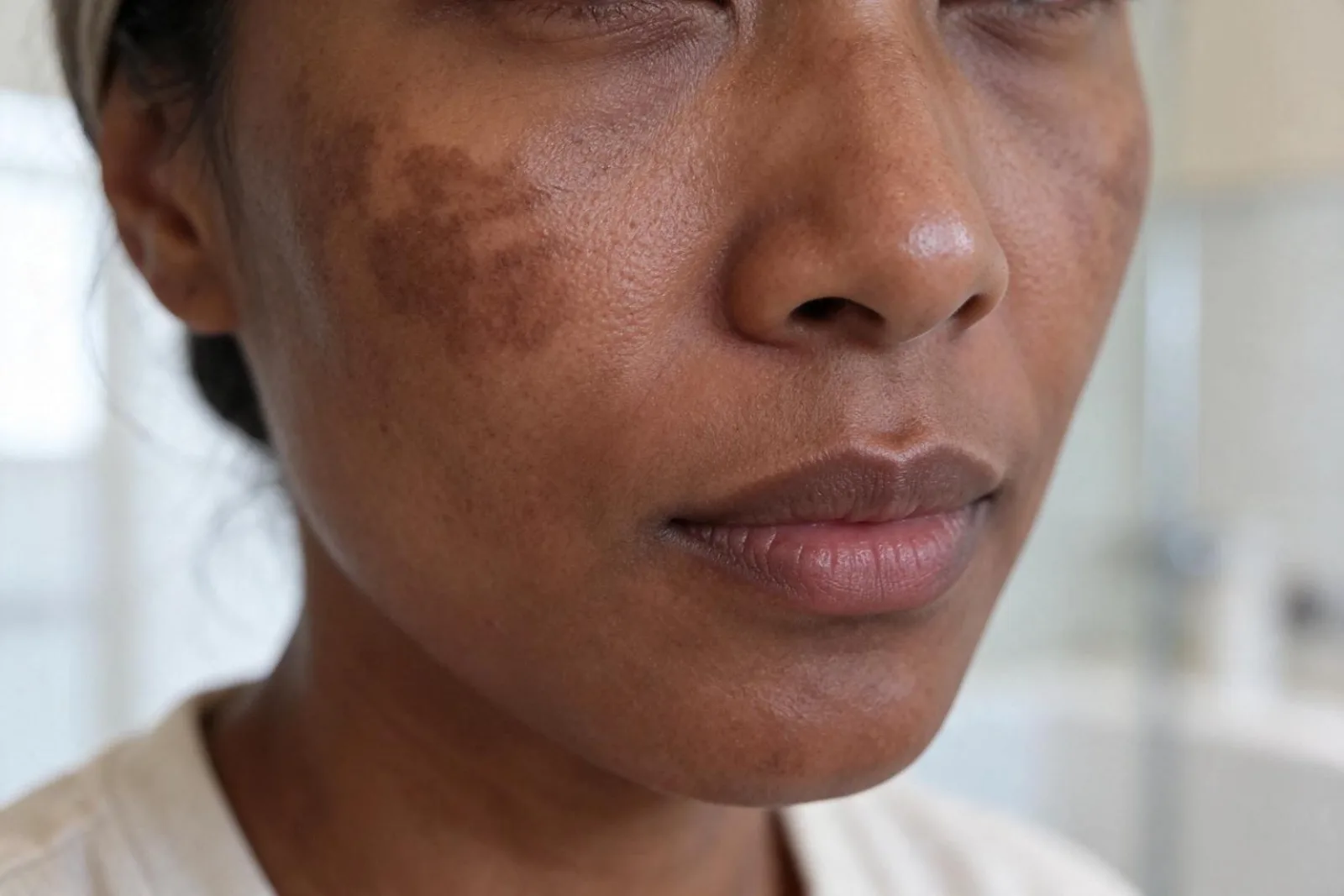
Melasma means patches and spots that are darker than your natural skin tone, usually on the face. The colour can be tan, brown, grayish brown or bluish gray. Typical places are the cheeks, forehead, chin and the skin above the upper lip.
Three features help you spot it. Melasma usually sits on both sides of the face, it doesn't itch, and its edges are irregular. On the upper lip, the groove between nose and lip is often spared. Run a finger over it and you won't feel a bump, because the area is flat.
Sun, pregnancy, stress, medical conditions and certain medicines can all trigger melasma. Some women first notice it during pregnancy or when they start the pill. If your patches are around the mouth, read hyperpigmentation around the mouth too.
[S1][S2][S3]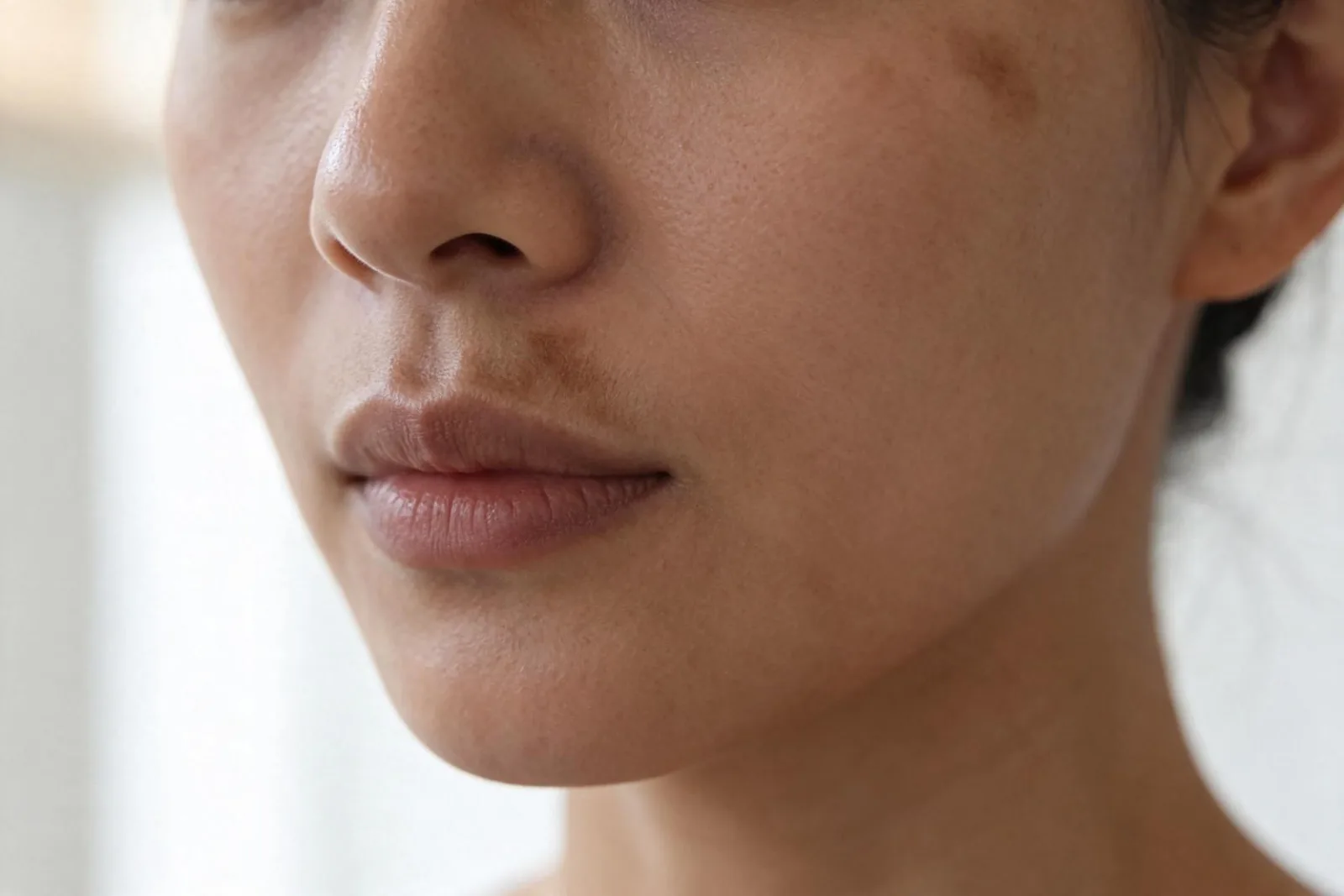
A soft brownish patch above the upper lip, like a shadow.
Illustration
What are acne marks, and what do they look like?
An acne mark is colour left behind in the skin after inflammation. The medical term is post-inflammatory hyperpigmentation, PIH for short. The skin makes extra melanin, its brown pigment. The cause can be a pimple that clears, or a wound from an insect bite, a cut or a burn.
PIH sits exactly where the inflammation was, and it shows once that has healed. If you find a dark dot on your chin where a pimple was a few weeks ago, that fits PIH. On darker skin PIH is more common, the colour is more intense, and it lasts longer.
A spot a few shades darker than your skin usually fades within 6 to 12 months. If the colour sits deeper, it can take years. There's more in dark spots after acne.
[S4][S5]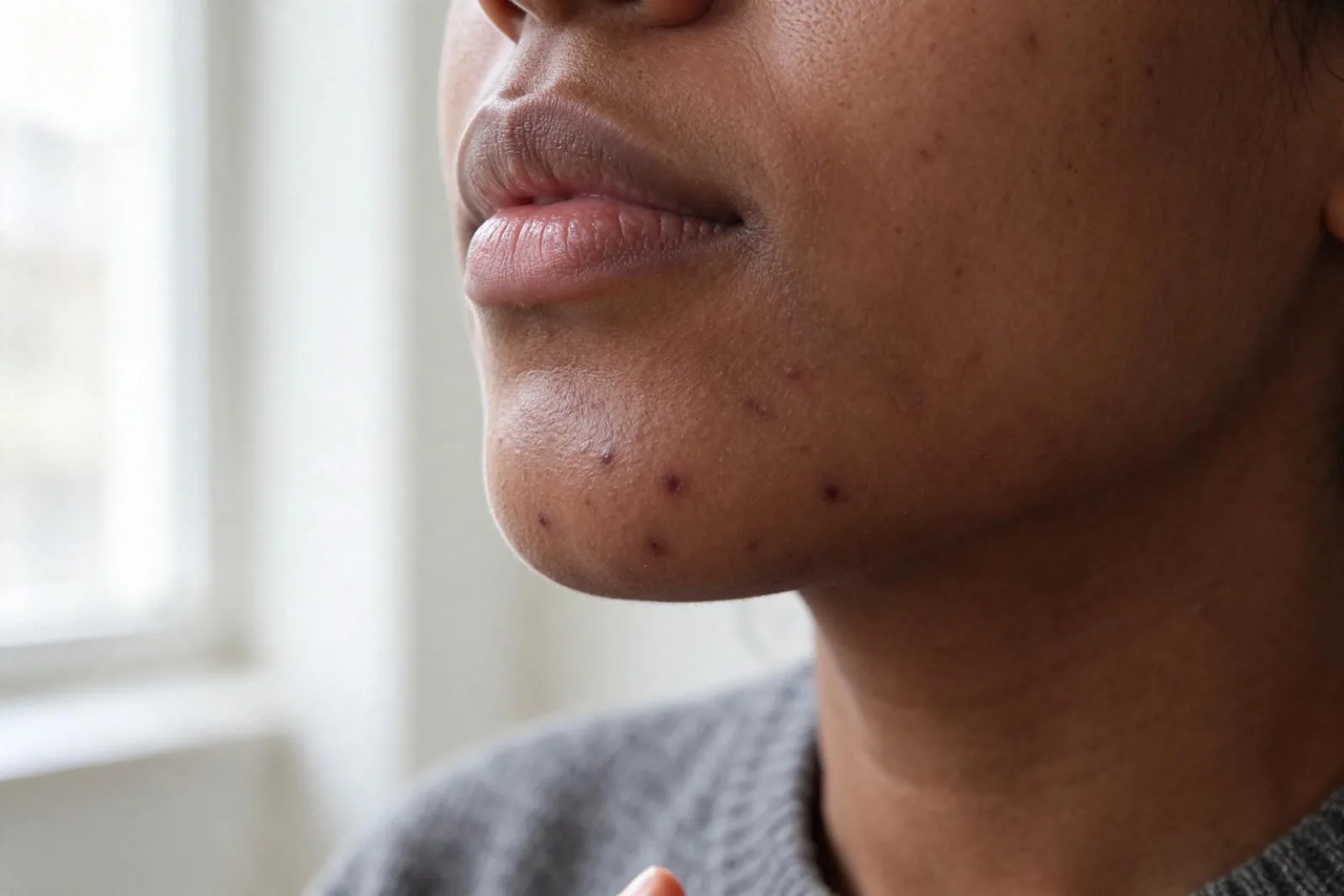
- 01Single marks where pimples were
Small, separate marks in the places of earlier pimples point to PIH.
Illustration
Melasma vs hyperpigmentation: how can you tell?
Stand in front of a mirror in daylight and go through these three questions:
- Where is it? A patch on the cheeks, forehead or upper lip leans towards melasma, a single dot where a pimple was leans towards PIH.
- Was there inflammation or an injury in that spot before? If so, PIH is likely.
- Is the pattern similar on both sides of the face? That is typical for melasma.
The questions give you a first direction, because PIH can look a lot like melasma. The table puts the two side by side.
[S1][S3][S4][S5]In shortA patch on both cheeks points to melasma, a dot where a pimple was points to an acne mark. A dermatologist can settle it.
| — | Melasma | Acne mark (PIH) |
|---|---|---|
| Where | cheeks, forehead, nose, chin, upper lip | exactly where the earlier inflammation was |
| Shape | broad, uneven edges, usually on both sides | follows the spot that was inflamed |
| Trigger | sun and visible light, hormones such as pregnancy or the pill | inflammation or injury of the skin |
| Course | can last for years and return with sun | often fades in 6 to 12 months, deeper colour takes longer |
| Who decides | dermatologist | dermatologist, if the spot stays |
Who can say whether it's melasma?
If you are unsure, a visit to a dermatologist is a good idea. A close look at the skin is usually enough. Sometimes a Wood lamp, a special lamp for the skin, and a dermatoscope, which magnifies the skin, are used as well.
The dermatologist also checks how deep the colour sits. If it lies in the upper skin layers, the edges are clear and treatment usually works well. If it lies deeper, the edges are blurred and treatment usually works less well.
If melasma doesn't go away, the appointment is especially worth it. Bring photos that show how it has changed.
[S1][S2][S3]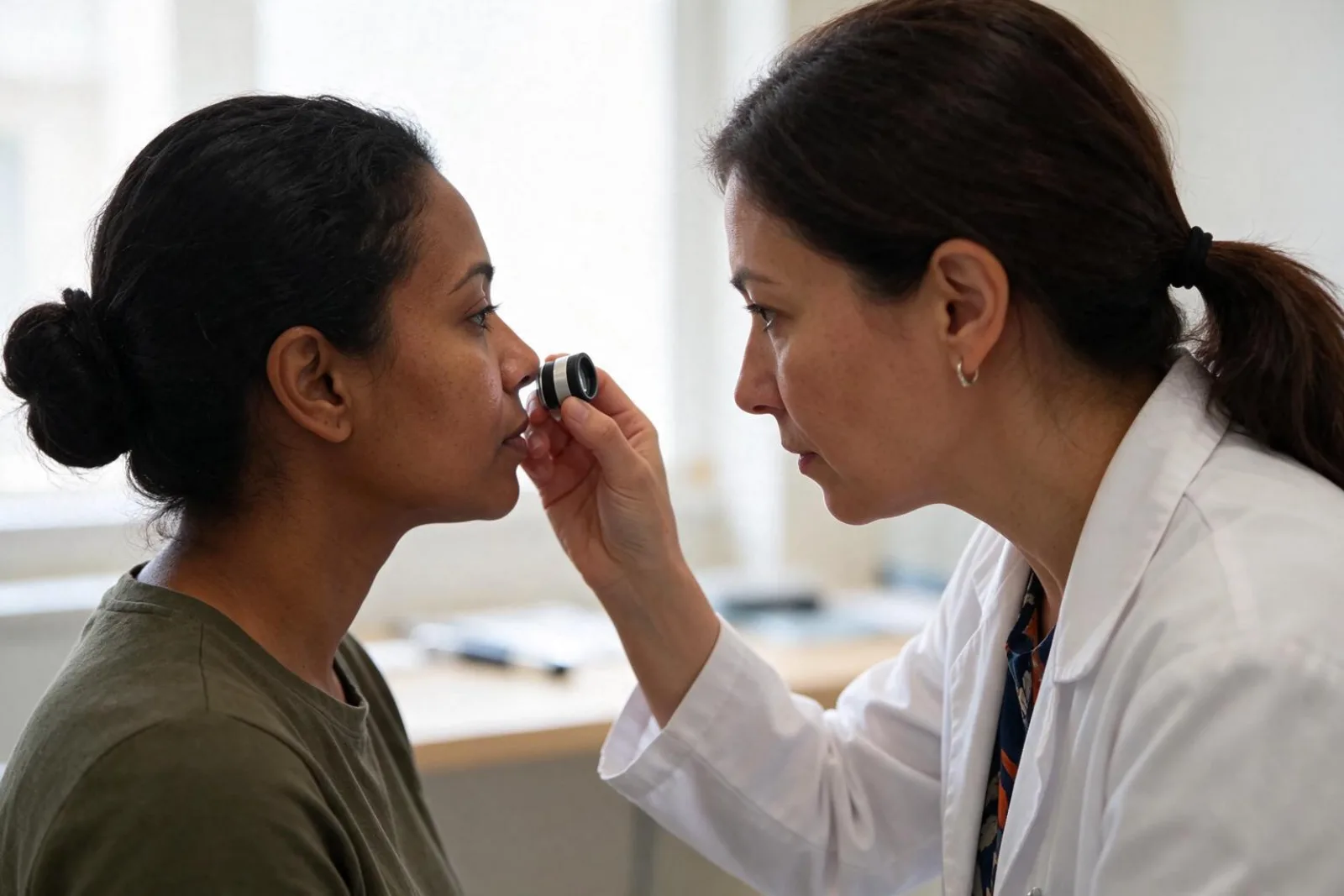
- 01Dermatoscope: a magnified look at skin
A dermatologist examines the cheek with a dermatoscope.
Illustration
What protects your skin with melasma and acne marks?
Sun protection matters most for both. Melasma adds a twist, because visible light can make it worse too, especially on darker skin tones. A tinted sunscreen with iron oxides and at least SPF 30 helps, because iron oxides block visible light. Choose broad-spectrum protection and wear it all year.
We're working on our own sunscreen. If you buy one now, choose a tinted one.
Pick gentle, fragrance-free products. If a product burns or stings, it is irritating your skin, and that can darken spots. Stop using it then. For background, read hyperpigmentation in dark skin.
[S2][S3][S5]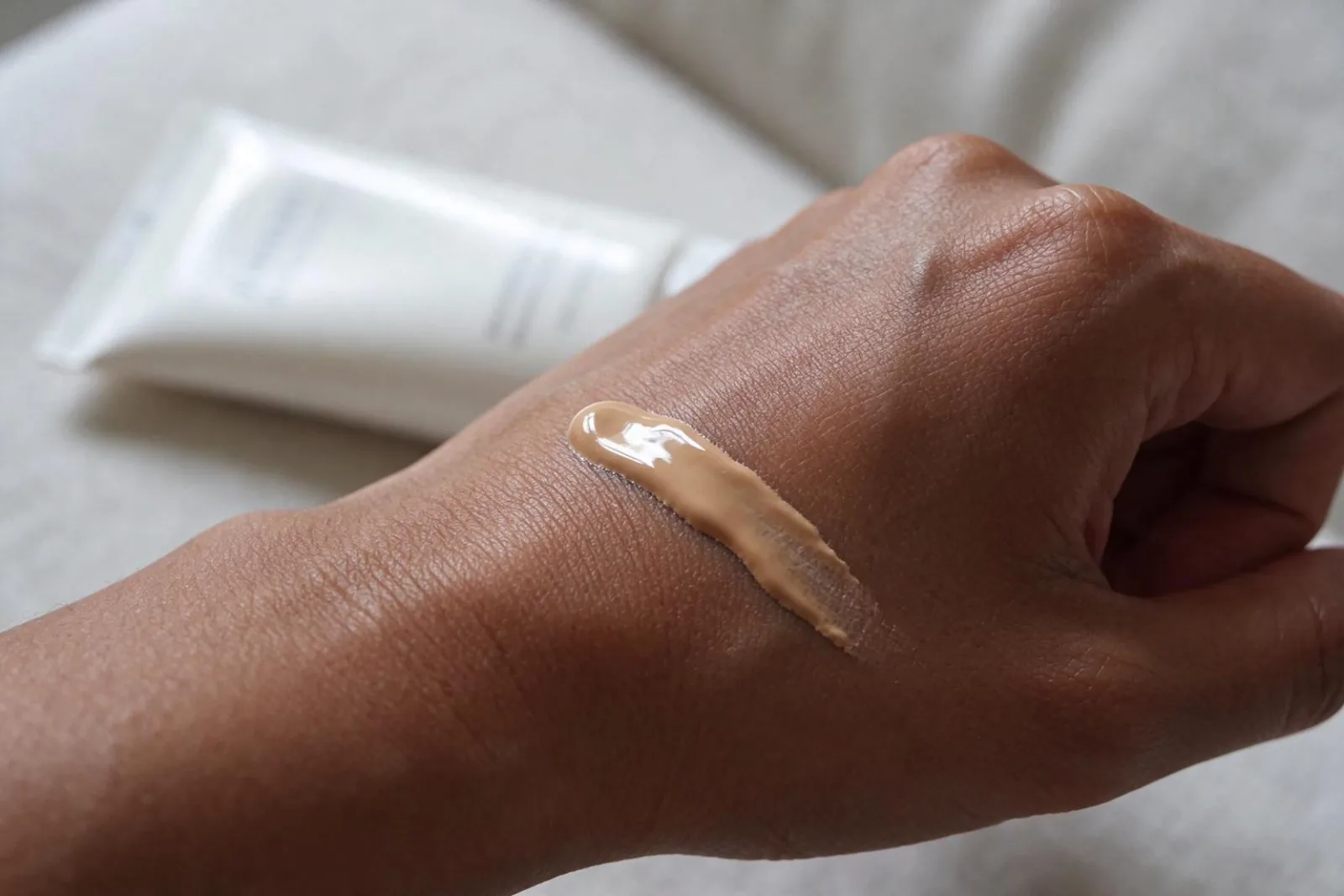
Tinted sunscreen with iron oxides also protects against visible light.
Illustration
What can you do about dark spots yourself?
For acne marks, products with azelaic acid, glycolic acid, kojic acid, retinoids or vitamin C may help fade spots. Of these we carry vitamin C. We don't carry tranexamic acid, azelaic acid, retinol, hydroquinone, kojic acid, arbutin, glycolic or mandelic acid, or glutathione.
Melasma treatment belongs in a doctor's hands. Creams can help fade it, but they can't make it go away for good, and it can come back. For daily face care you can use the Pure Bright C7 Serum. It can make the patches look lighter, but it does not treat melasma. We're working on a product of our own for melasma. Our Mela Bright is still in development. If it isn't linked here yet, it isn't online yet.
How to add a new product:
- Test it on a small area first.
- Add only one new product at a time.
- If it burns or stings, stop using it.
Your next step
Both routes are fine. Pick the one that fits you today.
- Photograph the spots in the same light and note where they sit and whether a pimple was there before.
- Wear a tinted sunscreen every day.
- Have the spots looked at by a dermatologist before you try something new.
Matching products from our lab:
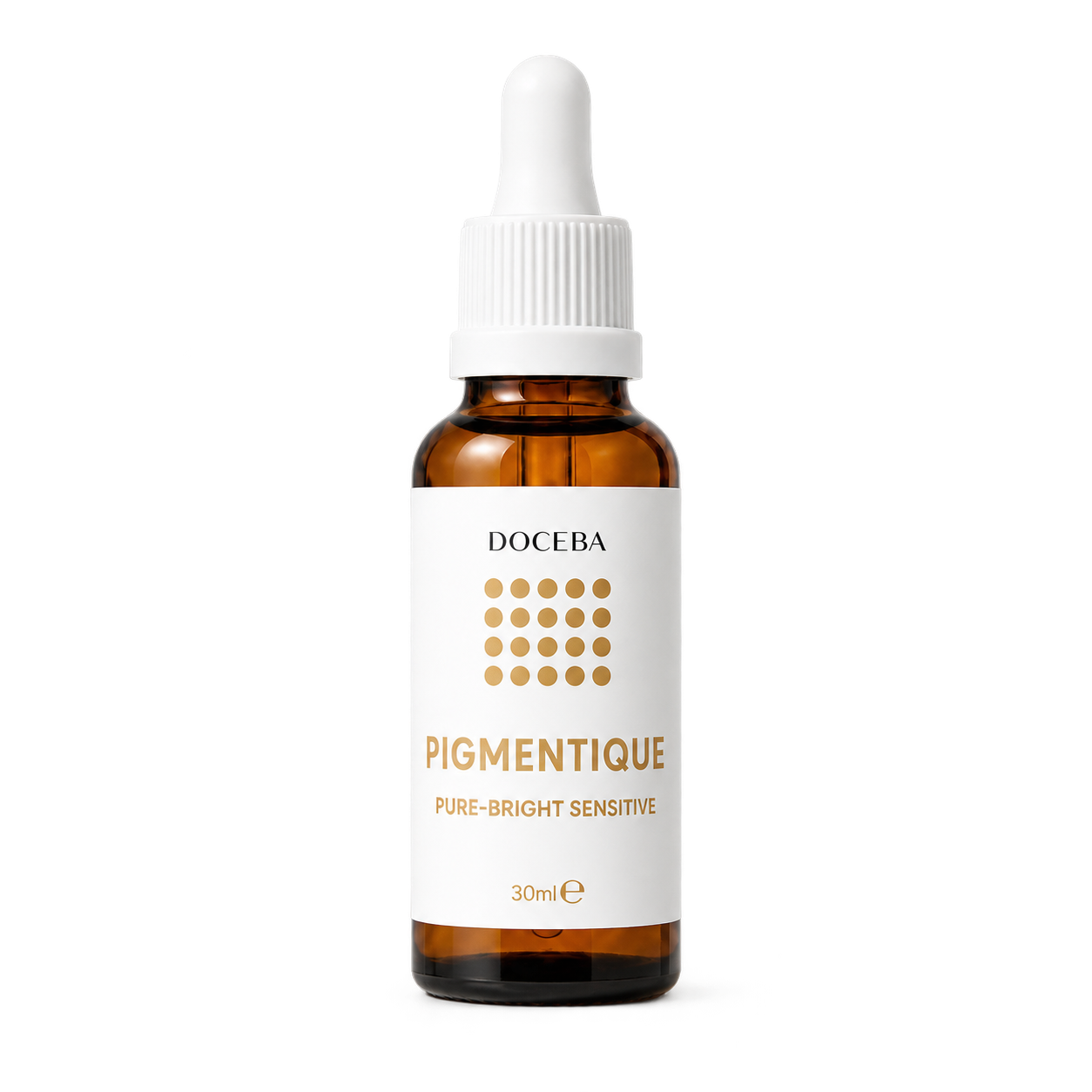
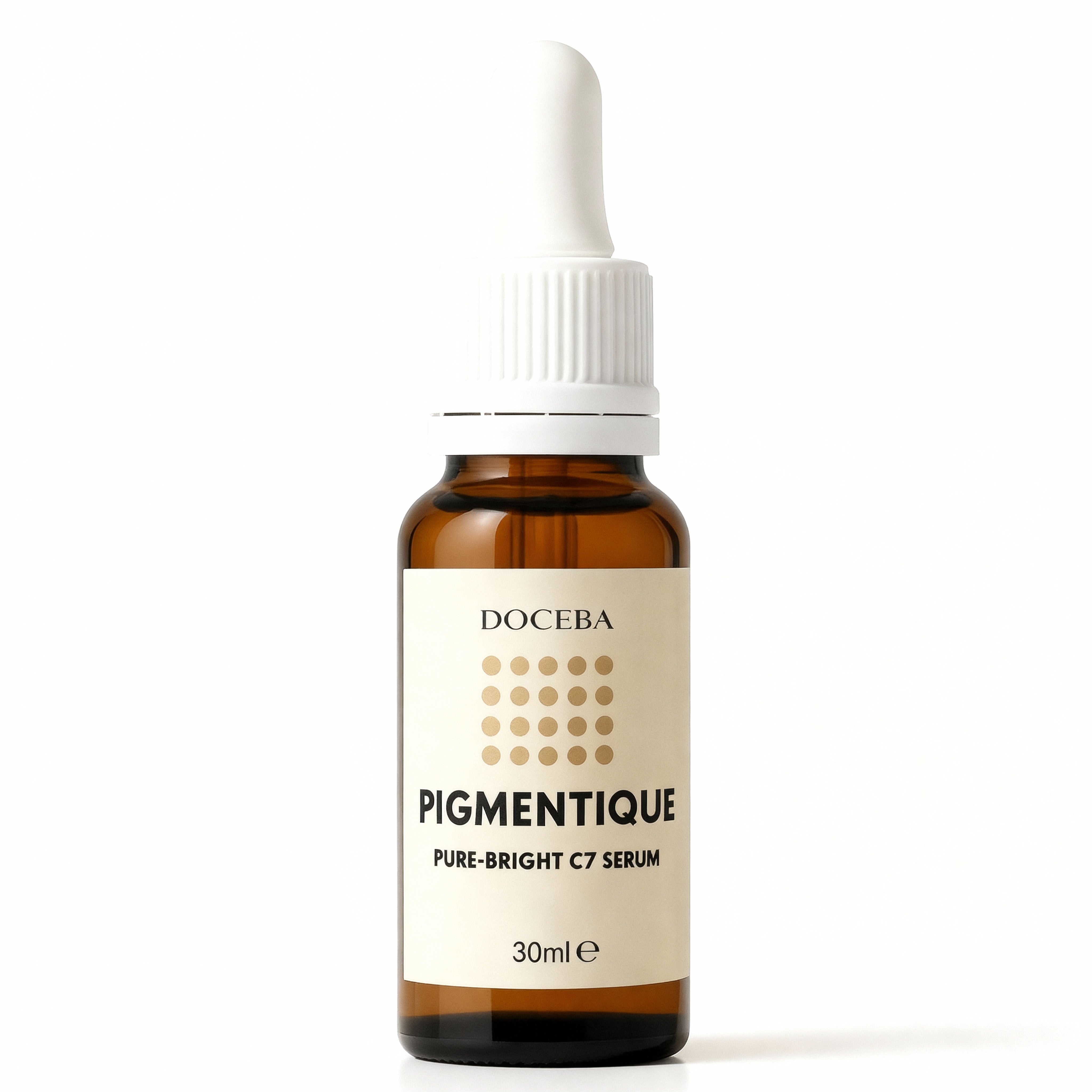
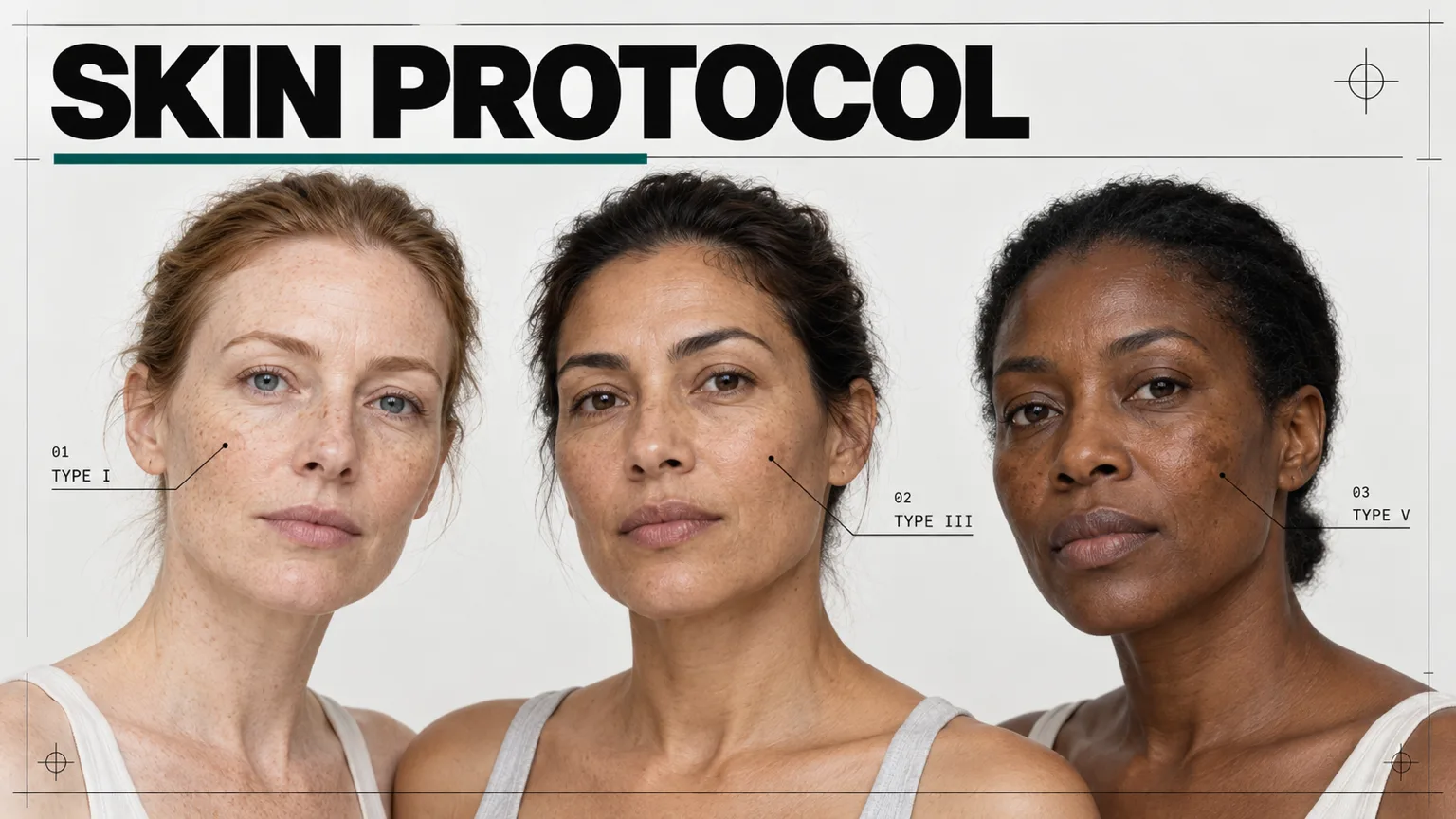
Skin Protocol: a plan for your skin and a team that adjusts it
You get a plan built around your skin and what you've already tried. We check in regularly and adjust products from Anita's lab when your skin needs something different. In English or German.
It starts with a free 20-minute call. We ring you and listen to your skin story, including your routine for dark spots.
Book your free skin callCosmetic advice, not a diagnosis. If you think you have a skin condition, see a doctor first.
Questions you might still have
Can I tell melasma from acne marks myself?
There are clear clues. Melasma usually sits as a broad patch on both sides of the face, an acne mark exactly where a pimple used to be. Because the two can look alike, a visit to a dermatologist is a good idea if you are unsure. [S1][S3][S4]
Are dark spots above the upper lip melasma?
They can be. The skin above the upper lip is a typical place for melasma, and the groove under the nose is often spared. A pimple, inflammation or an injury can also leave a mark there. If it stays, have it looked at. [S1][S3][S4]
Does melasma go away on its own?
For some people, yes. Melasma may go away on its own, but it can also last for years. The colour may come back with summer sun, even after successful treatment. [S1][S3]
How long do acne marks take to fade?
A spot a few shades darker than your skin usually fades within 6 to 12 months. If the colour sits deeper, it can take years. [S5]
Sources
- [S1] American Academy of Dermatology: Melasma: Overview ↗
- [S2] American Academy of Dermatology: Melasma: Self-care ↗
- [S3] DermNet: Melasma ↗
- [S4] DermNet: Postinflammatory hyperpigmentation ↗
- [S5] American Academy of Dermatology: How to fade dark spots in darker skin tones ↗
- [P1] DOCEBA: Pure Bright C7 Serum ↗
- [P4] DOCEBA: Pure Bright Sensitive Serum ↗
General skincare information, not a diagnosis or an individual treatment plan.
Your bag
Review your items before continuing.
Your bag is empty.