
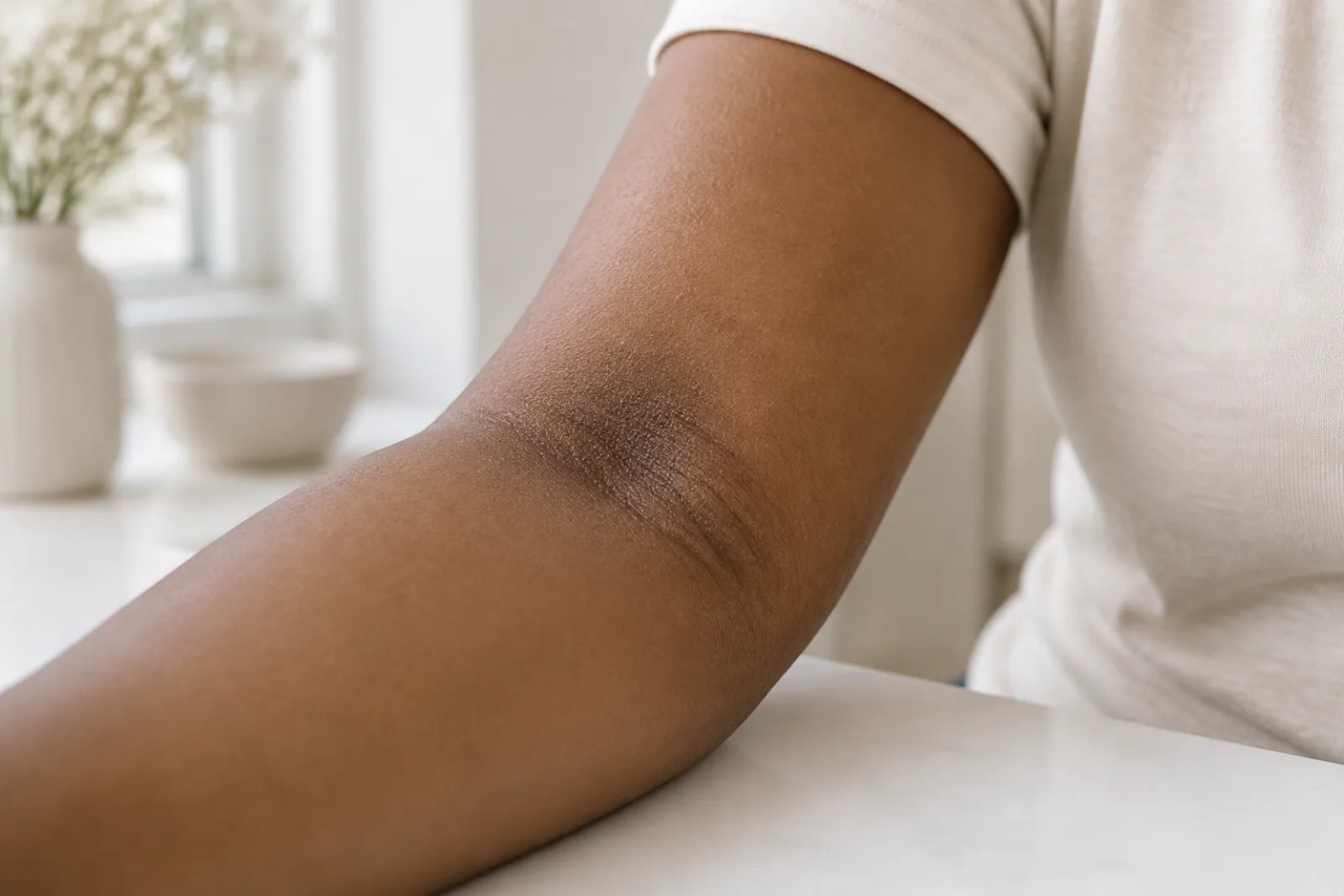
Why does eczema leave dark spots?
During an eczema flare your skin is inflamed. That inflammation stimulates the melanocytes, the cells that make melanin, your skin's pigment. They produce more of it than the skin would normally carry. When the flare ends, the extra pigment is still sitting there, and you see a patch that is darker than the skin around it. Dermatologists call this post-inflammatory hyperpigmentation, or PIH.
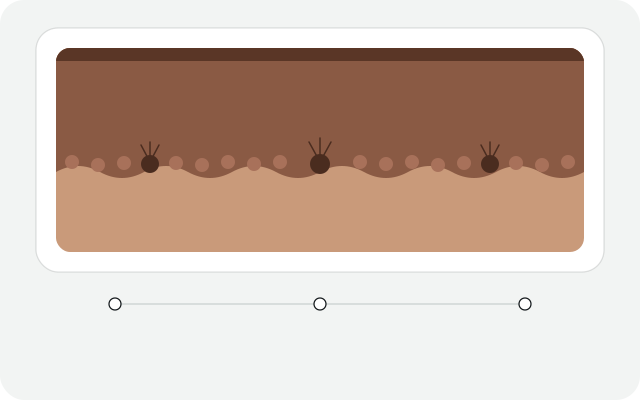 InflammationMore pigmentPigment stays
Schematic illustration · not a before-and-after or a treatment result
Anyone can get PIH. DermNet notes it is more common in darker skin, and that after eczema it is also more noticeable there than on white skin. Eczema UK adds that the discolouration can worry people more than the eczema did. Our overview of hyperpigmentation on dark skin explains how PIH forms in general.
There is a second problem. Eczema on dark skin often doesn't look red at all. The AAD describes dark brown, purple or greyish areas, and small rough bumps that are more common in darker skin tones. DermNet warns that the severity of eczema in skin of colour can be underestimated for this reason.
[S2][S3][S4][S1]Why does scratching make the marks darker?
Itch is the symptom that defines eczema, and scratching is the reflex. DermNet describes an itch-scratch cycle: it itches, you scratch, the skin gets irritated, and then it itches more. The NHS puts it bluntly and says scratching can make eczema worse.
 ItchScratchingInflammationdarker
Schematic illustration · not a before-and-after or a treatment result
For skin colour, that matters twice over. Eczema UK says the skin changes are caused either by active eczema or by scratching. And skin that is scratched or rubbed in the same place for a long time thickens, turns leathery and shows deeper skin lines. The medical word is lichenification. The AAD says thickened skin like this is often very dry and itches most of the time. According to DermNet, pigment changes in these patches are seen more often in darker skin types.
"Just don't scratch" is easy to say at 2 a.m. and hard to do. The NHS suggests keeping your nails short and keeping cool, because being hot can make eczema itchier. Germany's IQWiG health institute adds rough wool, cleaning products and extreme temperatures to the list of things that irritate eczema-prone skin. For cold-weather dryness in particular, see our guide to ashy skin in winter.
[S6][S7][S2][S1][S9]Does hyperpigmentation from eczema go away?
Usually, yes. Eczema UK says both darker and lighter patches left by eczema will eventually resolve. It also says the discolouration can last for months or years, even after the eczema itself has been treated. DermNet calls PIH a temporary pigmentation.
We couldn't find a timeline specific to eczema marks in our sources. The AAD does give one for dark spots in general: a spot a few shades darker than your natural skin colour usually fades within 6 to 12 months. If the colour sits deep in the skin, fading can take years.
Based on the AAD's guidance for dark spots in general, not a promise. The clock only runs once no new inflammation is added.
The starting point matters. The AAD says that when a skin condition is behind the dark spots, the condition has to be treated effectively first. As long as the same patch keeps flaring, new pigment keeps arriving. For more on which marks clear without help, read Does hyperpigmentation go away on its own?
[S2][S3][S5]What about light patches after eczema?
Some areas heal lighter instead of darker. The AAD says skin may be lighter or darker where you had atopic dermatitis, and DermNet notes both are more common in skin of colour. Eczema UK puts the lighter patches down to the eczema itself and says they resolve with time.
According to Eczema UK there is no specific treatment for the colour change. If a light patch lingers or grows, have a doctor look at it. Light patches have other causes too, vitiligo among them, and that one is usually permanent.
[S1][S4][S2]How to fade dark spots from eczema: calm first, brighten second
The biggest lever is the eczema. Eczema UK calls treating the underlying inflammation the main way to improve pigment changes. That treatment belongs with your doctor, and we won't comment on prescription creams here. What you control is everyday care, and the order you do it in.
[S2][S5]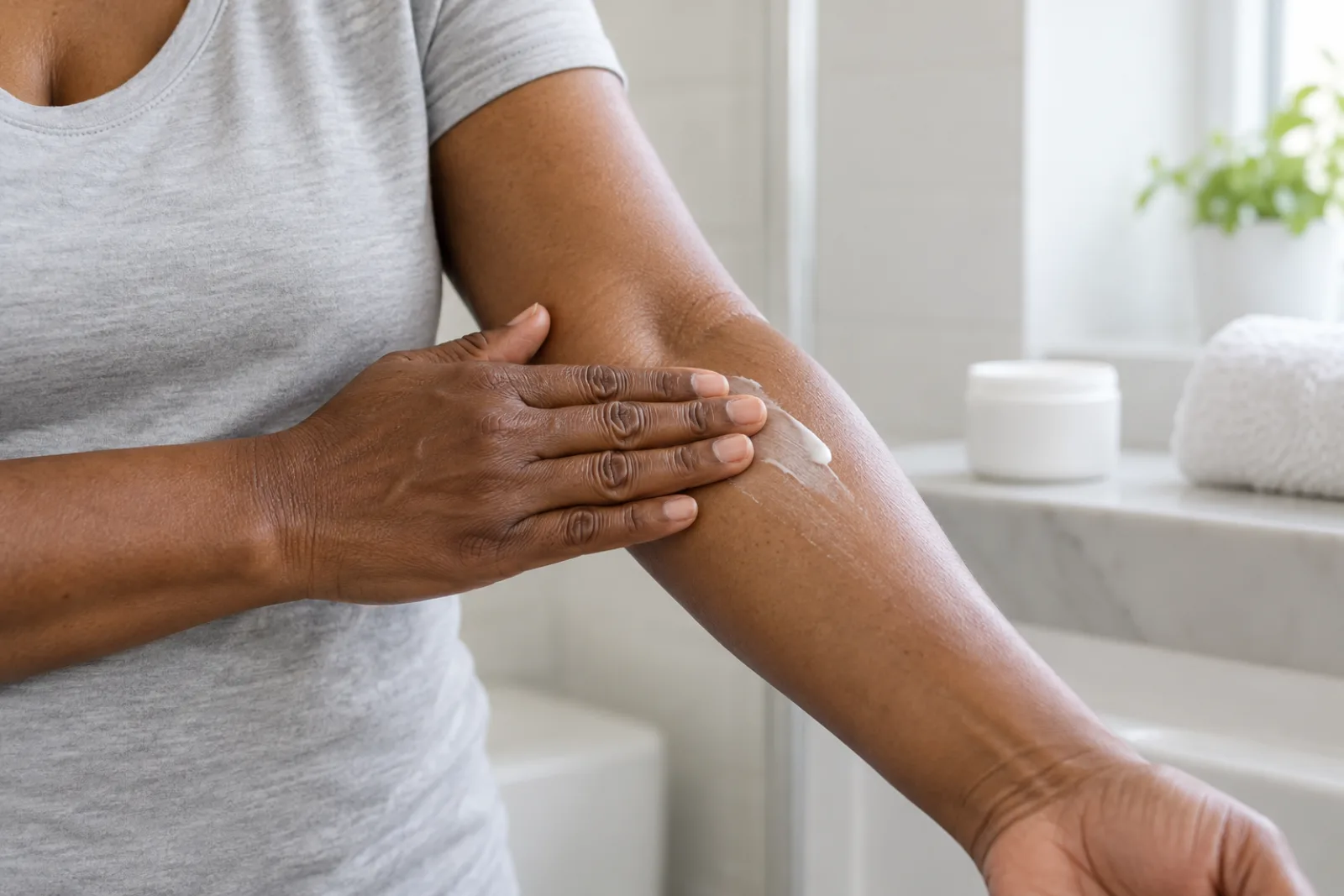
Best straight after washing, once the skin is patted dry.
Illustration
1. Calm the skin and look after the barrier
Emollients are moisturisers that cover the skin with a protective film and trap water in it, as the NHS explains. They work best straight after washing, as soon as you've patted the skin dry. Smooth them on in the direction your hair grows and don't rub. The NHS says you can apply them as often as you like. Everyday soaps and shower gels dry the skin and can make eczema worse, so it recommends a soap substitute. Keep moisturising after the eczema improves, too.
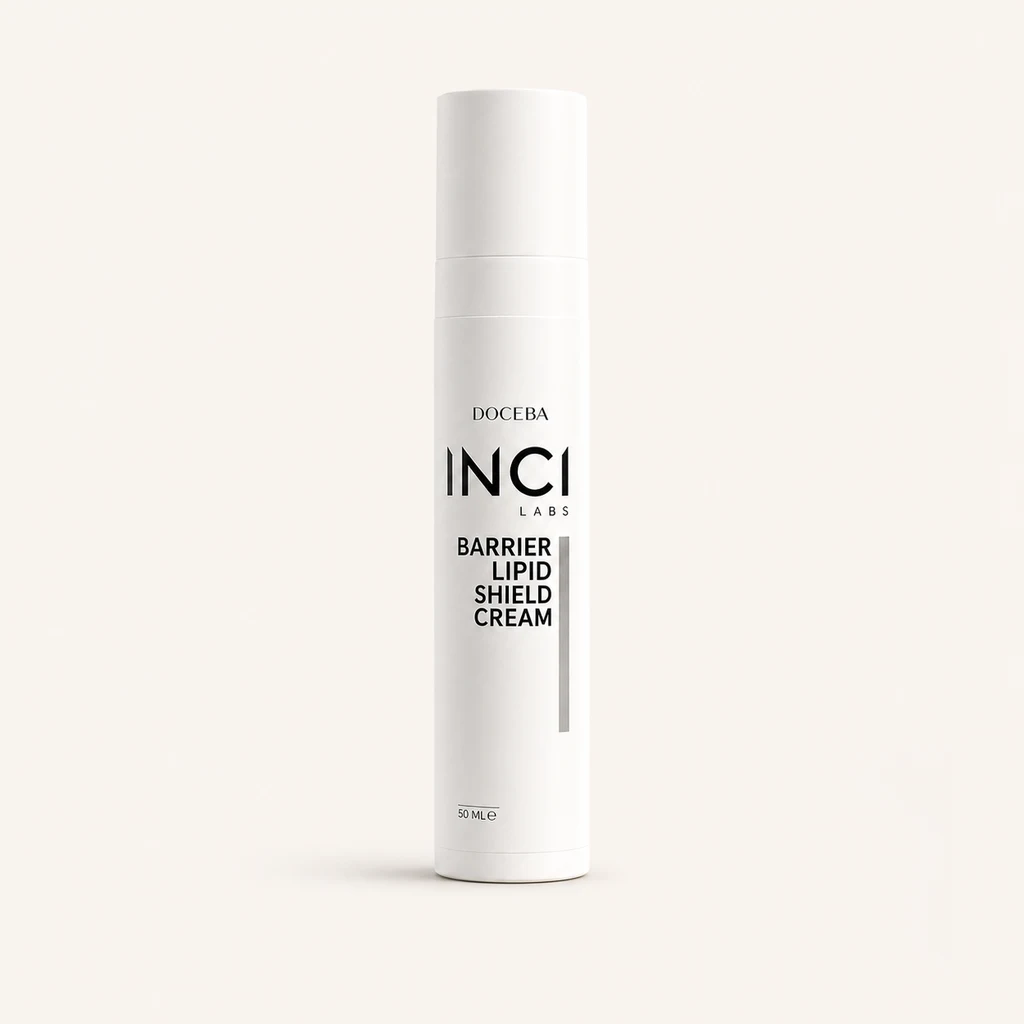
On open or weeping skin, use only what your doctor has recommended. A cosmetic cream is not an eczema treatment. One note on our own cream: it contains urea, and IQWiG says products with urea are generally not suitable for babies and children because they can irritate their skin.
[S8][S7][S9]2. Keep the sun off the area
Sunlight stimulates post-inflammatory pigmentation, says Eczema UK. For PIH, DermNet recommends daily SPF 50+ broad-spectrum sunscreen. The AAD goes a step further for darker skin tones and recommends a tinted sunscreen with iron oxide. Iron oxide helps against visible light, which the AAD also names as a cause of dark spots.
We are working on a sunscreen of our own. If you're buying one now, choose a tinted one and patch-test it first. More detail here: Sunscreen for hyperpigmentation on dark skin.
[S2][S3][S5]3. Brighten once the skin is calm
An active for the mark is worth adding only when the skin is closed, has stopped itching and hasn't flared for a while. The AAD's list of ingredients that can fade dark spots includes vitamin C as well as azelaic acid and retinoids. It comes with a warning: a product that irritates your skin can cause dark spots of its own. If something burns or stings, stop using it.
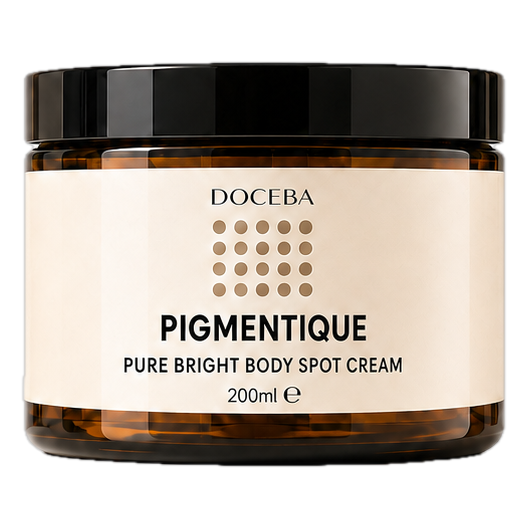
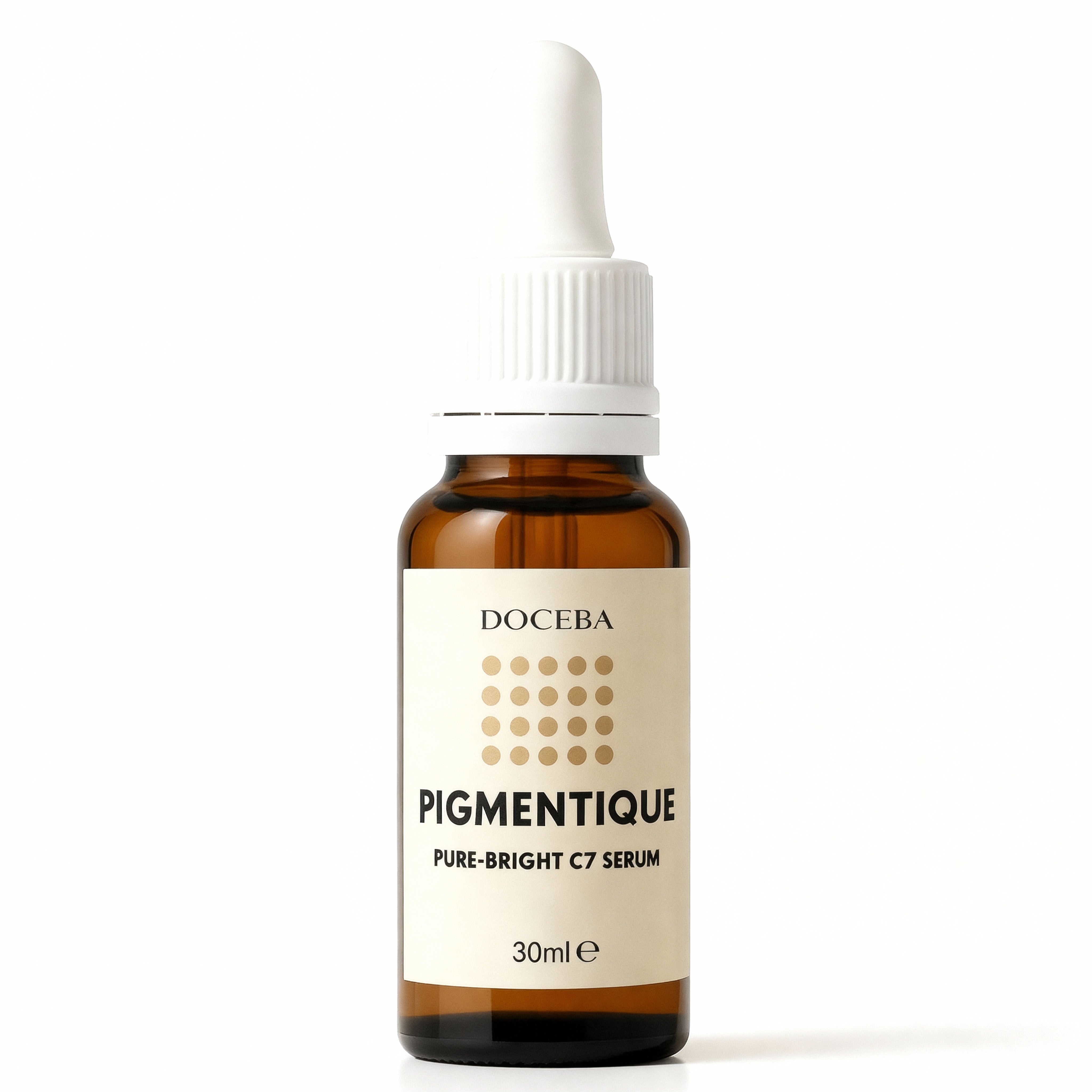
On eczema-prone skin that means one active at a time, a patch test before you commit, and never on irritated skin. We don't make a product with azelaic acid or retinoids. Our dark-spot products are built on vitamin C. For the body that is the Pure Bright Body Spot Cream, or the Pure Bright C7 Body Serum if you prefer a spray. For the face it is the Pure Bright C7 Serum. The face serum isn't meant for the body.
[S5]What makes eczema dark spots darker
- Scratching and rubbing the same place. It keeps the itch-scratch cycle turning.
- Sun without protection. DermNet says the patches may darken when exposed to sunlight.
- Brightening products on irritated skin. The AAD says to stop anything that burns or stings.
- Ordinary soap and shower gel. They dry the skin and can make eczema worse, according to the NHS.
- Waiting out the flare. While the inflammation is active, your pigment cells keep making colour.
Bleaching creams with hydroquinone or an unknown formula are no shortcut on eczema-prone skin. We cover the risks in Skin bleaching creams and hydroquinone.
[S6][S3][S5][S8][S2]When to see a doctor
The NHS says to see a GP if you have symptoms of atopic eczema, or if the treatments you already have are not helping.
Get urgent advice if the area is blistered, crusty, leaking fluid or has pus-filled spots, or if you have a high temperature and feel generally unwell. The NHS lists these as possible signs of infection.
The marks can be a reason to book as well: when they aren't getting lighter although the skin has been calm, when light patches are growing, or when you aren't sure it was eczema in the first place. Questions about prescription creams, steroid creams included, are for your doctor. This article is a skincare guide and not a diagnosis.
[S7][S5]From the lab
On skin that has only just come out of a flare we wouldn't start with a brightening product, not even our own. Every active is one more thing for the skin to react to, and this skin has had enough of that lately. Calm comes first. The mark can wait.
A shelf product stays the same in every phase. Your skin doesn't. Because Anita formulates in our own lab in Bielefeld, we can adjust a product when your skin needs something different. That is what Skin Protocol is for.
Your next step
Both routes are fine. Pick the one that fits you today.
- Moisturise after every wash, at least twice a day, everything fragrance-free.
- Put tinted sunscreen on exposed areas every day.
- Add one active for the mark only when the skin is calm. Take a photo once a month in the same light.
Matching products from our lab:
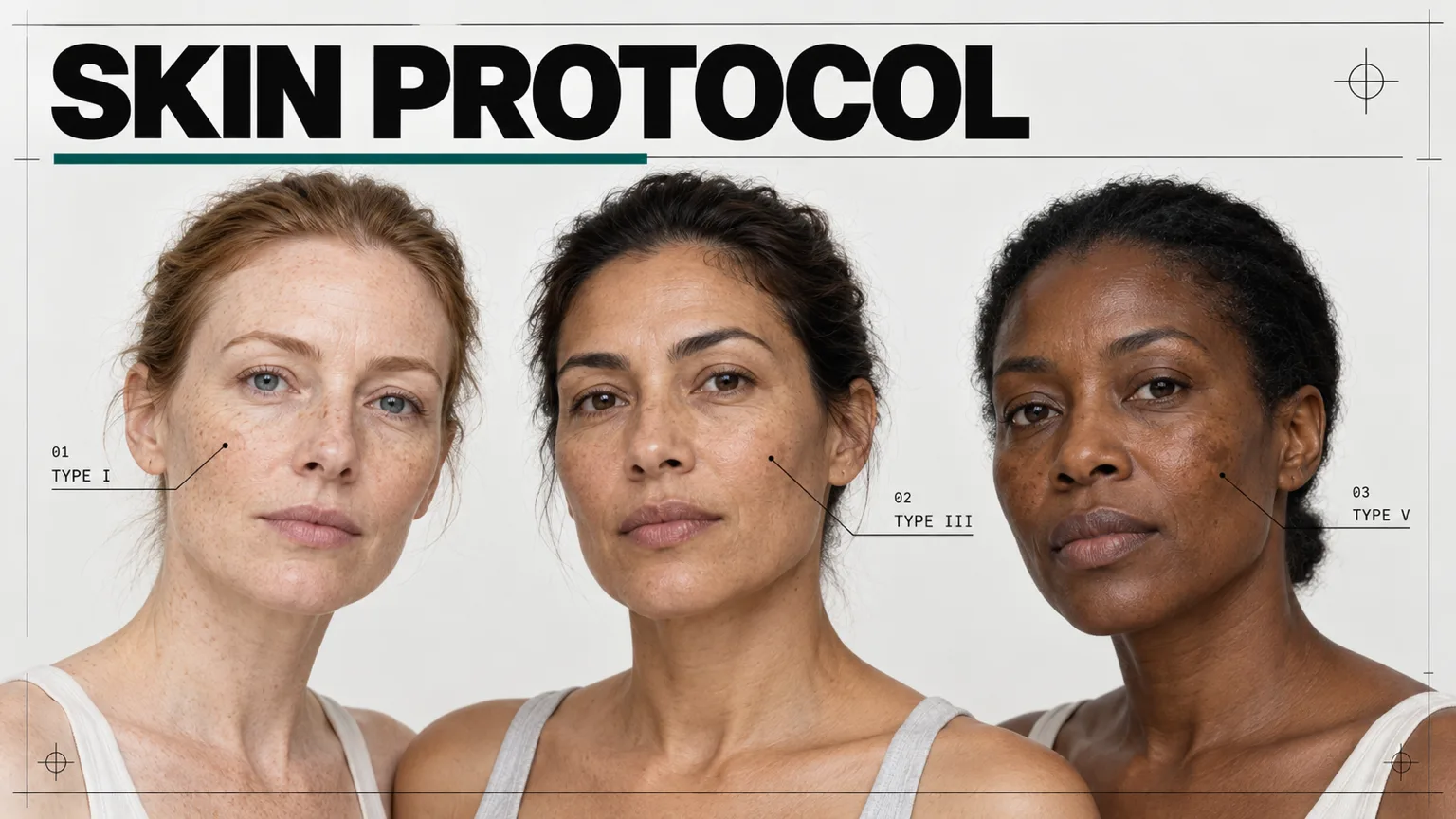
Skin Protocol: a plan for your skin and a team that adjusts it
You get a plan built around your skin and what you've already tried. We check in regularly and adjust products from Anita's lab when your skin needs something different. In English or German.
It starts with a free 20-minute call. We ring you and listen to your skin story, including dark spots after eczema.
Book your free skin callCosmetic advice, not a diagnosis. If you think you have a skin condition, see a doctor first.
Questions you might still have
Do dark spots from eczema go away?
Mostly, yes. Eczema UK says the colour changes eventually resolve. That can take months or years, and it depends on the same patch not flaring again and again. [S2]
How long does hyperpigmentation from eczema last?
For dark spots in general, the AAD says a spot a few shades darker than your skin usually fades within 6 to 12 months, and deeper colour can take years. The clock only starts once the skin is calm. [S5]
Are eczema dark spots scars?
Usually not. They are pigment left in the skin after inflammation, and DermNet describes PIH as temporary. A patch that feels thick and leathery often points to long-term scratching. [S3][S6]
What does eczema look like on dark skin?
The AAD describes dark brown, purple or greyish areas, often with small rough bumps. Redness is harder to see on darker skin tones, so a flare can be missed. [S1][S4]
Can I use vitamin C on eczema-prone skin?
Not on an irritated or open patch. Once the skin is calm, patch-test on a small area first. The AAD says to stop anything that burns or stings, because irritation can cause new dark spots. [S5]
How do I get rid of white patches after eczema?
Mostly with time and calm skin. Eczema UK says lighter patches left by eczema resolve and that there is no specific treatment for them. If they stay or spread, see a doctor. [S2]
Sources
- [S1] AAD: Eczema types: Atopic dermatitis symptoms ↗
- [S2] Eczema UK (National Eczema Society): Skin Pigmentation and Eczema ↗
- [S3] DermNet: Postinflammatory hyperpigmentation ↗
- [S4] DermNet: Atopic dermatitis (Atopic Eczema): Symptoms and Causes ↗
- [S5] AAD: How to fade dark spots in darker skin tones ↗
- [S6] DermNet: Lichen simplex chronicus ↗
- [S7] NHS: Atopic eczema ↗
- [S8] NHS: Emollients ↗
- [S9] IQWiG, gesundheitsinformation.de: Neurodermitis bei Babys, Kleinkindern und Erwachsenen ↗
- [P1] DOCEBA: Barrier Lipid Shield Cream ↗
- [P2] DOCEBA: Pure Bright Body Spot Cream ↗
- [P3] DOCEBA: Pigmentique Pure Bright C7 Serum ↗
General skincare information, not a diagnosis or an individual treatment plan.
Your bag
Review your items before continuing.
Your bag is empty.