
What's actually different on melanin-rich skin
Melanocytes are the cells that make pigment. Lighter and dark skin have the same number of them. Dark skin, though, contains more melanin and more melanosomes, the small stores where the pigment sits. DermNet also describes the melanosomes of darker skin as larger, and the enzyme tyrosinase, which makes melanin, as more active.
The extra melanin offers better protection against UV radiation. The trade-off is that a dark mark is more likely to stay after irritation.
On other differences, the evidence is thinner than advertising often makes it sound. Whether the skin barrier, skin lipids or the dermal matrix are fundamentally different in dark skin is something studies have not answered consistently. In her review in the journal Cutis, the dermatologist Susan C. Taylor calls the findings conflicting.
So if a product advertises "the completely different barrier of Black skin", it is leaning on findings that are still conflicting. We think that should be said plainly.
[S1][S2][S3][S5]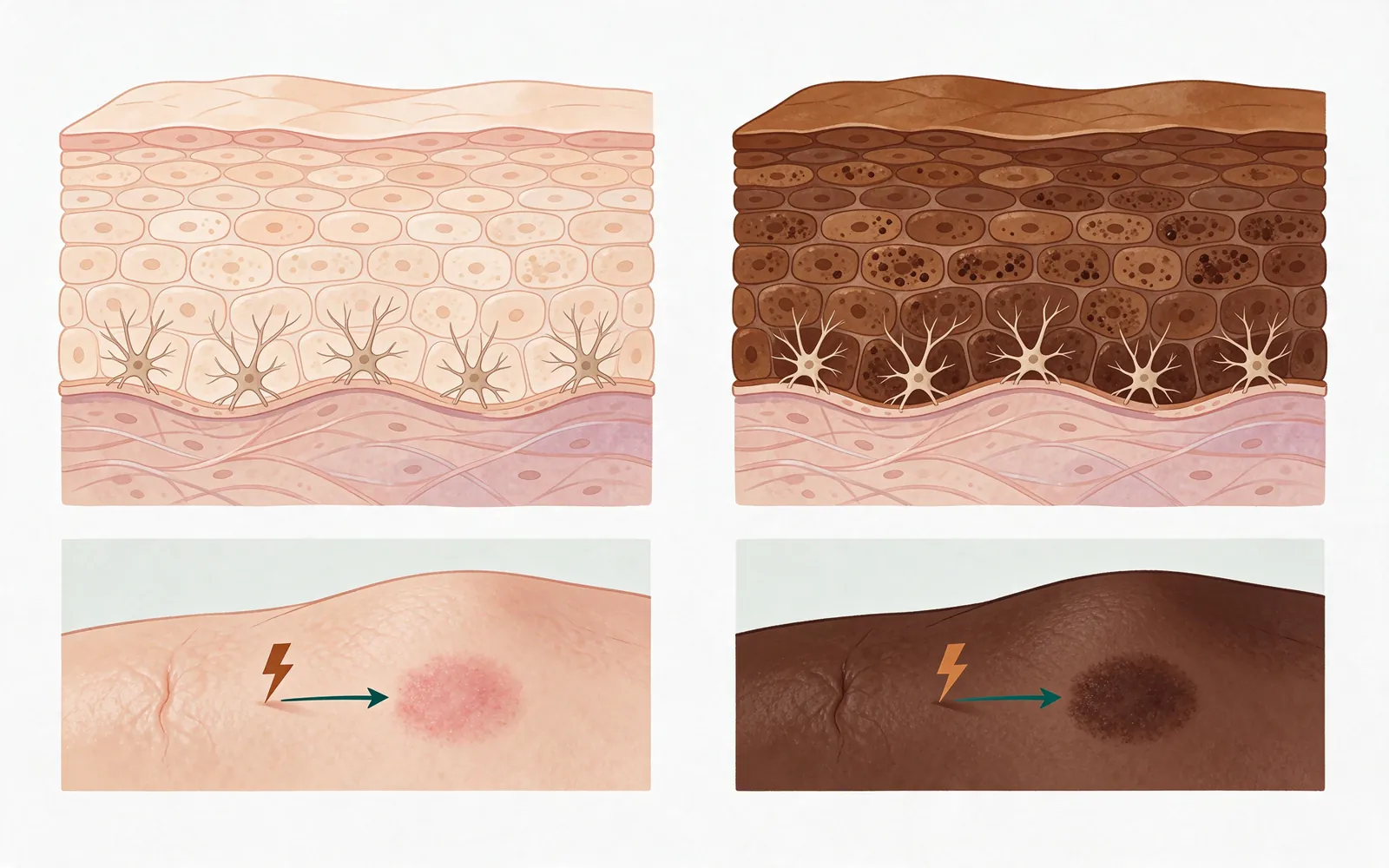
- 01lighter skin
- 02melanin-rich skin
- 03Irritation → mark
Schematic illustration · not a before-and-after or a treatment result
Why redness on dark skin becomes a mark
On lighter skin, inflammation usually shows up as redness. On richly pigmented skin, the redness is often barely visible; the spot darkens instead. DermNet describes this in the context of eczema. Inflammatory messengers stimulate the melanocytes to make more melanin.
What remains afterwards is called post-inflammatory hyperpigmentation, or PIH.
PIH can happen to anyone. On dark skin it is more common, the colour is usually more intense, and it lasts longer.
Acne is only one trigger among many. The AAD also lists insect bites, cuts and burns, certain medicines, and skin or hair products that irritate the skin.
For your routine, that means: a product that irritates your skin can itself leave dark marks.
If a mark is a few shades darker than your skin, it usually fades within 6 to 12 months. If the colour sits deeper, it can take years.
That is why we recommend being careful on dark skin with anything that burns, tightens or peels.
How PIH forms, why new marks keep appearing, and what helps them fade is covered in full in the guide to hyperpigmentation on dark skin. Acne marks have their own article: dark spots after acne on dark skin. For your routine, the basic rule is enough here. Avoiding irritation prevents many marks before they form.
[S2][S3][S4]Why dry dark skin looks grey
Dry skin happens on every skin tone. On dark skin you simply see it sooner. Flakes, rough patches and discolouration stand out more; the skin looks grey or whitish.
In English this is called "ashy"; in German many people say "aschig".
Taylor gives two explanations: dead horn cells are lighter than the skin underneath, and a rough surface scatters light differently from a smooth one.
What helps is unspectacular. The AAD recommends short, warm showers, patting the skin dry and moisturising straight afterwards with a mild, fragrance-free product. Creams and ointments work better than lotions. A moisturiser with ceramides can reduce the grey sheen.
If the skin is no better after about two weeks, it's worth booking a dermatology appointment. Persistent dry skin can also be eczema or psoriasis.
The full routine for the cold months is in the article Ashy skin: why dark skin turns grey in winter.
[S5][S6]Sunscreen: yes, and preferably tinted
Melanin protects, but it does not replace sunscreen. Skin cancer also occurs on dark skin, and according to the AAD it is often already advanced in people with a darker skin tone by the time it is found.
For daily care it also matters that the sun can darken marks that are already there.
Alongside UV radiation, visible light can also worsen PIH and melasma.
Mineral filters such as zinc oxide and titanium dioxide often leave a white residue, and on dark skin it shows immediately.
That is why, for a deeper skin tone, the AAD recommends a tinted sunscreen that matches your shade. It avoids the film, and with iron oxides it also helps protect against visible light. A tinted cream should still offer SPF 30 or higher, broad-spectrum protection and water resistance.
DOCEBA does not yet have its own sunscreen. How to recognise a suitable product on the label is in Sunscreen for hyperpigmentation on dark skin.
[S1][S3][S4][S7][S8]Five claims that don't hold up
"Dark skin doesn't need sunscreen."
Not true. Skin cancer also occurs on dark skin. And the sun darkens marks that are already there.
[S4][S8]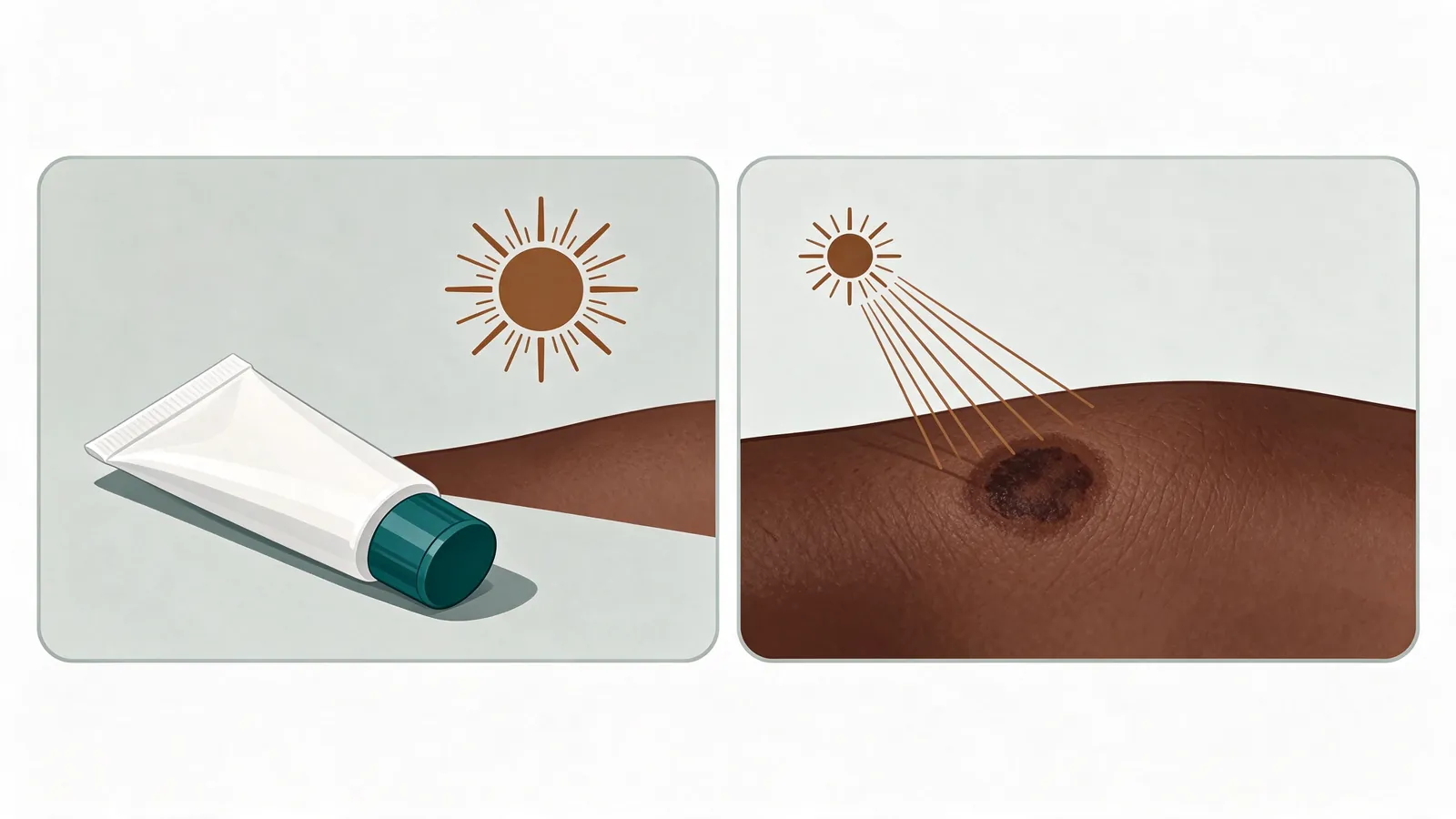
Not true. The sun darkens marks that are already there.
Schematic illustration
"Dark skin is tougher and can take harsher products."
Not true. When it comes to pigment, it's rather the other way round. Because of the PIH risk, deep chemical peels and ablative lasers are considered relatively contraindicated on dark skin. Vigorous scrubbing and strong soaps also make acne worse, according to the AAD.
[S1][S10]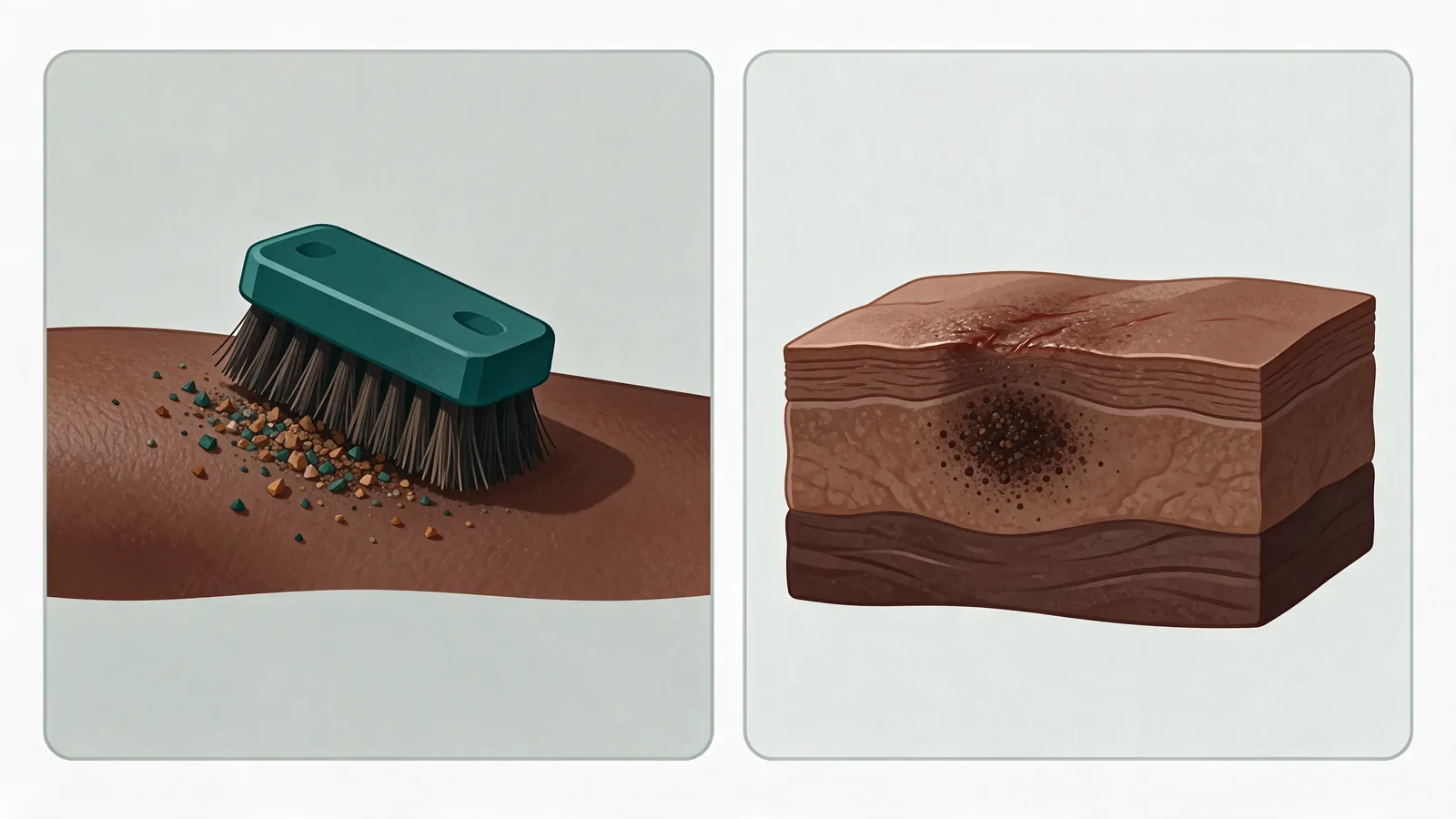
Not true. When it comes to pigment, it's rather the other way round.
Schematic illustration
"Cocoa butter evens out skin tone."
Not true. According to the AAD, there is no scientific evidence for that. On the face, back or chest it can clog pores and trigger breakouts.
[S10]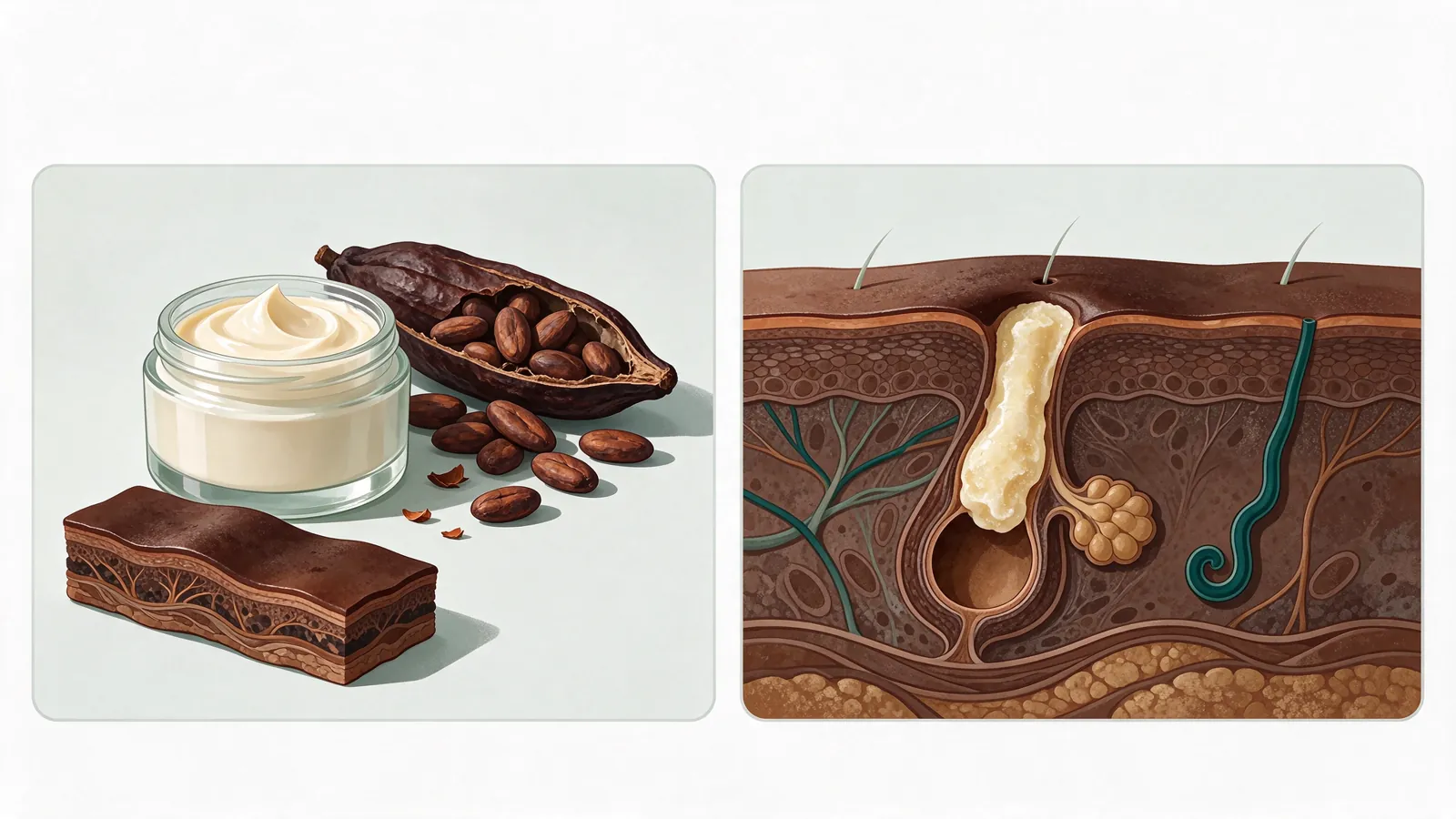
Not true. On the face, back or chest it can clog pores and trigger breakouts.
Schematic illustration
"Benzoyl peroxide leaves light patches."
Not true. According to the AAD, that's a myth. It does, however, bleach towels, pillowcases and clothes.
[S10]
Not true. It does, however, bleach towels, pillowcases and clothes.
Schematic illustration
"The stronger the product, the faster marks fade."
Not true. A product that irritates can itself leave new marks. Be especially careful with fading creams of unknown origin: the AAD reports products that contained steroids or mercury without listing them on the label.
[S4]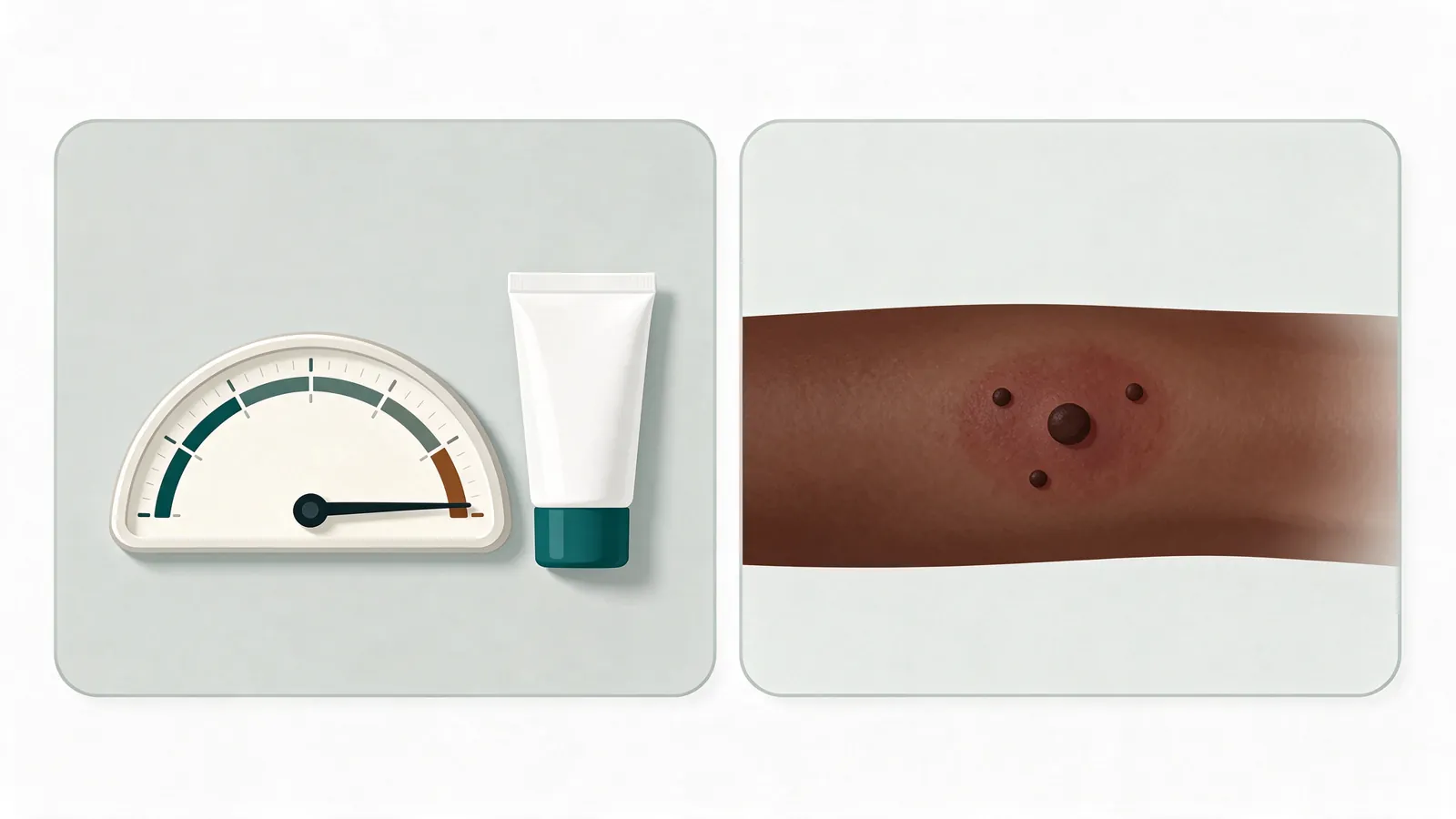
Not true. A product that irritates can itself leave new marks.
Schematic illustration
How to introduce new ingredients gently
For dark marks, the AAD lists over-the-counter options including azelaic acid, glycolic acid, kojic acid, retinoids and vitamin C. In our experience, these are the same ingredients that also appear in skincare for lighter skin. What we would do differently is mainly the pace.
[S4]One product at a time
This rule of thumb comes from our practice. If only one new product is added, you know at once what caused a reaction. With three new products at once, you're guessing.
Start with a patch test
The AAD recommends applying a new product twice a day for seven to ten days to a small area, for example on the inner arm or in the elbow crease, in the amount you would normally use. If the spot stays calm, with no redness, itching or swelling, you can use the product.
[S9]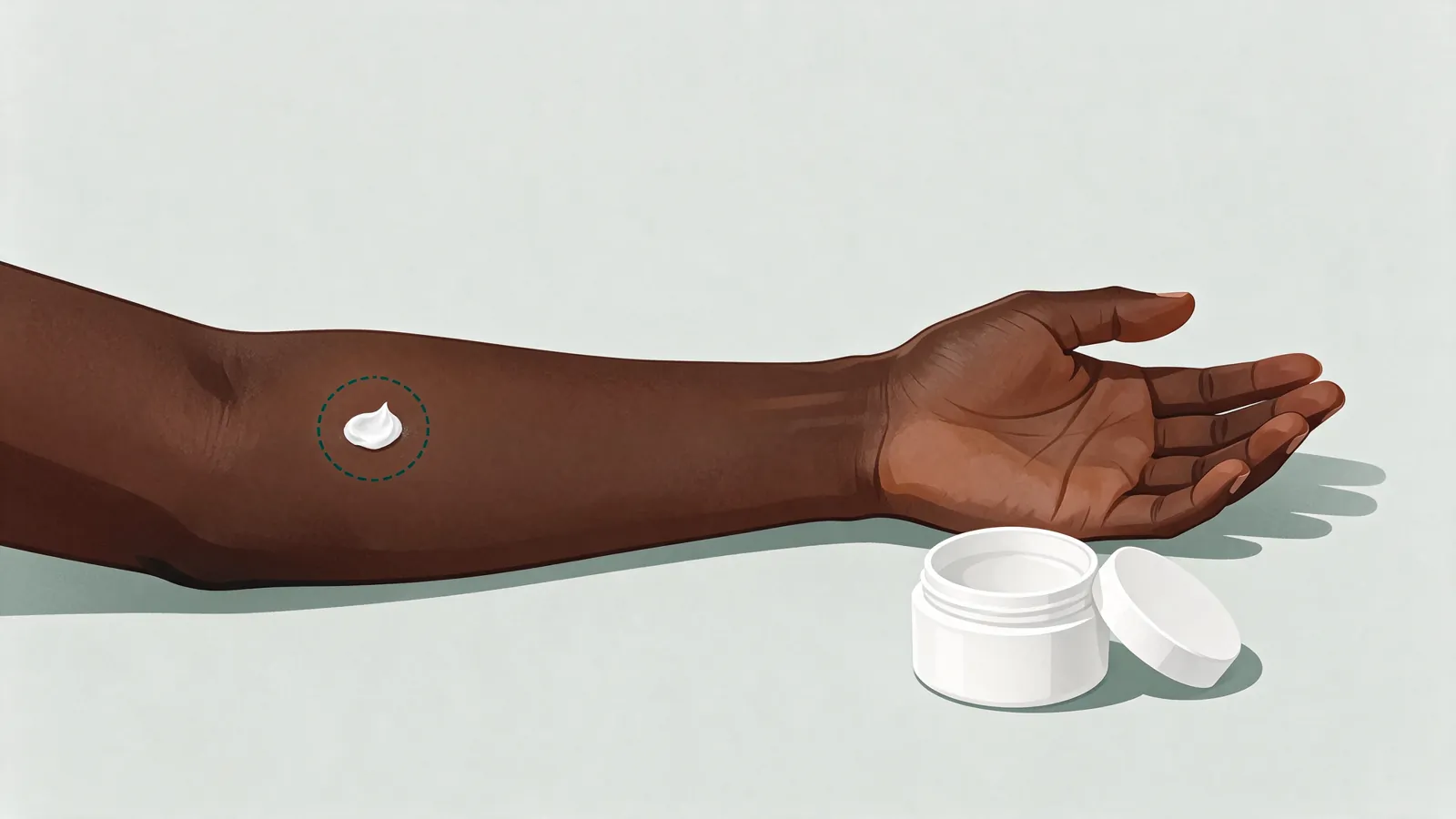
- 01Inner arm or elbow crease
2× daily on the same small area, 7–10 days, in your usual amount. Day 1: apply · Every day: watch for redness, itching, swelling · After 7–10 days: calm, so it's usable.
Listen when it burns
Retinol and glycolic acid can irritate, especially sensitive skin. If a product burns or stings when you apply it, stop using it. In our view, pushing through is not worth it, because a product that irritates your skin can itself leave dark marks.
[S4][S9]Keep the base routine calm
A mild cleanser and a fragrance-free cream that holds in moisture are enough as a base. Products labelled "for sensitive skin" or "fragrance-free" irritate less often, according to the AAD.
If breakouts sit only on the forehead and temples, hair oil may be the reason. The AAD calls this pomade acne and recommends hair products with a water or glycerin base.
The morning and evening order is in Skincare routine for hyperpigmentation on dark skin. How to choose and use vitamin C is explained in Vitamin C for dark spots on dark skin.
[S4][S10]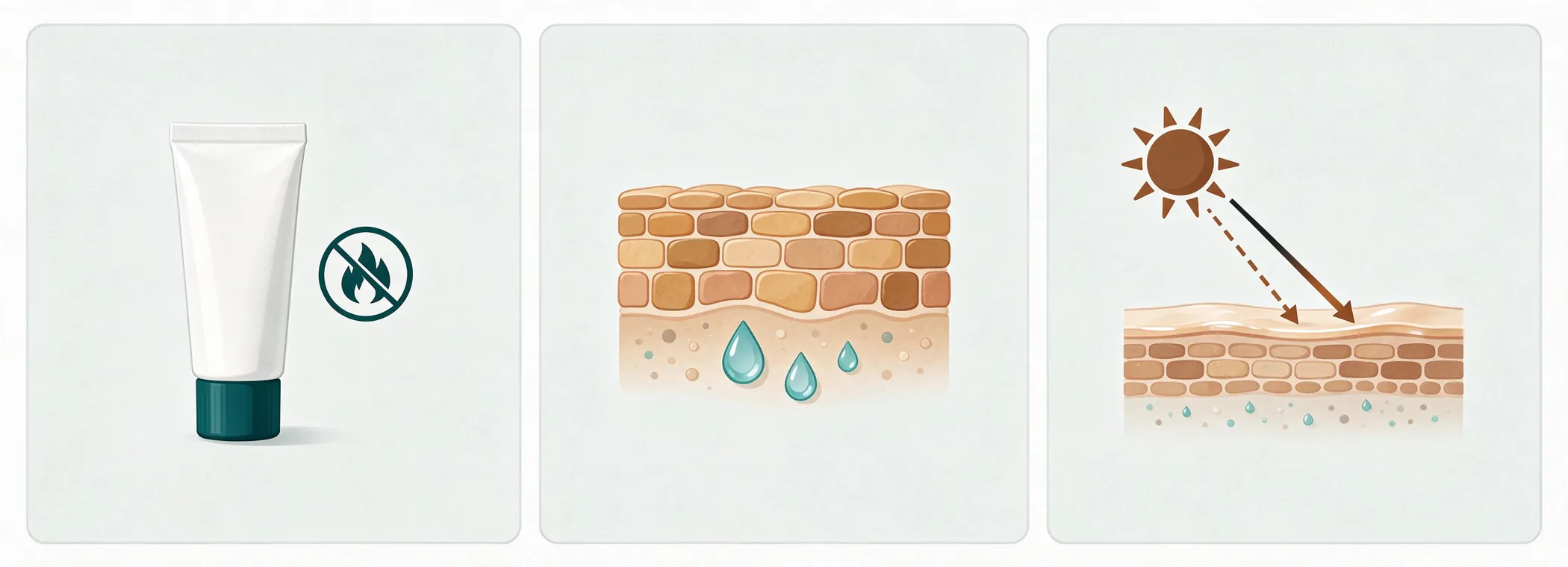
Gentle: one product at a time, with a patch test · Barrier: hold in moisture, or the skin looks grey · Protection: every day, preferably tinted (UV and visible light)
Schematic illustration · not a treatment recommendation for any individual case
When you should see a doctor
The AAD lists warning signs on darker skin that you should not wait on: a spot, lump or mole that grows, bleeds, itches or changes; a new darkening of the skin, including on the scalp, mouth, lips or in the genital area; a wound that does not heal or keeps coming back; a dark streak in a nail; and a scaly, rough patch that stays.
Acne also belongs in treatment early. If it becomes moderate or severe, the AAD says the risk of dark marks and of keloids, a type of raised scar, rises on dark skin. And dry skin that is no better after two weeks of good care should be seen by a dermatologist.
[S6][S8][S10]From the lab
I founded DOCEBA and develop the products in our GMP-certified lab in Bielefeld (ISO 22716). More than 100 formulas for other cosmetics brands carry my handwriting.
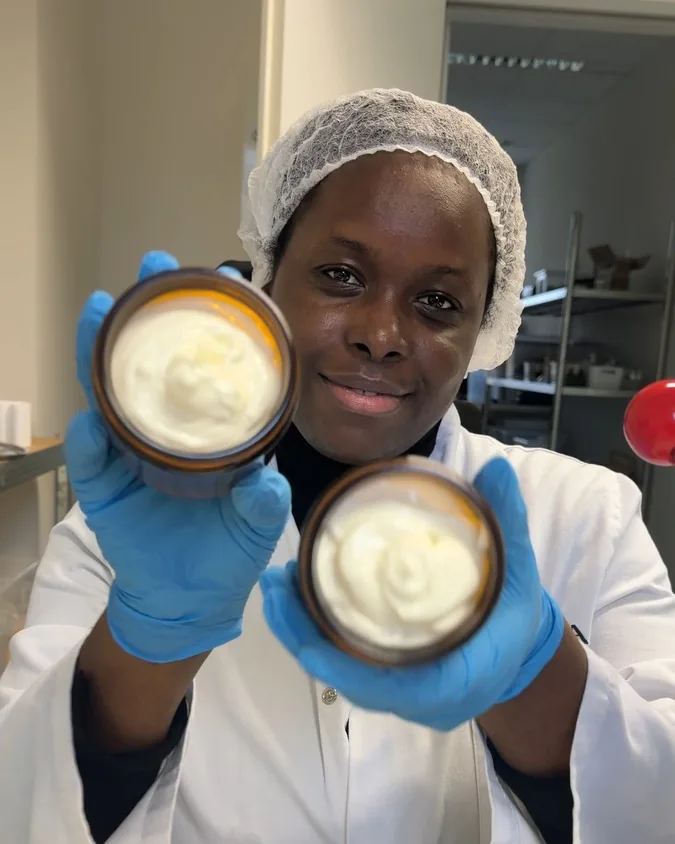
Anita Yabo in our lab in Bielefeld
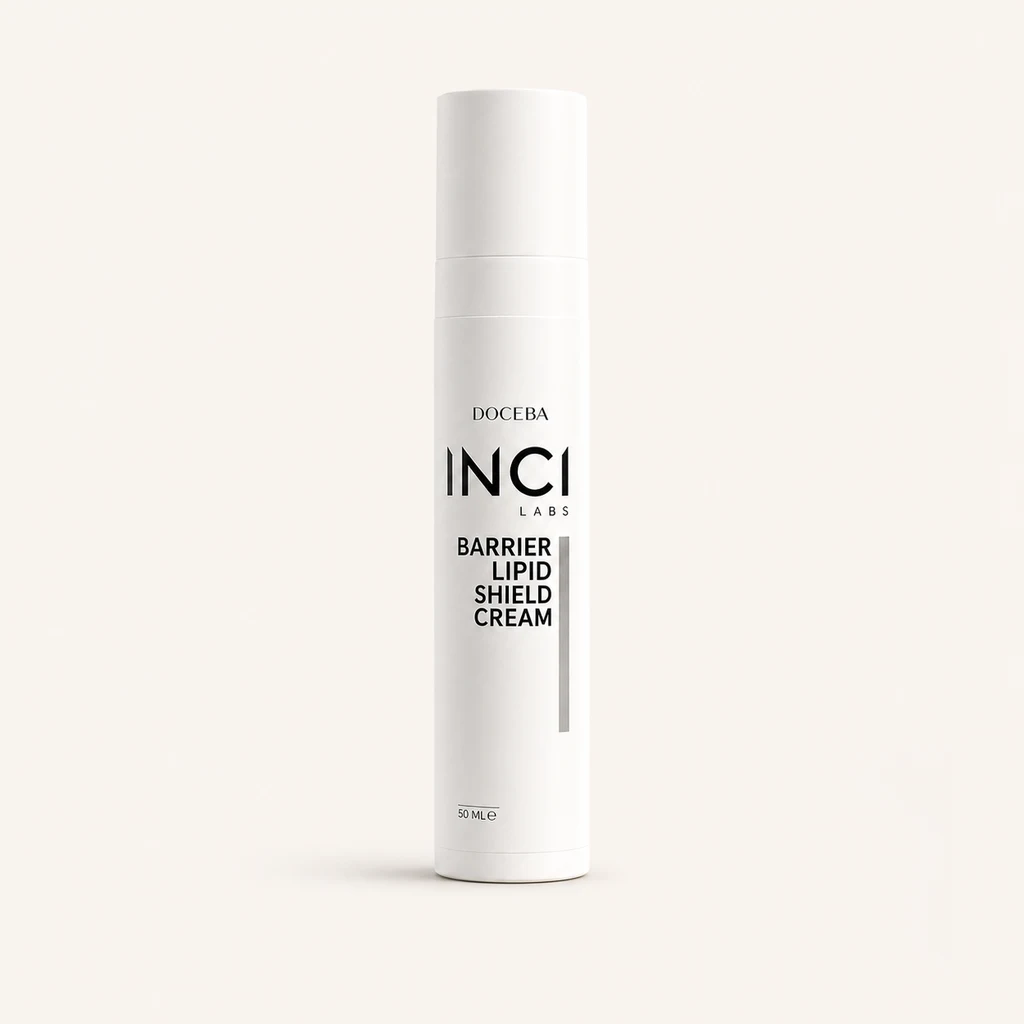
The Barrier Lipid Shield Cream is formulated without fragrance. That fits what the AAD advises for dark skin: gentle, fragrance-free products irritate less often, and less irritation means fewer new marks.
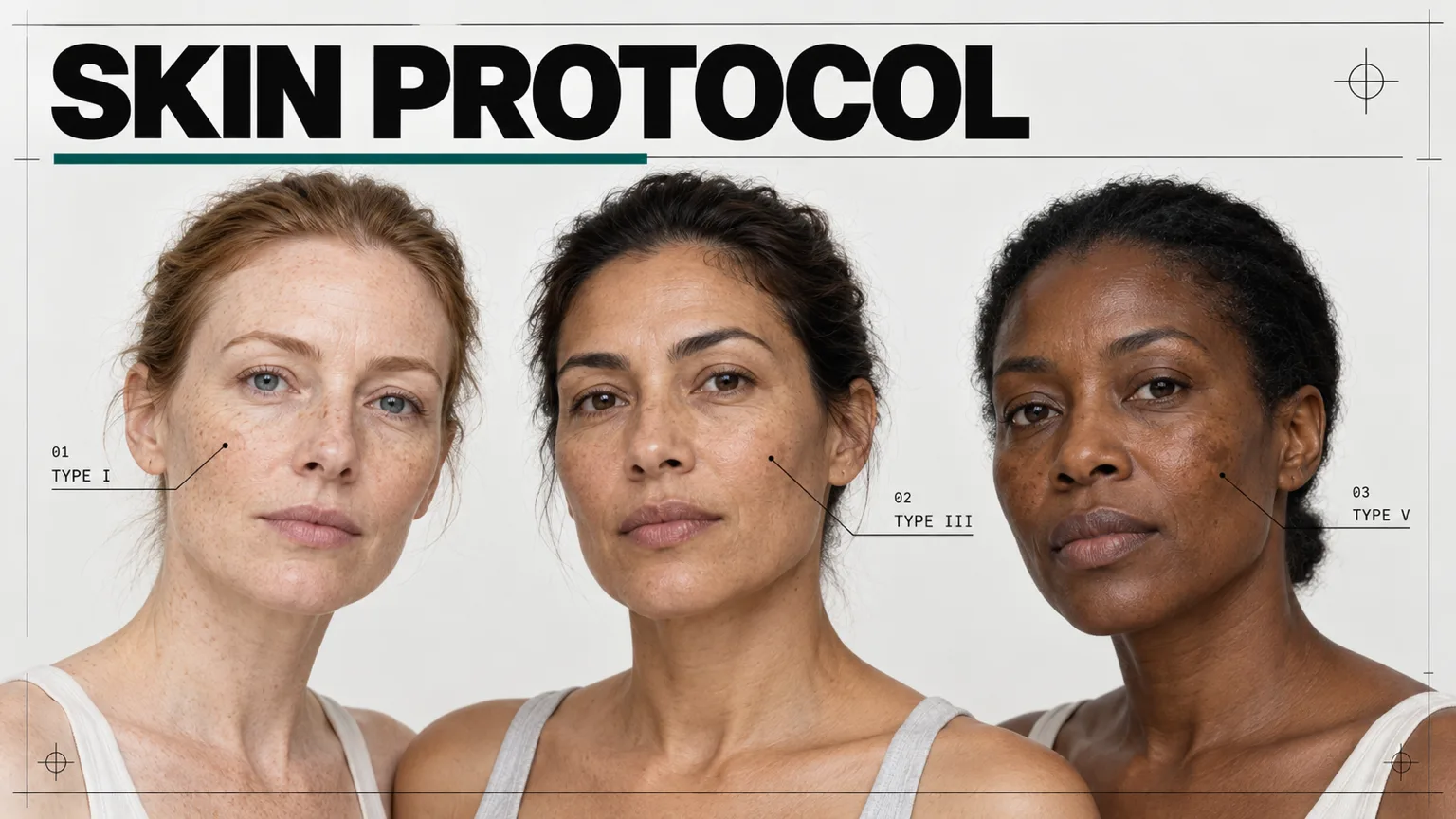
A shelf product stays the same every week. Your skin does not. Because I formulate in our own lab, we can adjust a product when your skin needs something else. That is what Skin Protocol is for.
[S4][P1]From my own experience
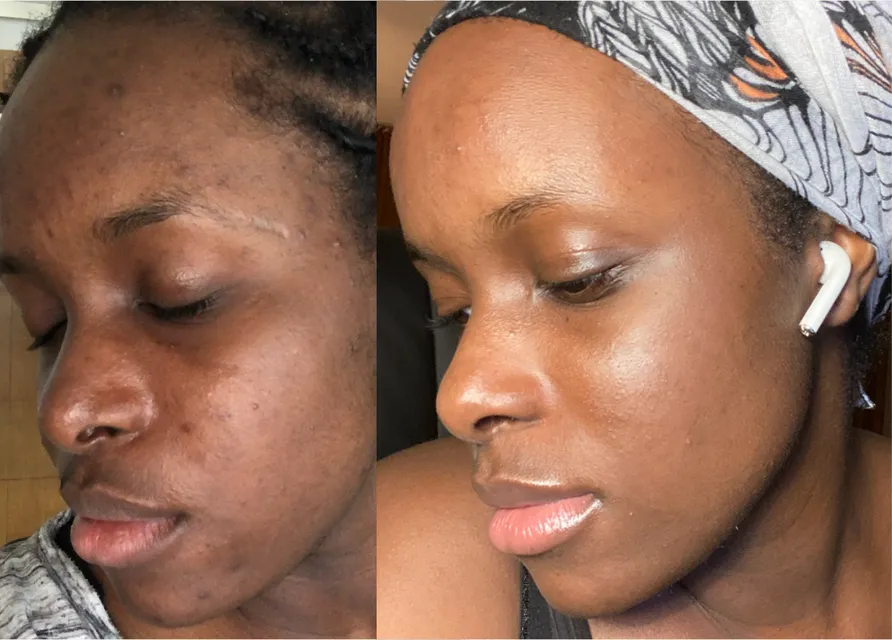
I have dark, melanin-rich skin myself and have struggled with it since I was a teenager. I tried a lot and spent thousands on skincare, much of it from abroad: first products from Africa, later from Germany as well. None of it helped.
My husband encouraged me to develop a solution of my own. I started experimenting at home, sent my mixes to friends, and then decided to do it professionally. I documented my own skin over time, front, left and right, unedited. The photos are in the guide to hyperpigmentation on dark skin.
Your next step
- For two weeks, drop everything that burns or tightens. A mild cleanser and a fragrance-free cream.
- Every morning, sunscreen with SPF 30 or higher, preferably tinted.
- Only then a new ingredient, with a patch test.
- If you already have marks, read on in the guide to hyperpigmentation on dark skin.
Matching products from our lab:
Skin Protocol: a plan for your skin, and a team that adjusts it
You get a plan that fits your skin and what you have already tried. We check in regularly and adjust products from my lab when your skin needs something else. In German or English.
It starts with a free conversation of about 20 minutes. We'll call you and listen to your skin history, even if you don't yet know exactly what your skin actually needs.
Book a free skin consultationA cosmetic assessment, not a diagnosis. Inflamed, painful or changing spots belong in a doctor's practice first.
Questions that often remain
Does Black skin need different skincare?
It mainly needs a gentler routine; the basic rules stay the same. On Black skin, a dark mark is more likely to stay after irritation, the colour is usually more intense, and it lasts longer. That is why we consider mild products, a good moisturiser and daily sunscreen more important than especially strong ingredients. [S1][S3]
Do I really need sunscreen if I have dark skin?
Yes. Skin cancer can also develop on dark skin, and the sun darkens marks that are already there. The AAD recommends SPF 30 or higher, broad-spectrum protection and water resistance. [S4][S7][S8]
Why does sunscreen leave a white film on my skin?
Mineral filters such as zinc oxide and titanium dioxide often leave a white residue. A tinted sunscreen in your shade helps avoid that, and with iron oxides it also helps protect against visible light. [S1][S7]
Sources
- [S1] Tsai J, Chien AL: Photoprotection for Skin of Color. Am J Clin Dermatol 2022;23(2):195–205 ↗
- [S2] DermNet: Ethnic dermatology ↗
- [S3] DermNet: Postinflammatory hyperpigmentation ↗
- [S4] AAD: How to fade dark spots in darker skin tones ↗
- [S5] Taylor SC: Enhancing the Care and Treatment of Skin of Color, Part 2: Understanding Skin Physiology. Cutis 2005;76:302–306 ↗
- [S6] AAD: Dry skin remedies for darker skin tones ↗
- [S7] AAD: How do I know if I'm using the right sunscreen? ↗
- [S8] AAD: Finding skin cancer in darker skin tones ↗
- [S9] AAD: How to test skin care products ↗
- [S10] AAD: 10 tips for clearing acne in darker skin tones ↗
- [P1] DOCEBA: Barrier Lipid Shield Cream ↗
General skin-care information, not a diagnosis or a personalised treatment plan.
Your bag
Review your items before continuing.
Your bag is empty.