
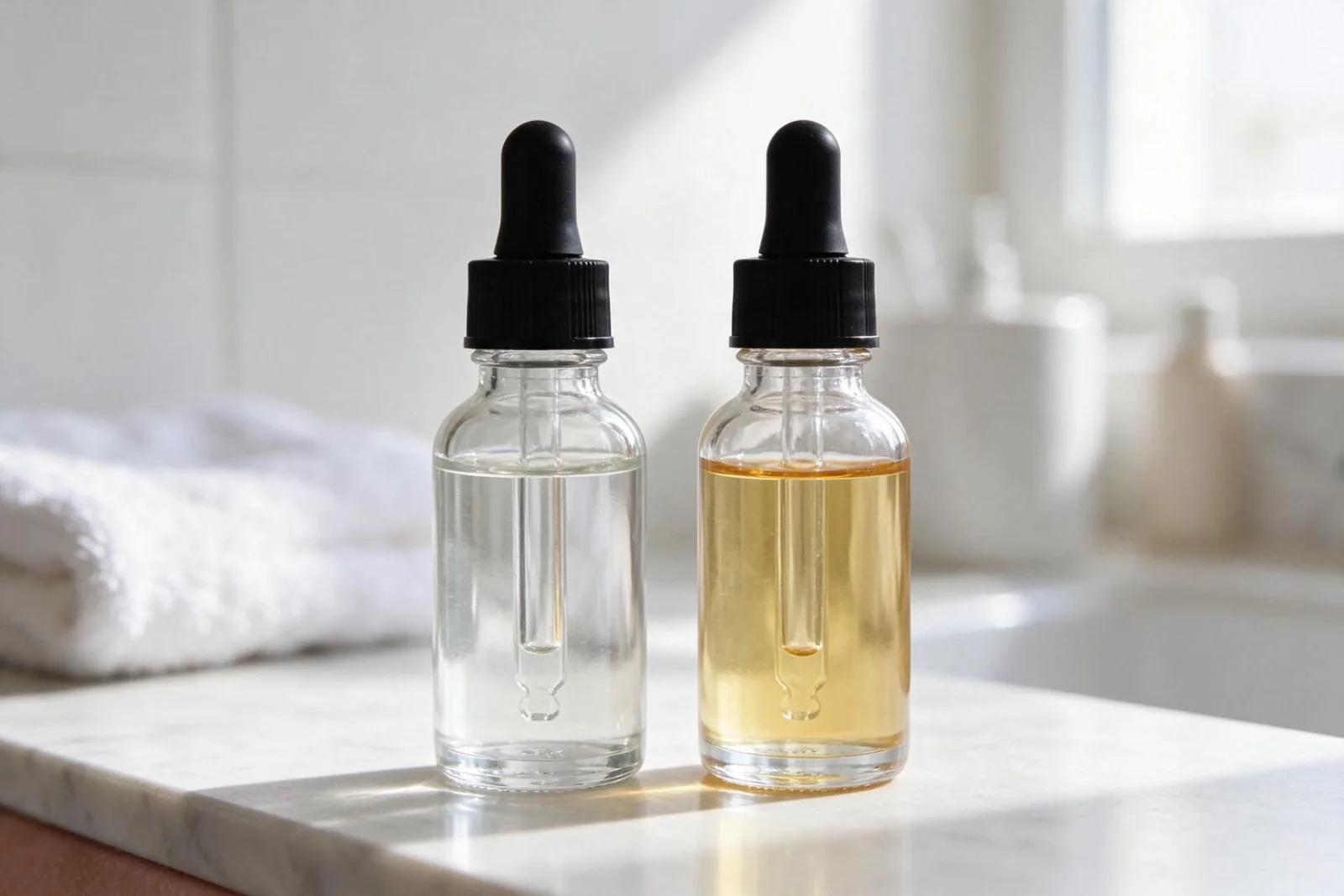
Your vitamin C serum used to be almost clear, now it has a yellow tinge, and maybe it even stings. That is annoying, especially when the bottle was not cheap and you bought it for your dark spots.
Let me sort it out. Oxidation means oxygen and light change the vitamin C. Burning is something else, a signal from your skin that it is irritated, and that matters more on dark skin.
I'll show you how to spot an oxidized serum, when to stop using it and how to store it so it lasts longer.
How do I know if my vitamin C serum has oxidized?
A serum with pure L-ascorbic acid, the classic form of vitamin C, is almost colorless in the bottle. The substance is unstable. Light oxidizes it to dehydroascorbic acid, which is vitamin C in its oxidized form, and that form gives the serum a yellow color.
Your first warning sign is therefore the color. Hold the bottle against a sheet of white paper and compare it with the day you opened it. A photo from day one makes the comparison easier. The yellowing is documented, but no one knows at which shade of orange a serum has spoiled.
Minor side effects give a second clue. A yellowish tint on the skin and stains on clothing come from oxidative changes of vitamin C. If you see a yellow sheen on your skin after applying it, or yellow marks on a collar, that can point to oxidation.
[S1]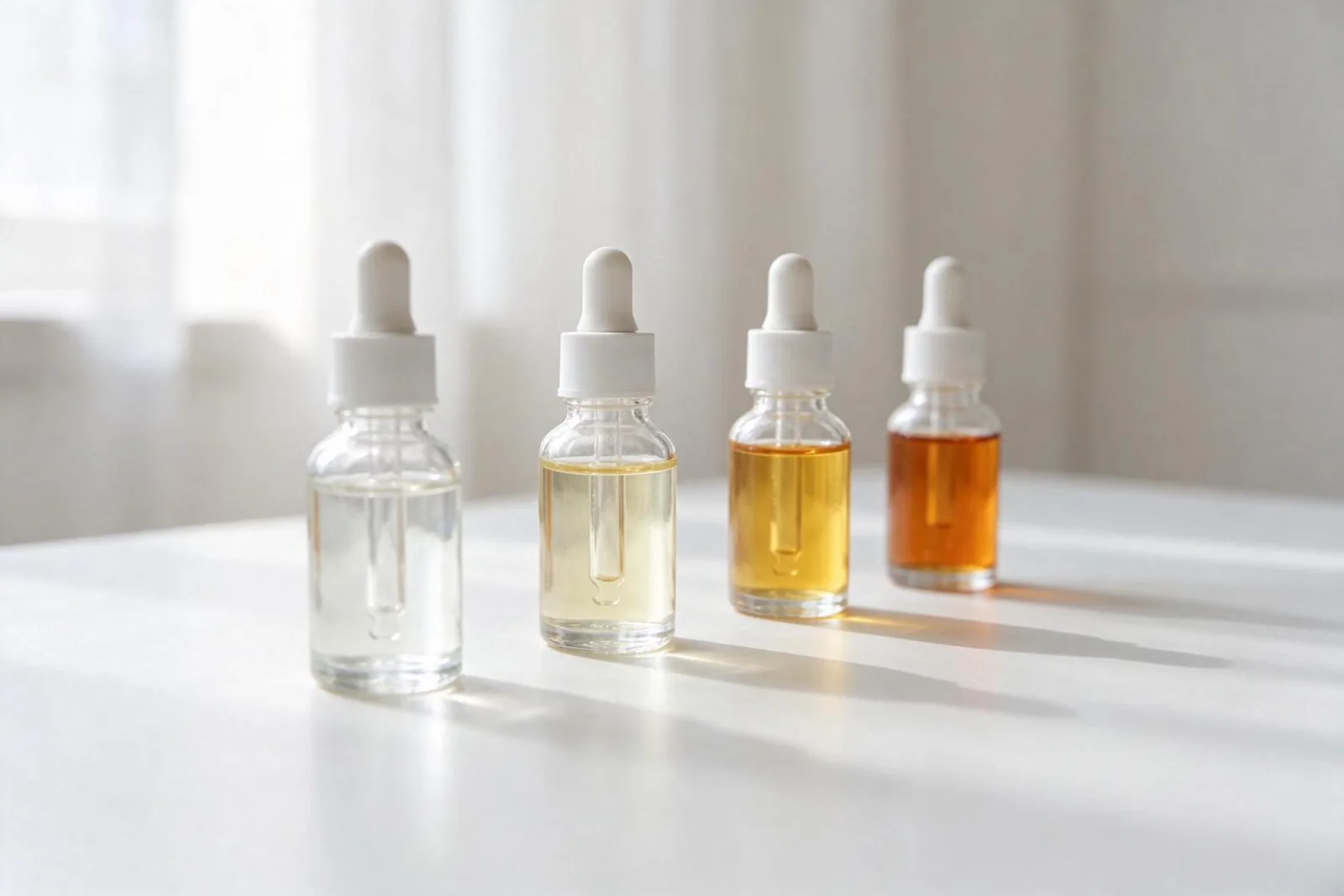
The more yellow and orange, the more the vitamin C has oxidized.
Illustration
Can I still use a yellow or orange vitamin C serum?
If the color has changed clearly, stop applying it. There is no proven answer to the question itself. What is known is that oxidation turns the serum yellow. Whether a yellow serum works less well or irritates more has not been studied, so I give no percentage and no cut-off date after which a serum counts as spoiled.
My own judgment, not a study result: with a serum meant to fade dark spots, the risk is not worth taking, because irritated skin can turn into a new spot on a dark skin tone. Here is what to do:
- Hold the bottle against white paper and compare the color with how it looked when you opened it.
- If the color has changed clearly, stop applying it and buy a fresh one.
- Patch-test a new serum on a small area before it goes on your whole face.
Is burning from vitamin C serum normal?
Stinging, redness and dryness after topical vitamin C are rare. Mild dryness or brief tightness is easily treated with a moisturizer. If a product burns or stings noticeably or again and again, though, it is irritating your skin, and that may darken dark spots. Stop it then, you do not have to get used to a burning feeling.
One possible reason is acidity. The pH value shows how acidic something is, and a lower number means more acid. Pure L-ascorbic acid stays stable at a pH below 3.5 and is then transported well across the outermost layer of skin. Because of that acidic pH, though, it may irritate sensitive skin. More than 20 percent vitamin C also adds no benefit and might cause some irritation.
If your serum burns, stop using it and give your skin gentle, fragrance-free care. Hives, swelling or a strong rash belong in a dermatologist's office, because hives and erythema multiforme, an inflammatory skin reaction, have been documented as reactions to topical vitamin C.
[S1][S2][S3][S4]
- 01Flushed area after a product
Illustration
Why does irritation matter more on dark skin?
Inflammation prompts pigment cells to make more melanin. What remains is postinflammatory hyperpigmentation (PIH), color left behind after inflammation. It is more common on darker skin tones, and the color there is stronger and stays longer.
An irritated patch can therefore turn into a spot on melanin-rich skin. A serum meant to fade dark spots could then do the opposite if it irritates your skin every morning. That is a conclusion drawn from these links, not the result of a study on vitamin C serums.
Introduce a new serum on its own and patch-test it. Add the next product only once your skin stays calm. How vitamin C fits into a routine on dark skin is covered in vitamin C serum for dark spots. How niacinamide compares is in niacinamide vs vitamin C.
[S5]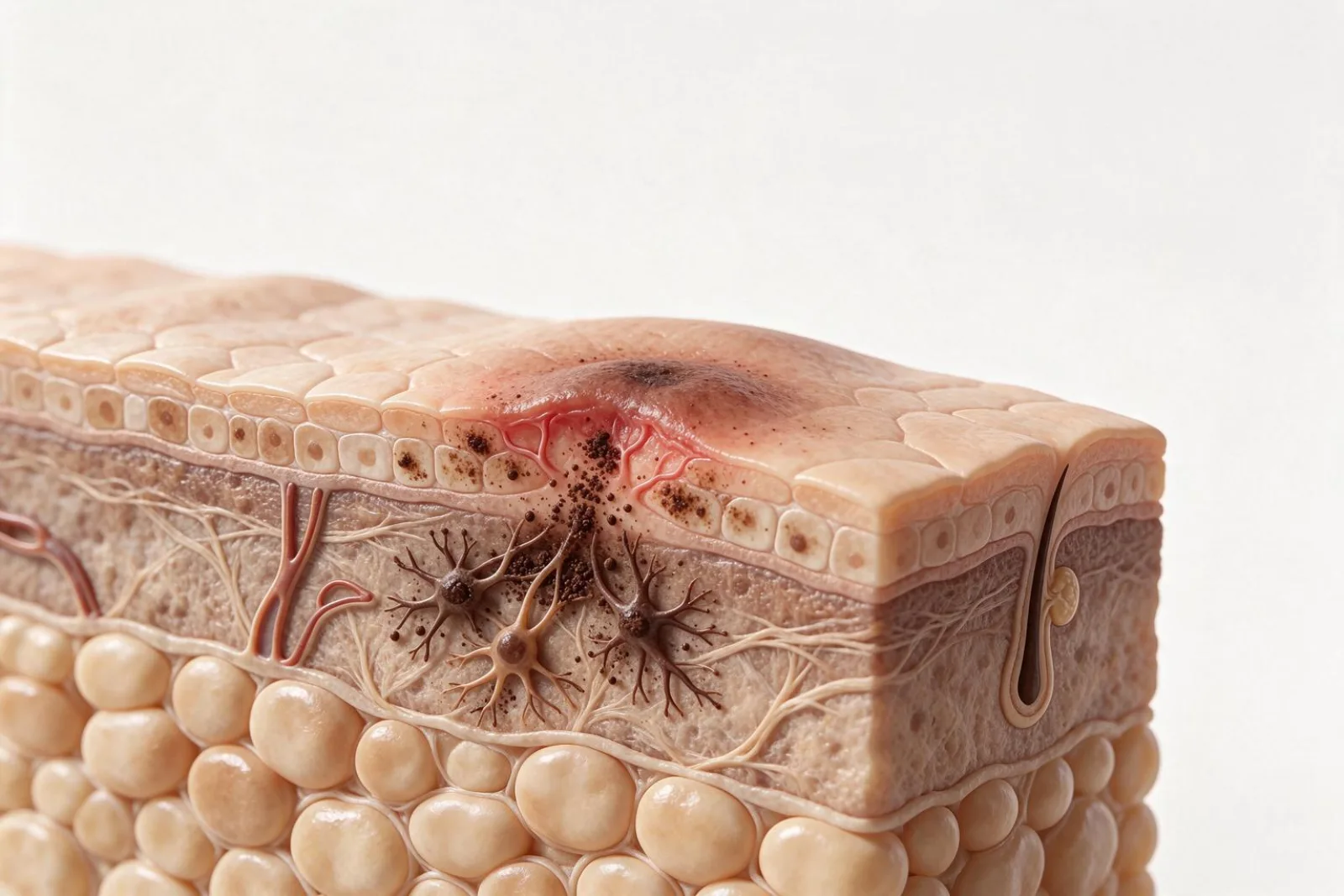
- 01Irritation
- 02Pigment cells release more colour
Inflammation prompts the pigment cells to make more melanin.
Simplified illustration
How should I store vitamin C serum so it lasts longer?
L-ascorbic acid is sensitive to light and air. A low pH and opaque packaging help its stability, as do little oxygen during manufacture and little water in the formula. The last part is up to the maker, the rest you can take care of yourself:
- Close the bottle right after every use so little air gets in.
- Keep the serum in the dark, for example in a closed cabinet instead of on the windowsill.
- When you have the choice, pick a bottle that blocks light.
There is no reliable figure for how many weeks an opened serum lasts or which temperature is ideal. The instructions on your maker's packaging are the basis here.
[S3]
- 01Bottle shielded from light
Illustration
What changes with a derivative like the one in the C7 serum?
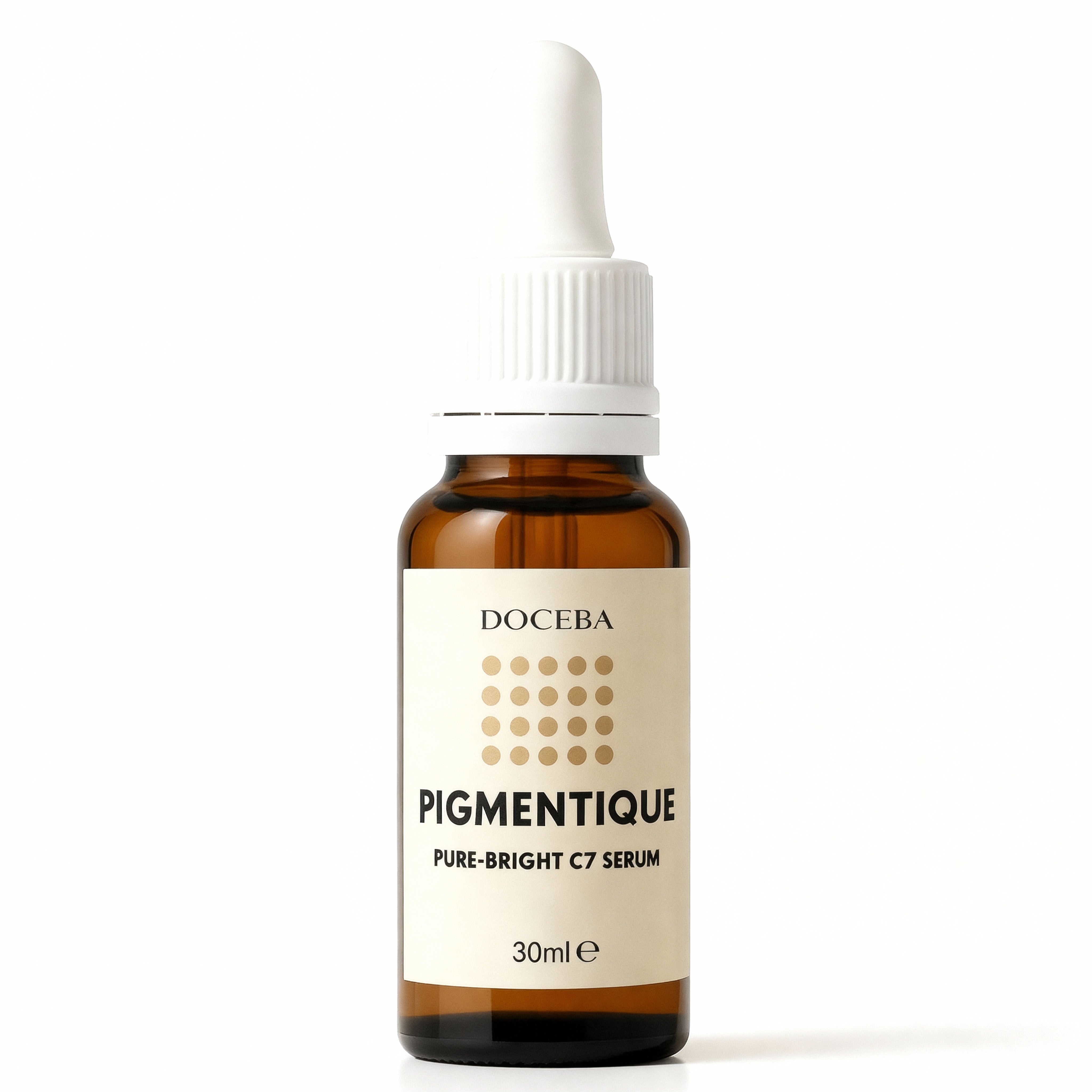
Our Pure Bright C7 Serum contains 3-O-Ethyl Ascorbic Acid according to its ingredient list (INCI). That is a derivative, a chemically modified relative of L-ascorbic acid. It is described as water-soluble and chemically stable. It tolerates heat better and is more stable in water-based solutions than L-ascorbic acid. Whether it is also more stable against air and other oxidizers is unclear.
Stable in the bottle says little about what happens in the skin. Some derivatives are not converted to the active form of vitamin C in the skin. In one study, daily use of ascorbyl palmitate and magnesium ascorbyl phosphate did not raise L-ascorbic acid levels in the skin. There is no such data for 3-O-Ethyl Ascorbic Acid.
Whether yellowing means the same for a derivative as for L-ascorbic acid is not proven either. The simple rules still apply to the Pure Bright C7 Serum: close the bottle, keep it dark, stop if it burns.
[S1][S2][S3][P1]
A derivative is a chemically modified relative of vitamin C.
Illustration
Your next step
Both routes are fine. Pick the one that fits you today.
- Check your serum's color. If it has changed clearly or it burns, stop using it.
- Patch-test a fresh serum on a small area and introduce only one new product at a time.
- Close the bottle after every use and keep it in the dark.
Matching products from our lab:

Skin Protocol: a plan for your skin and a team that adjusts it
You get a plan built around your skin and what you've already tried. We check in regularly and adjust products from Anita's lab when your skin needs something different. In English or German.
It starts with a free 20-minute call. We ring you and listen to your skin story, including your routine for dark spots.
Book your free skin callCosmetic advice, not a diagnosis. If you think you have a skin condition, see a doctor first.
Questions you might still have
How long does vitamin C serum last once opened?
There is no reliable figure in weeks. Light and air are the enemies of L-ascorbic acid. Check the color regularly and follow the instructions on the packaging. [S1][S3]
Can I apply vitamin C serum around my eyes?
Take care around the eyes and keep your distance from the eye itself. If you are unsure, a visit to a dermatologist is a good idea. [S1]
Can a serum leave yellow marks on skin or clothes?
Yes. A yellowish tint on the skin and staining of clothes are minor side effects that come from oxidative changes of vitamin C. [S1]
Does vitamin C burn more often on dark skin?
We found no figure for that. What is documented is that inflammation on darker skin tones more often leaves stronger, longer-lasting marks. That is why what you tolerate without burning matters. [S5]
Sources
- [S1] Telang PS: Vitamin C in dermatology. Indian Dermatol Online J 2013;4(2):143–146 ↗
- [S2] Al-Niaimi F, Chiang NYZ: Topical Vitamin C and the Skin: Mechanisms of Action and Clinical Applications. J Clin Aesthet Dermatol 2017;10(7):14–17 ↗
- [S3] Esfandiyari M, Ahmadi Ashtiani HR: Topical Vitamin C and Its Derivatives in Cosmetic Science: Stability, Efficacy, and Formulation Strategies. J Skin Stem Cell 2025;12(4):e163798 ↗
- [S4] AAD: Melasma: Self-care ↗
- [S5] DermNet: Postinflammatory hyperpigmentation ↗
- [P1] DOCEBA: Pure Bright C7 Serum (Produktseite, INCI) ↗
- [P2] DOCEBA: Pure Bright Sensitive Serum (Produktseite, INCI) ↗
General skincare information, not a diagnosis or an individual treatment plan.
Your bag
Review your items before continuing.
Your bag is empty.