
You turn your vitamin C serum around and the ingredient list doesn't say vitamin C at all. It says 3-O-ethyl ascorbic acid. Is that real vitamin C, or a stand-in?
Let me sort it out. There is pure vitamin C, and there are modified forms of it. They behave differently in the bottle and on your skin, and that is where it gets interesting for you.
I'll show you how this form differs from pure vitamin C, what the studies actually measured and what to look for in a serum.
What is 3-O-ethyl ascorbic acid?
3-O-ethyl ascorbic acid, EA for short, is a modified form of vitamin C. It starts from L-ascorbic acid, the pure form of the vitamin. In EA, an ethyl group, a short chain of carbon atoms, sits on the molecule's third carbon.
This change protects the spot where the molecule would otherwise pick up an electric charge, and so the whole molecule from oxidation. Oxidation means oxygen from the air uses up the active ingredient.
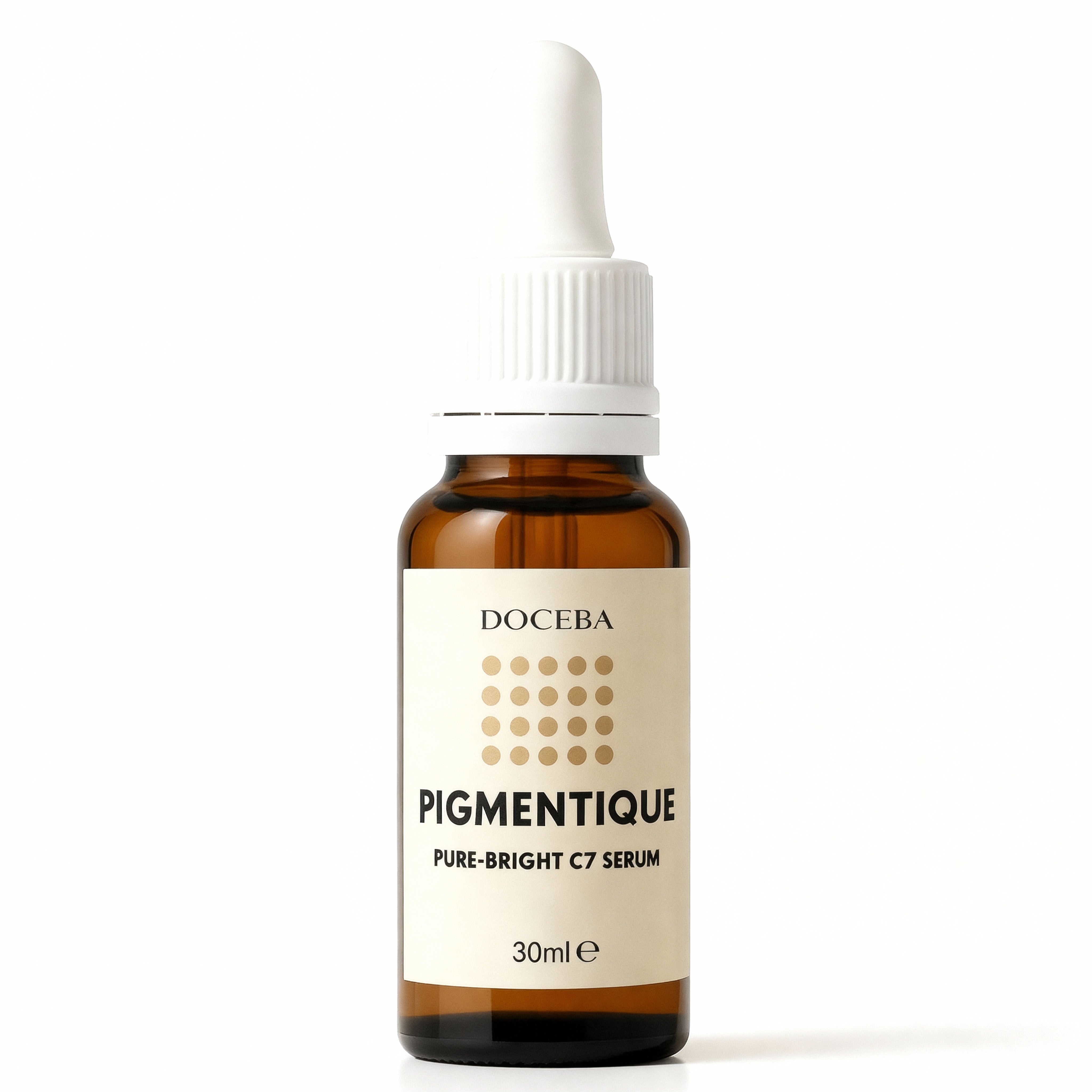
On a pack, the INCI list, which is the ingredient list, names it 3-O-ethyl ascorbic acid. Our Pure Bright C7 Serum contains it.
[S1][S3][S4]How does EA differ from pure vitamin C?
Pure L-ascorbic acid is water-loving, unstable and charged, which slows its way into skin. A pH below 3.5 makes it more stable and more permeable. pH measures how acidic a liquid is. For EA, lab papers look at three points:
- Oxidation: L-ascorbic acid oxidizes readily in air. In EA, the ethyl group is meant to prevent that.
- pH needs: L-ascorbic acid needs a pH below 3.5. Which pH EA needs has not been tested.
- Fat solubility: the measured logP, which shows how well a substance dissolves in fat, is −1.07 for EA and −1.85 for L-ascorbic acid. EA dissolves slightly better in fat but stays in the negative range.
These numbers come from lab tests. They do not tell you how a finished serum behaves on your skin.
[S1][S2]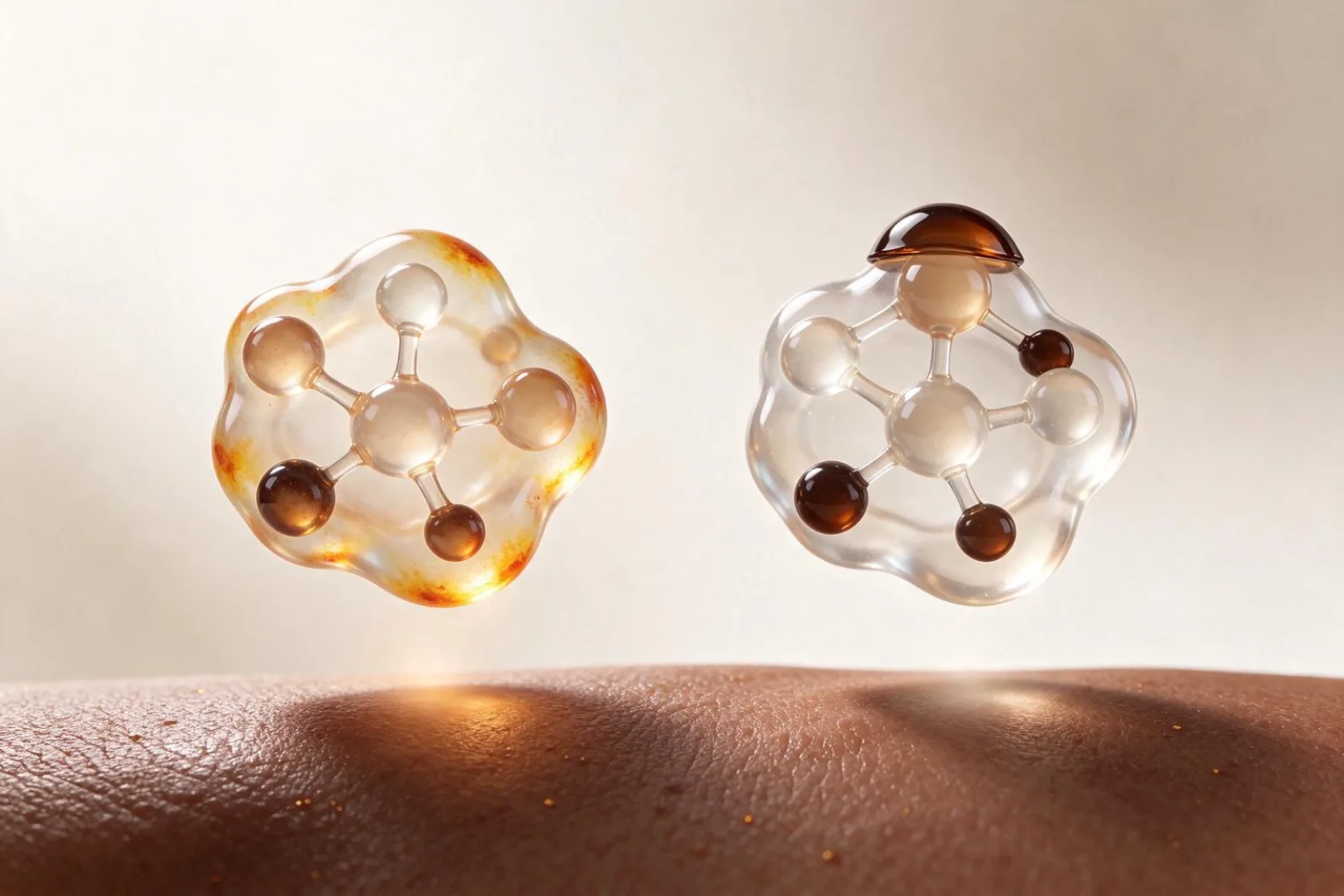
- 01Pure vitamin C: breaks down more easily
- 02EA: more stable
EA carries a small change that makes it more stable than pure vitamin C.
Simplified illustration
Does EA get into skin better than pure vitamin C?
The studies so far do not compare the two on skin head to head. One lab study tested EA in different carrier liquids on pig skin. With propylene glycol, glycerol and 1,2-hexanediol, EA entered the skin. With 1,5-pentanediol and tripropylene glycol, no penetration was measured. So the carrier has a say, and a study of plain solvents tells you only so much about a finished serum.
The same study recovered less EA than was put in, which points to partial breakdown inside the skin. Whether ascorbic acid forms in the process was not tested.
A 2024 paper assumes that the actual antioxidant is ascorbic acid, formed from EA in the skin. That is an assumption from a pig-skin experiment, not a measurement in people. For other derivatives such as magnesium ascorbyl phosphate, daily use did not raise vitamin C levels in the skin.
[S1][S2][S4]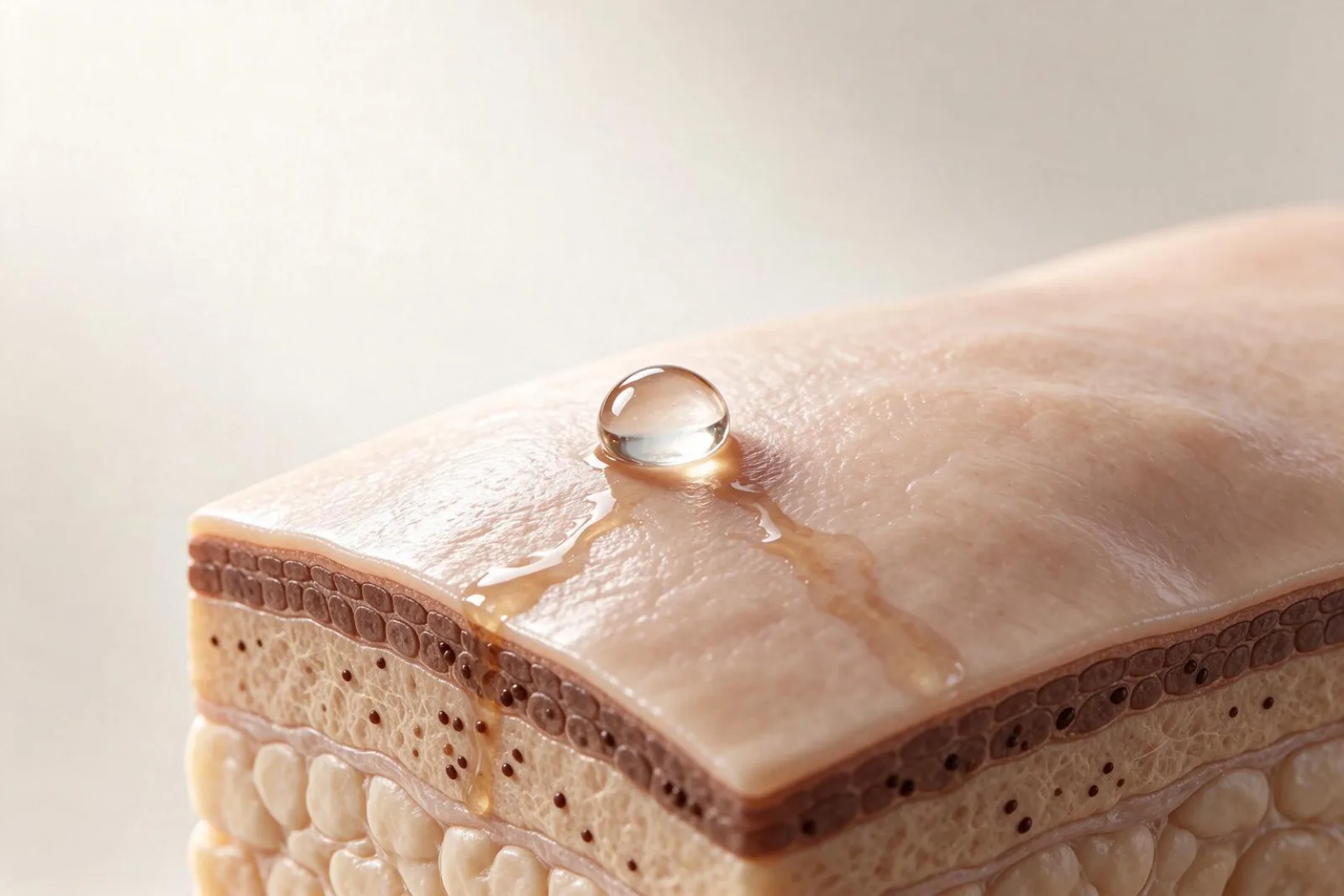
- 01Drop on the skin
- 02moves into the upper layers
How well an ingredient gets in also depends on the carrier liquid.
Simplified illustration
Does 3-O-ethyl ascorbic acid fade dark spots?
Vitamin C inhibits tyrosinase, an enzyme your skin needs to make melanin, the pigment that colors skin. Vitamin C is one of the substances, next to azelaic acid, glycolic acid, kojic acid and retinoids, that can fade existing spots. Read more in our guide to vitamin C for dark spots.
For EA itself there is one lab test on a model of pigmented skin. A serum with 30 percent EA was applied daily for four days. Melanin afterwards measured 16.60 instead of 20.02 micrograms per milliliter, about 17 percent below the control. The serum's maker funded the study, some experiments used very few samples, and no people took part.
We found no studies on EA in people with dark skin. For vitamin C in general, too, the clinical evidence is limited and the studies are small.
[S2][S3][S5]
- 01The EA studies are lab experiments
The EA studies work with cells and skin models.
Illustration
What should you look for in a serum with EA?
These points help you choose and use one:
- Look at the whole formula. The carrier helps decide how much penetrates, and the serum in the skin-model study was a custom formula with 30 percent EA, lactic acid and a pH of 3.82. Results from one formula do not carry over to another.
- Test a new product on a small area first and add only one new product at a time. On dark skin, an irritated spot can turn into a spot of its own, because inflammation tells pigment cells to make more melanin.
- If a product burns or stings, it is irritating your skin, and that can make spots darker. Stop using it then.
- Apply vitamin C in the morning under sunscreen. Vitamin C counts as an antioxidant that catches free radicals that sunscreen alone blocks only in part. For dark spots a tinted sunscreen with iron oxides suits best, because they shield against visible light, which can darken spots.
We are working on our own sunscreen. If you buy one now, choose a tinted one.
Whether to combine vitamin C with niacinamide or pick one is covered in niacinamide vs vitamin C.
[S2][S3][S5][S6][S7]
- 01Thin film on cleansed skin
Test a new serum on a small area first.
Illustration
How do you go on from here?
Two paths fit most readers.
Introduce a serum with EA with care
- Apply the serum in the morning after cleansing, then moisturizer and a tinted sunscreen.
- Test it on a small area first and add only one new product at a time.
- If it burns or stings, stop using it.
Matching products
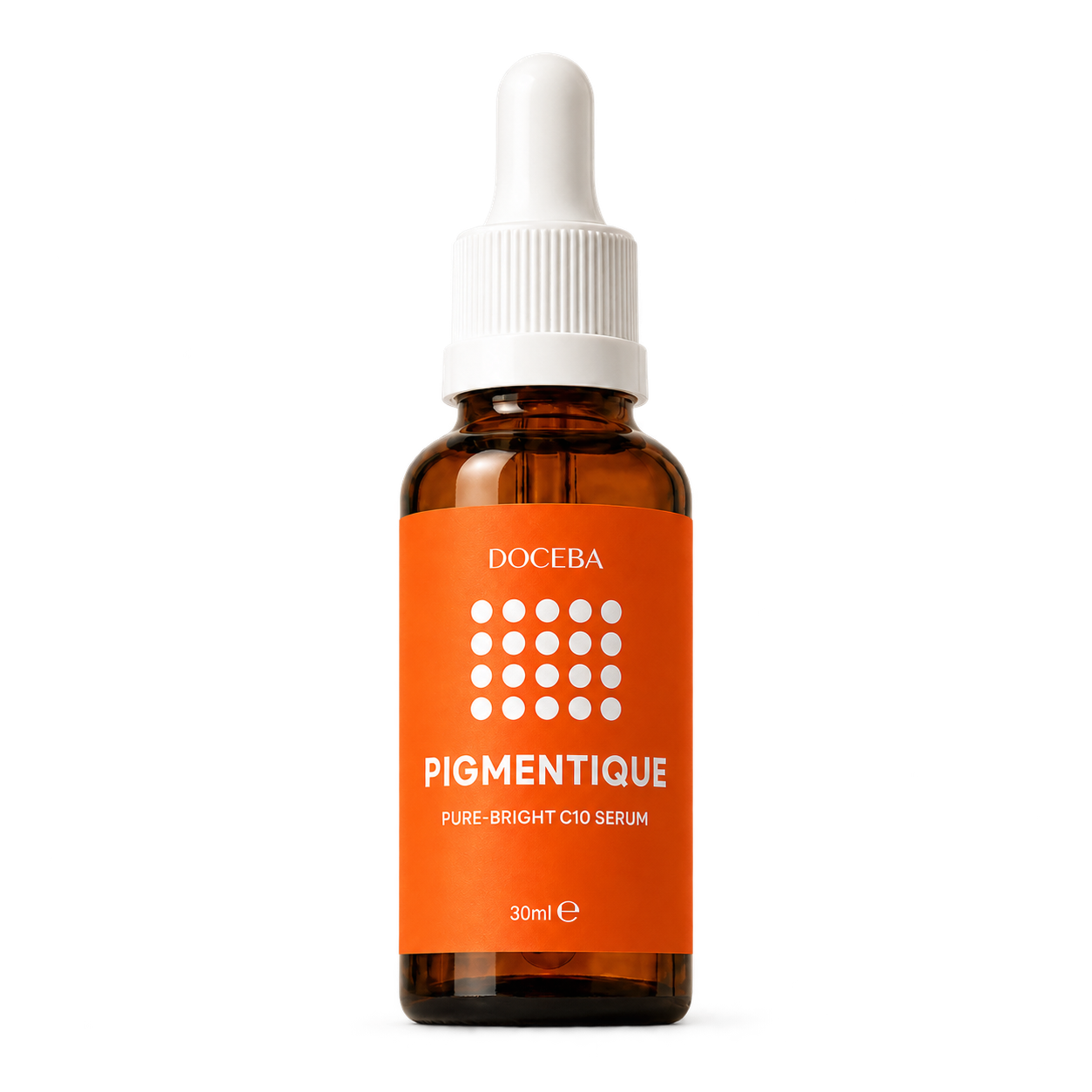

Skin Protocol: a plan for your skin and a team that adjusts it
You get a plan built around your skin and what you've already tried. We check in regularly and adjust products from Anita's lab when your skin needs something different. In English or German.
It starts with a free 20-minute call. We ring you and listen to your skin story, including your routine for dark spots.
Book your free skin callCosmetic advice, not a diagnosis. If you think you have a skin condition, see a doctor first.
Common questions about 3-O-ethyl ascorbic acid
Is 3-O-ethyl ascorbic acid the same as vitamin C?
It is a modification of L-ascorbic acid, the pure form of vitamin C. The ethyl group on the third carbon changes the molecule. The research literature counts EA among the vitamin C derivatives. [S1][S4]
Does a serum with EA never oxidize?
The lab papers say the ethyl group protects the molecule from oxidation. That is no guarantee for a finished serum, since the studies tested solvents under lab conditions. In one paper, EA was less stable in two solvents after 120 hours, with 76.64 and 82.76 percent of the active still detectable. [S1]
Does EA need an acidic pH like pure vitamin C?
L-ascorbic acid needs a pH below 3.5. We found no test of which pH EA needs. The serum in the skin-model study had a pH of 3.82. [S2][S3]
When will I see results on dark spots?
We found no timeframe for EA. For spots in general, here is a guide: a spot a few shades darker than your skin usually fades within 6 to 12 months once the cause is stopped. If the pigment sits deep, it can take years. [S5]
Sources
- [S1] 3-O-ethyl-l-ascorbic acid: Characterisation and investigation of single solvent systems for delivery to the skin ↗
- [S2] Al-Niaimi F, Chiang NYZ: Topical Vitamin C and the Skin: Mechanisms of Action and Clinical Applications. J Clin Aesthet Dermatol 2017;10(7):14–17 ↗
- [S3] The Anti-Ageing and Whitening Potential of a Cosmetic Serum Containing 3-O-ethyl-l-ascorbic Acid. Life 2021 ↗
- [S4] Loza-Rodríguez N et al.: Lipid-Based Gels for Delivery of 3-O-Ethyl L-Ascorbic acid in Topical Applications. Pharmaceutics 2024;16(9):1187 ↗
- [S5] AAD: How to fade dark spots in darker skin tones ↗
- [S6] AAD: Melasma: Self-care ↗
- [S7] DermNet: Postinflammatory hyperpigmentation ↗
General skincare information, not a diagnosis or an individual treatment plan.
Your bag
Review your items before continuing.
Your bag is empty.