

You bought a vitamin C serum, and now the bottle sits in your bathroom raising questions. Morning or night, before or after moisturizer, and what if it stings?
Let me sort it out. A vitamin C serum can only work if you use it steadily and without irritation. On dark skin there is a second reason to go gently, because a spot that stings can end up darker afterwards.
I'll show you the morning order, a four-step patch test and how to tell when a serum does not suit you. Whether vitamin C fades dark spots at all is covered in [vitamin C for dark spots](https://www.doceba.com/en/learn/vitamin-c-for-dark-spots).
Should I use vitamin C serum in the morning or at night?
Morning. Put it on after washing your face in the morning, before your sunscreen. Sunscreen always goes on after your other skin care.
Here is why. Vitamin C catches free radicals, the aggressive particles that UV light creates in the skin. Sunscreen alone only partly blocks them, and a serum underneath catches part of what gets through.
There is no separate evening rule for vitamin C. The order of steps is the same as in the morning: cleanse, active, moisturizer. Retinol belongs to the evening only, so the morning stays free for vitamin C.
[S1][S2][S3][S5]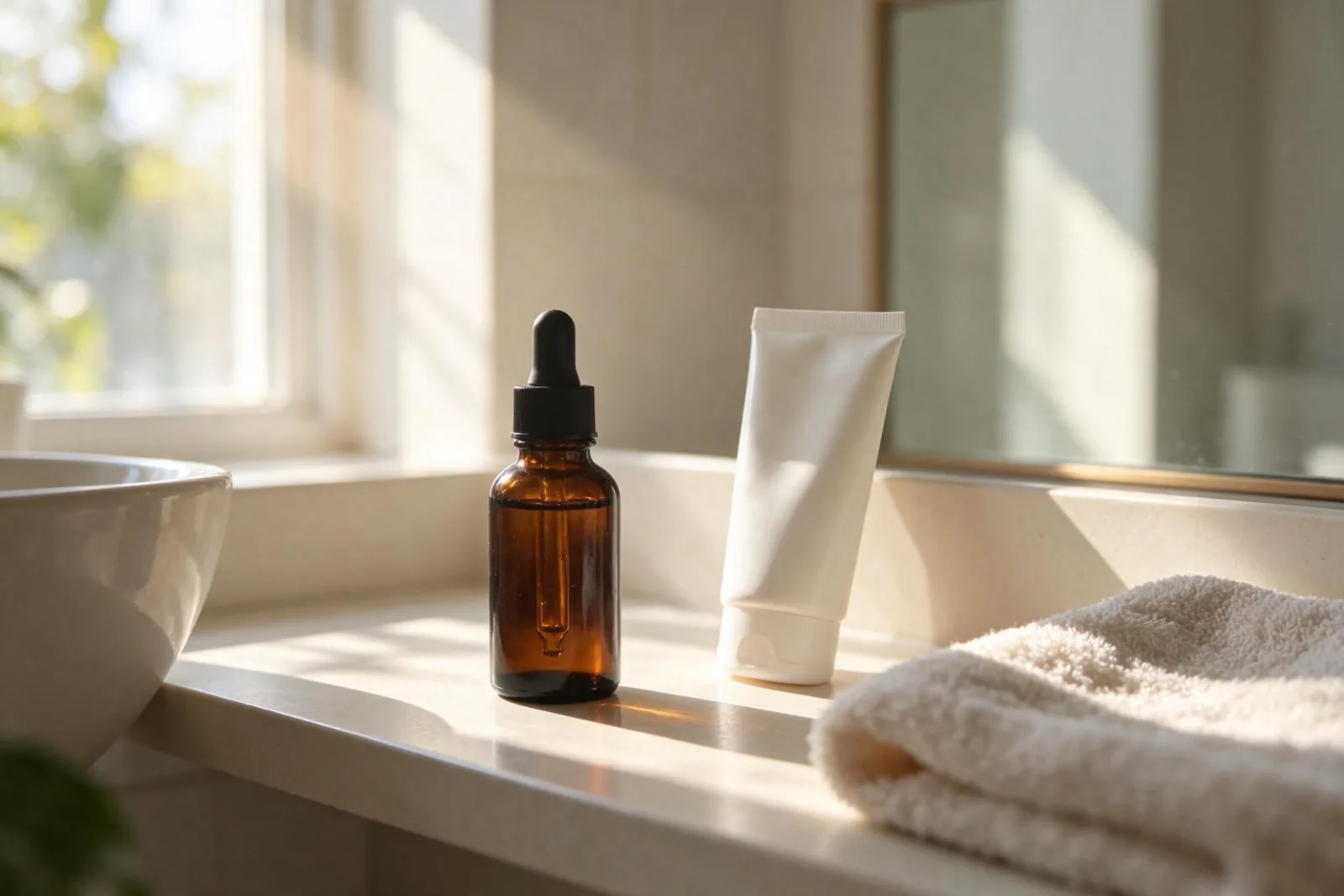
Serum first, then sunscreen.
Illustration
In what order do I apply vitamin C serum?
The usual order is: wash, then an active or treatment, then moisturizer and sunscreen, then makeup if you want it. In the morning that means:
- Wash your face with a gentle cleanser and pat it dry.
- Apply the vitamin C serum, because treatments go right after cleansing.
- Apply your moisturizer.
- Finish with sunscreen, after every other skin care product and under makeup.
That is all you need in the morning, because too many products can irritate your skin.
Use sunscreen with SPF 30 or higher and broad-spectrum coverage, meaning protection from both UVA and UVB rays. For dark spots a tinted product with iron oxides suits best, iron oxides being mineral colour pigments. They protect against visible light, which can darken spots too. We are working on a sunscreen of our own. If you buy one now, choose a tinted one.
[S2][S1][S7]Order of steps according to the AAD.
How much serum do I need, and how often?
There is no exact amount. Follow the directions on your product's packaging, spread the serum over clean skin with your fingertips, and pat it in gently.
Little is known about frequency either. In one study, people applied 3 percent vitamin C daily for four months. That is a study design, not advice for your serum. In daily life it means once in the morning, after your patch test stayed calm. If your skin feels tight or turns red, skip a day and restart more slowly.
Concentration is worth a look at the label. In most cases, a product with pure ascorbic acid needs more than eight percent vitamin C to matter biologically. Reputable products sit between 10 and 20 percent. Above 20 percent it may irritate.
[S3]
- 01Then moisturizer and sunscreen
Pat it in with your fingertips, then moisturizer and sunscreen follow.
Illustration
How do I patch test a vitamin C serum?
Try a new product on a small area first, and start only one new product at a time. On dark skin this counts double, because inflammation stimulates pigment cells to make more melanin, so an irritated spot can turn into a dark mark of its own. Here is how:
- Pick an unobtrusive spot, such as the inner forearm.
- Put a small amount of serum there.
- Watch for burning, stinging, redness or itching. If you notice any, stop using the serum right away.
- If the spot stays calm, use the serum on your face for the first time. Do not start another new product in the meantime.
Don't switch to new products too often, or you may see no progress and end up with irritated skin. Allergies can also develop to products that never caused a problem before.
[S6][S1]
- 01Test a new product on a small spot first
One drop on the forearm before the serum goes on your face.
Illustration
What can I combine with vitamin C?
Retinol belongs in the evening only, because retinoids, the vitamin A actives, can make skin more sensitive to the sun. If you use vitamin C in the morning and retinol at night, the two never meet. Whether they fit into one routine is covered in vitamin C and retinol.
If you have a prescription product from a dermatologist, for acne for example, it goes right after cleansing like any active. The practice tells you how often and how much to use.
Care matters most with retinoids on dark skin, because in skin with more melanin, irritation can trigger dark marks. Start with the gentlest formula and use it every other night at first.
How vitamin C fits into a whole routine is shown in hyperpigmentation routine for dark skin. One rule covers everything new: one product at a time.
[S5][S2][S6]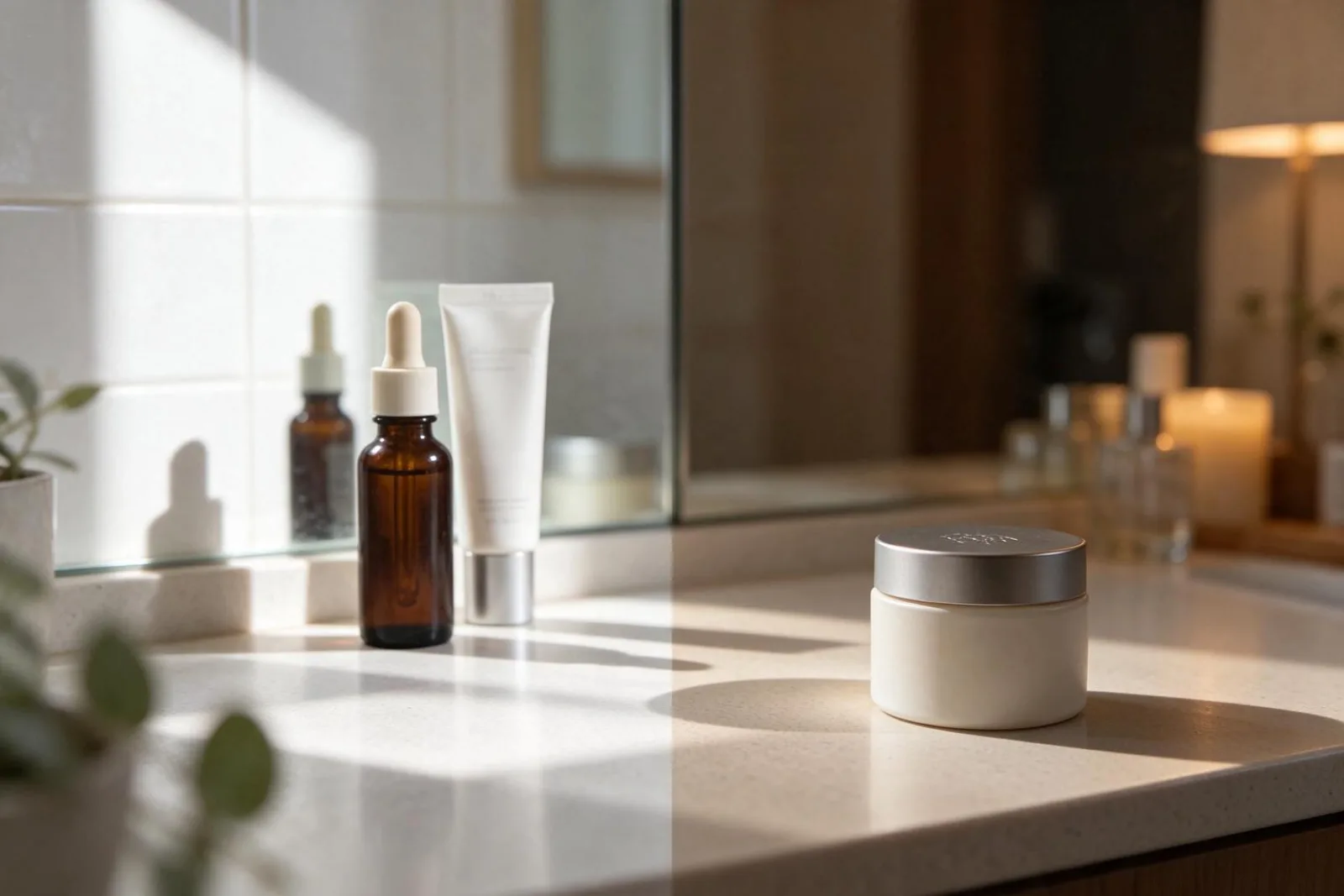
Vitamin C in the morning, retinol in the evening.
Illustration
How do I know a serum does not suit my skin?
If a serum burns or stings, stop using it right away. On dark skin, irritation can leave dark marks, and this has been described for retinoids in particular.
Pure ascorbic acid (L-ascorbic acid) is highly unstable when exposed to oxygen. Our serums contain 3-O-Ethyl Ascorbic Acid, a modified form of ascorbic acid. Still, read the storage note and the shelf life on the packaging, and close the bottle after every use.
Spots take patience. A spot a few shades darker than your skin usually fades within 6 to 12 months once the cause has stopped. If the pigment sits deep, it can take years. Count in months, and take a photo every four weeks in the same light.
If your skin stays irritated or a spot gets darker, have a dermatologist look at it. If you are unsure, a visit to a dermatologist is a good idea.
[S1][S5][S4][S3][S7]
If a serum burns or stings, stop using it.
Illustration
Your next step
Both paths are fine. Take the one that suits you today.
- Patch test on the forearm, then serum in the morning after washing, followed by moisturizer and sunscreen.
- One new product at a time. Stop anything that burns.
- Take a photo every four weeks in the same light and count in months.
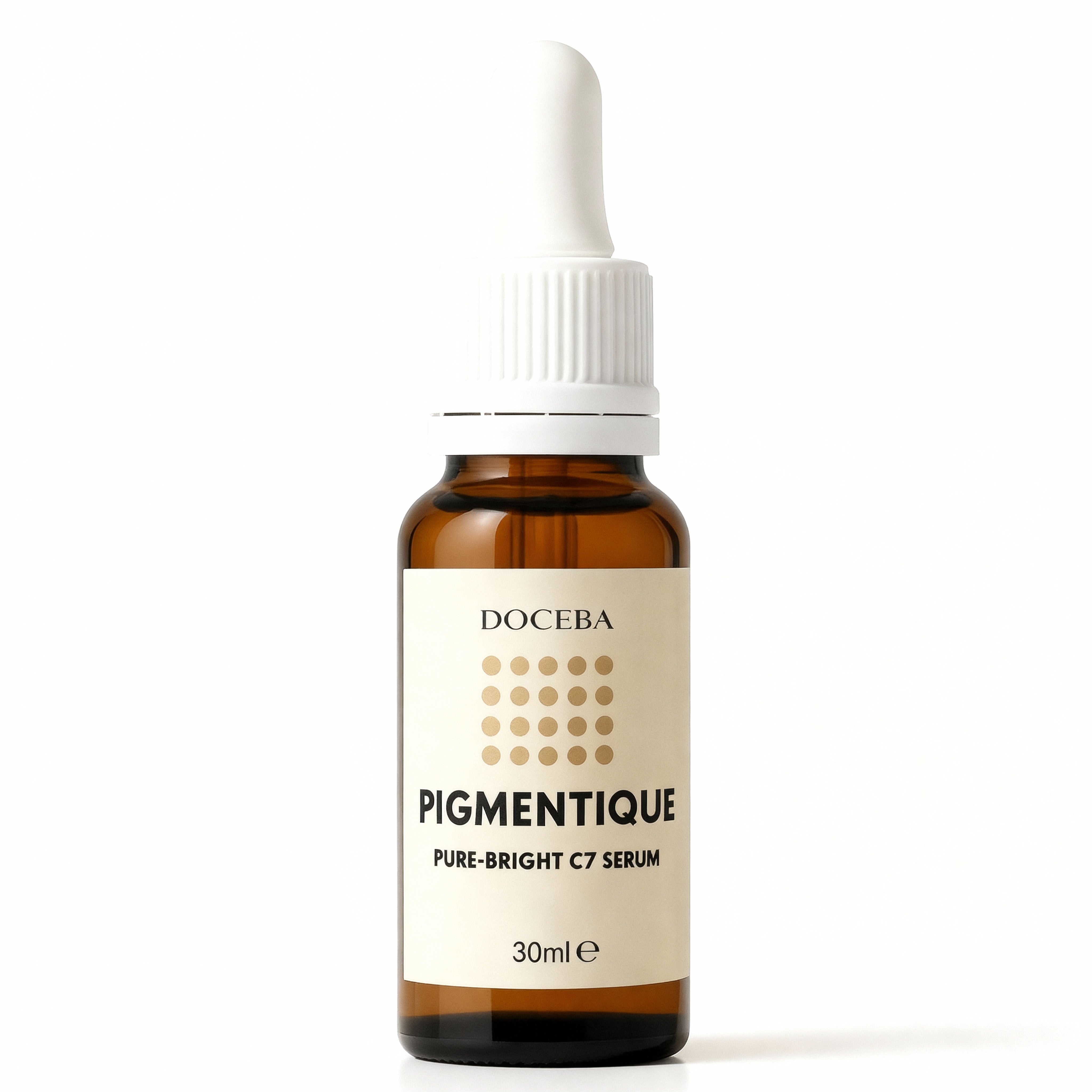
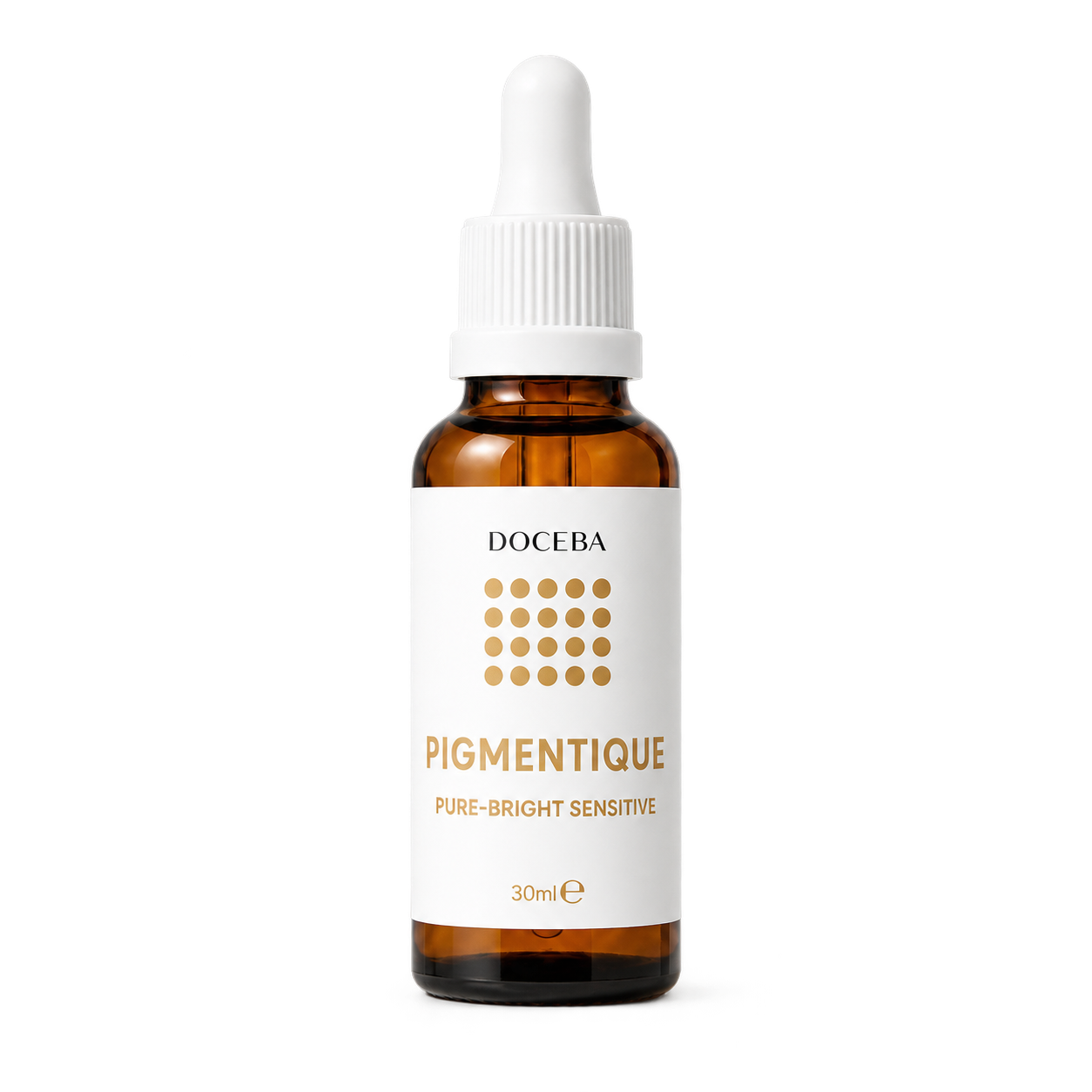
A matching product from our lab:

Skin Protocol: a plan for your skin and a team that adjusts it
You get a plan built around your skin and what you've already tried. We check in regularly and adjust products from Anita's lab when your skin needs something different. In English or German.
It starts with a free 20-minute call. We ring you and listen to your skin story, including your routine and your serum.
Book your free skin callCosmetic advice, not a diagnosis. If you think you have a skin condition, see a doctor first.
Questions people still ask
Can I use vitamin C serum at night?
The morning is recommended, and there is no separate evening rule for vitamin C. The order of steps at night is the same: cleanse, active, moisturizer. You do not need sunscreen in the evening. [S1][S2]
How often should I use vitamin C serum?
There is no fixed number. In one study, people applied 3 percent vitamin C daily for four months. After your patch test, begin with one use in the morning and follow the directions on your packaging. [S3]
Does vitamin C go before or after moisturizer?
Before. Treatments go right after cleansing, and the moisturizer comes after. Sunscreen goes on last. [S2][S1]
Can I use vitamin C and retinol together?
Retinoids belong at night only, because they can make skin more sensitive to the sun. Vitamin C belongs in the morning routine. That way the two reach your skin at different times. More in vitamin C and retinol. [S5][S1]
Sources
- [S1] AAD: Dermatologist-recommended skin care for your 20s ↗
- [S2] AAD: Should I apply my skin care products in a certain order? ↗
- [S3] Al-Niaimi F, Chiang NYZ: Topical Vitamin C and the Skin: Mechanisms of Action and Clinical Applications. J Clin Aesthet Dermatol 2017;10(7):14–17 ↗
- [S4] DermNet: Topical vitamin C ↗
- [S5] AAD: Retinoid or retinol? ↗
- [S6] DermNet: Postinflammatory hyperpigmentation ↗
- [S7] AAD: How to fade dark spots in darker skin tones ↗
- [P1] DOCEBA: Pure Bright C7 Serum ↗
- [P2] DOCEBA: Pure Bright Sensitive Serum ↗
General skincare information, not a diagnosis or an individual treatment plan.
Your bag
Review your items before continuing.
Your bag is empty.