
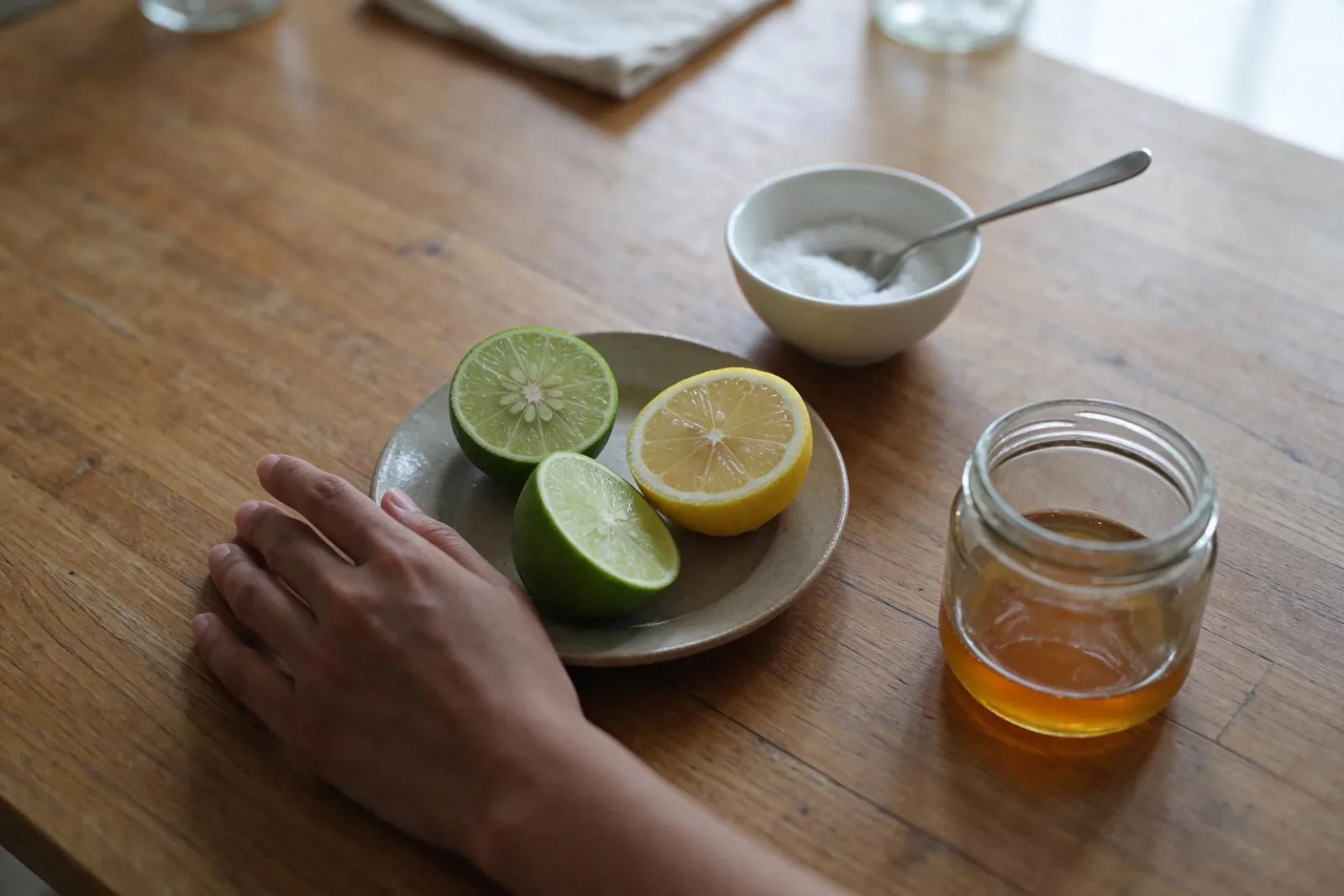
When spots just won't fade, sooner or later you reach for what's in the kitchen. The internet is full of recipes, and they all sound harmless because they are natural.
Let me sort it out. Many dark spots on dark skin are colour left behind after irritation or inflammation. That is exactly why a home remedy that burns or reddens your skin can make a spot worse instead of lighter.
I'll show you what is known about the most common home remedies and what actually helps at home.
Why can a home remedy make dark spots worse on dark skin?
Many dark spots are colour left behind after inflammation. Doctors call this post-inflammatory hyperpigmentation, or PIH. Inflammation prompts your pigment cells to make more melanin. Darker skin types are affected most often, and the colour is stronger and lasts longer.
For home remedies that gives you one simple rule. Anything that burns, itches or reddens your skin can turn into the next dark spot. If it burns or stings when you put it on, stop using it. For more on why spots sometimes deepen, read Why are my dark spots getting darker?.
[S1][S5]
An irritated patch can become a dark spot on darker skin.
Illustration
What happens when you dab lemon or lime juice on dark spots?
There is no proof that lemon juice fades dark spots, and it does not appear in guides to fading them. What is known is a risk from the kitchen. Many plants contain furanocoumarins, compounds that cause acute phototoxic reactions. These are skin reactions that only happen once light reaches the skin.
It most often happens when plant sap smears onto the skin and light follows. A typical example is lime juice, which leaves drip-shaped marks on the arms. The skin turns acutely red and often blisters. Once the inflammation settles, PIH typically remains and can last for years. On melanin-rich skin it can be more intense.
This has been described for lime, not for lemon, so I cannot prove that lemon juice does the same. I also see no reason to dab it on dark spots. If you have a red or blistered patch after juice and sun, have a doctor look at it.
[S1][S2]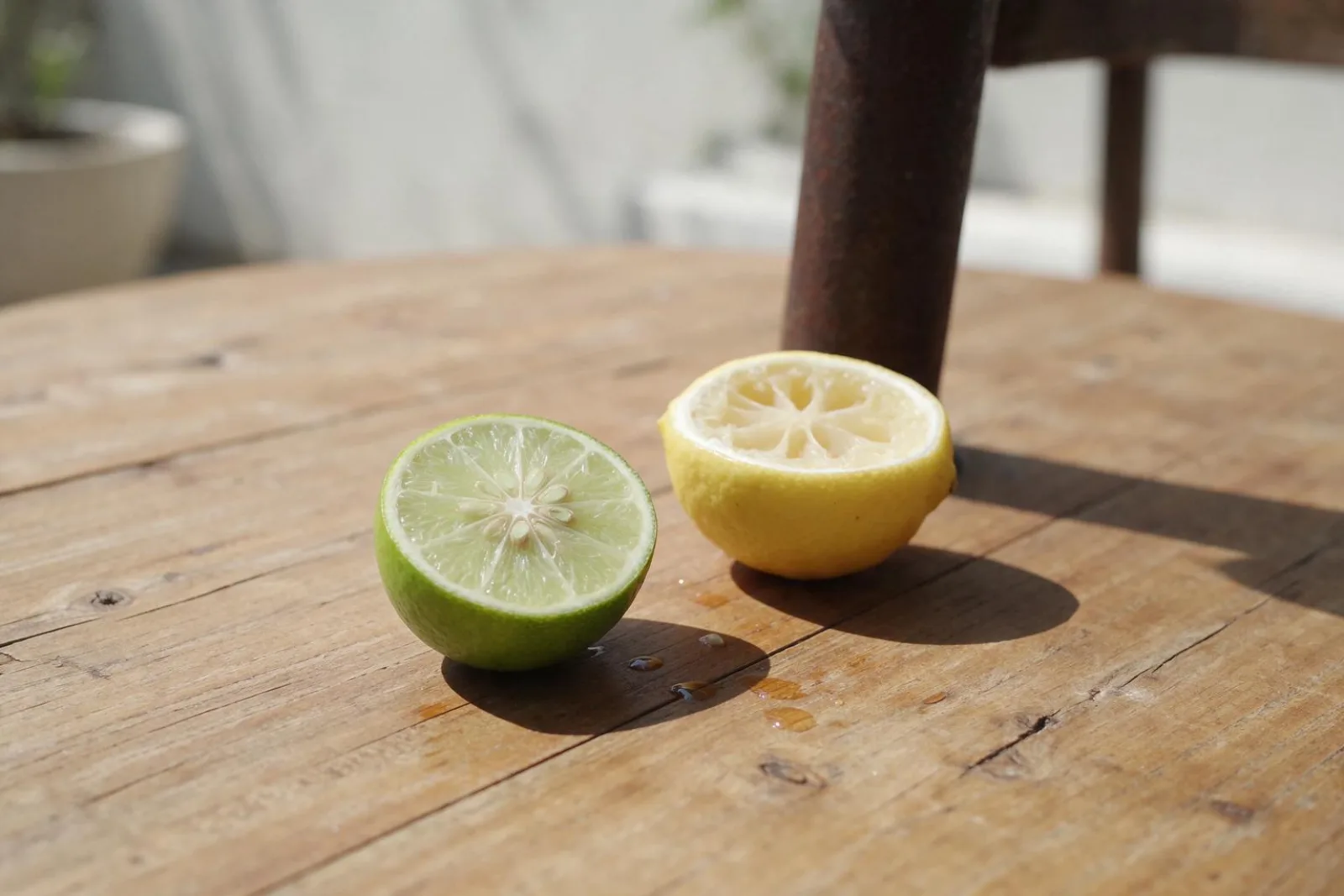
Lime or lemon juice on the skin plus sun can irritate the skin.
Illustration
What about baking soda and toothpaste, or apple cider vinegar?
Baking soda and toothpaste are not proven treatments for dark spots, but they can irritate skin. I do not recommend either. If they burn or itch on your skin, the rule from the first section applies: stop.
For apple cider vinegar there is a case report in a dermatology journal. A 14-year-old girl followed an online guide and put apple cider vinegar drops on moles on her nose every day for three days, covered with bandages. By the second day she had clear redness and irritation, and later there were open areas. Common vinegar contains 4 to 8 percent acetic acid. The report warns of scarring and dark marks after inflammation, and calls many home remedies ineffective and possibly dangerous.
That is a single case and no measure of how often this happens. It does show how quickly acid becomes a problem when it sits on one spot for long. The same goes for household bleach: liquid bleach never belongs on skin. More about lightening creams from the internet is in Skin bleaching risks.
[S1][S4]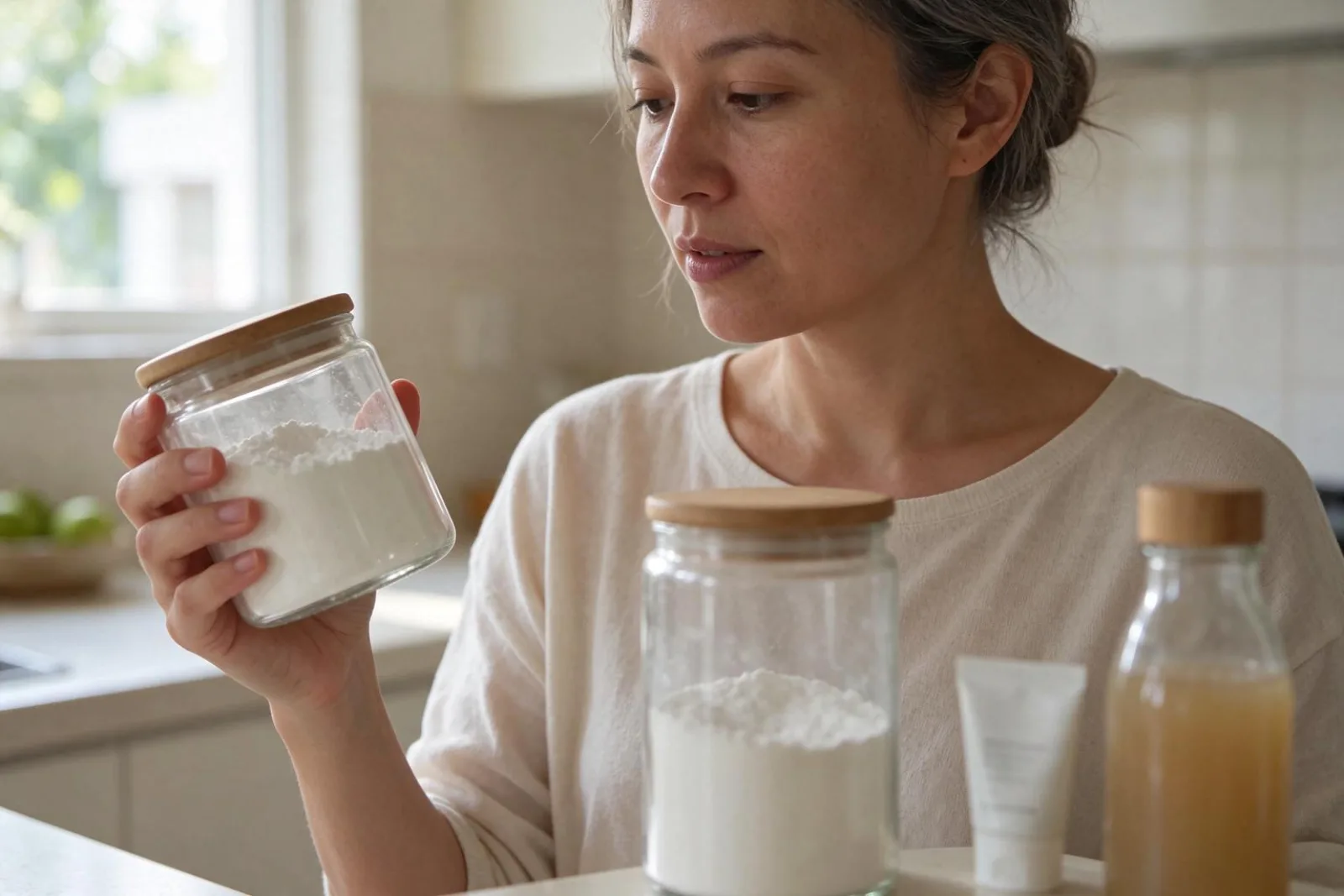
Not proven against dark spots, but it can still irritate.
Illustration
Does aloe vera help dark spots?
Aloe gel on the skin is generally well tolerated. It may speed burn healing and reduce pain. For acne, psoriasis and other skin problems the evidence is limited, and there are occasional reports of burning, itching, rash and eczema.
Nothing is known about it fading dark spots. Aloe is therefore not a proven treatment for hyperpigmentation. If you want to try it anyway, patch test it on a small area like any new product and introduce only one thing at a time.
Keep aloe latex, the yellowish sap under the leaf skin, off your plate. Taken by mouth it can cause abdominal pain, cramps and diarrhoea.
[S3][S5]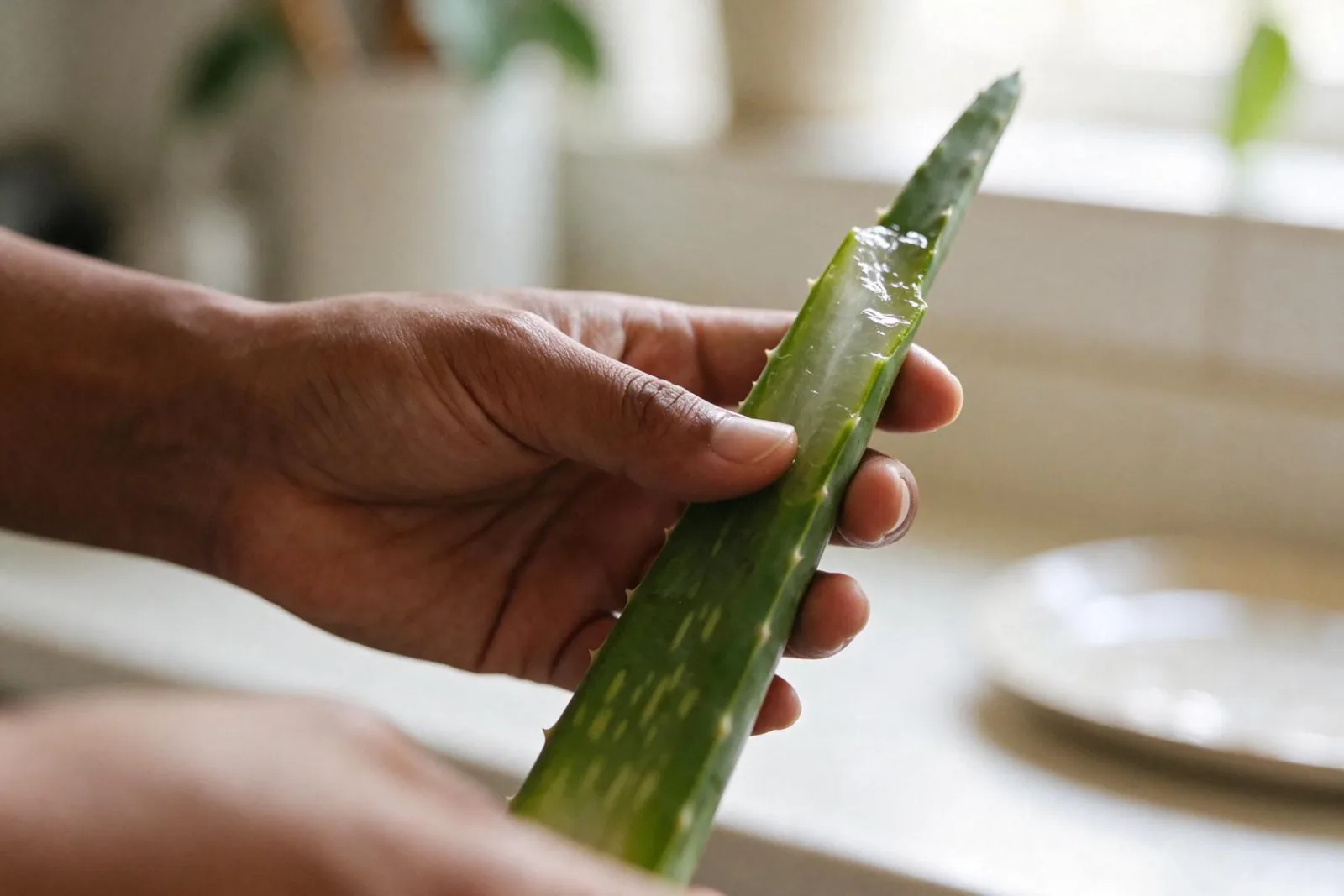
Aloe gel is usually well tolerated. The source does not say it fades dark spots.
Illustration
What actually helps dark spots at home?
Instead of kitchen ingredients, two steps help:
- Protect your skin from the sun every day, with SPF 30 or higher and broad-spectrum protection, meaning cover against both UVA and UVB. Apply it every two hours and again after swimming or sweating. For dark spots a tinted product with iron oxides suits best, because they also protect against visible light, which can darken spots.
- Handle your skin calmly. Pat it dry after washing instead of rubbing, then apply a mild, fragrance-free moisturiser straight away. Less irritation means less inflammation, and less inflammation gives your pigment cells less reason to add more colour.
We are working on our own sunscreen. If you buy one now, choose a tinted one.
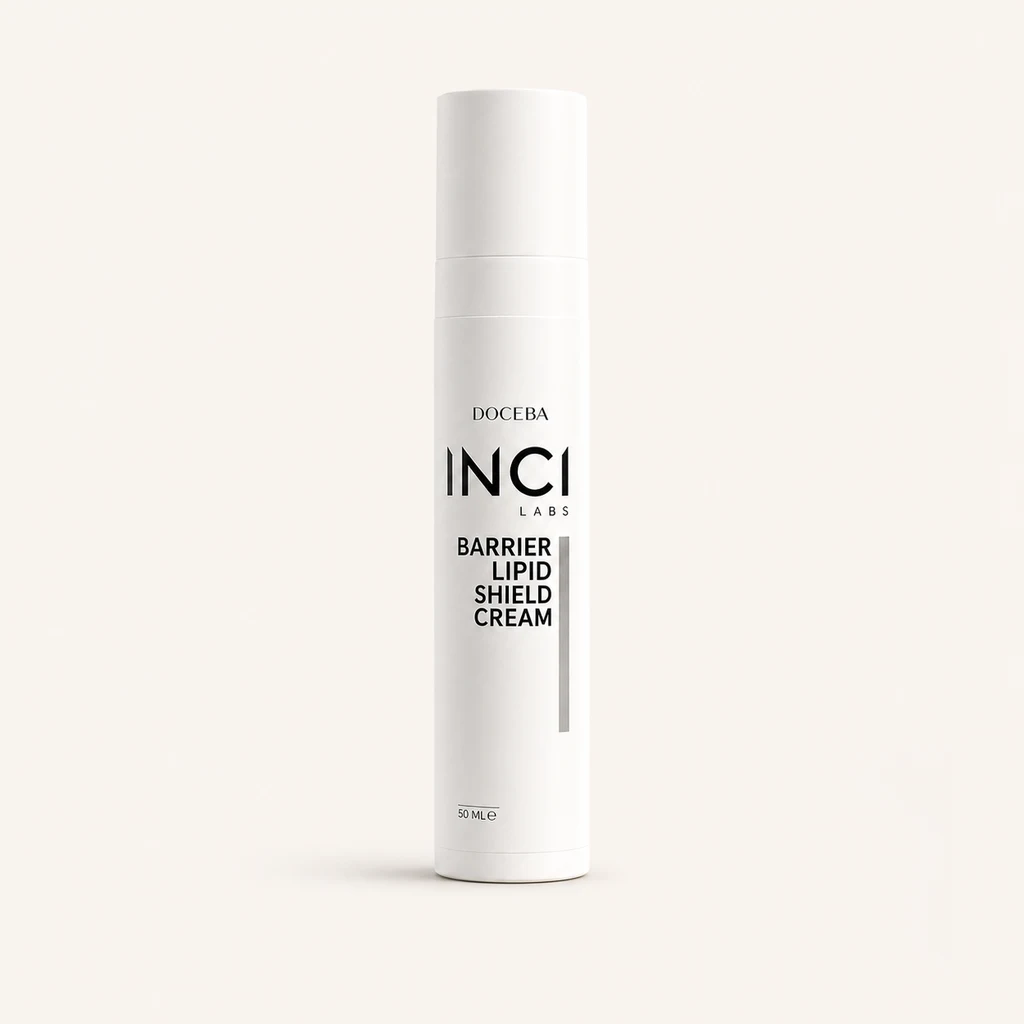
Our Barrier Lipid Shield Cream is fragrance-free and meant for exactly that second step.
[S1][S5][S6]How long do dark spots take to fade, and what comes next?
A spot a few shades darker than your skin usually fades within 6 to 12 months once the cause is stopped. If the pigment sits deep, it can take years. So count in months, not days. More in Does hyperpigmentation go away?.
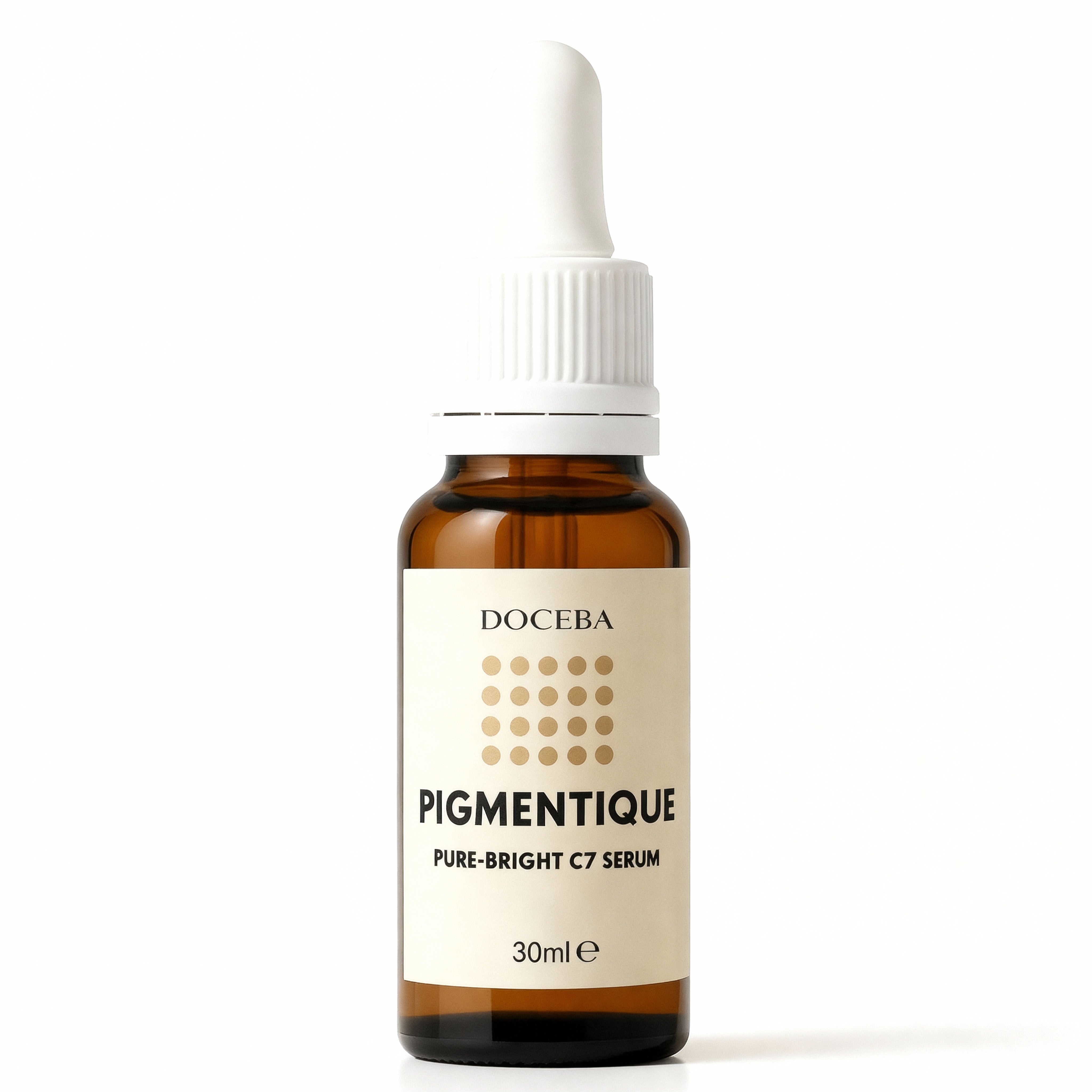
Azelaic acid, glycolic acid, kojic acid, retinoids and vitamin C can fade existing spots. Of these we only carry vitamin C. Our Pure Bright C7 Serum helps dark spots on the face look lighter. We do not carry tranexamic acid, azelaic acid, retinol or hydroquinone.
If what you use is not giving the result you want, or you are unsure, a visit to a dermatologist is a good idea.
[S1]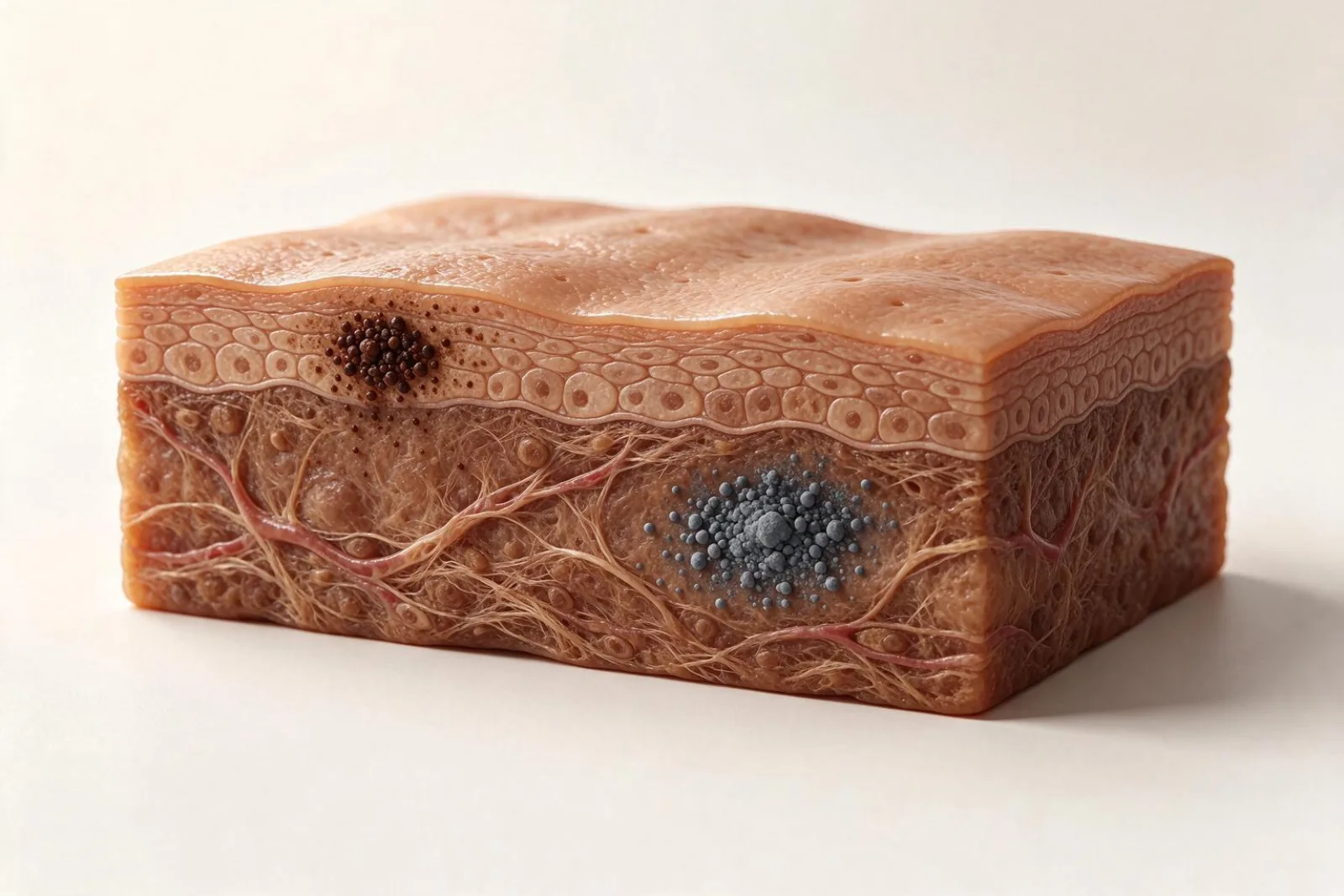
- 01Near the top: usually fades in months
- 02Deep: often takes longer
Pigment near the surface fades faster than pigment deeper down.
Simplified illustration
So what now?
You do not need to work on your spots with kitchen ingredients. Pick the path that suits you.
Keep it calm and go step by step
- Drop anything that burns or stings, kitchen ingredients included.
- Wear sunscreen in the daytime, ideally tinted, and reapply every two hours.
- Pat your skin dry after washing and moisturise with something mild and fragrance-free.
- Introduce new products one at a time and patch test them on a small area first.
That fits with
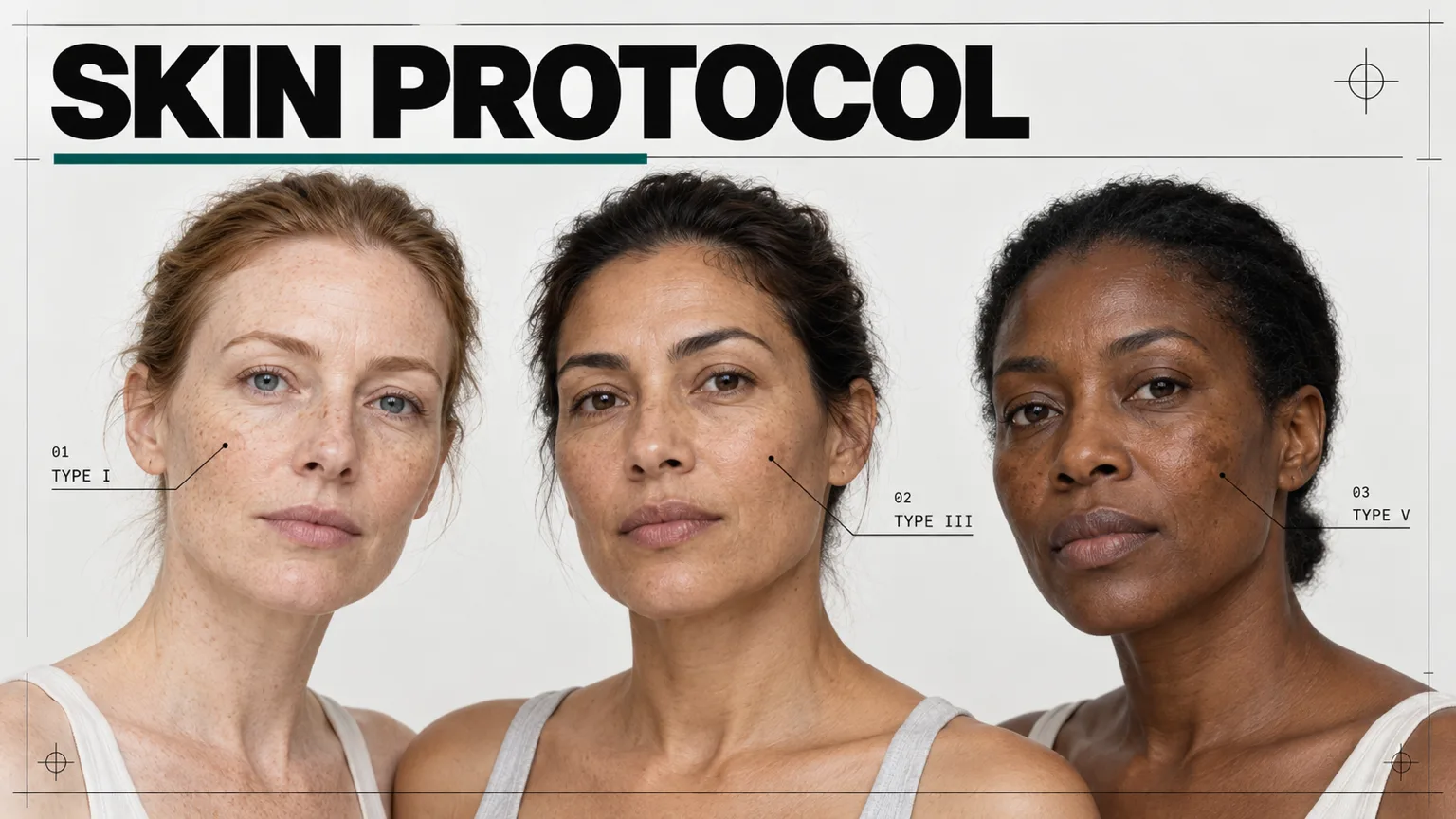
Skin Protocol: a plan for your skin and a team that adjusts it
You get a plan built around your skin and what you've already tried. We check in regularly and adjust products from Anita's lab when your skin needs something different. In English or German.
It starts with a free 20-minute call. We ring you and listen to your skin story, including your routine for dark spots.
Book your free skin callCosmetic advice, not a diagnosis. If you think you have a skin condition, see a doctor first.
Frequently asked questions about home remedies for dark spots
Does lemon juice help dark spots?
There is no proof of it. What is known is that lime juice plus light can cause a skin reaction with redness and blisters. A dark mark typically remains afterwards and can last for years. [S2]
Can baking soda lighten dark spots?
We found no proof of that. If baking soda irritates your skin, the inflammation itself can become a dark spot, because it prompts the pigment cells to make melanin. [S5]
Is aloe vera worth using on dark spots?
Aloe gel is generally well tolerated on the skin. Whether it fades spots is not known. Patch test it, because burning, itching or rash occasionally occur. [S3]
How long do dark spots take to fade?
A spot a few shades darker than your skin usually fades within 6 to 12 months once the cause is stopped. If the pigment sits deep, it can take years. [S1]
Sources
- [S1] AAD: How to fade dark spots in darker skin tones ↗
- [S2] DermNet: Phytophotodermatitis ↗
- [S3] NCCIH: Aloe Vera ↗
- [S4] Chemical Burn from Vinegar Following an Internet-based Protocol for Self-removal of Nevi. J Clin Aesthet Dermatol 2015 ↗
- [S5] DermNet: Postinflammatory hyperpigmentation ↗
- [S6] AAD: Dry skin remedies for darker skin tones ↗
General skincare information, not a diagnosis or an individual treatment plan.
Your bag
Review your items before continuing.
Your bag is empty.