

You look in the mirror in the morning, and the dark spots on your cheek or forehead are the first thing you see. Then come a hundred tips that contradict each other, from lemon juice to lasers.
Let me sort it out. Dark spots are places where your skin has made extra pigment. On dark skin they are often marks left after inflammation, such as a pimple. Less often it is melasma, its own form with its own triggers.
I'll show you the options, what you can do yourself and when a dermatologist is the better route.
What causes dark spots on the face?
Dark spots appear when something prompts your skin to make more melanin, the dark pigment in skin. Triggers include injuries, some medications, irritating products and hormonal changes.
On dark skin, inflammation is a common trigger. After a pimple or eczema, a dark mark stays behind. It is called post-inflammatory hyperpigmentation, PIH for short. It mostly affects darker skin types, looks more intense there and lasts longer.
That is why every plan starts with stopping the cause. Inflammation prompts pigment cells to make more melanin, and skincare that irritates your skin does the same. Here is how to handle new products:
- Patch-test a new product on a small area first.
- Add only one product at a time, so you know what caused any reaction.
- If a product burns or stings on your face, stop using it, because an irritated patch can turn into the next dark spot.
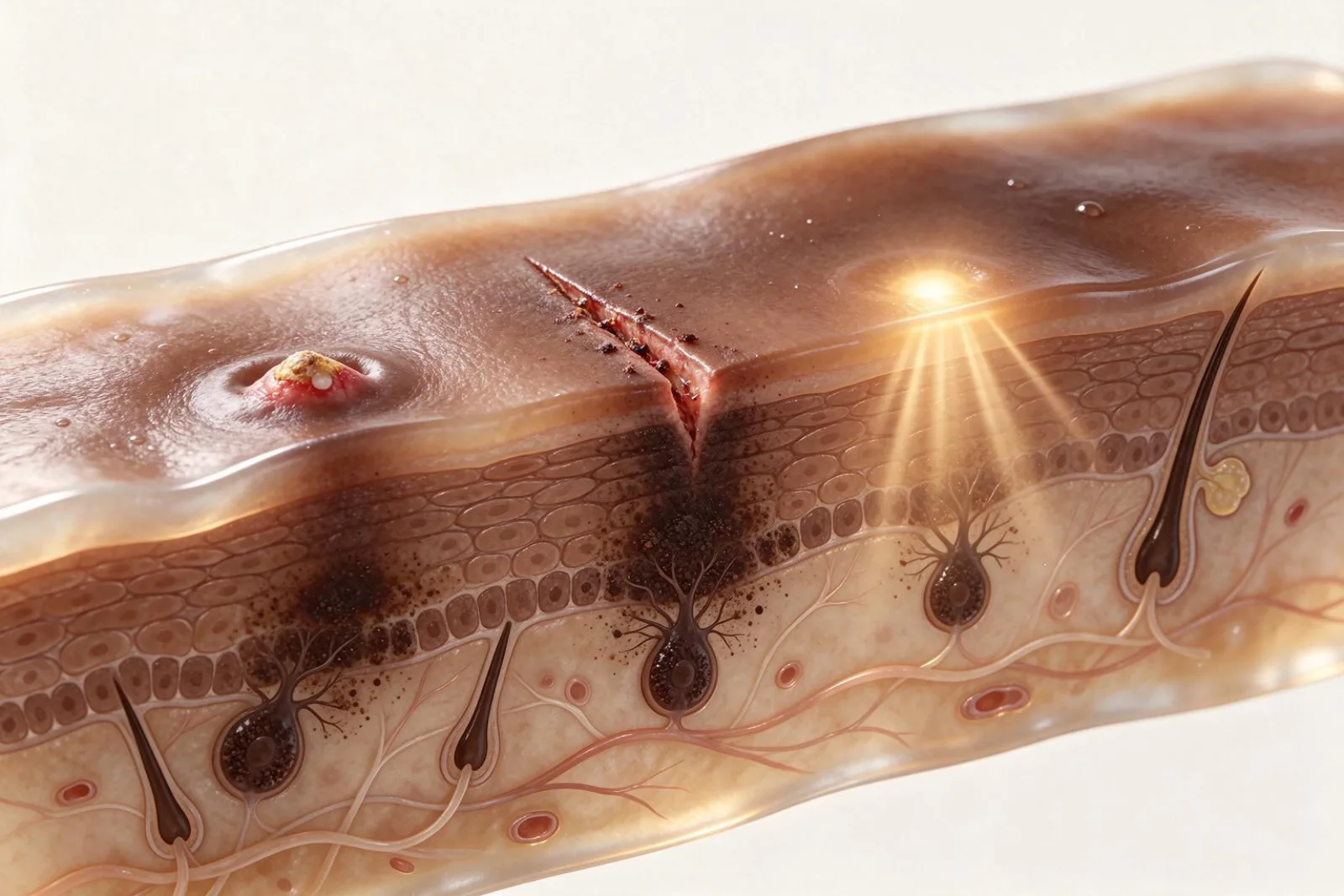
- 01Pimple
- 02Scratch
- 03Sun
A pimple, a scratch or sun: in the end the skin makes more melanin.
Simplified illustration
Why does every dark spot plan include sunscreen?
Sunscreen is the starting point for preventing dark spots and helping existing ones fade. A tinted sunscreen with iron oxide suits best. Iron oxide also blocks the sun's visible light, and visible light can darken spots too.
Use SPF 30 or higher with broad-spectrum protection, ideally SPF 50+ every day so spots don't darken further. Reapply every two hours and after swimming or sweating. Outdoors, a wide-brimmed hat helps because it shades your forehead and cheeks, which is where many people have their spots.
We are working on our own sunscreen. If you buy one now, choose a tinted one.
[S1][S2]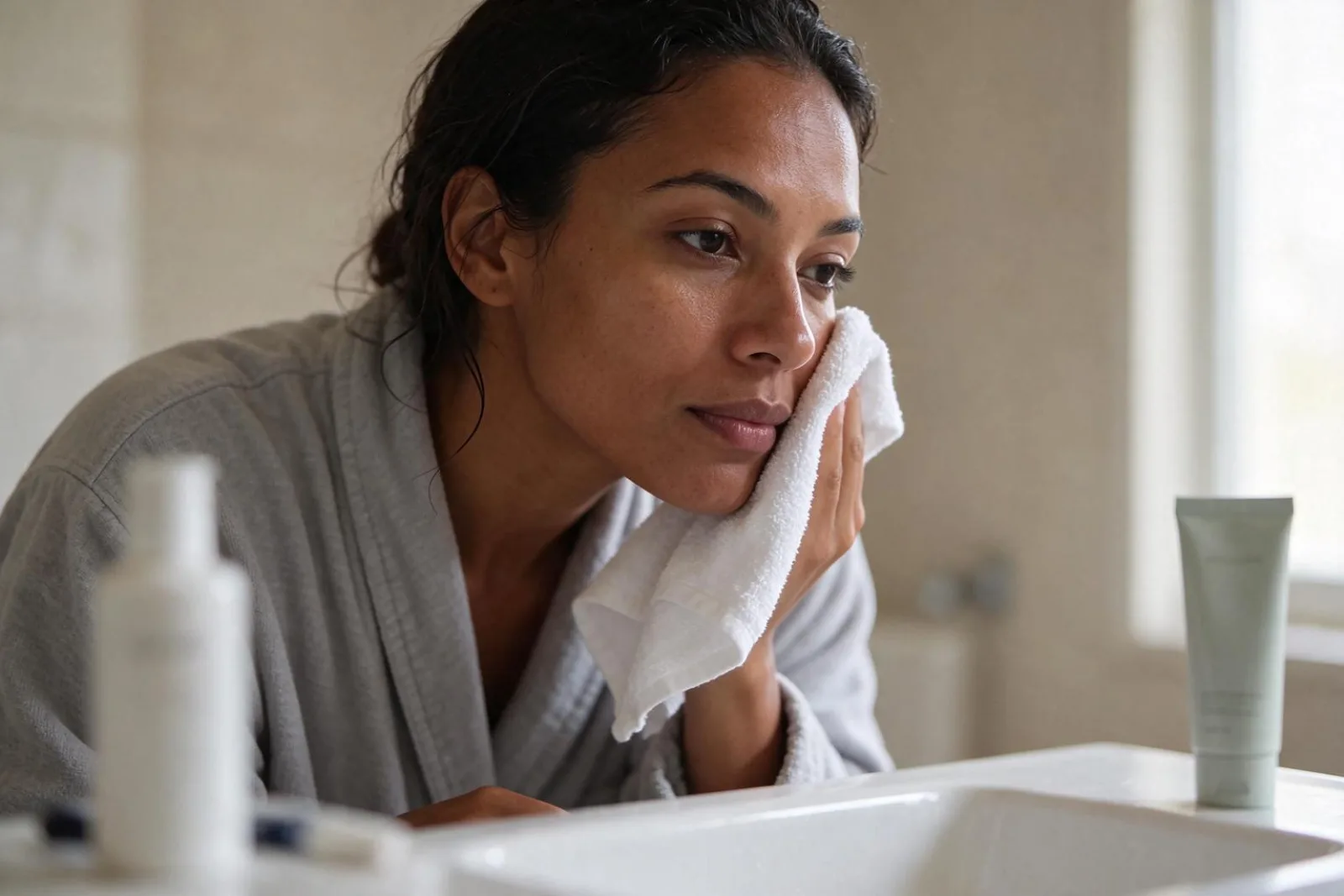
- 01Sunscreen: the step that stays
Illustration
Which active ingredients can lighten dark spots on the face?
For over-the-counter products, five groups of ingredients can help existing dark spots fade. Azelaic acid, glycolic acid and kojic acid belong to them, as do retinoids and vitamin C.
Of these, we only carry vitamin C. We do not carry azelaic acid, glycolic acid, kojic acid, retinol or hydroquinone. Our Pure Bright C7 Serum for the face contains 3-O-ethyl ascorbic acid, ferulic acid and hyaluronic acid according to its INCI list. It is made to help dark spots look lighter.
Vitamin C also catches free radicals that sunscreen alone only partly blocks. That makes it a morning step, applied under your sunscreen.
Reach for gentle products labelled for sensitive skin. An active that irritates your face can make spots darker instead of fading them.
Clear improvement usually takes a combination of steps. A serum is one building block next to sunscreen and patience. How different creams and serums compare is covered in Dark spot corrector for dark skin.
[S1][S2][S6]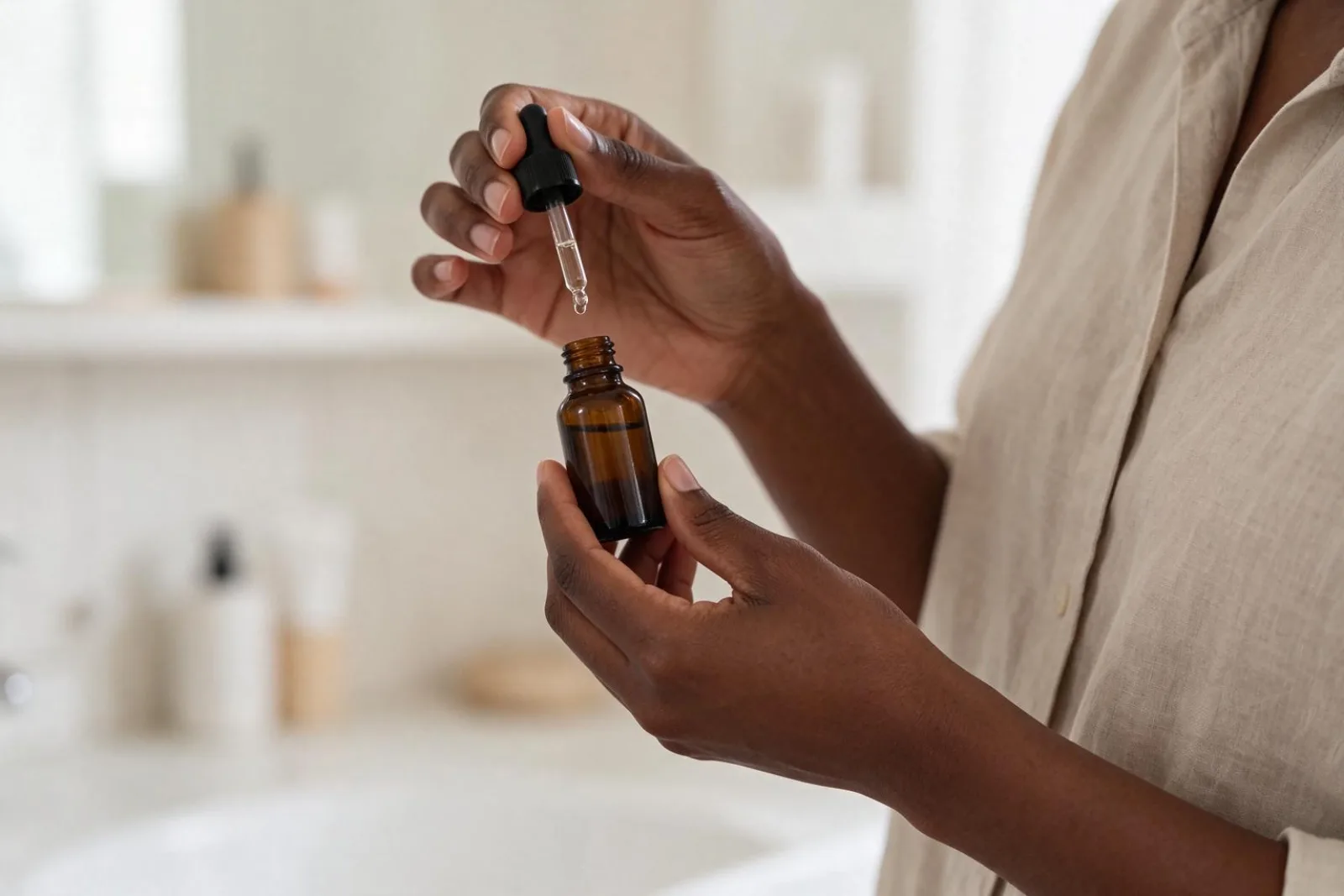
- 01Vitamin C serum: morning, under sunscreen
Illustration
What can a dermatologist do about dark spots?
If spots stay despite skincare, you may need a prescription-strength treatment. A dermatologist can combine treatments safely, for example laser therapy with a prescription cream.
In a chemical peel, the practice applies an acid solution to your skin. On dark skin this works when someone experienced with darker skin tones does it. Without that experience, lasting pigment problems can result. Depending on the strength of the peel, skin heals after a day or only after two to three weeks. Some people get a skin care plan for 2 to 4 weeks beforehand. Your practice will tell you whether you need one. We advise against DIY acid peels on existing dark spots.
Lasers and other devices can also make pigmentation worse, because they injure the top layer of skin. Ask about experience with your skin tone before you book. There's more in Laser and peels on dark skin.
Hydroquinone is not allowed in skin and face creams in the EU (Regulation (EC) No 1223/2009, Annex II). If someone offers you a cream with it without a prescription, leave it. Steroids or mercury, not listed on the label, have also been found in some imported products. Liquid bleach never belongs on your skin.
[S1][S2][S3][S4]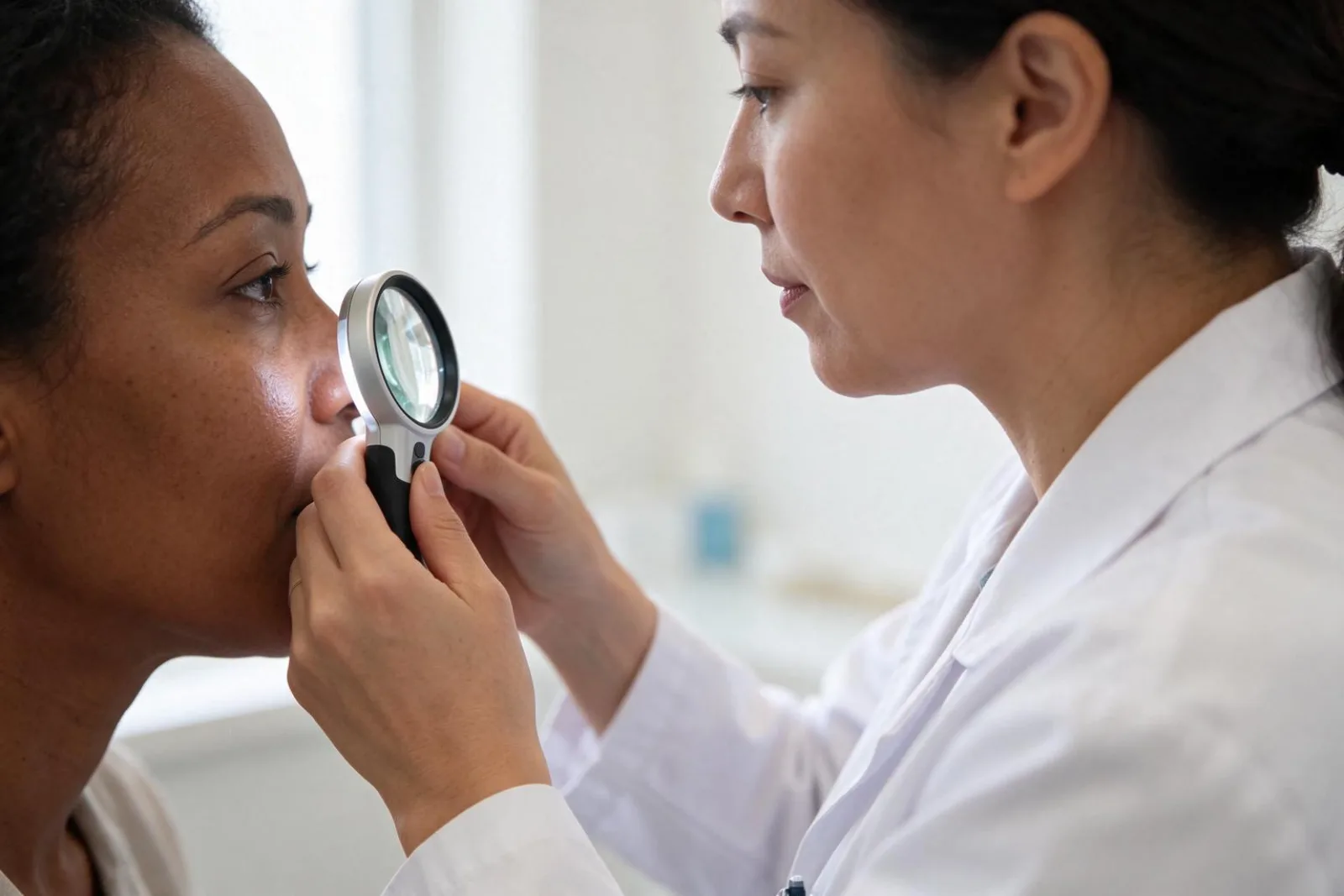
At the practice, a close look at the skin is often enough.
Illustration · not a before-and-after or a treatment result
How long do dark spots on the face take to fade?
Spots a few shades darker than your skin usually take 6 to 12 months once the cause is stopped. Deeper pigment can take years. On darker skin, PIH lasts longer than on lighter skin.
So plan in months. Take a photo every four weeks in the same light, and you will see a trend without relying on your impression. If nothing changes over a longer time, that is the moment for an appointment and a prescription option. Whether spots go away completely is covered in Does hyperpigmentation go away?.
[S1][S2]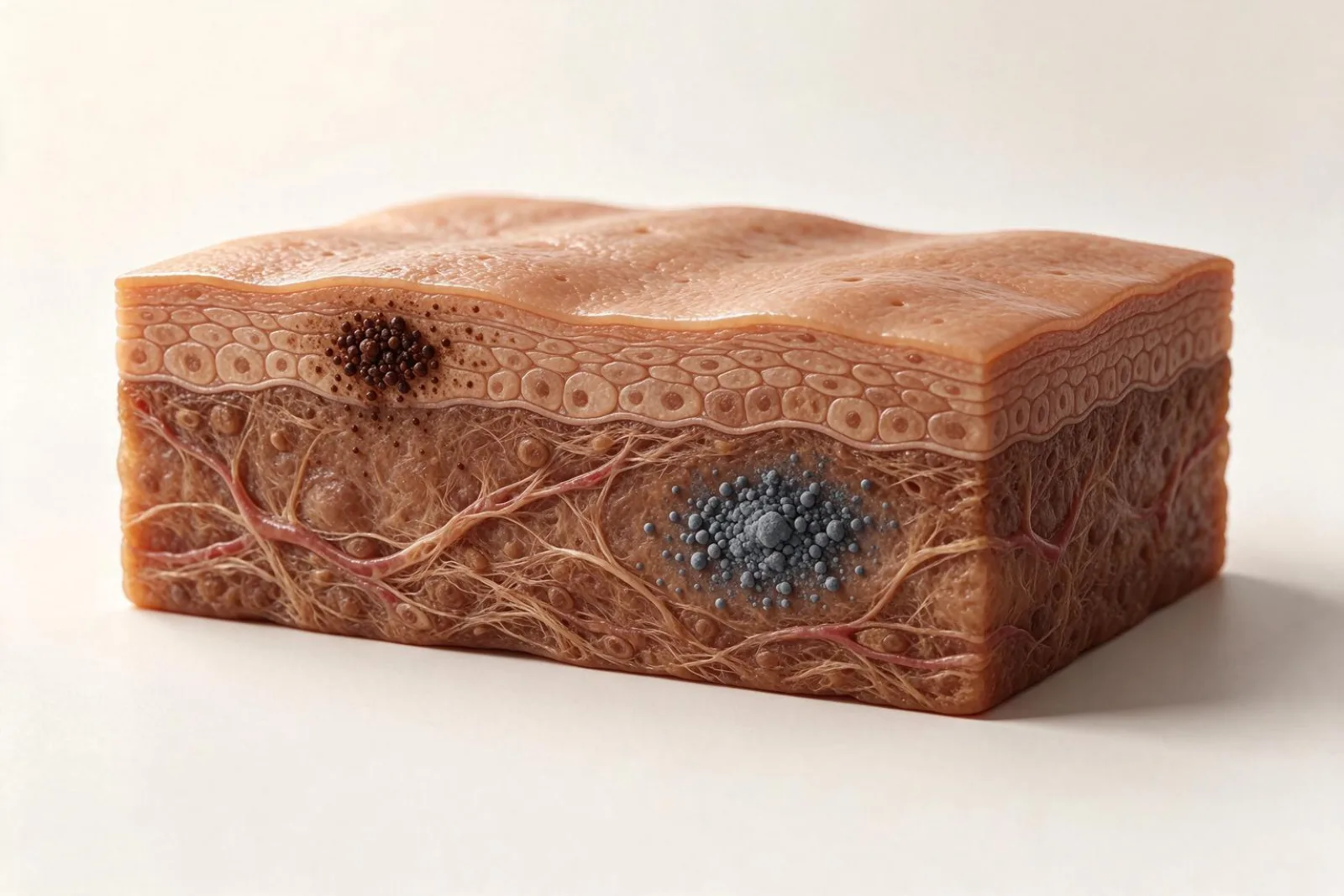
- 01Near the top: usually fades in months
- 02Deep: often takes longer
Pigment near the surface fades faster than pigment deeper down.
Simplified illustration
Where do I start: on my own or at the dermatologist?
Read the list from the top and stop at the first point that fits you.
- You don't know what the spots are? If you are unsure, a visit to a dermatologist is a good idea before you use anything.
- The spots are fresh, after a pimple or an irritated patch? Then you can start yourself, with tinted sunscreen every morning and an active such as vitamin C.
- The spots barely change after several months? Then an appointment with a dermatologist is worth it.
- A product burns or stings? Stop using it, however good it sounds.
Your next step
Both routes are fine. Pick the one that fits you today.
- Work out what set off your spots, such as a pimple or an irritating product, and stop it.
- Wear a tinted sunscreen every morning and add a vitamin C active that you patch-test first.
- If nothing changes after several months, have the spots checked by a dermatologist.
Matching products from our lab:
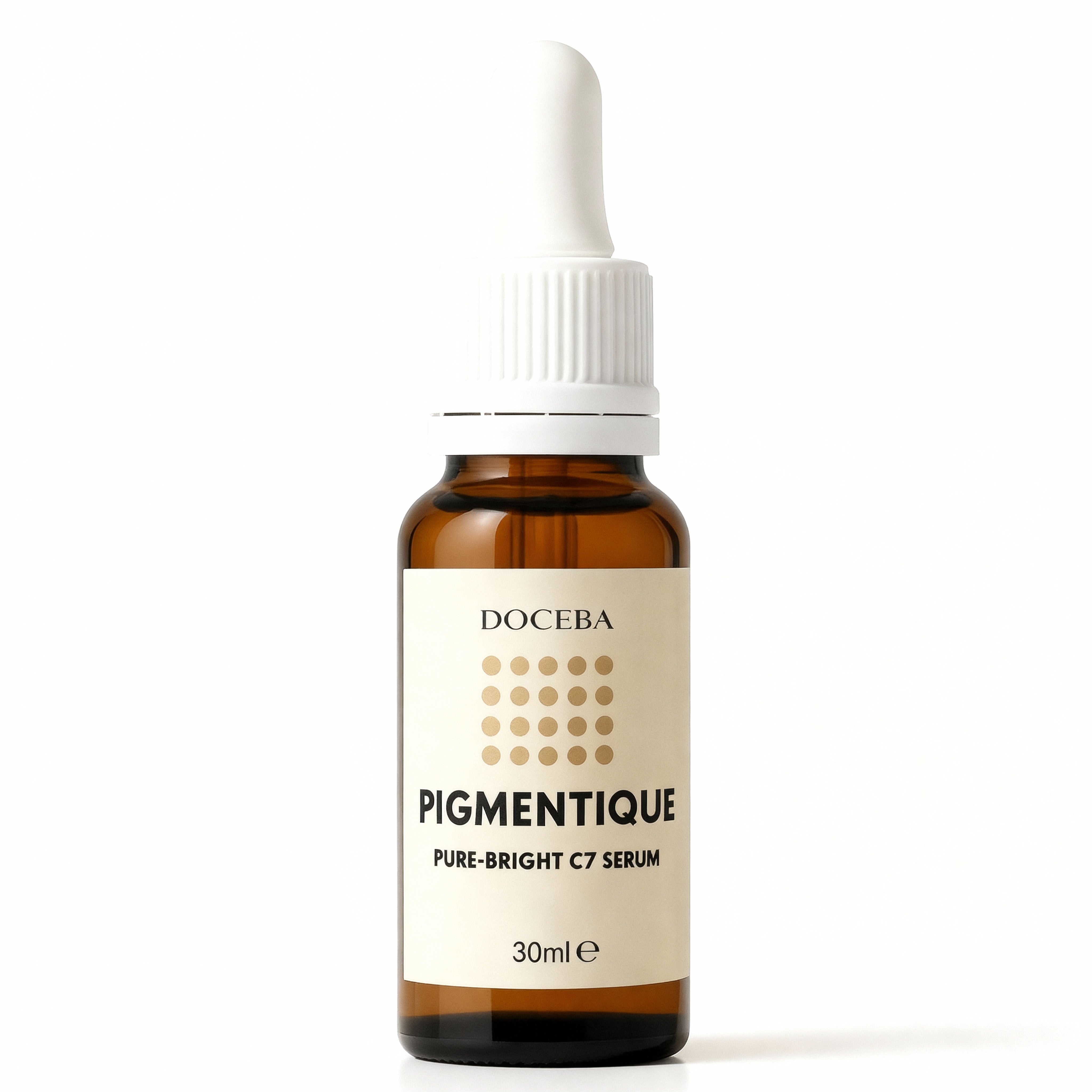
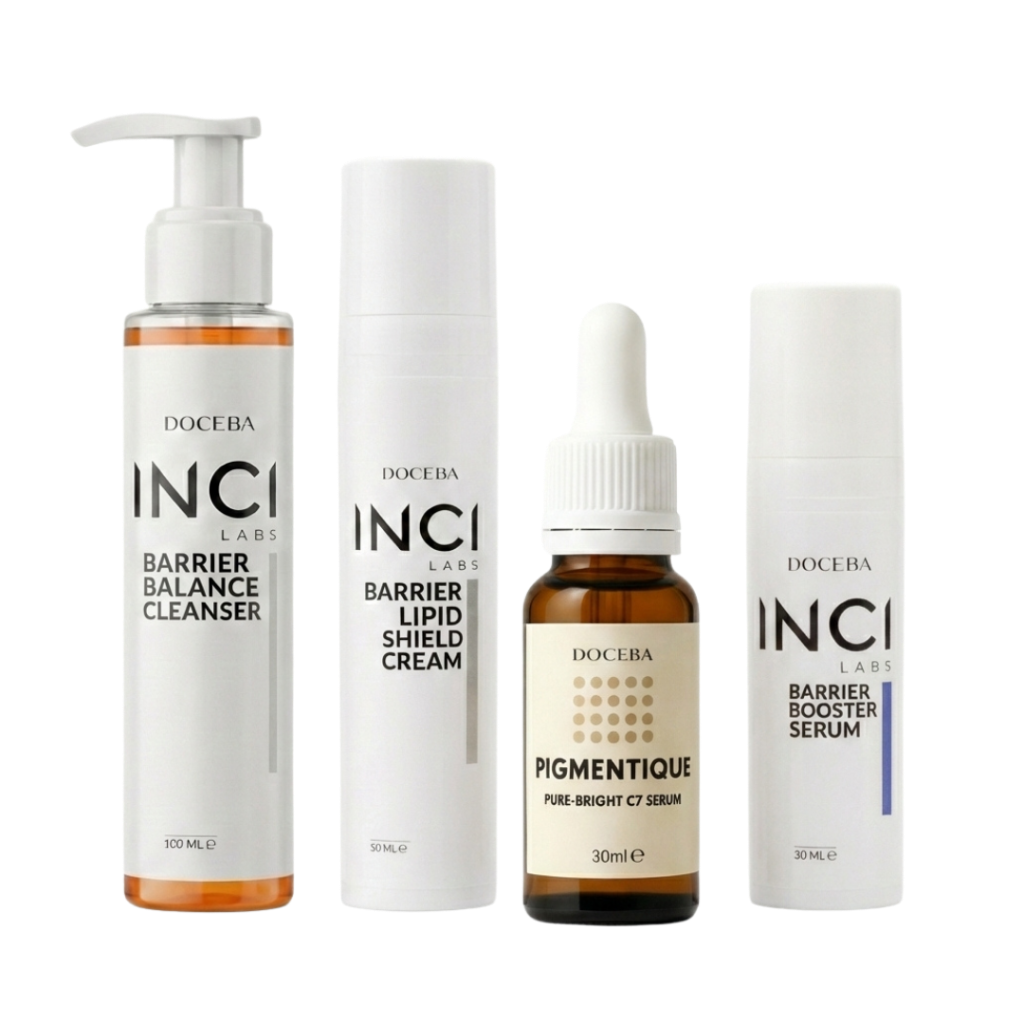
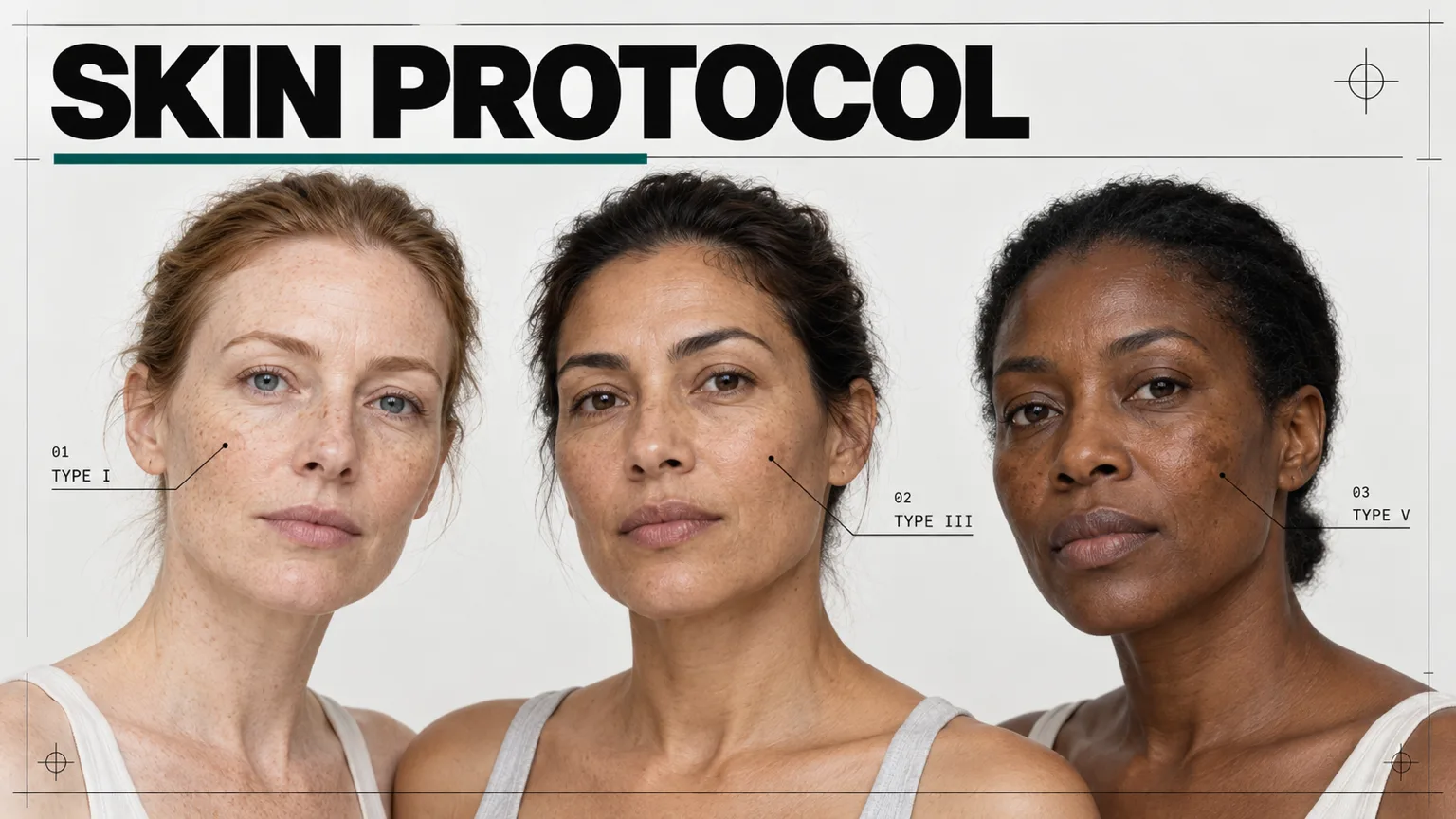
Skin Protocol: a plan for your skin and a team that adjusts it
You get a plan built around your skin and what you've already tried. We check in regularly and adjust products from Anita's lab when your skin needs something different. In English or German.
It starts with a free 20-minute call. We ring you and listen to your skin story, including your routine for dark spots.
Book your free skin callCosmetic advice, not a diagnosis. If you think you have a skin condition, see a doctor first.
Questions you might still have
Can I remove dark spots on my face completely?
That cannot be promised for every spot. Spots a few shades darker than your skin usually fade within 6 to 12 months, and deeper pigment can take years. What counts is that the cause is stopped and you wear sunscreen every day. [S1]
Can I use a skin bleaching cream on my face?
We advise against over-the-counter bleaching creams. Hydroquinone is banned in skin and face creams in the EU, and steroids and mercury, not listed on the label, have been found in some imported products. [S1][S4]
Are my dark spots melasma?
Melasma can be triggered by sun, pregnancy and medicines such as the pill. Visible light can make it worse, especially on darker skin tones, which is why tinted sunscreen matters. If you are unsure, a visit to a dermatologist is a good idea. Our Pure Bright C7 Serum can make the patches look lighter, but it does not treat melasma. Our Mela Bright is still in development. If it is not linked here yet, it is not online yet. [S5]
When should I see a dermatologist for dark spots?
If your spots don't fade after months of skincare, you may need a prescription option. If you don't know what the spots are, a dermatologist is the first stop too. They can combine treatments safely. [S1]
Sources
- [S1] AAD: How to fade dark spots in darker skin tones ↗
- [S2] DermNet: Postinflammatory hyperpigmentation ↗
- [S3] AAD: Chemical peels: FAQs ↗
- [S4] Verordnung (EG) Nr. 1223/2009 über kosmetische Mittel, konsolidierte Fassung vom 1.9.2025 (Anhang II Nr. 1339) ↗
- [S5] AAD: Melasma: Self-care ↗
- [S6] Al-Niaimi F, Chiang NYZ: Topical Vitamin C and the Skin: Mechanisms of Action and Clinical Applications. J Clin Aesthet Dermatol 2017;10(7):14–17 ↗
- [P1] DOCEBA: Pigmentique Pure Bright C7 Serum ↗
- [P3] DOCEBA: Pure Brightening Set ↗
General skincare information, not a diagnosis or an individual treatment plan.
Your bag
Review your items before continuing.
Your bag is empty.