
The label on your vitamin C serum lists ferulic acid, and everywhere you read that it makes the serum twice as effective. That sounds good, but what does it mean for your skin and your serum?
Let me sort it out. Ferulic acid is an antioxidant, a substance that catches harmful molecules. In serums it usually sits next to vitamin C. What it does there depends on which form of vitamin C is in the bottle.
I'll show you what the studies actually measured, what of that applies to our serum and how to use a ferulic acid serum.
What is ferulic acid and where does it come from?
Ferulic acid is an antioxidant found in plants. An antioxidant mops up free radicals, which are unstable, aggressive molecules that can damage proteins, cell membranes and genetic material in skin cells. UV light produces them in the skin.
Ferulic acid catches free radicals and also blocks enzymes that generate them. Skincare uses it as a photoprotective agent, to delay photoaging, and as a brightening component.
In a vitamin C serum it sits next to the vitamin C, which raises the question of why vitamin C needs help at all.
[S3][S4]
- 01Ferulic acid occurs in plants
Plant ingredients as a picture for a plant compound. The source does not say which plant supplies the ferulic acid in a serum.
Illustration
Why is pure vitamin C so fragile?
Pure vitamin C is called L-ascorbic acid. It is an unstable molecule and enters the skin poorly. A pH below 3.5 improves its stability. The pH value tells you how acidic a liquid is.
Ferulic acid makes two contributions here. It stabilizes the molecule, and it helps the formula reach a pH below 3.5.
Vitamin C derivatives, altered forms of the molecule, take a different route. Ascorbyl palmitate and MAP (magnesium ascorbyl phosphate), for example, are fat-soluble forms that are stable at neutral pH. We draw nothing from this for 3-O-ethyl ascorbic acid, the derivative in our serums.
[S4]
Pure vitamin C breaks down when exposed to light and air.
Illustration
What do studies show about vitamin C, vitamin E and ferulic acid?
The best-known study is from 2005. It tested a solution of 15% L-ascorbic acid and 1% alpha-tocopherol, a form of vitamin E. With ferulic acid added, the vitamins stayed more stable chemically. The skin's protection against simulated sunlight rose from about 4-fold to about 8-fold, meaning the skin took far more simulated sunlight before it reacted, measured by redness and sunburn cells.
A follow-up study from 2008 tested the same mix with 0.5% ferulic acid on normal-looking human skin. The mix was applied for four days, then the patches were exposed to simulated sunlight. It protected on every measure used, including redness and sunburn cells. The number of participants was small, though.
Both studies tested L-ascorbic acid. The abstracts do not say which skin tones the participants had. The mix works differently from a sunscreen. It does not replace one, it is meant to add to it.
[S1][S2]Does ferulic acid lighten dark spots?
Ferulic acid can inhibit the production of melanin, the skin pigment, and counts as a brightening component in skincare. We did not find a study showing how strongly ferulic acid alone fades dark spots on dark skin.
For vitamin C the picture is better, since it is one of the ingredients that can fade existing spots. A spot that is a few shades darker than your skin usually fades within 6 to 12 months once the cause has stopped. If the pigment sits deep, it can take years.
So I see ferulic acid as a companion that can make an L-ascorbic acid serum last longer. How vitamin C works on spots is covered in vitamin C for dark spots. If you wonder whether niacinamide or vitamin C suits you better, read niacinamide vs vitamin C.
[S3][S5]Do the studies on ferulic acid in vitamin C serum apply to our serum?
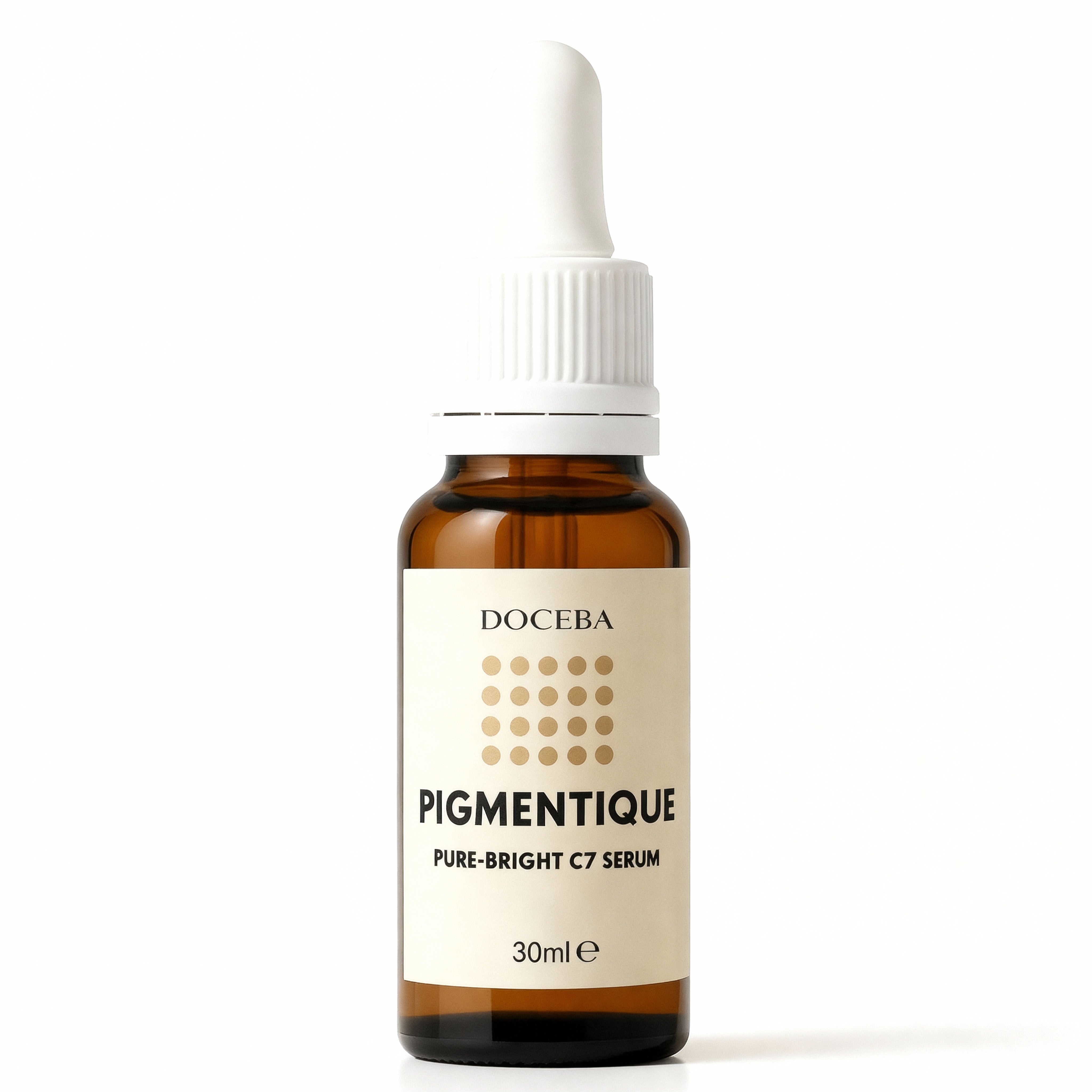
The ingredient list (INCI) of the Pigmentique Pure Bright C7 Serum reads: Aqua, Propanediol, 3-O-Ethyl Ascorbic Acid, Pentylene Glycol, Citric Acid, Ferulic Acid, Sodium Hyaluronate, Allantoin. The Pure Bright C10 Serum has the same list.
Our vitamin C is in the serum as a derivative, an altered form of L-ascorbic acid. Both studies examined L-ascorbic acid. We know of no study on ferulic acid together with 3-O-ethyl ascorbic acid.
So we draw no sun protection claim for our serum from these studies. In cosmetic terms, Pure Bright C7 helps dark spots look less visible.
[S1][S2][S4][P2][P3]How do you use a ferulic acid serum on melanin-rich skin?
Here is how to fit the serum into your routine:
- Patch-test the serum on a small area first. If it burns or stings, it is irritating your skin, and that can darken spots. Stop using it then.
- Apply it in the morning, because vitamin C mops up free radicals that sunscreen alone only partly blocks.
- Put sunscreen on top, SPF 30 or higher with broad-spectrum protection. For dark spots a tinted product with iron oxides suits best, because they also block visible light, which can darken spots.
- If you add a retinoid, a vitamin A ingredient, use it only in the evening, because it can make skin more sensitive to sun.
We are working on a sunscreen of our own. If you buy one now, choose a tinted one.
We do not carry retinol. How vitamin C and retinol fit together is covered in vitamin C and retinol.
[S4][S5][S6][S7]
- 01Patch-test a new serum on a small spot
Before a new serum goes on your face, test a small area.
Illustration
Your next step
Both paths are fine. Take the one that suits you today.
- Patch-test the serum on a small area. If it burns, stop.
- Apply it in the morning after cleansing, then tinted sunscreen.
- Take one photo a month in the same light.
Matching products from our lab:
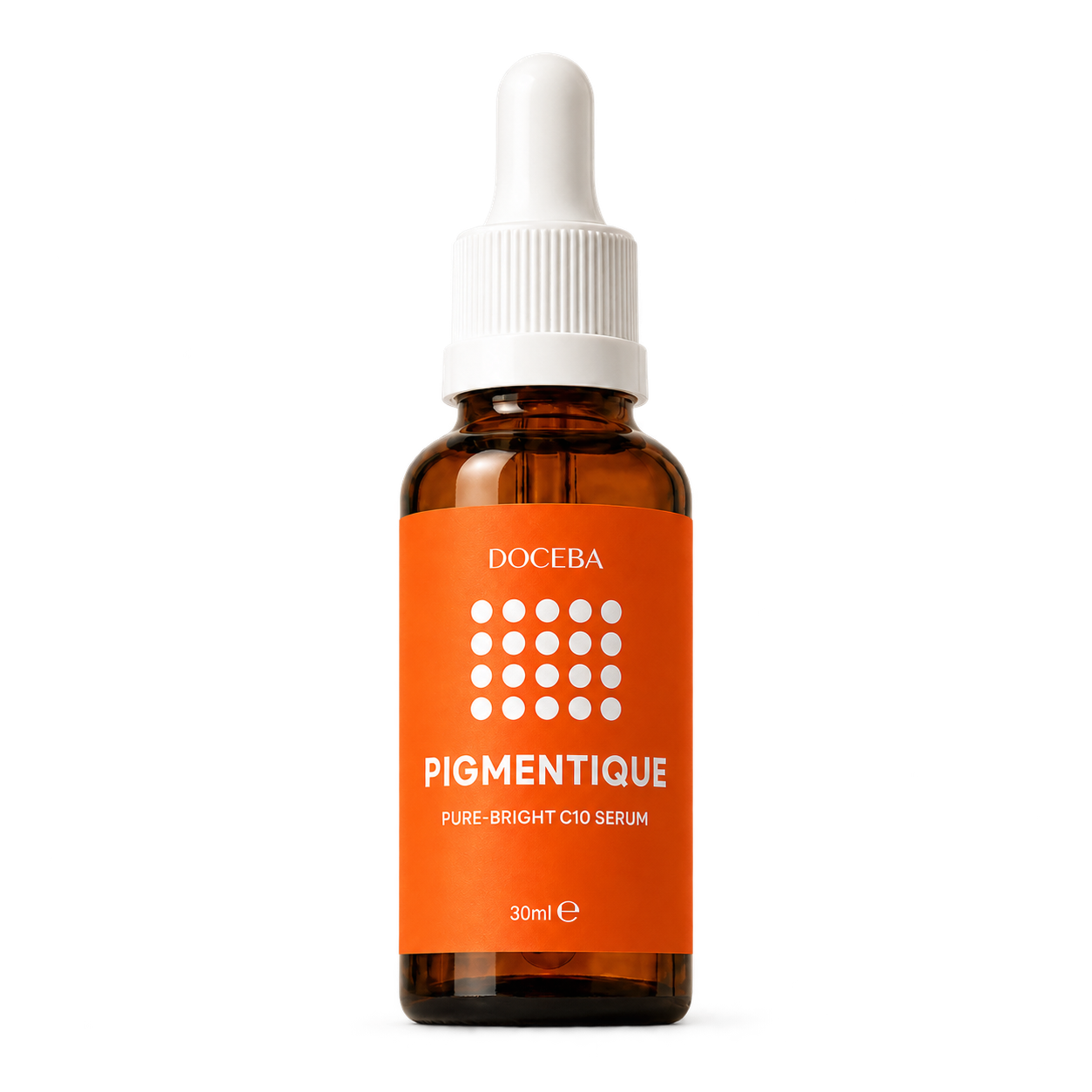
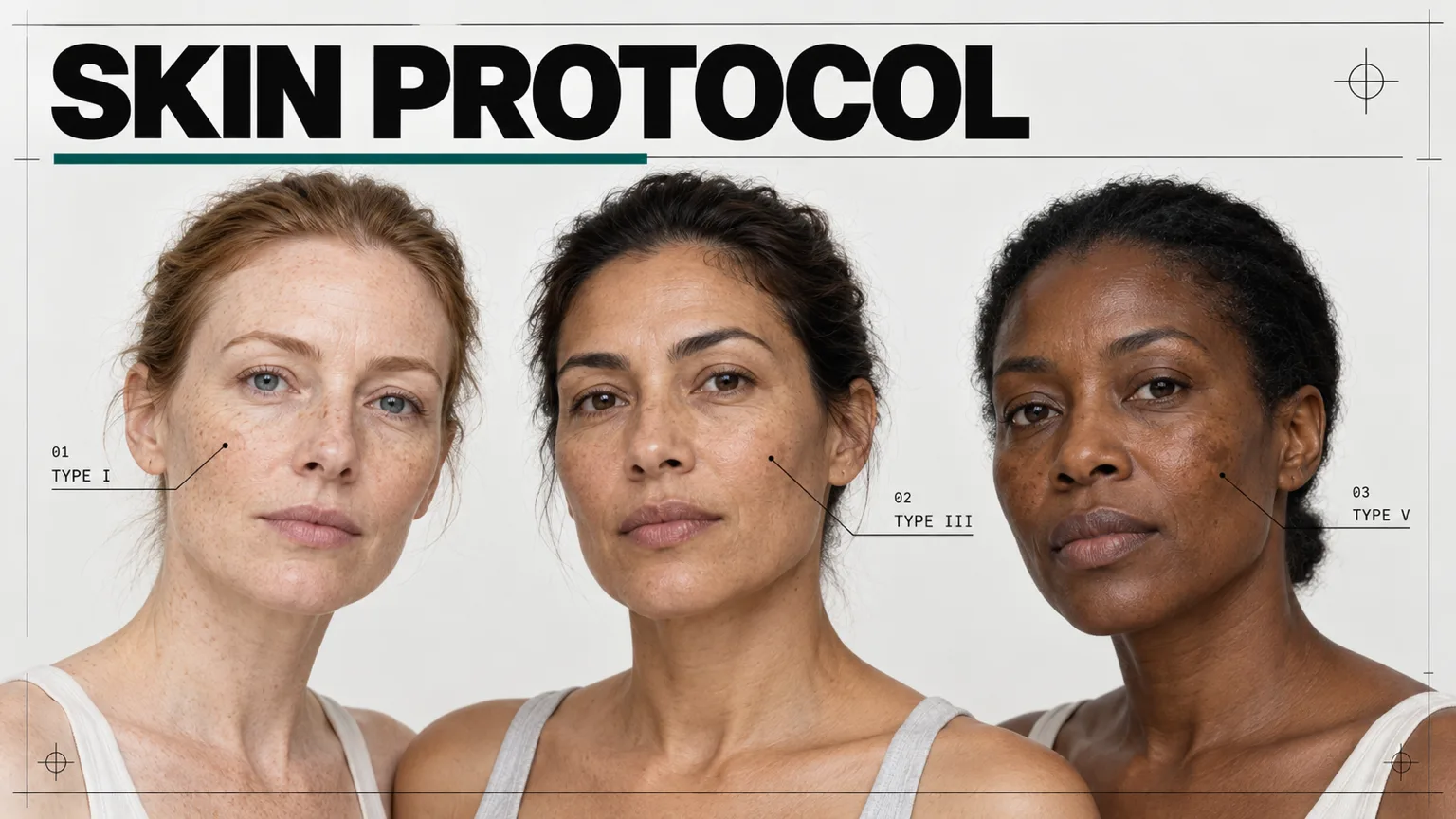
Skin Protocol: a plan for your skin and a team that adjusts it
You get a plan built around your skin and what you've already tried. We check in regularly and adjust products from Anita's lab when your skin needs something different. In English or German.
It starts with a free 20-minute call. We ring you and listen to your skin story, including your vitamin C serum.
Book your free skin callCosmetic advice, not a diagnosis. If you think you have a skin condition, see a doctor first.
Questions you might still have
Does ferulic acid stabilize vitamin C?
For L-ascorbic acid, yes, measured as better chemical stability. For 3-O-ethyl ascorbic acid, the derivative in our serums, we know of no study. [S1][S4]
Does ferulic acid replace sunscreen?
No. The mix of vitamin C, vitamin E and ferulic acid works differently from sunscreens and is meant to supplement their protection. For dark spots a tinted sunscreen with iron oxides and at least SPF 30 suits best. We are working on a sunscreen of our own. If you buy one now, choose a tinted one. [S2][S5]
Can ferulic acid lighten dark spots?
Ferulic acid can inhibit melanin production and is used as a brightening component in skincare. We did not find a study on how strong that effect is on dark skin. Vitamin C, by contrast, is one of the ingredients that can fade existing spots. [S3][S5]
Does melanin-rich skin tolerate ferulic acid?
The studies say nothing about melanin-rich skin. What counts is how your skin reacts. If a product burns or stings, it irritates the skin, and that can darken spots. Stop using it then. [S2][S6]
Should I use a vitamin C and ferulic acid serum in the morning or at night?
Morning makes the most sense. Vitamin C mops up free radicals that sunscreen alone only partly blocks. Apply it under your sunscreen. [S4]
Sources
- [S1] Lin FH et al.: Ferulic acid stabilizes a solution of vitamins C and E and doubles its photoprotection of skin. J Invest Dermatol 2005 ↗
- [S2] Murray JC et al.: A topical antioxidant solution containing vitamins C and E stabilized by ferulic acid provides protection for human skin against damage caused by ultraviolet irradiation. J Am Acad Dermatol 2008 ↗
- [S3] Zduńska K et al.: Antioxidant Properties of Ferulic Acid and Its Possible Application. Skin Pharmacol Physiol 2018 ↗
- [S4] Al-Niaimi F, Chiang NYZ: Topical Vitamin C and the Skin: Mechanisms of Action and Clinical Applications. J Clin Aesthet Dermatol 2017;10(7):14–17 ↗
- [S5] AAD: How to fade dark spots in darker skin tones ↗
- [S6] AAD: Melasma: Self-care ↗
- [S7] AAD: Retinoid or retinol? ↗
- [P2] DOCEBA: Pigmentique Pure Bright C7 Serum ↗
- [P3] DOCEBA: Pigmentique Pure Bright C10 Serum ↗
General skincare information, not a diagnosis or an individual treatment plan.
Your bag
Review your items before continuing.
Your bag is empty.