
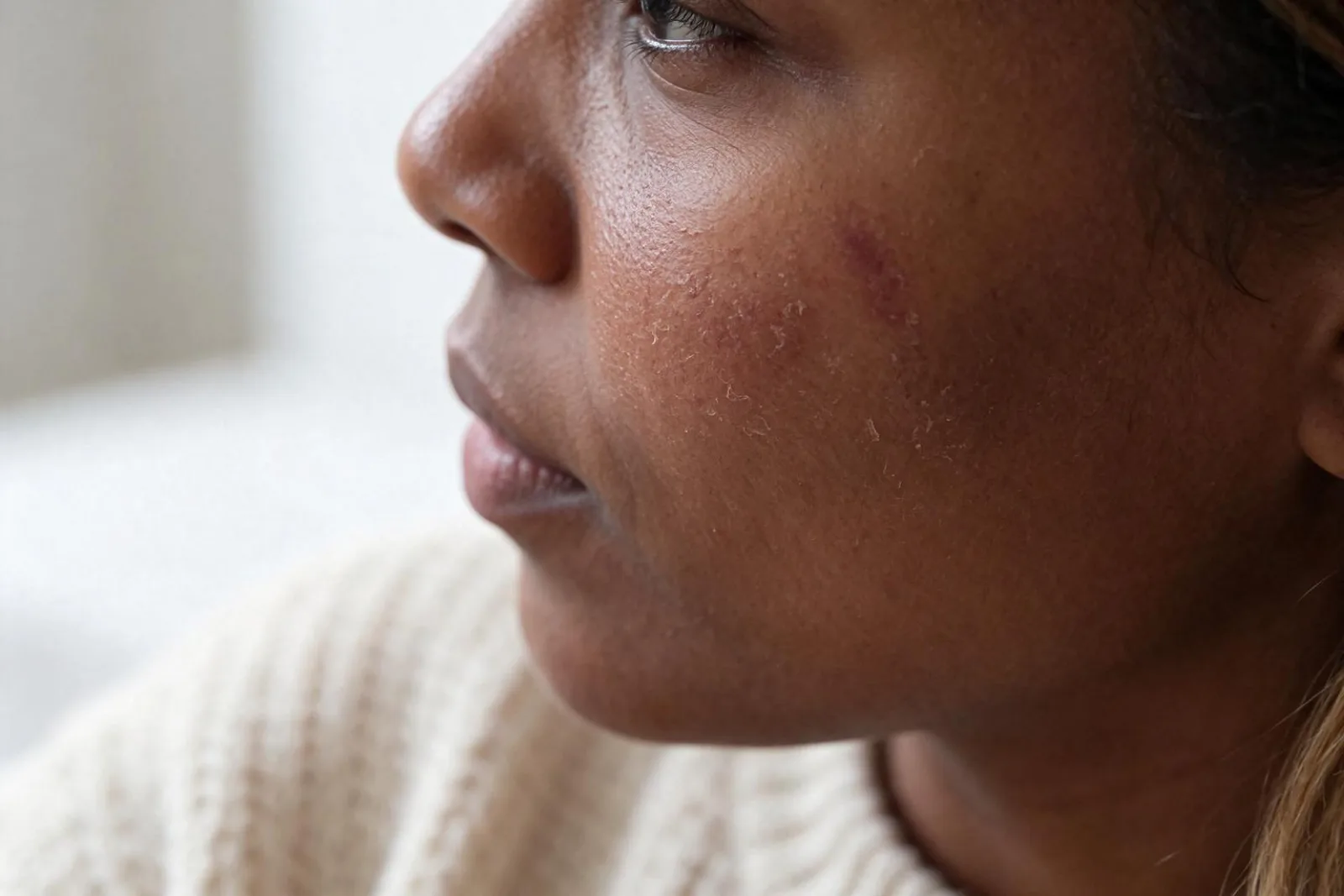
Suddenly the cream you have used for months starts to sting, and your skin feels tight by morning. That is unsettling, especially when you have dark skin and know how quickly an irritated patch turns into a spot.
Let me sort it out. The skin barrier is the outermost layer of your skin. When it is disturbed, it holds water less well and keeps irritants out less well. On dark skin, the irritation can then stay visible as a dark spot.
I'll show you how to recognize a damaged barrier, what irritates it day to day and how to repair your skin barrier step by step.
What is the skin barrier?
Your skin barrier is the outermost layer of your skin, the stratum corneum. It helps keep irritants out and water in.
Three fats are mainly responsible for that barrier function: ceramides and cholesterol, plus free fatty acids.
Once the barrier is damaged, for example by dermatitis, the skin loses more water and becomes more sensitive to the irritants it touches.
[S2][S3]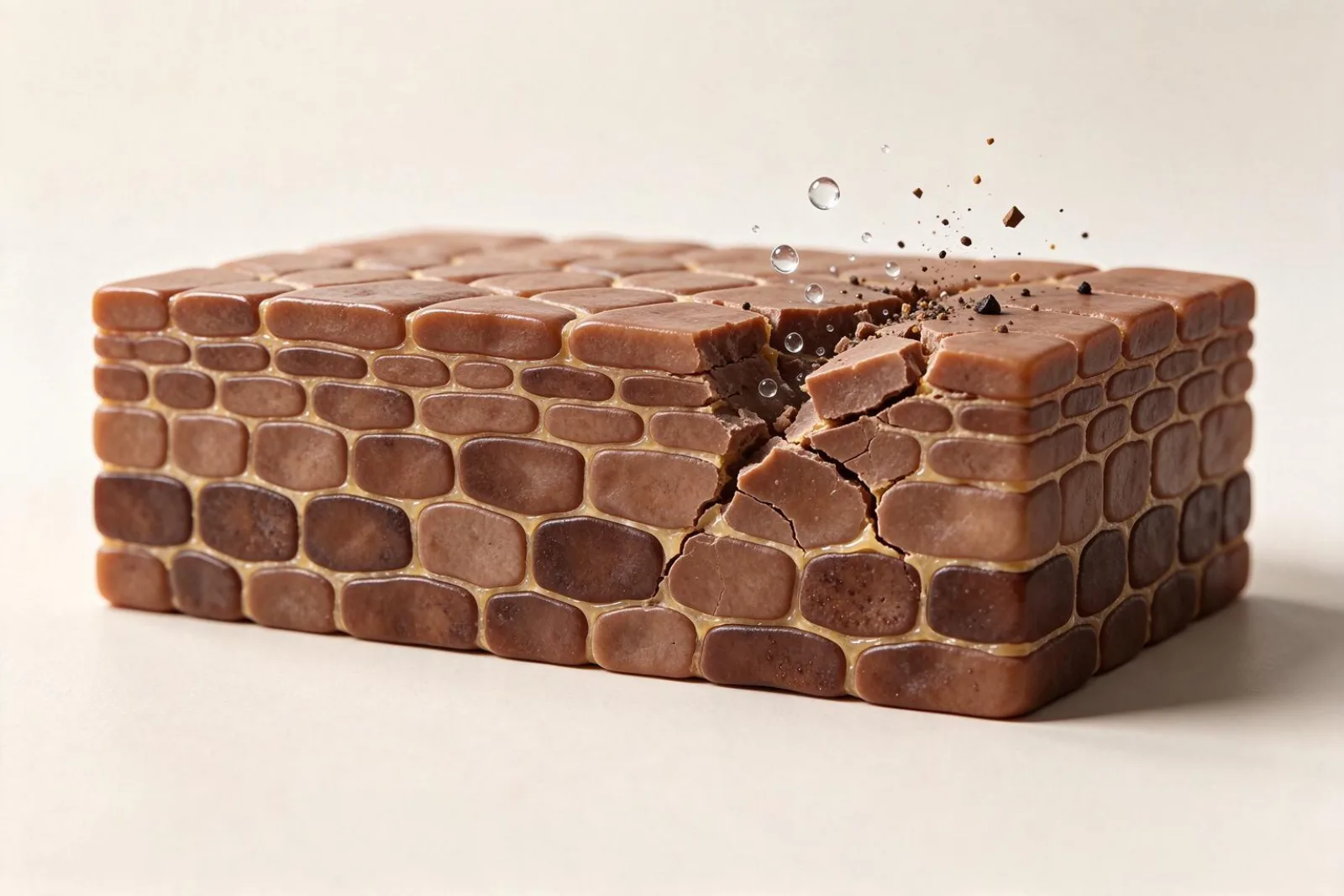
- 01Intact: lipids hold the cells together
- 02Cracks: water escapes
- 03Irritants get in
Skin cells are the bricks, the lipids are the mortar. Without mortar, gaps open up.
Simplified illustration
What are the signs of a damaged skin barrier?
With irritation from things your skin touches, dryness and fine cracks come first, followed by redness and itch. Burning and pain are more common than itch. Check your skin with these four questions:
- Does your skin feel dry or rough, or does it have fine cracks?
- Is the area red or itchy?
- Does a product you usually tolerate suddenly burn or sting?
- Do water, soap or hand sanitizer bother your skin more than before?
On dark skin, redness is harder to see, because erythema, the redness of inflamed skin, is more difficult to spot on darker skin types. So go by feel and surface as well as color. Burning, itching and flaking count even when you see no red.
[S1][S7]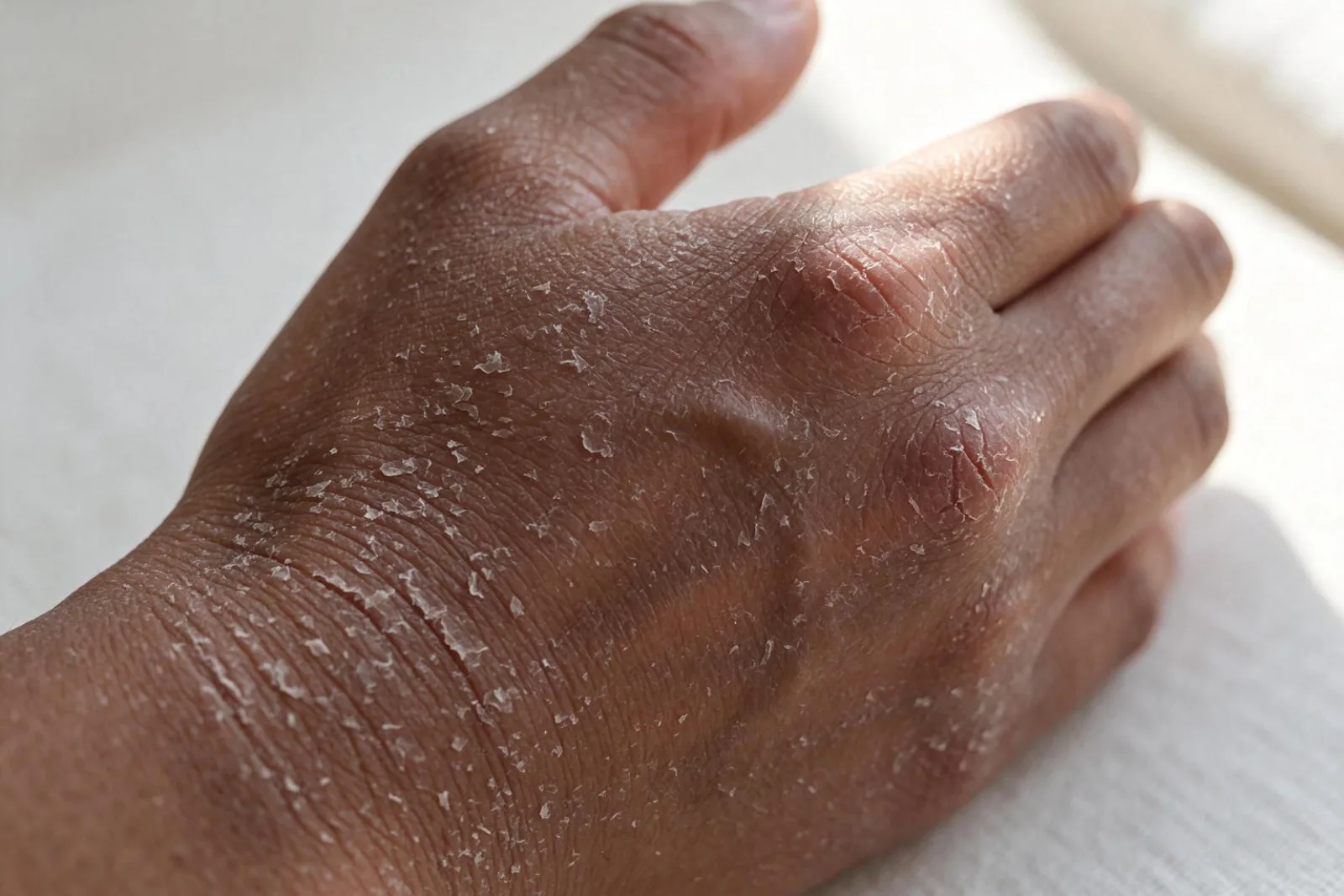
Fine cracks and flakes are often the first sign.
Illustration
What irritates your skin barrier day to day?
Everyday irritants include water and soap, and hand sanitizer as well. Jobs where your hands are often wet add detergents, solvents and acids. Friction and sweating irritate too, as does heat.
In your bathroom, that comes down to a few things. How often you wash your face, how hot the water is and how hard you rub with the towel all make a difference. For dry skin, warm rather than hot water and five to ten minutes in the shower help, because long hot baths make dry skin drier. Choose fragrance-free products as well. If your face wash, moisturizer and shower gel are strongly scented, check the ingredient list.
After a winter of dry indoor air, this can add up. How dry skin looks on dark skin is covered in Ashy skin in winter.
[S1][S4]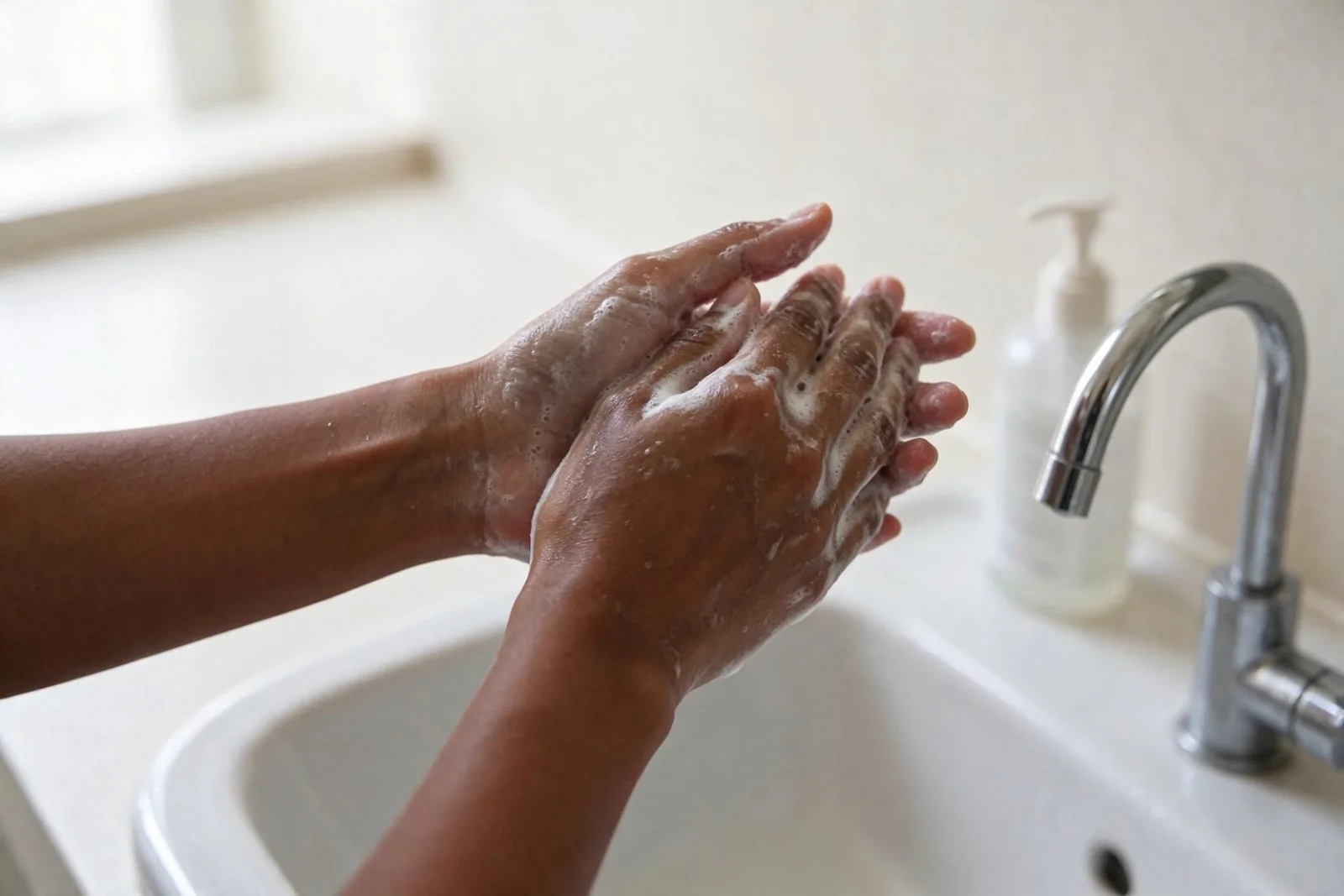
Frequent washing and sanitizing are typical irritants.
Illustration
Why can irritated skin turn into a dark spot on deep skin tones?
Inflammation prompts pigment cells to make more melanin. That is how postinflammatory hyperpigmentation, or PIH, forms: color left behind after inflammation. Darker skin types are affected most often, and the color is stronger and lasts longer there.
After irritation from contact with irritants in particular, PIH is more common once the inflammation has settled. So an irritated patch can become the spot.
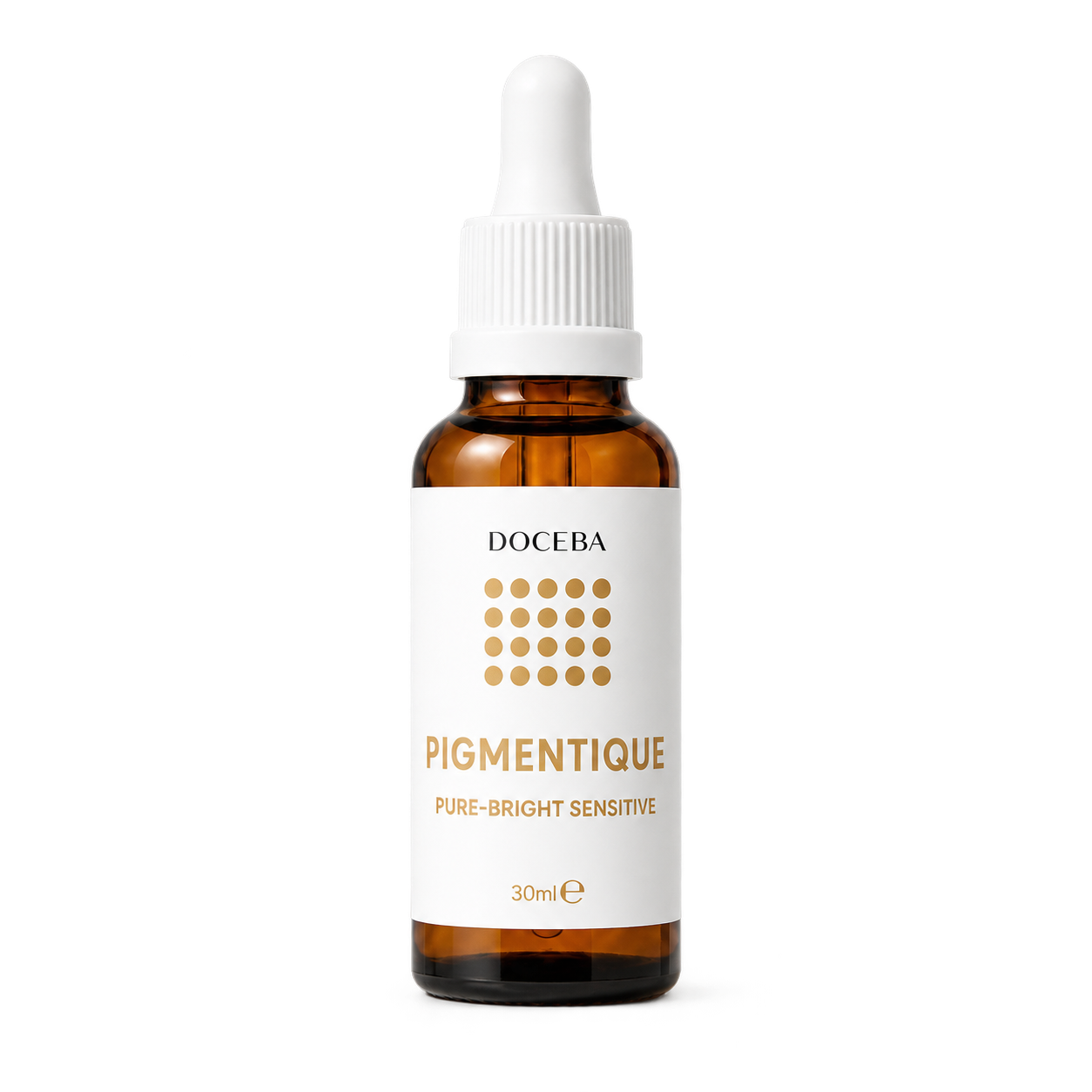
That is why one rule applies to every product: if it burns or stings, it is irritating your skin, and that can make dark spots darker. Stop using it. Calm skin is the first step. A vitamin C serum for the face fits in once nothing burns anymore, and even then you test it on a small patch first. If spots you already have are getting darker, Why dark spots get darker goes into it.
[S1][S6][S7]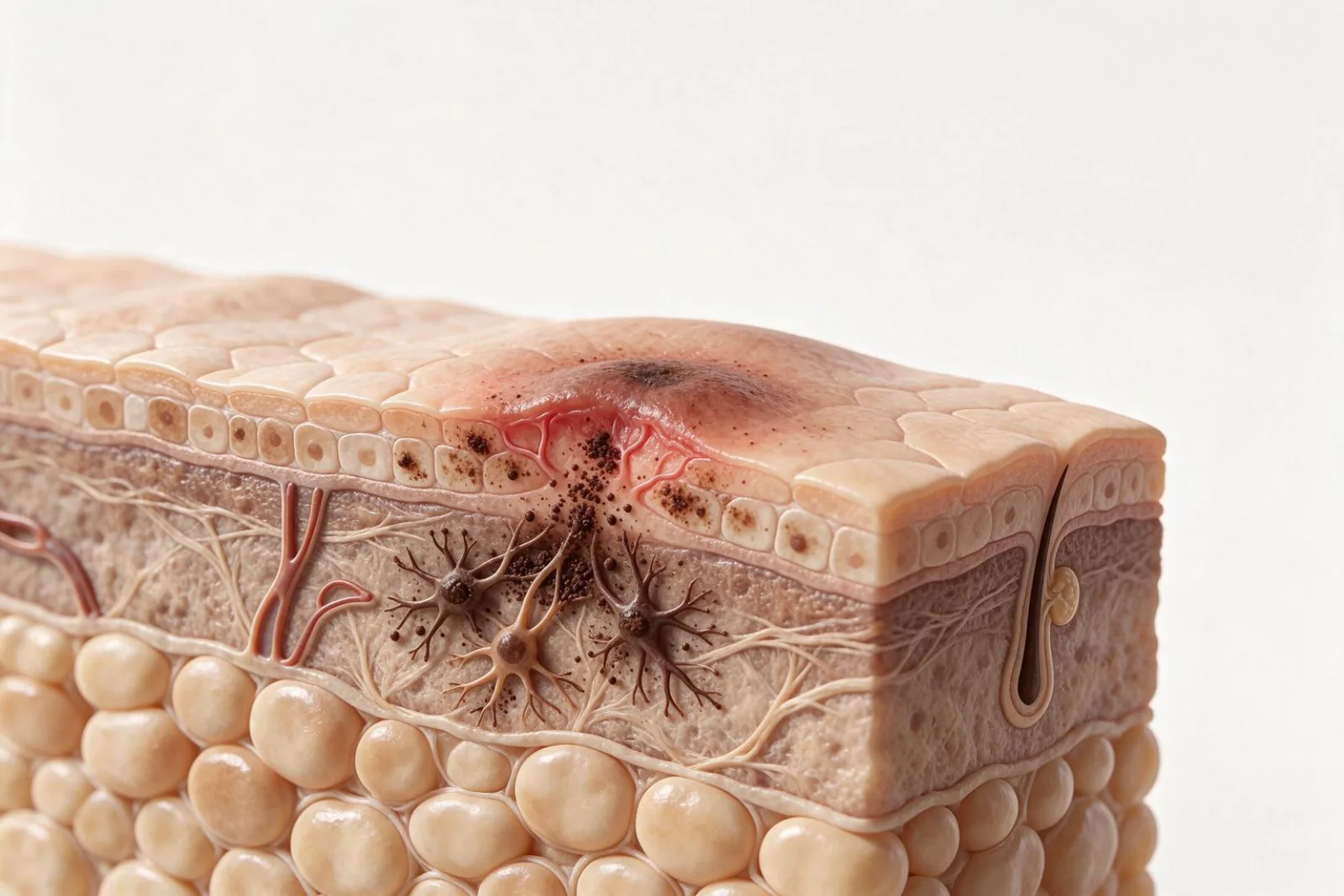
- 01Irritation
- 02Pigment cells release more colour
Inflammation prompts the pigment cells to make more melanin.
Simplified illustration
How do I repair my skin barrier?
Three things help irritated skin: avoiding possible irritants, using emollients (moisturizers that soften skin) and using barrier creams. Here is how to put that into practice:
- Wash short and warm instead of long and hot.
- Pat your skin dry with a towel instead of rubbing, and leave it slightly damp.
- Apply a mild, fragrance-free moisturizer right away so the water stays in the skin.
- Choose a cream or ointment instead of a lotion, reapply during the day if your skin is very dry, and use hand cream after every wash.
- Try new products on a small patch first and add only one at a time.
With short warm showers and consistent moisturizing, dry skin should improve after about two weeks.
[S1][S4][S5][S6]
- 01Pat, don't rub
After washing, pat dry and leave the skin slightly damp.
Illustration
What belongs in a cream for your skin barrier?
An expert paper describes barrier creams that follow the skin's own three fats, which are ceramides and cholesterol, plus free fatty acids. Later studies identified an optimal molar ratio of these lipids (3:1:1 mixtures). The paper also says that incomplete or imbalanced mixtures aggravate an underlying barrier defect.
Natural ceramides are an important part of the layer between the cells of the stratum corneum. Creams with synthetic ceramides are thought to be particularly useful for atopic dermatitis (eczema), which belongs in a doctor's hands.
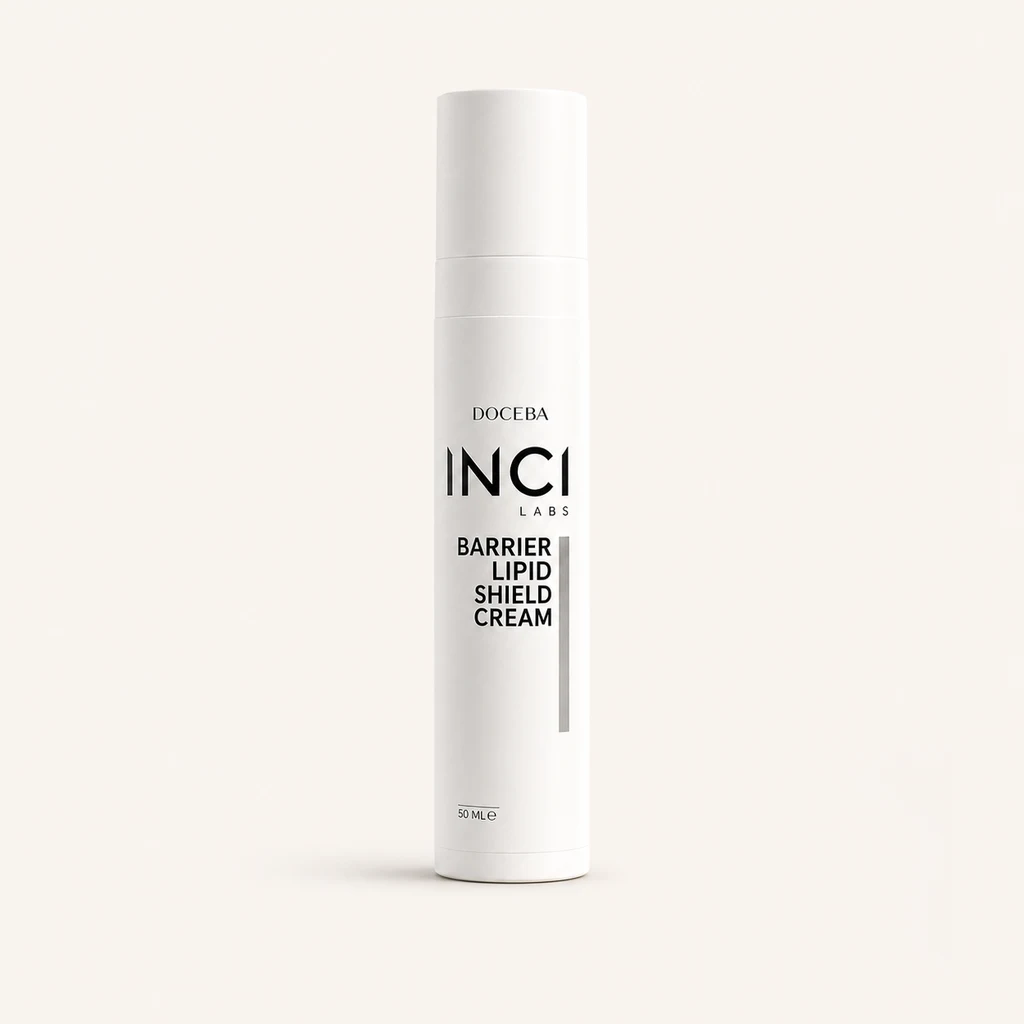
For choosing a cream, read the ingredient list and look for more than one of these fats. These fats work together. You cannot read a ratio like 3:1:1 off an ingredient list. For our cream, we state it on the product page.
[S2][S3]
- 01One dab covers one area
A small dab, fragrance-free.
Illustration
When should I see a dermatologist about my skin?
If nothing improves after about two weeks of gentle care, or your skin keeps burning, cracking or itching badly, have it looked at. If you are unsure, a visit to a dermatologist is a good idea. They can work out what lies behind lasting irritation.
For what dark skin needs in general, read Does dark skin need different skincare?
[S1][S4]Your next step
Both paths are fine. Pick the one that suits you today.
- For two weeks, wash short and warm, pat dry and moisturize right away.
- Keep everything fragrance-free and use a cream or ointment instead of a lotion.
- If a product burns, stop it. If nothing improves, see a dermatologist.
A matching product from our lab:
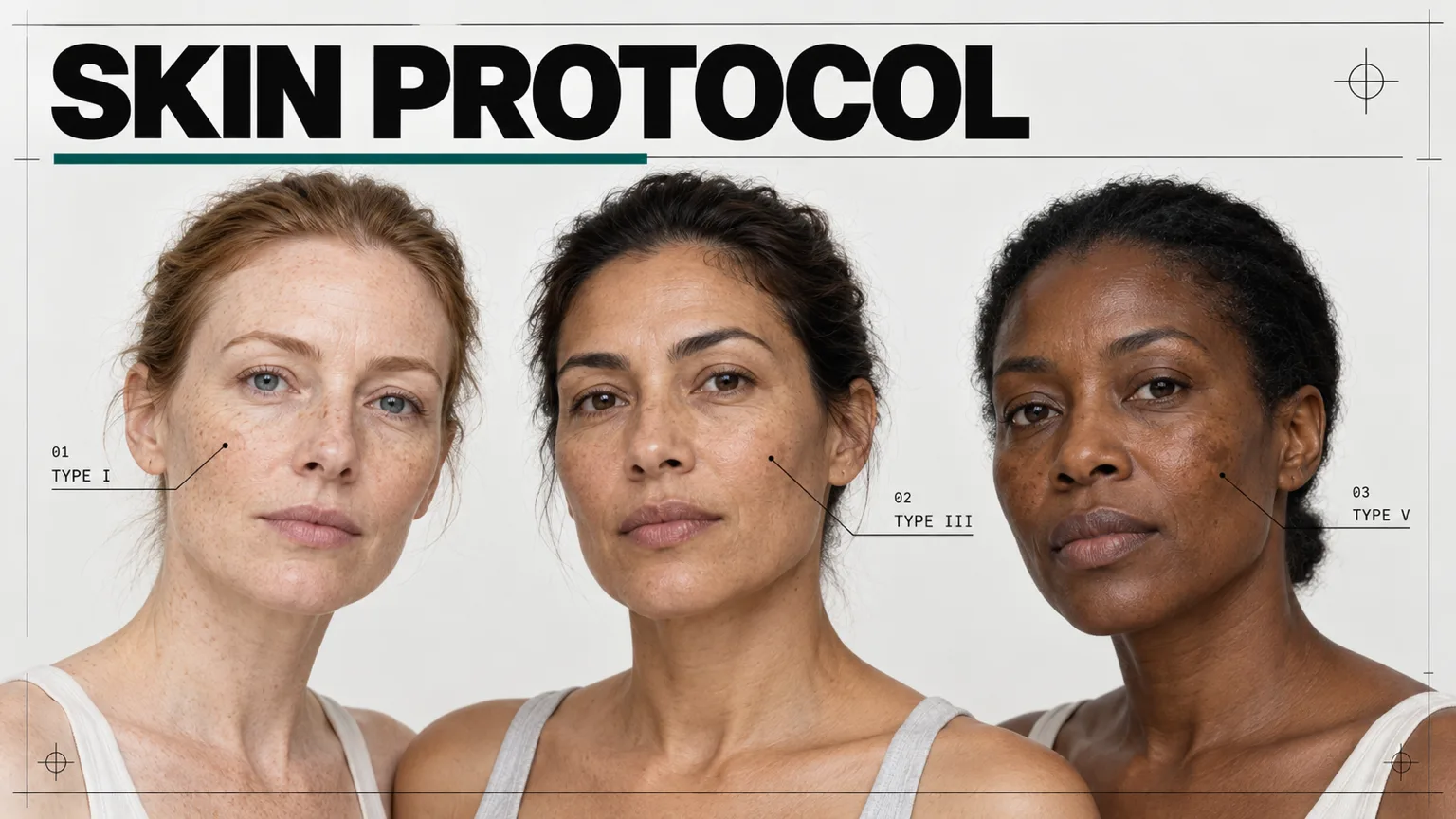
Skin Protocol: a plan for your skin and a team that adjusts it
You get a plan built around your skin and what you've already tried. We check in regularly and adjust products from Anita's lab when your skin needs something different. In English or German.
It starts with a free 20-minute call. We ring you and listen to your skin story, including your routine for dark spots.
Book your free skin callCosmetic advice, not a diagnosis. If you think you have a skin condition, see a doctor first.
Questions people often still have
How long does it take to repair a skin barrier?
With short warm showers and consistent moisturizing, dry skin should improve after about two weeks. If it does not, have a dermatologist look at it. [S4]
How do I know my skin is irritated if I can't see redness?
On darker skin types, redness can be harder to see. Look for dryness, cracks, itching and burning. Burning and pain are more common than itch with irritation. [S1]
Can irritation leave a dark spot?
Yes. Inflammation prompts pigment cells to make more melanin. This is called postinflammatory hyperpigmentation, and it affects darker skin types most often. [S6]
Should I keep using a product that burns?
No. A product that burns or stings is irritating your skin and can make dark spots darker. Stop using it. [S7]
Do I really need ceramides in a cream?
Ceramides and cholesterol, along with free fatty acids, are responsible for the skin's barrier function. A mixture modeled on them is said to restore the barrier best, and incomplete mixtures can worsen a defect. Whether you need one depends on your skin. With eczema, talk to your dermatologist. [S3]
Sources
- [S1] DermNet: Irritant contact dermatitis ↗
- [S2] DermNet: Barrier cream ↗
- [S3] Elias PM, Man MQ, Darmstadt GL: Optimised emollient mixture for skin barrier repair. J Glob Health 2022;12:03019 ↗
- [S4] AAD: Dry skin remedies for darker skin tones ↗
- [S5] AAD: Dermatologists' top tips for relieving dry skin ↗
- [S6] DermNet: Postinflammatory hyperpigmentation ↗
- [S7] AAD: Melasma: Self-care ↗
- [P1] DOCEBA: Barrier Lipid Shield Cream ↗
- [P2] DOCEBA: Pigmentique Pure Bright Sensitive Serum ↗
General skincare information, not a diagnosis or an individual treatment plan.
Your bag
Review your items before continuing.
Your bag is empty.