
Many dark spot serums list kojic acid, alpha arbutin or vitamin C, and all of them promise brighter skin. If you have dark skin and have ended up with new marks after irritation before, you want to know first what actually holds up.
Let me sort it out. All three work at the same point in pigment production. They differ in how well they have been studied, which amounts count as safe and how well skin tolerates them.
I'll show you what is known about each one, where the limits are and how to try vitamin C safely on dark skin.
How do kojic acid, alpha arbutin and vitamin C slow pigment production?
Dark spots appear when pigment cells make extra melanin, the brown pigment in your skin. The enzyme tyrosinase starts that process, and kojic acid, alpha arbutin and vitamin C all go after it, each in its own way.
Certain fungi and bacteria produce kojic acid. It binds the copper at the enzyme's active site and switches the enzyme off.
Arbutin is a derivative of hydroquinone. Alpha arbutin is the lab-made form, and it inhibits human tyrosinase just like natural beta arbutin.
Vitamin C also acts on the enzyme's copper and slows one intermediate step of melanin formation. It is also a strong antioxidant, which means it catches aggressive oxygen molecules.
[S2][S4][S5]
- 01Tyrosinase makes pigment
- 02Ingredients slow it down
- 03Less pigment
All three slow down tyrosinase, the enzyme that makes melanin.
Simplified illustration
Kojic acid, alpha arbutin or vitamin C: which has the best evidence on dark skin?
None as well as you would hope. Kojic acid and vitamin C are among the ingredients that can fade existing spots. A review of dark marks after inflammation in dark skin lists all three, with a caveat for each. Studies on dark skin are still missing for kojic acid and arbutin, and most vitamin C studies looked at melasma.
| Kojic acid | Alpha arbutin | Vitamin C | |
|---|---|---|---|
| How it slows pigment | Binds copper in the enzyme tyrosinase [S2][S4][S5] | Inhibits tyrosinase | Acts on the enzyme’s copper, antioxidant |
| Strength in products | 1 to 4% per the review, safe up to 1% per the SCCS [S2][S3][S4][S5] | SCCS: up to 2% in face, 0.5% in body products | 5 to 20%, depending on the source |
| Evidence on dark skin | Studies with hydroquinone in melasma, still needed for post-inflammatory marks [S2] | Studies on arbutin are lacking for higher skin types | Most studies looked at melasma |
| What to watch | Can irritate, contact allergy has been described [S2][S3][S5] | With arbutin, too high a dose can darken skin | Unstable in pure form, above 20% may irritate |
| Do we make it | No [P1] | No | Yes, as 3-O-Ethyl Ascorbic Acid |
A related substance shows how little carries over. Deoxyarbutin at 3% worked on sun spots in 34 light-skinned people, but 16 dark-skinned people showed no significant response. It is a different substance from alpha arbutin, yet it shows that a result on lighter skin does not automatically apply to yours.
[S1][S2][S3][S4][S5][P1]What concentrations do EU scientists consider safe?
The EU's scientific committee for consumer safety has reviewed both ingredients. These are scientific opinions, not legal text. Its limits:
- Kojic acid is safe as a skin lightener in cosmetics up to 1%. Possible hormone-disrupting effects were weighed as well.
- Alpha arbutin is safe up to 2% in face creams and up to 0.5% in body lotions, including when you use both.
- Beta arbutin, the natural form, is safe up to 7% in face creams.
For kojic acid in peeling agents, the committee sees an extra concern, because a weakened skin barrier lets more of it through. Derivatives such as kojic acid dipalmitate were not assessed, because no data were submitted.
With arbutin, hydroquinone matters too. It should stay as low as possible in arbutin products, at most as unavoidable traces. Hydroquinone can be released from arbutin, and long use of hydroquinone at 2% or more has been linked to ochronosis in dark-skinned people, a darkening of the skin with small bumps. More in skin bleaching risks.
[S2][S3][S4]
Kojic acid and arbutin have recommended maximum amounts.
Illustration
How well will you tolerate kojic acid and arbutin, and what about kojic acid soap?
On dark skin, tolerance helps decide the result. Inflammation tells pigment cells to make more melanin, so an irritated patch can become a dark spot itself. If a product burns or stings, it is irritating your skin. Stop using it.
For kojic acid, the assessments differ. The review calls contact dermatitis, a rash from contact, a common side effect. The EU committee considers an allergic reaction very rare, but lists single cases, such as a woman who developed an acute rash on her face and neck after three days with a product containing 0.5% kojic acid.
For arbutin, the effect depends on the dose, and higher concentrations can paradoxically darken skin. More arbutin is not automatically better.
We found no source that backs up the effect or tolerability of kojic acid soaps. What has been looked at is use in leave-on face creams and hand creams, so we can't tell you whether a soap fades dark spots.
[S2][S3][S6][S7]
- 01We found no studies on soaps
Illustration
How do you try vitamin C on dark skin?
Vitamin C is the only one of the three that we carry. Pure ascorbic acid, the most active form, is unstable and penetrates skin poorly. A pH below 3.5 improves both, and above 20% adds no benefit and may irritate. Clinical studies of vitamin C products are still limited.
Our serums contain 3-O-Ethyl Ascorbic Acid, a vitamin C derivative, plus ferulic acid, hyaluronic acid and allantoin. They can help dark spots look lighter. How vitamin C differs from niacinamide is covered in this comparison, and facial use in our vitamin C serum article. To start any new product:
- Introduce only one new product at a time.
- Try it on a small area first, for example the crook of your elbow.
- Stop as soon as it burns or stings.
- Apply vitamin C in the morning under your sunscreen. Sunscreen blocks free radicals, the aggressive oxygen molecules, only partly, and vitamin C catches them.
For dark spots, a tinted sunscreen with iron oxides and SPF 30 or higher suits best, because iron oxides protect against visible light. We are working on our own sunscreen. If you buy one now, choose a tinted one.
[S1][S5][S6][S7][P1]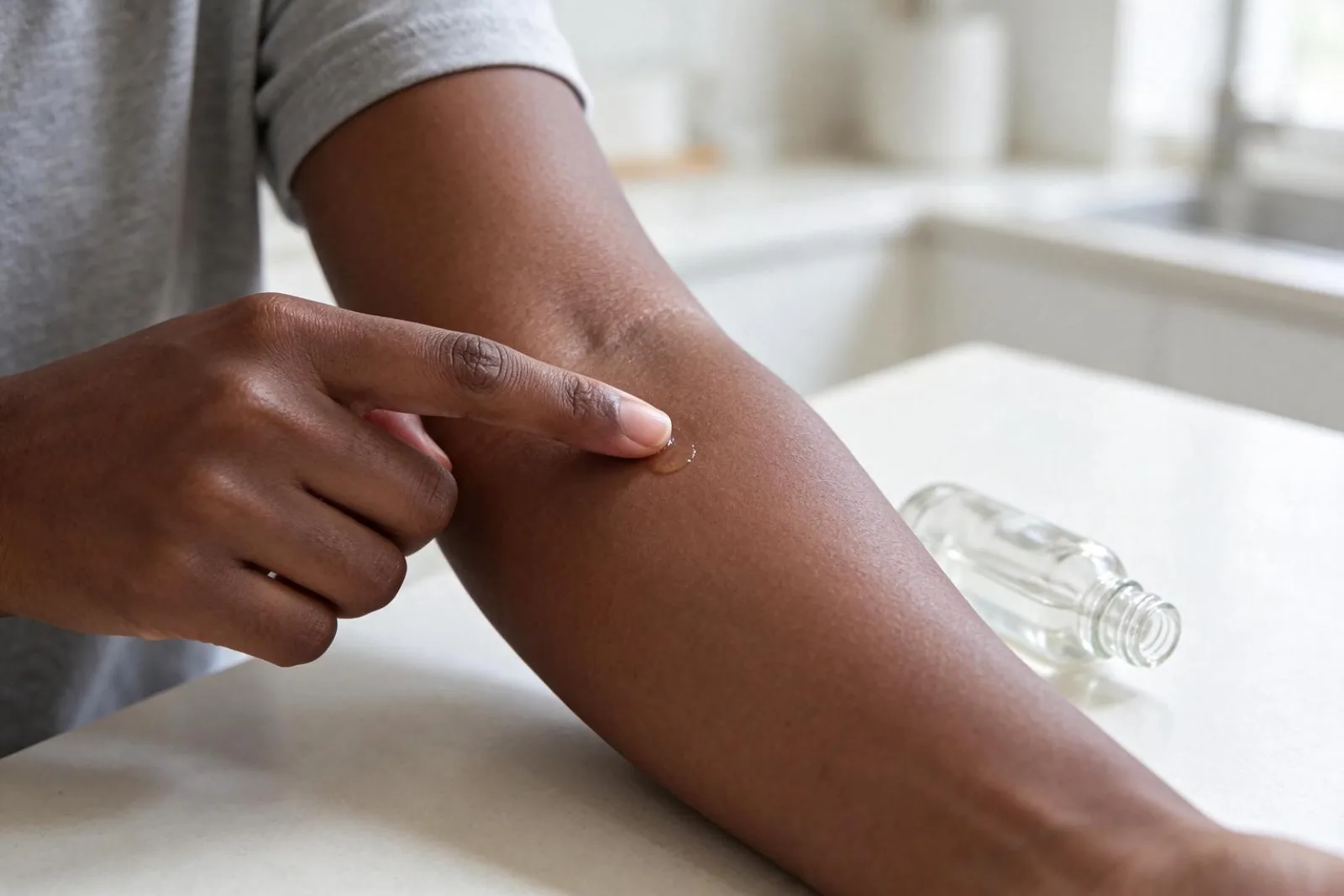
- 01Test on a small area first
Illustration
When should you see a dermatologist about dark spots?
Creams mainly help with spots in the top layer of skin, while deeper pigment responds poorly. Peels or lasers in a practice can help with stubborn spots.
Dark patches can also be melasma, which can be triggered by sun, pregnancy or medicines such as the pill. If you are unsure, a visit to a dermatologist is a good idea. For facial care you can use our Pure Bright C7 Serum. It can make the patches look lighter, but it does not treat melasma. Our Mela Bright is still in development. If it isn't linked here yet, it isn't online yet.
With melasma, sun protection matters even more, because visible light can worsen it, especially in darker skin tones.
[S2][S6][P1]Your next step
Both routes are fine. Pick the one that fits you today.
- Introduce only one new product at a time and patch test it on a small area.
- Stop as soon as it burns or stings, and wear a tinted sunscreen in the morning.
- Take a photo once a month in the same light. If nothing changes over months, see a dermatologist.
Matching products from our lab:
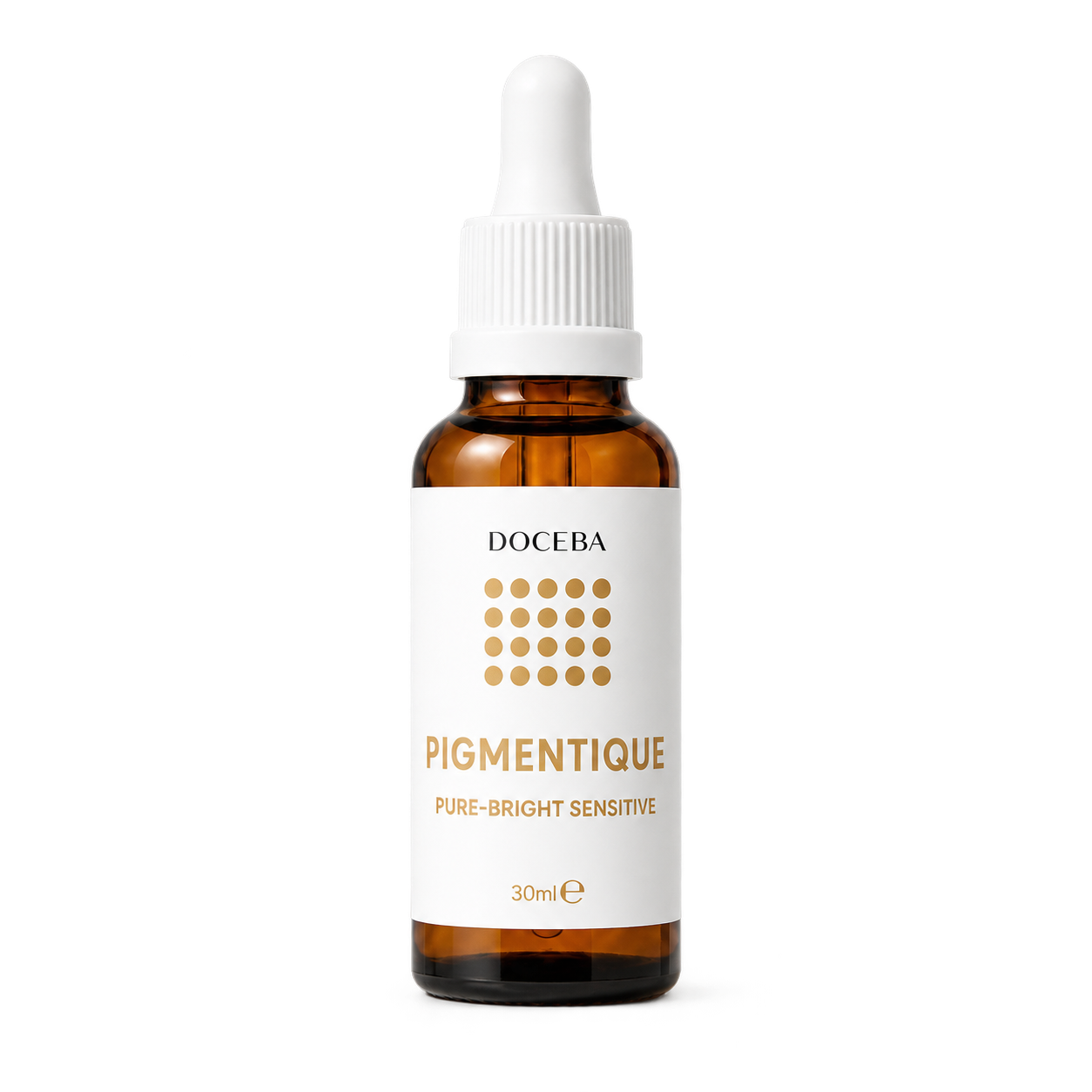
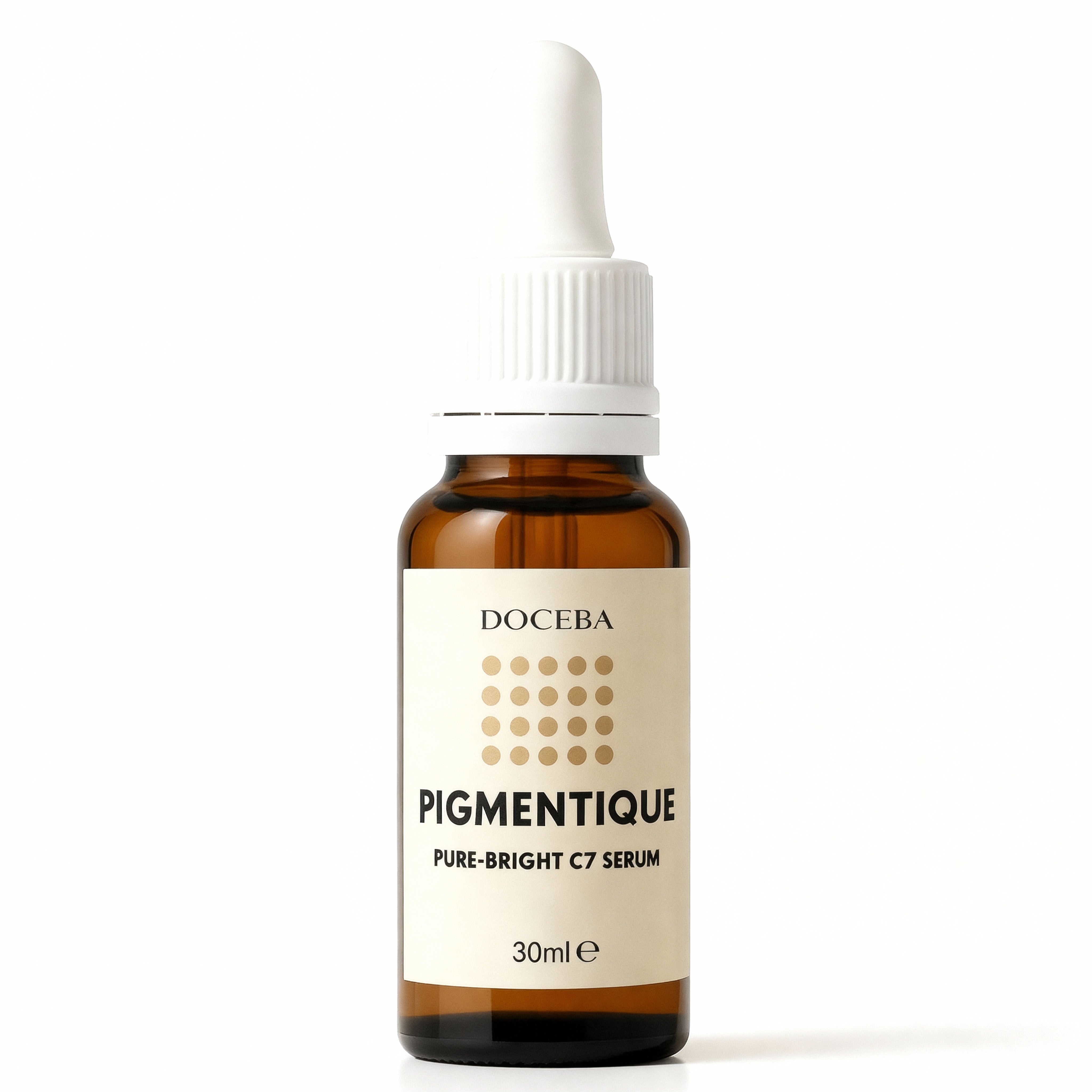
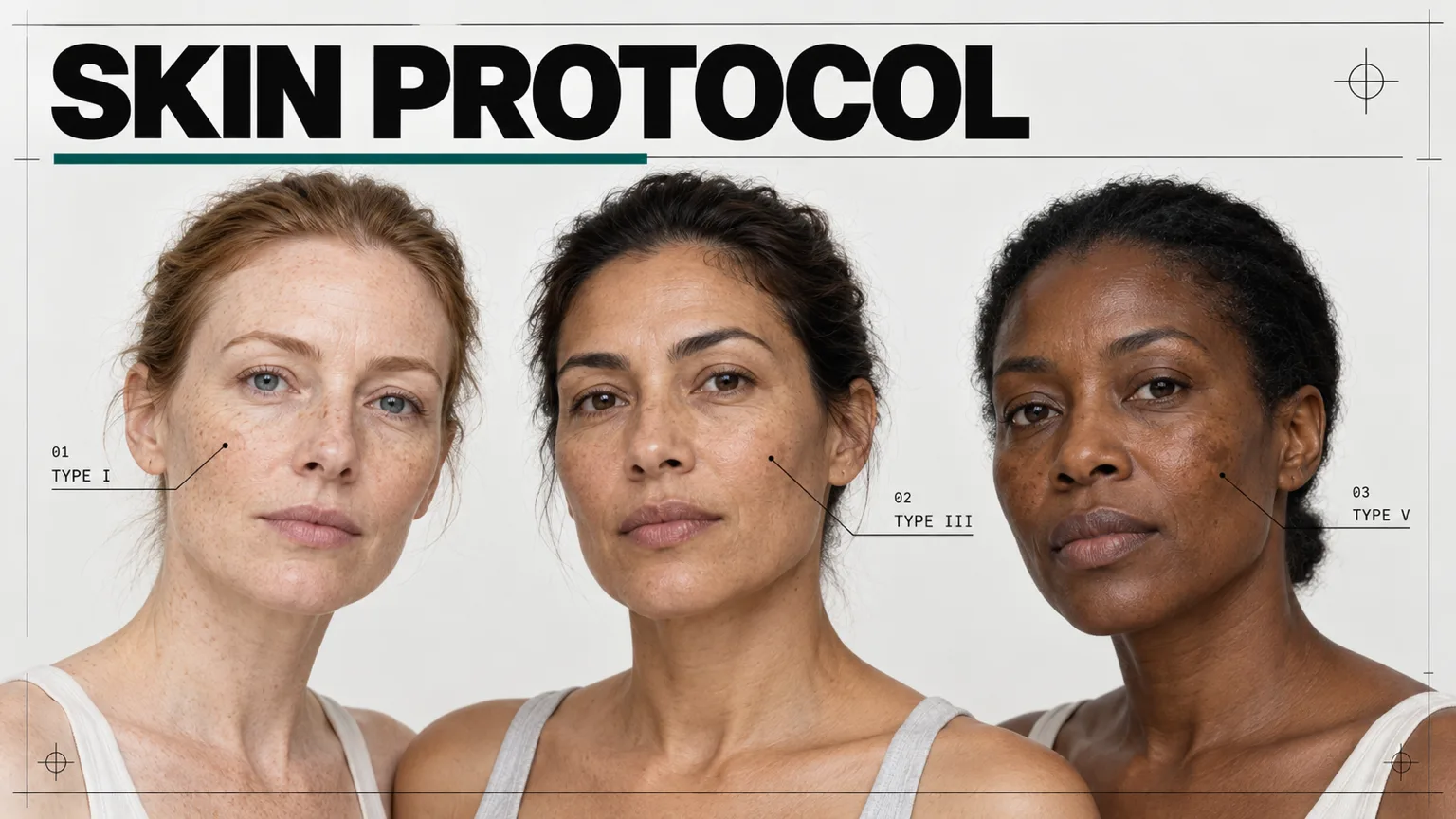
Skin Protocol: a plan for your skin and a team that adjusts it
You get a plan built around your skin and what you've already tried. We check in regularly and adjust products from Anita's lab when your skin needs something different. In English or German.
It starts with a free 20-minute call. We ring you and listen to your skin story, including your routine for dark spots.
Book your free skin callCosmetic advice, not a diagnosis. If you think you have a skin condition, see a doctor first.
Questions you might still have
Is alpha arbutin better than kojic acid?
Our sources contain no head-to-head comparison on dark skin. Both slow tyrosinase, and studies on post-inflammatory marks in dark skin are lacking for both. We can't give you a ranking. [S2]
How much alpha arbutin is safe in cosmetics?
The EU's consumer safety committee considers alpha arbutin safe up to 2% in face creams and 0.5% in body lotions, and beta arbutin, the natural form, up to 7% in face creams. [S4]
Does kojic acid soap help with dark spots?
We found no source on that. What has been looked at is kojic acid in creams for face and hands. Whether a soap lightens spots or irritates skin, we can't back up. [S3][S6]
Can I combine kojic acid or arbutin with vitamin C?
We have no source on that exact pairing. Introduce only one new product at a time so you can tell what irritates you. [S7]
How long until dark spots get lighter?
A spot a few shades darker than your skin usually fades within 6 to 12 months once the cause is stopped. Deep pigment can take years, and treatment can speed up the fading. [S1]
Sources
- [S1] AAD: How to fade dark spots in darker skin tones ↗
- [S2] Davis EC, Callender VD: Postinflammatory Hyperpigmentation: A Review of the Epidemiology, Clinical Features, and Treatment Options in Skin of Color. J Clin Aesthet Dermatol 2010;3(7):20–31 ↗
- [S3] SCCS (Scientific Committee on Consumer Safety): Opinion on Kojic acid, SCCS/1637/21, final version ↗
- [S4] SCCS (Scientific Committee on Consumer Safety): Opinion on the safety of alpha-arbutin and beta-arbutin in cosmetic products, SCCS/1642/22, final version ↗
- [S5] Al-Niaimi F, Chiang NYZ: Topical Vitamin C and the Skin: Mechanisms of Action and Clinical Applications. J Clin Aesthet Dermatol 2017;10(7):14–17 ↗
- [S6] AAD: Melasma: Self-care ↗
- [S7] DermNet: Postinflammatory hyperpigmentation ↗
- [P1] DOCEBA: Pigmentique Pure Bright C7 Serum ↗
- [P2] DOCEBA: Pigmentique Pure Bright Sensitive Serum ↗
General skincare information, not a diagnosis or an individual treatment plan.
Your bag
Review your items before continuing.
Your bag is empty.