

You have a vitamin C serum and a hyaluronic acid serum in your bathroom and wonder whether they get along. And if they do, which one goes first?
Let me sort it out. Hyaluronic acid adds moisture, vitamin C is an active for dark spots.
I'll show you what each one does, the order to apply them in and what to do if your skin stings.
Can I use hyaluronic acid and vitamin C together?
Yes. The two have different jobs and sit at different points in your routine. Hyaluronic acid is one of the ingredients to look for in a cream for dry skin. Vitamin C is one of the ingredients that can fade existing dark spots.
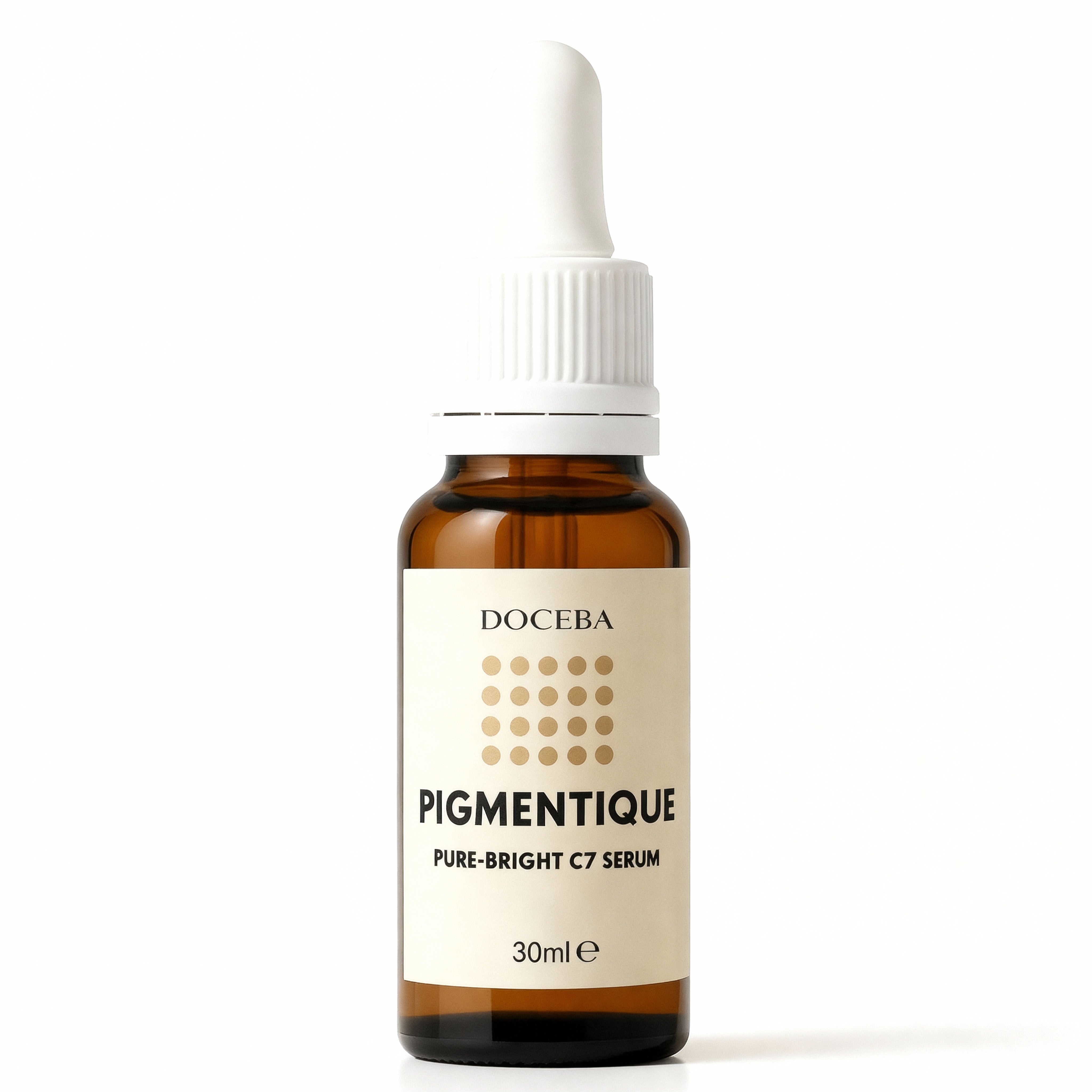
Some serums put both in one bottle. Our Pure Bright C7 Serum has the vitamin C form 3-O-Ethyl Ascorbic Acid and also Sodium Hyaluronate, which is the hyaluronic acid on the ingredient list.
For skin rich in melanin there is one more rule to know. If a product burns or stings, it irritates the skin, and that can make dark spots darker. The last section covers what to do about it.
[S4][S5][S6]
The two ingredients sit at different steps of your routine.
Illustration
What does hyaluronic acid do, and what does vitamin C do for dark spots?
Hyaluronic acid is a sugar molecule that can bind and hold water, and it counts as the key molecule of skin moisture. It is not one of the ingredients that fade dark spots. Those include vitamin C, along with retinoids and acids such as azelaic acid.
Vitamin C works at another point. It interacts with copper ions in the enzyme tyrosinase and inhibits it. That enzyme builds melanin, the pigment that darkens a spot. Less melanin means a spot can look paler over time.
Vitamin C is also one of the most potent antioxidants in the skin. An antioxidant catches free radicals, which are aggressive particles that put stress on skin.
So if you want dark spots to look paler, the vitamin C step is the one that counts, while hyaluronic acid adds moisture next to it. More in our guide to vitamin C for dark spots.
[S1][S3][S5]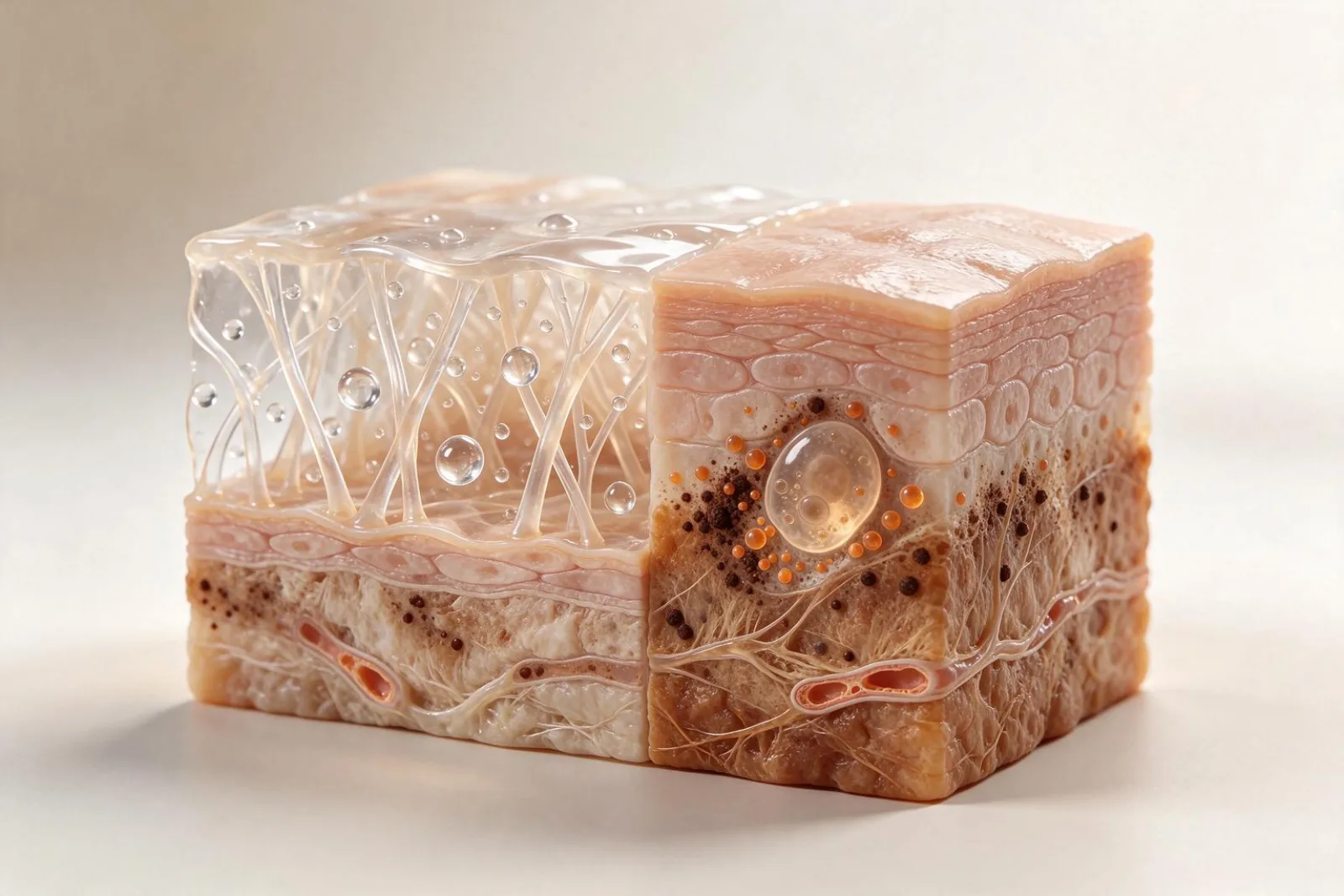
- 01Hyaluronic acid holds water
- 02Vitamin C slows pigment production
Hyaluronic acid holds water, vitamin C slows pigment production.
Simplified illustration
Hyaluronic acid and vitamin C: what goes on first?
The usual order for your face is: wash, apply an active or treatment, apply moisturizer and sunscreen, then makeup if you want it. A vitamin C serum is an active ingredient and belongs right after cleansing. For your routine that means:
- Wash your face with a mild cleanser and pat it dry gently.
- Apply the vitamin C serum.
- Apply a hyaluronic acid serum, if you use one.
- Apply moisturizer while the skin is still slightly damp.
- In the morning, finish with a tinted sunscreen.
There is no separate rule for hyaluronic acid serums. Placing them between the active and the cream is my reading of the sequence of active first, moisturizer after.
A routine does not need more steps than these. How the whole thing looks for dark spots is covered in our guide to a routine for hyperpigmentation.
[S2][S4]
- 01Active serum right after cleansing
The serum with the active ingredient goes on first after cleansing.
Illustration
Does my vitamin C serum already contain hyaluronic acid?
You can check the ingredient list, the INCI, on the pack. The Pure Bright C7 Serum for the face lists 3-O-Ethyl Ascorbic Acid, Ferulic Acid and Sodium Hyaluronate, among others. So the hyaluronic acid already sits in the active step.
An extra hyaluronic acid serum is possible but not required. I don't give amounts for our serum here.
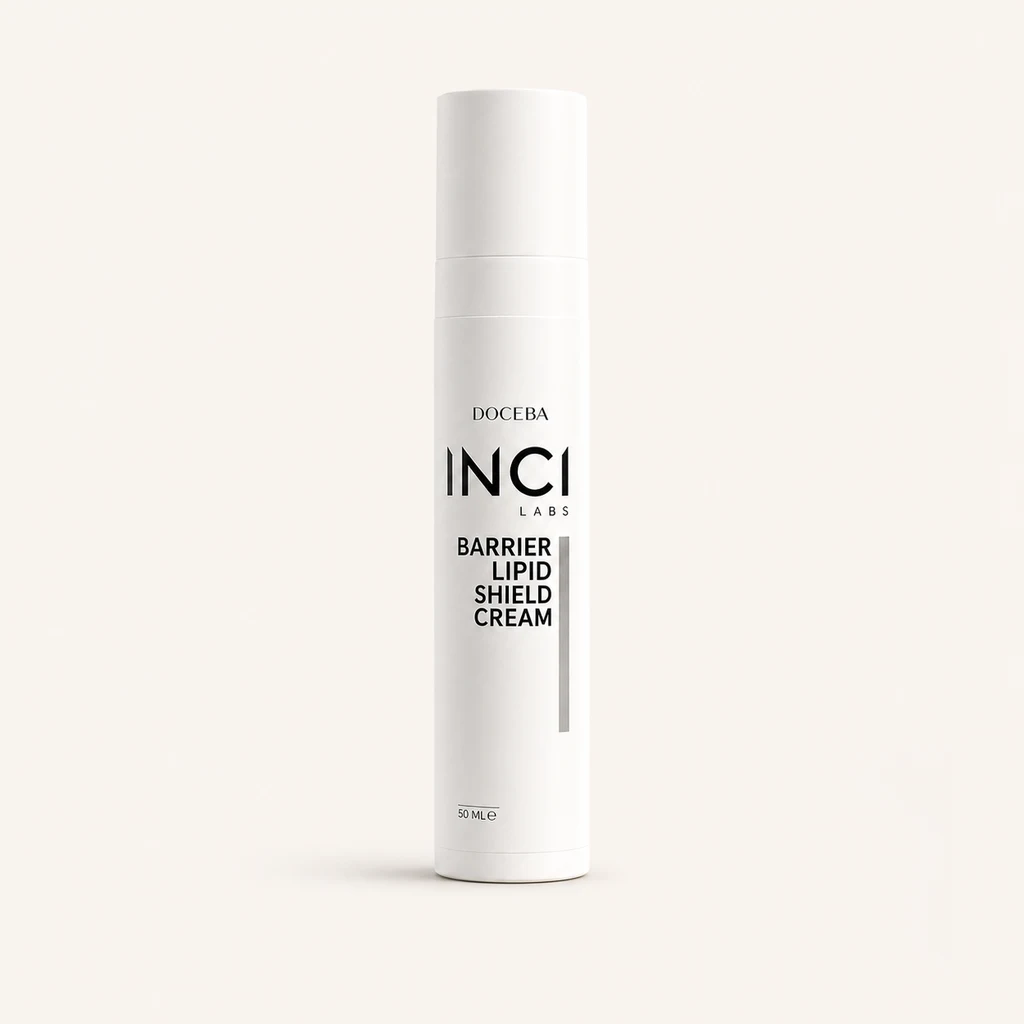
The cream afterwards can bring hyaluronic acid too. The Barrier Lipid Shield Cream is fragrance-free and contains ceramides and cholesterol, plus urea and hyaluronic acid. Fragrance-free products are the better choice for dry skin.
[S4]
- 01Cream after the active serum
A cream with hyaluronic acid closes the routine.
Illustration
Morning or evening: when do I use vitamin C and hyaluronic acid?
Vitamin C in the morning makes the most sense. It catches free radicals that sunscreen alone only partly blocks, so apply it under your sunscreen. You can keep the same order morning and evening and simply leave out sunscreen at night.
For dark spots a tinted sunscreen with iron oxides and SPF 30 or higher suits best. Iron oxides protect against visible light, which can darken spots too. We are working on our own sunscreen right now. If you buy one today, choose a tinted one.
Whether vitamin C also belongs in your evening depends on your skin, and there is no fixed rule on that. How it combines with other actives is covered in niacinamide vs vitamin C.
[S1][S2][S5]What do I do if my skin burns?
Stop using the product. A product that burns or stings irritates the skin and can make dark spots darker. On skin rich in melanin, this is where a pigment problem can turn into a bigger one.
Introduce new products one at a time, never two on the same day. That way you know which one caused the reaction. Afterwards, fragrance-free creams that bring moisture help.
If the irritation lasts, have it looked at. If you are unsure, a visit to a dermatologist is a good idea.
[S4][S6]How do you want to go on?
You can build your routine alone or have help with it.
Cleanse, vitamin C, cream, tinted sunscreen in the morning
- Wash your face with a mild cleanser and pat it dry.
- Apply the vitamin C serum, which can contain hyaluronic acid as well.
- Add a fragrance-free cream while the skin is still slightly damp.
- Use a tinted sunscreen in the morning and add new products one at a time.
Matching products

Skin Protocol: a plan for your skin and a team that adjusts it
You get a plan built around your skin and what you've already tried. We check in regularly and adjust products from Anita's lab when your skin needs something different. In English or German.
It starts with a free 20-minute call. We ring you and listen to your skin story, including your routine for dark spots.
Book your free skin callCosmetic advice, not a diagnosis. If you think you have a skin condition, see a doctor first.
Frequently asked questions about hyaluronic acid and vitamin C
Can I mix hyaluronic acid and vitamin C?
You can use both in one routine, and some serums contain both in one bottle, like our Pure Bright C7 Serum. If you have two separate products, apply the vitamin C serum first and the hyaluronic acid product or the cream after it. [S2]
Does hyaluronic acid lighten dark spots?
There is no evidence for that. Hyaluronic acid binds water. It is not one of the ingredients that fade dark spots, while vitamin C is. [S3][S5]
Do I apply hyaluronic acid to damp or dry skin?
Moisturizer works best while your skin is still damp after washing. For a hyaluronic acid serum there is no separate rule. [S4]
Is a cream with hyaluronic acid enough instead of a serum?
Hyaluronic acid is one of several ingredients in creams and ointments for dry skin, and creams and ointments add more moisture than lotions. Such a cream does not replace the vitamin C step, though. [S4]
What do I do if vitamin C stings?
Stop using it. A product that burns or stings irritates the skin, and that can make dark spots darker. If the irritation lasts, have a dermatologist look at it. [S6]
Sources
- [S1] Al-Niaimi F, Chiang NYZ: Topical Vitamin C and the Skin: Mechanisms of Action and Clinical Applications. J Clin Aesthet Dermatol 2017;10(7):14–17 ↗
- [S2] AAD: Should I apply my skin care products in a certain order? ↗
- [S3] Papakonstantinou E, Roth M, Karakiulakis G: Hyaluronic acid: A key molecule in skin aging. Dermatoendocrinol 2012;4(3):253–258 ↗
- [S4] AAD: Dermatologists' top tips for relieving dry skin ↗
- [S5] AAD: How to fade dark spots in darker skin tones ↗
- [S6] AAD: Melasma: Self-care ↗
General skincare information, not a diagnosis or an individual treatment plan.
Your bag
Review your items before continuing.
Your bag is empty.