
Acid toners for dark spots are everywhere, and the promises sound good. If you have dark skin, you are still right to wonder whether a peel might make your spots worse.
Let me sort it out. Glycolic acid and mandelic acid are both fruit acids that loosen the top layer of dead skin cells. They differ in how fast they get into the skin and how much they irritate.
I'll show you what the two can do on dark skin, where the risk lies and how to start carefully.
What are glycolic acid and mandelic acid?
Both are alpha hydroxy acids, or AHAs, which are fruit acids. You find them in toners, serums and pads, and in peels that a clinic applies. Glycolic acid comes from sugar cane and has very small molecules, so it gets into the skin well. Mandelic acid comes from almonds. Its molecules are larger, it moves into the skin more slowly and therefore irritates less.
Lactic acid, made from milk, is a third AHA. It is known for its moisturizing effect and is often chosen for dry skin.
We do not carry glycolic acid or mandelic acid. What you read here rests on studies and expert sources, not on a product of ours.
[S5]Do glycolic acid and mandelic acid help with dark spots?
For glycolic acid, yes, with limits. It is listed alongside azelaic acid, kojic acid, retinoids and vitamin C as an ingredient that can fade existing dark spots.
A small study from 1997 tested glycolic acid peels in people with Fitzpatrick skin types IV to VI, the darker skin types, who had dark spots after inflammation. Sixteen of 19 participants finished. Everyone used the same prescription routine at home, and some also had six peels in a clinic with up to 68% glycolic acid. Both groups improved, and the peel group tended to improve faster and further.
The study describes itself as a pilot. It says something about clinic peels and little about toners or serums you use at home.
For mandelic acid the picture is thinner. A 2024 review describes it as well tolerated with few side effects. We did not find a large study of mandelic acid for dark spots on dark skin.
Whatever the ingredient, plan in months. A spot that is a few shades darker than your skin usually fades within 6 to 12 months once its cause has stopped.
[S1][S6][S5]How risky are fruit acids for dark skin?
The biggest risk is irritation. On melanin-rich skin, inflammation prompts the pigment cells to make more melanin. A patch that stings and turns red from an acid can therefore stay behind as a dark spot. The spot you wanted to fade then gets company.
Chemical peels and lasers can even worsen dark marks left after inflammation on dark skin, or not work at all.
Strength matters too. Higher concentrations may work better but also irritate more. In studies, people who received 50% glycolic acid had significantly more moderate to severe redness. For over-the-counter cosmetics, the US FDA recommends no more than 10% AHA and a pH of 3.5 or higher. The pH value shows how acidic a product is, and the lower it is, the more acidic the product.
If a product burns or stings, it is irritating your skin, and that can darken spots. Stop using it.
Fruit acids can make skin more sensitive to sunlight, so daily sunscreen belongs with them, at SPF 30 or higher with broad-spectrum protection. For dark spots a tinted product with iron oxides suits best, because visible light can darken spots too. We are working on our own sunscreen. If you buy one now, choose a tinted one.
[S2][S7][S5][S4][S1]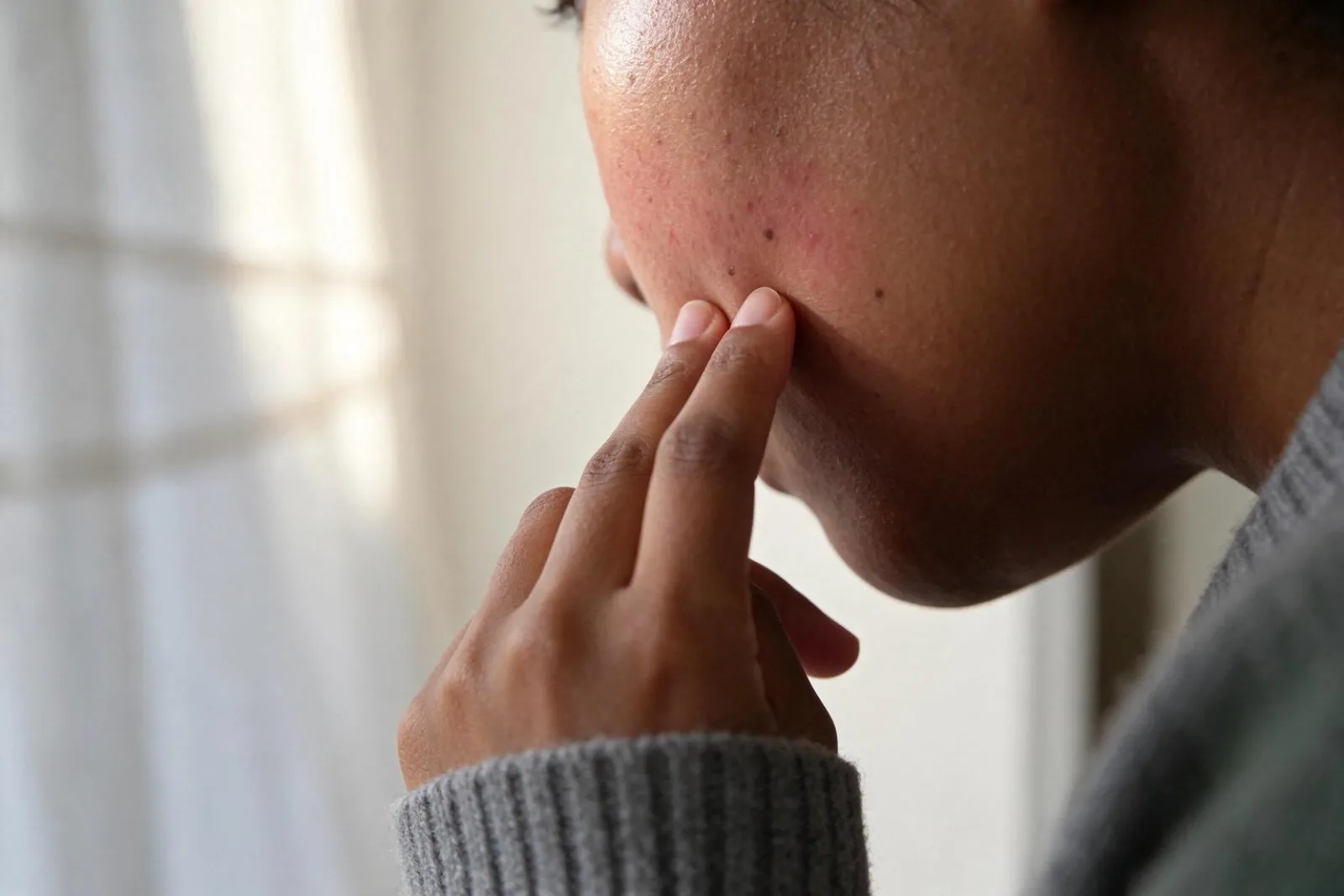
- 01Irritated patch: risk of a new spot
Redness after an acid is a warning sign.
Illustration
Is an acid peel in a clinic safer than at home?
On dark skin, chemical peels are feasible when a dermatologist with experience treating darker skin tones performs them. Without that experience, lasting pigment problems can result.
In a peel, the clinic applies an acid solution. Depending on strength, the skin heals after one day or only after two to three weeks. Before the peel, some people get a skin care plan for 2 to 4 weeks from the clinic.
We advise against home acid peels when you already have dark spots. More on peels and lasers is in Laser and peel for dark skin.
[S3]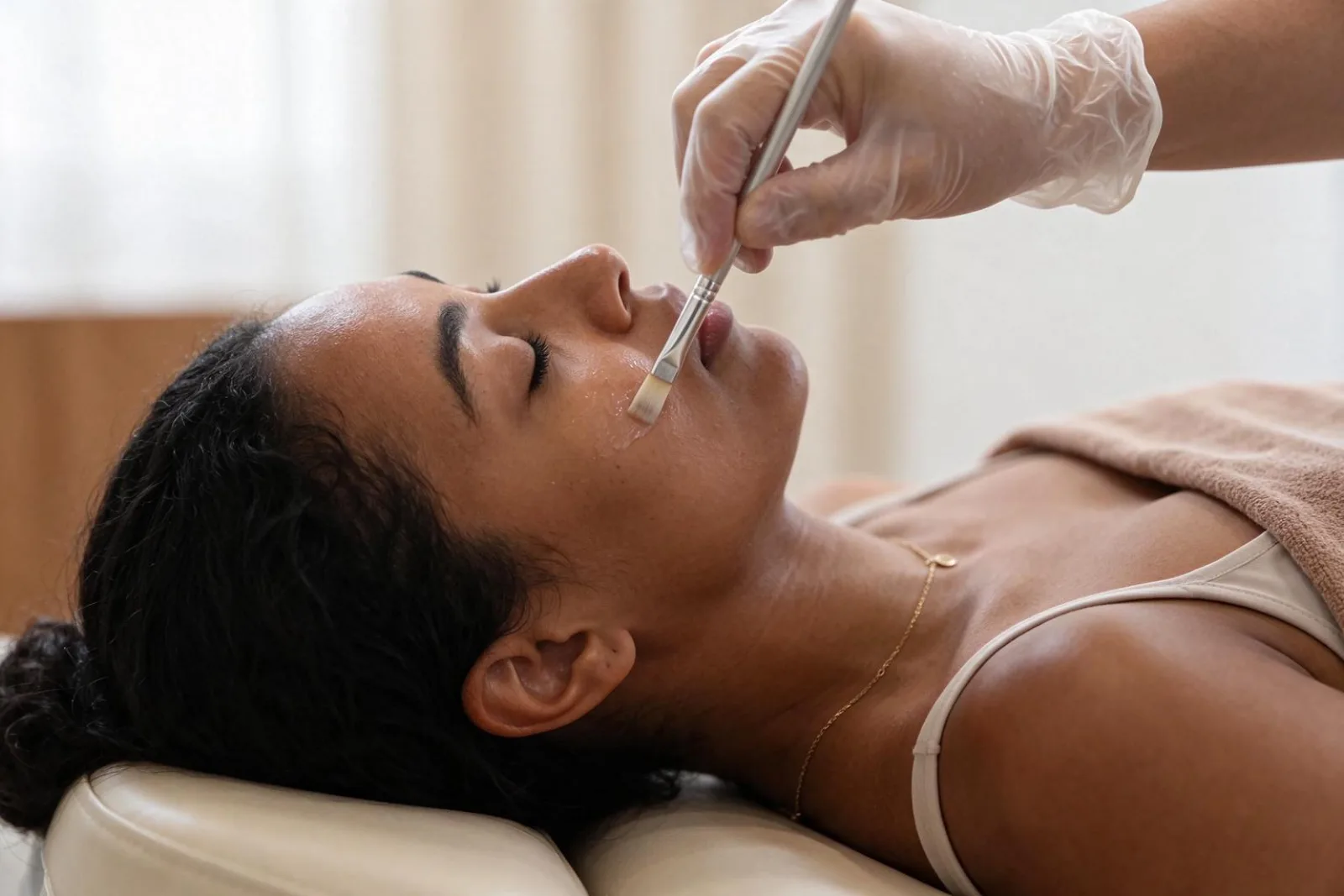
On dark skin, an acid peel belongs in experienced hands.
Illustration
Mandelic acid or glycolic acid: which suits dark skin better?
In favor of mandelic acid: it penetrates more slowly and irritates less. In favor of glycolic acid: it is named for dark spots, and there is the pilot study in skin types IV to VI. We did not find a direct comparison of the two on dark skin.
If your skin is sensitive or has already produced spots after irritation, the slower penetration of mandelic acid is an argument for it. That is my reading of the sources, not a study result.
Azelaic acid is on the list of ingredients for dark spots too. We do not carry it either, but Azelaic acid for dark spots puts it in context.
[S5][S1][S6]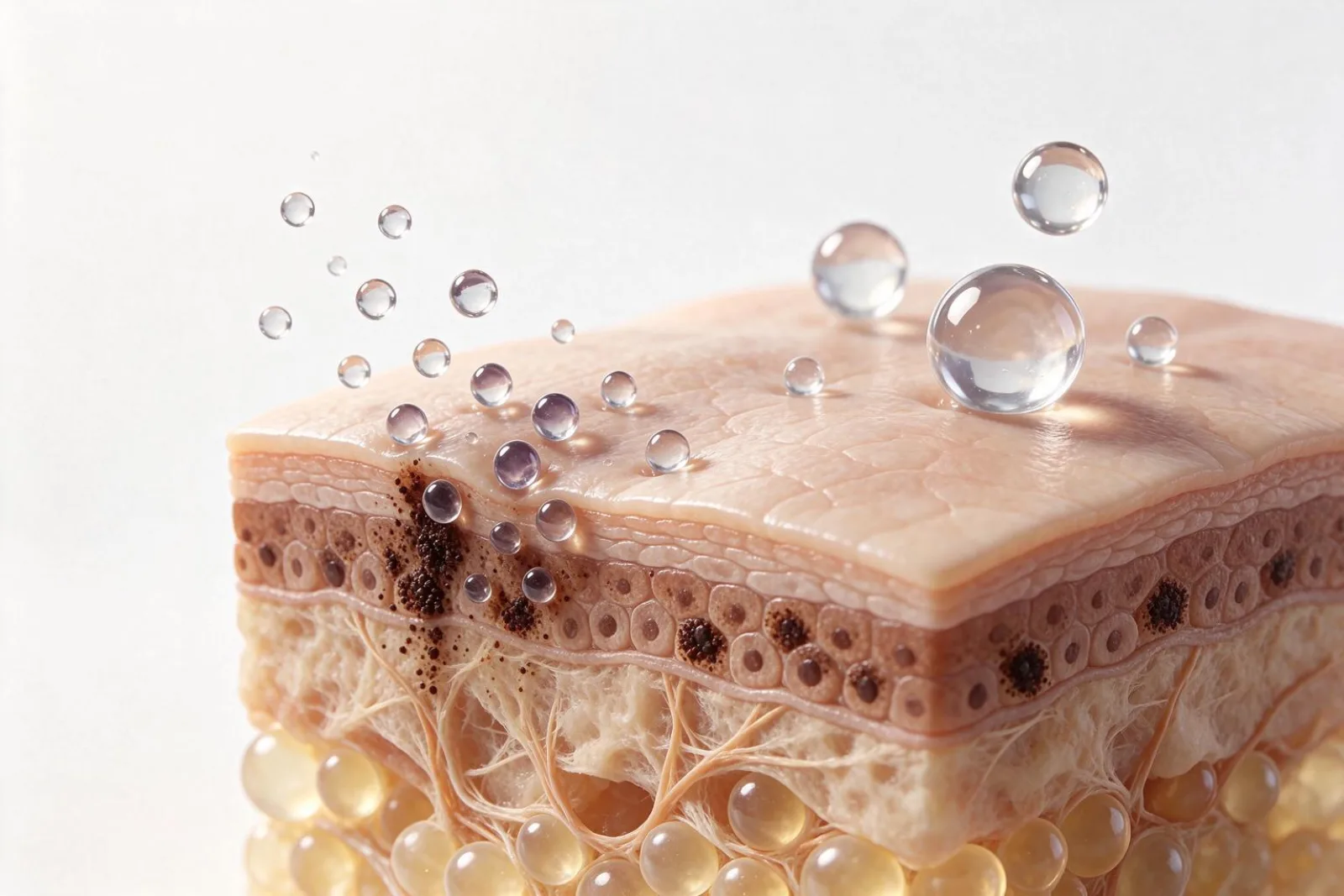
- 01Glycolic acid: small, gets in faster
- 02Mandelic acid: larger, slower
Mandelic acid penetrates more slowly than glycolic acid and irritates less.
Simplified illustration
What can you use instead of a fruit acid, and how do you start?
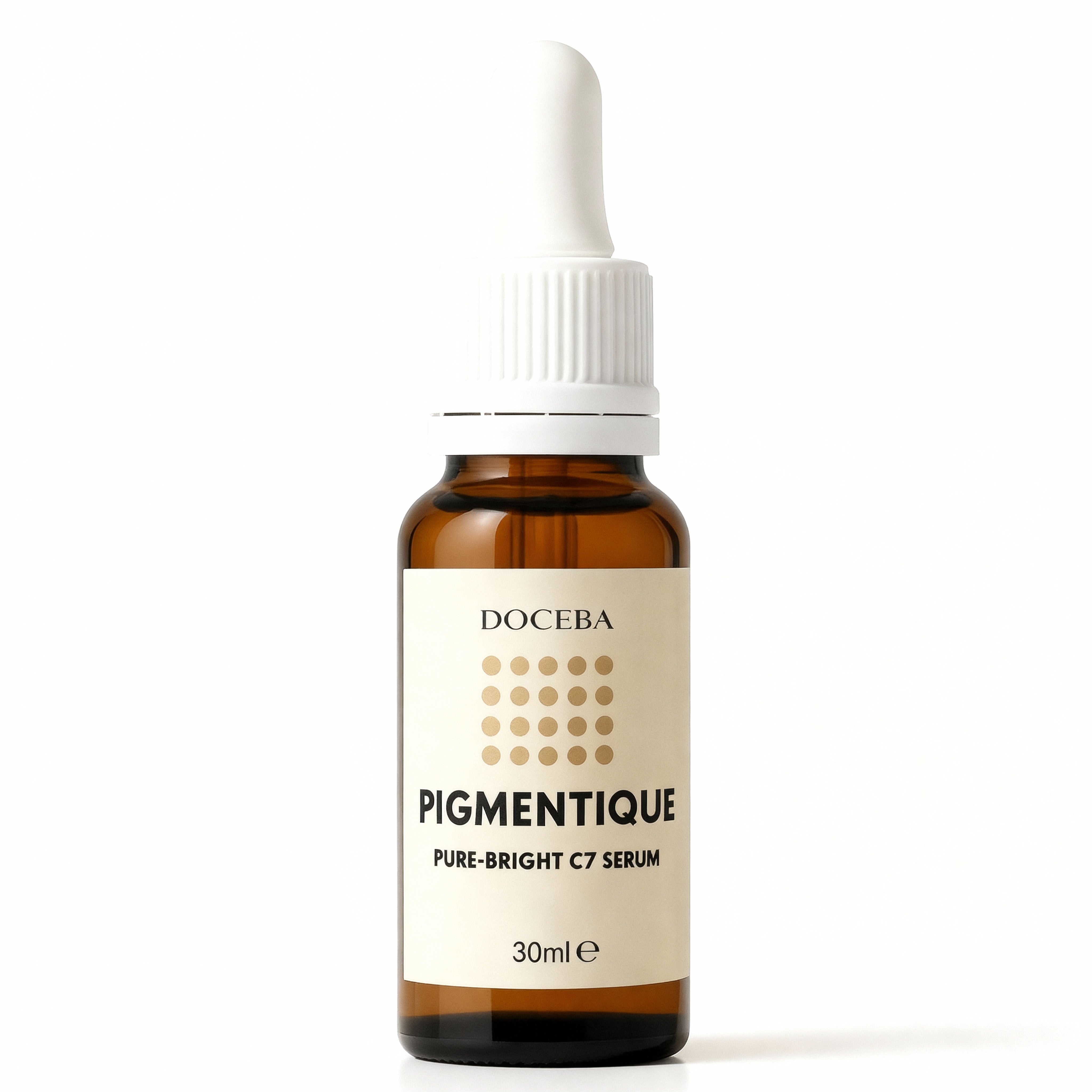
Vitamin C is on the same list as glycolic acid. Our Pure Bright C7 Serum contains 3-O-Ethyl Ascorbic Acid, a vitamin C derivative, plus ferulic acid, hyaluronate and allantoin. It can help dark spots look lighter.
Whether acid or serum, here is how to start a new product:
- Patch test it on a small area first.
- Introduce only one new product at a time, so you can see what your skin tolerates.
- With acids, pick a low strength and wear tinted sunscreen in the morning.
- Stop using the product as soon as it burns or stings.
How the steps of a routine follow each other is covered in Routine for dark spots.
Do you suspect melasma? It shows up as darker patches, and triggers include sun, pregnancy and medication such as the pill. If you are unsure, a visit to a dermatologist is a good idea. Visible light can make melasma worse, especially on darker skin tones, so tinted sunscreen counts double here. The Pure Bright C7 Serum can make the patches look lighter, but it does not treat melasma. Our Mela Bright is still in development. If it is not linked here yet, it is not online yet.
[S1][S2][S4][P1]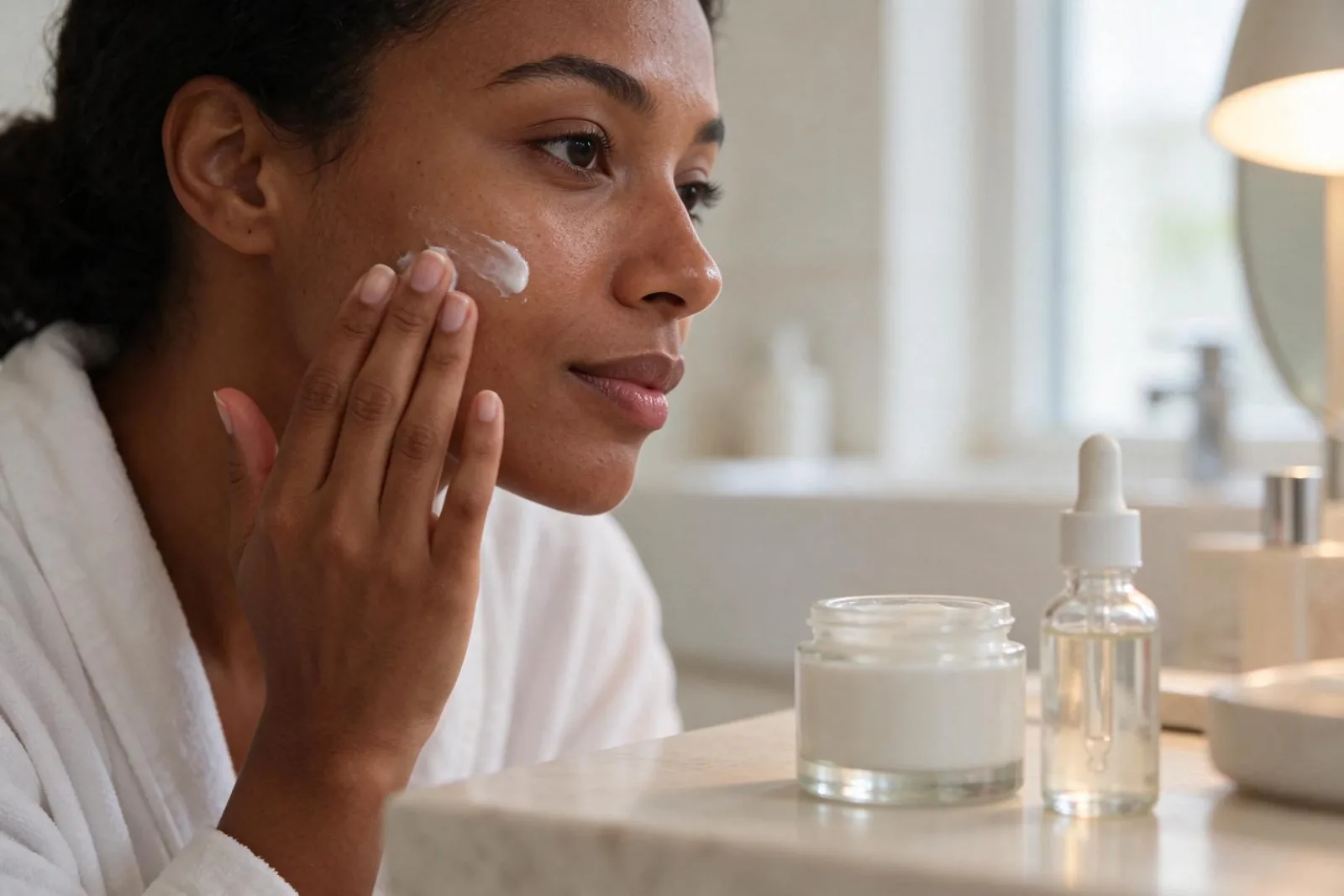
- 01Cream as the last step
Introduce new products one after another, not all at once.
Illustration
Your next step
Both paths are fine. Take the one that suits you today.
- Patch test every new product for seven to ten days on a small area.
- Stop anything that burns or stings, and wear a tinted sunscreen in the morning.
- If you want an acid applied in a clinic, book a dermatologist with experience in darker skin tones.
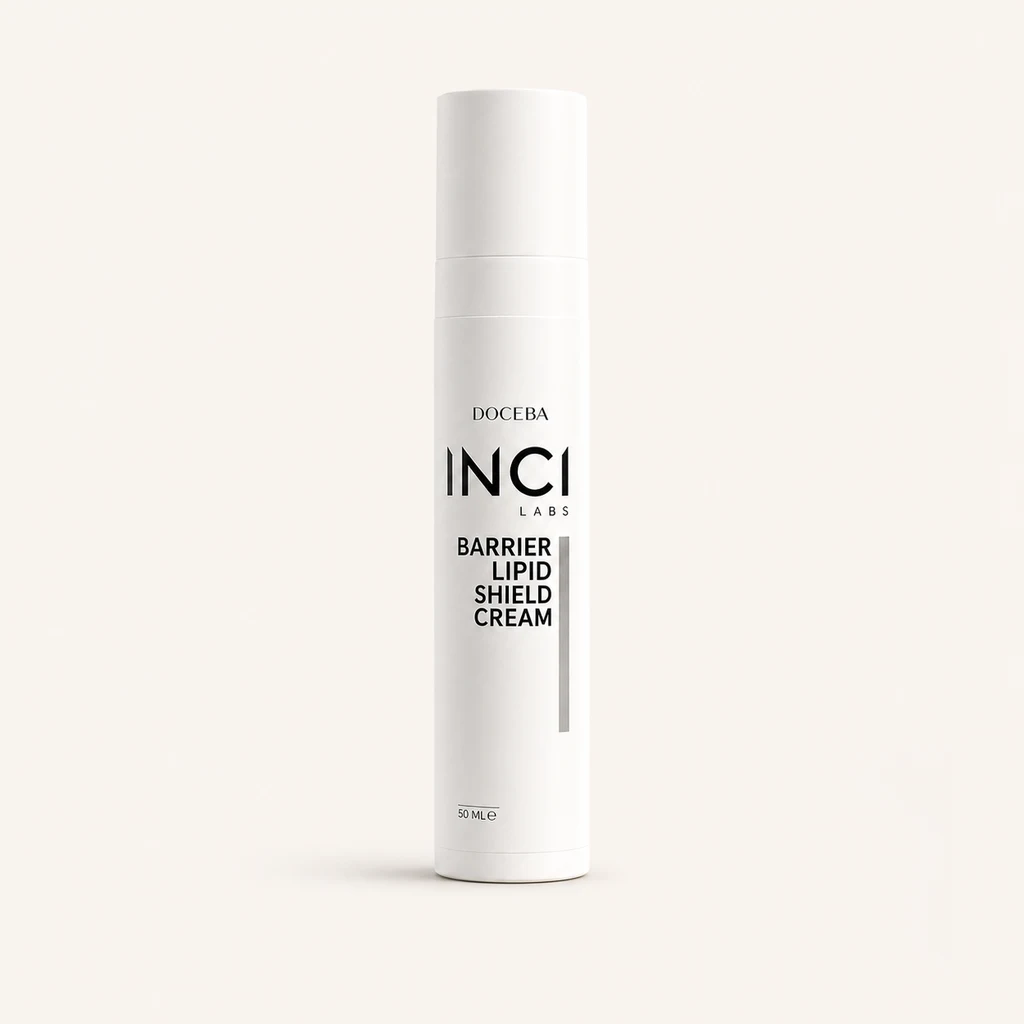
Matching products from our lab:
Skin Protocol: a plan for your skin and a team that adjusts it
You get a plan built around your skin and what you've already tried. We check in regularly and adjust products from Anita's lab when your skin needs something different. In English or German.
It starts with a free 20-minute call. We ring you and listen to your skin story, including your routine for dark spots.
Book your free skin callCosmetic advice, not a diagnosis. If you think you have a skin condition, see a doctor first.
Questions you might still have
Can mandelic acid lighten dark spots?
Possibly, but the evidence is thin. Mandelic acid is considered well tolerated with few side effects because it enters the skin slowly. We did not find a large study on dark spots in dark skin. We do not carry a mandelic acid product. [S5]
How long does glycolic acid take to fade dark spots?
A spot a few shades darker than your skin usually takes 6 to 12 months once its cause has stopped. We have no timeframe for glycolic acid alone in our sources. [S1]
Which concentration makes sense at home?
For over-the-counter cosmetics, the US FDA recommends no more than 10% AHA at a pH of 3.5 or higher. Higher concentrations irritate more. We found no separate recommendation for dark skin, and we suggest starting at the low end. [S5]
Sources
- [S1] AAD: How to fade dark spots in darker skin tones ↗
- [S2] DermNet: Postinflammatory hyperpigmentation ↗
- [S3] AAD: Chemical peels: FAQs ↗
- [S4] AAD: Melasma: Self-care ↗
- [S5] Almeman AA: Evaluating the Efficacy and Safety of Alpha-Hydroxy Acids in Dermatological Practice: A Comprehensive Clinical and Legal Review. Clin Cosmet Investig Dermatol 2024;17:1661–1685 ↗
- [S6] Burns RL et al.: Glycolic acid peels for postinflammatory hyperpigmentation in black patients. A comparative study. Dermatol Surg 1997;23(3):171–174 ↗
- [S7] Anvery N, Christensen RE, Dirr MA: Management of post-inflammatory hyperpigmentation in skin of color: A short review. J Cosmet Dermatol 2022 ↗
- [P1] DOCEBA: Pigmentique Pure Bright C7 Serum ↗
- [P2] DOCEBA: Barrier Lipid Shield Cream ↗
General skincare information, not a diagnosis or an individual treatment plan.
Your bag
Review your items before continuing.
Your bag is empty.