
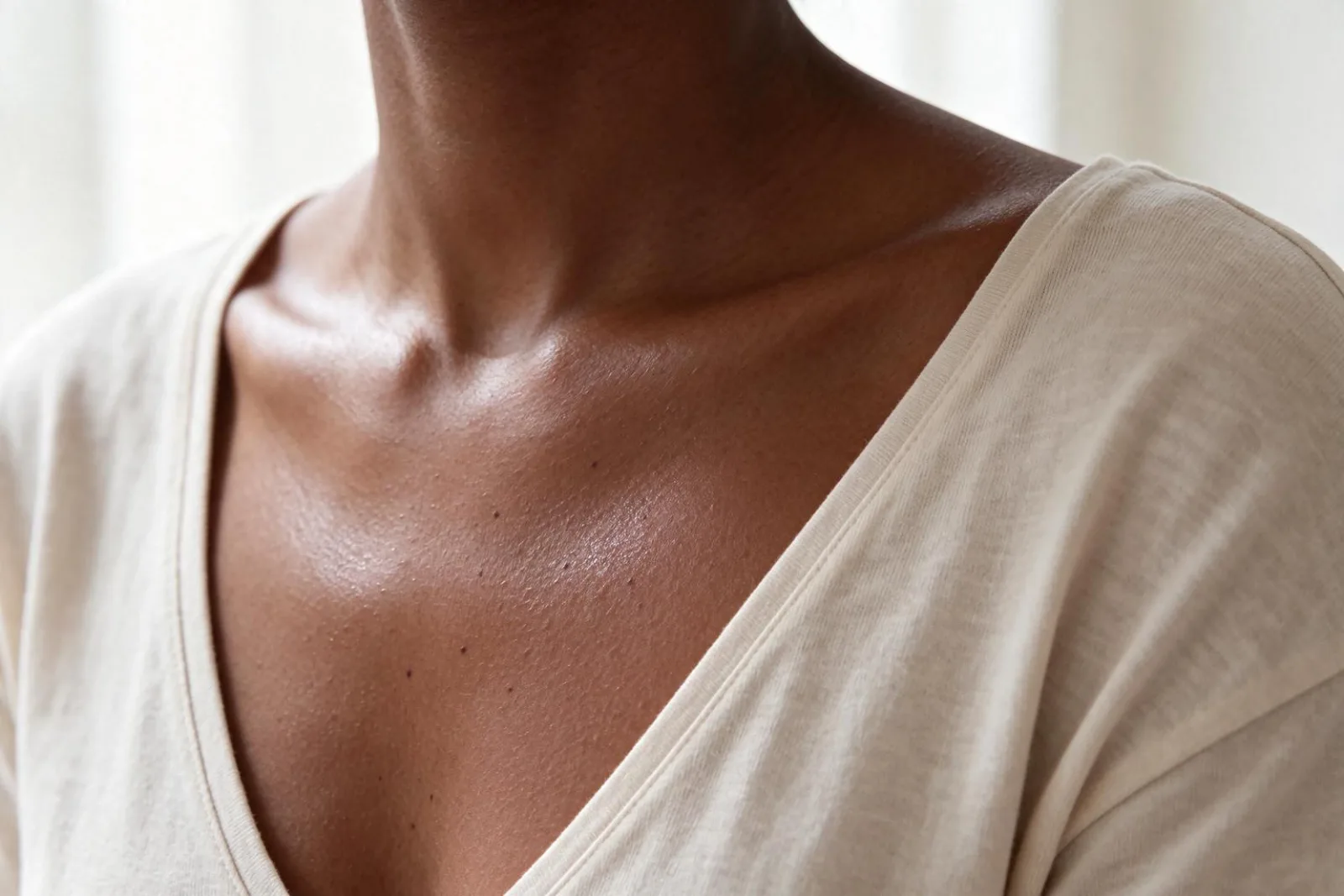
You look in the mirror, your neckline sits the way it always does, and on your chest you notice something that was not there before: a few dark spots. Maybe just one, maybe a handful under the collarbone, and suddenly you think twice about which top to wear.
Let me sort it out. Dark spots on the chest are usually colour left behind after irritation, for example after pimples. Sun and some fragrances can make them stronger. There is also a skin fungus that looks similar but is something else entirely.
I'll show you how four questions can point you to the cause and what you can do about the spots.
Why do I have dark spots on my chest?
On dark skin, pigment cells react quickly. When something irritates the skin, it makes more melanin, the brown pigment in skin. The spot stays long after the trigger is gone. People with medium to dark skin tones get dark spots and patches often.
On the chest, the main triggers are pimples and other inflammation, sun and perfume. A fungus that can lighten or darken skin also gets mistaken for dark spots. These four questions usually tell you which one you are dealing with:
- Were there pimples or inflammation on that spot before?
- Is your chest often uncovered in summer?
- Do you spray fragrance there?
- Are the patches flaky, and lighter or darker than your skin?
The sections below go through these clues one by one.
[S1]Are dark marks on my chest left over from pimples?
Often, yes. After a pimple or eczema, a dark spot frequently stays behind. It is called post-inflammatory hyperpigmentation, PIH for short, which means colour left after inflammation, because the inflammation tells pigment cells to make more melanin. It affects darker skin types most, and the colour there is stronger and lasts longer.
With acne on darker skin, the dark spots can last much longer than the pimples themselves. Picking, popping or squeezing acne also raises the risk of a scar. Treating acne early helps stop it from getting worse.
The chest has a catch. Products with oils such as shea butter or cocoa butter can clog pores on the face, back and chest, and clogged pores can turn into acne. If new pimples still show up on your chest, choose care labelled non-comedogenic, meaning it should not clog pores.
As long as the inflammation is untreated, new spots keep appearing. If a skin condition is behind the spots, treat it first. Acne that does not settle needs a dermatologist. More background is in dark spots after acne.
[S1][S2][S3]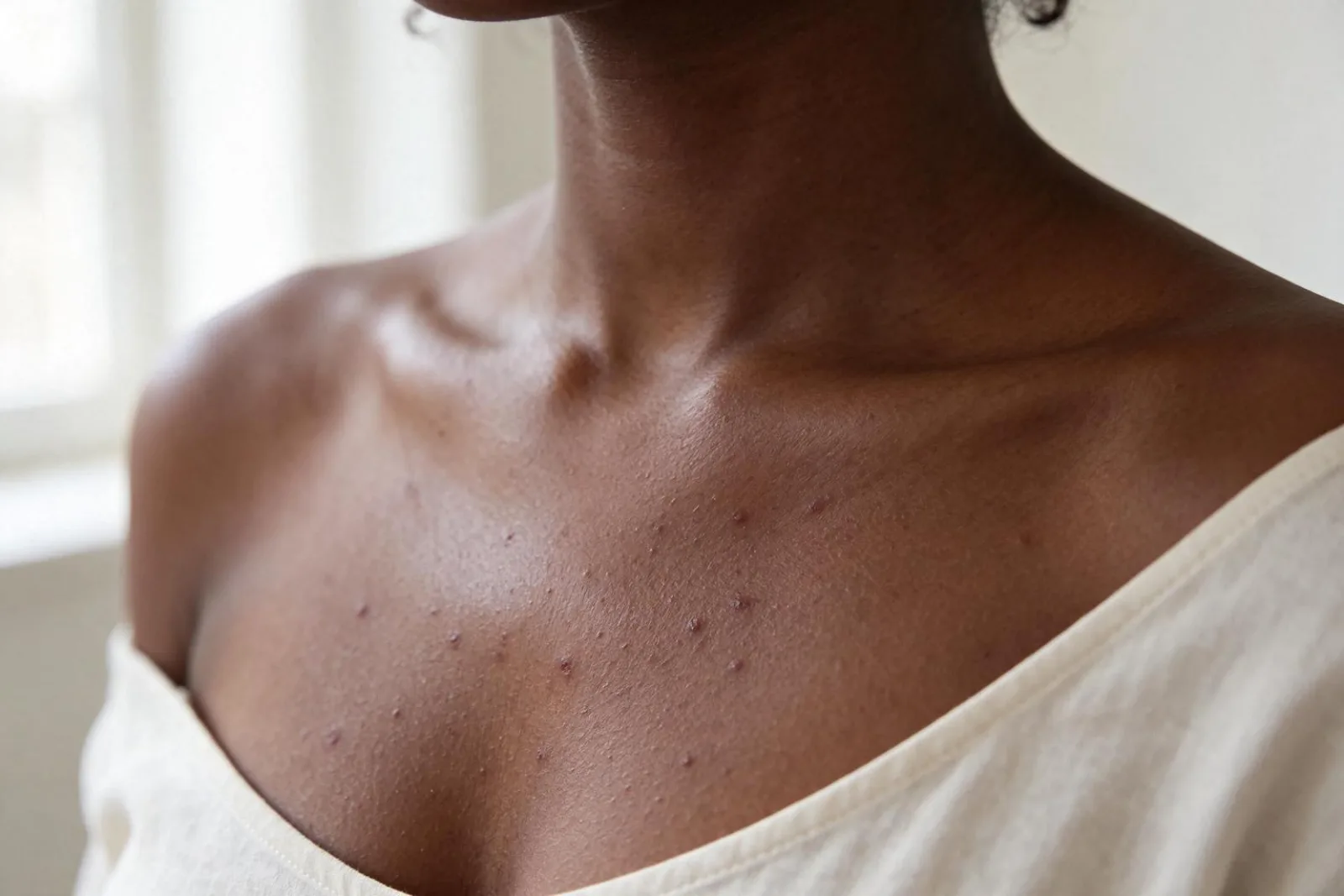
Pimples on the chest often leave small dark marks.
Illustration
Does sun make dark spots on the chest darker?
Yes, the patches may become darker when they are exposed to sunlight. In summer your chest is often uncovered in a V-neck or tank top, and at the beach even more so. If you only put sunscreen on your face, that area stays unprotected.
For dark spots, a tinted sunscreen with iron oxides and an SPF of at least 30 suits best. Iron oxides protect against visible light, which can also darken spots. We are working on a sunscreen of our own. If you buy one now, choose a tinted one.
Apply it to your chest the same way you do on your face. How to find one that suits dark skin is covered in sunscreen for dark skin.
[S1][S2]
In summer the chest is often in the sun.
Illustration
Can perfume cause dark spots on the neck and chest?
It can. There is a medical term for it, Berloque dermatitis. It is a skin reaction triggered by bergamot that only develops in light. In a case report, a 15-year-old girl developed dark, patchy marks on her face and neck. The doctors traced them to a perfume she had used without her family knowing. Bergamot is common in cosmetic products and aromatherapy oils.
The chest does not appear in that report, so whether your perfume is the cause is best settled by a dermatologist. If the spots sit exactly where you apply fragrance, mention that at the appointment, and also if bergamot is listed in the scent notes or ingredients.
[S5]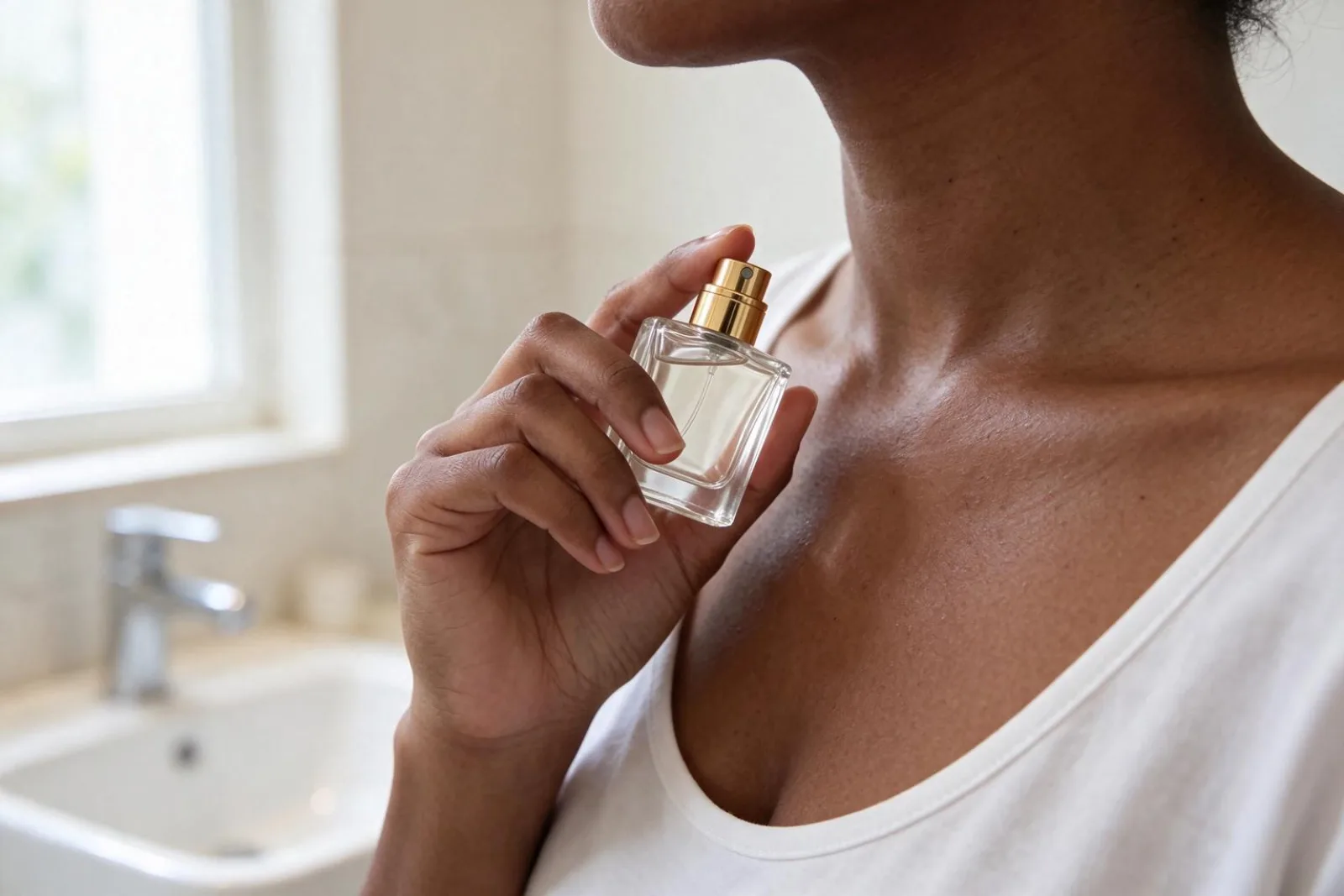
- 01Bergamot is common in cosmetics
Fragrance often lands right on the neck and chest.
Illustration
What are light or dark patches that flake?
That could be pityriasis versicolor, a common yeast infection of the skin. It affects the trunk, neck and arms, so chest and back included. The patches can be darker, such as coppery brown or pink, or paler than the surrounding skin. On darker skin, pale patches are more common. You can hardly tell a fungus apart yourself.
The fungus is more common in hot, humid climates and often affects people who sweat heavily. Mild cases are treated with antifungal products you apply to the skin. Have a dermatologist look at the area before you try a dark spot routine on it. If you are unsure, a visit to a dermatologist is a good idea.
Once the flaking is gone, the colour can still last weeks or months. That does not mean the treatment failed.
[S4]
Light or dark patches that flake slightly can be a yeast infection.
Illustration
What helps lighten dark spots on the chest?
The cause comes first. If pimples left the spots, you do not want new ones arriving. After that it takes time. A spot a few shades darker than your skin usually fades within 6 to 12 months. If the pigment sits deeper, it can take years.
Azelaic acid, glycolic acid, kojic acid, retinoids and vitamin C can fade existing spots. We do not carry azelaic acid, glycolic acid, kojic acid, retinol, tranexamic acid or hydroquinone. Our serums are built around vitamin C.
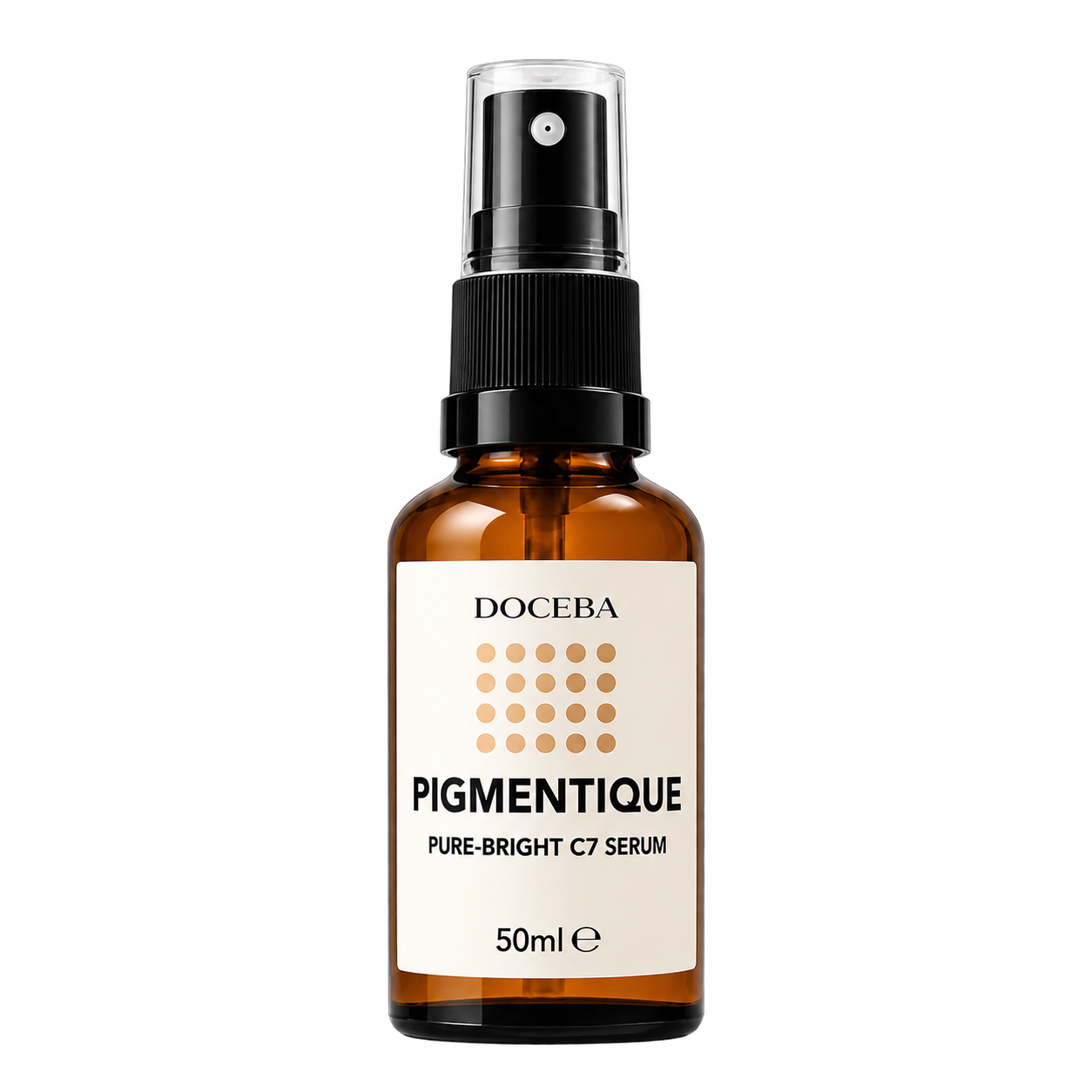
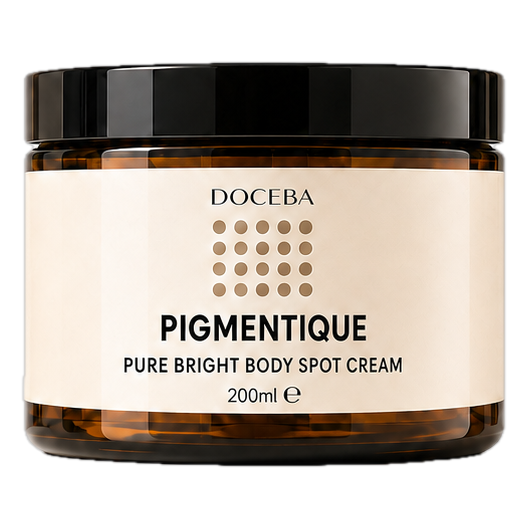
For the body we have two products. The Pure Bright C7 Body Serum is a spray that helps dark spots look lighter. The Body Spot Cream contains shea butter and several oils. Because oils can clog pores on the chest, it suits you better once new pimples have stopped appearing there.
Test any new product on a small area first and introduce only one at a time, because an irritated patch on dark skin can turn into a spot itself. Spots on the back also often sit where skin was inflamed before. We cover that in a separate article on dark spots on the back.
[S1][S2][S3]
A spray spreads evenly over the chest and collarbone.
Illustration
What is your next step?
You can start with a few steps on your own or get support.
Your starting point for spots on the chest
- Check whether the patches flake or itch, and get that looked at by a doctor before you apply anything.
- Wear a tinted sunscreen every morning and cover your chest too.
- Do not pop pimples, and pick lighter care without heavy oils while new ones still appear.
- Introduce one new product at a time and test it on a small area first.
Suitable: C7 Body Serum and Body Spot Cream
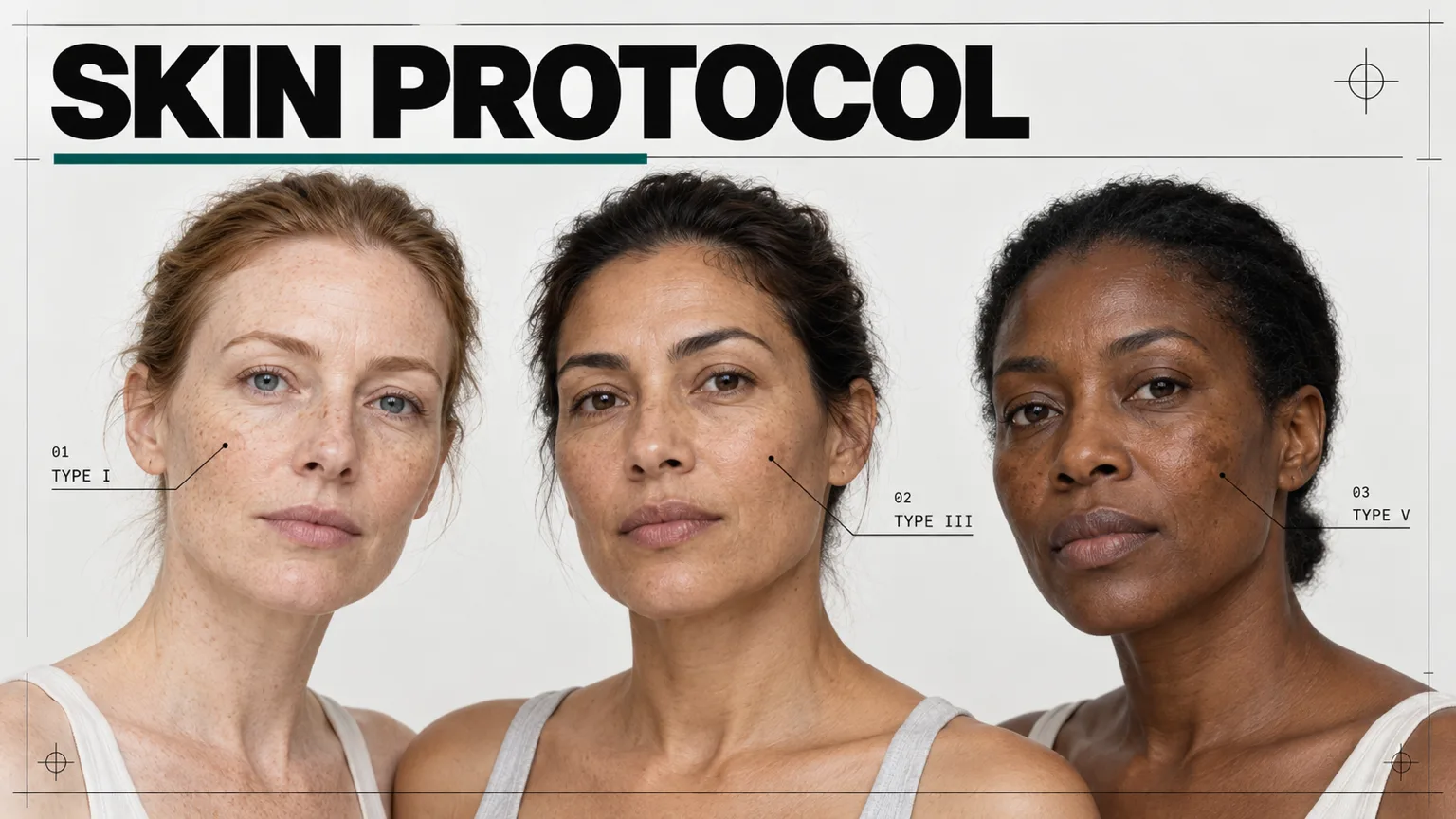
Skin Protocol: a plan for your skin and a team that adjusts it
You get a plan built around your skin and what you've already tried. We check in regularly and adjust products from Anita's lab when your skin needs something different. In English or German.
It starts with a free 20-minute call. We ring you and listen to your skin story, including your routine for dark spots.
Book your free skin callCosmetic advice, not a diagnosis. If you think you have a skin condition, see a doctor first.
Frequently asked questions about dark spots on the chest
Do dark spots on the chest go away on their own?
They often fade over time once the cause is gone. A spot a few shades darker than your skin usually fades within 6 to 12 months. If the pigment sits deeper, it can take years. [S1]
Can I use my face serum on my chest?
We do not recommend it. The Pure Bright C7 Serum is made for the face. For chest and décolleté we have the Pure Bright C7 Body Serum, a spray for the body.
Are light patches on the chest dark spots too?
Not always. Light patches on the chest or back that flake can be pityriasis versicolor, a yeast infection of the skin that often looks pale on darker skin. Have them checked by a doctor. [S4]
When should I see a dermatologist about spots on my chest?
See one for flaky patches, for acne that does not settle, and when a routine has not given you the results you want after a while. Stubborn spots may need prescription treatment. [S1][S3][S4]
Should I pop pimples on my chest?
Leave them alone. Picking, popping or squeezing raises the risk of a scar. The dark spots after acne can also last much longer than the pimples themselves. [S3]
Sources
- [S1] American Academy of Dermatology: How to fade dark spots in darker skin tones ↗
- [S2] DermNet: Postinflammatory hyperpigmentation ↗
- [S3] American Academy of Dermatology: 10 tips for clearing acne in darker skin tones ↗
- [S4] DermNet: Pityriasis versicolor ↗
- [S5] Gökalp Satıcı FE, Yuyucu Karabulut Y, Türsen Ü: An unexpected cause of hyperpigmentation: Berloque dermatitis. Cukurova Medical Journal 2024;49(4):1101–1103 ↗
General skincare information, not a diagnosis or an individual treatment plan.
Your bag
Review your items before continuing.
Your bag is empty.