

A brown spot on the back of your hand that wasn't there last year can play on your mind. Is it just the sun, or something you should have looked at?
Let me sort it out. Age spots and sun spots are two names for the same harmless change. They are different from dark marks after inflammation and from skin cancer that can look similar.
I'll show you how to recognise a sun spot, which warning signs count and what you can do about existing and new spots.
What are age spots and sun spots?
Age spots, sun spots and liver spots are different names for the same thing. Doctors call them solar lentigines. They are common, benign, flat spots that sit mostly on sun-exposed skin and hold more colour than the skin around them.
Typical places are the backs of the hands, the forearms, the upper body and the shins. They show up mostly from middle age on, because sun exposure adds up over the years. They are also common in Asian populations, where they tend to appear on the face.
The cause is UV exposure over a long time. Lab work supports the idea that repeated UVB exposure makes skin cells release signalling molecules. Those keep nearby pigment cells switched on to produce melanin, the pigment that gives skin its colour. Freckles fade in winter, while a sun spot stays visible all year.
[S1][S5]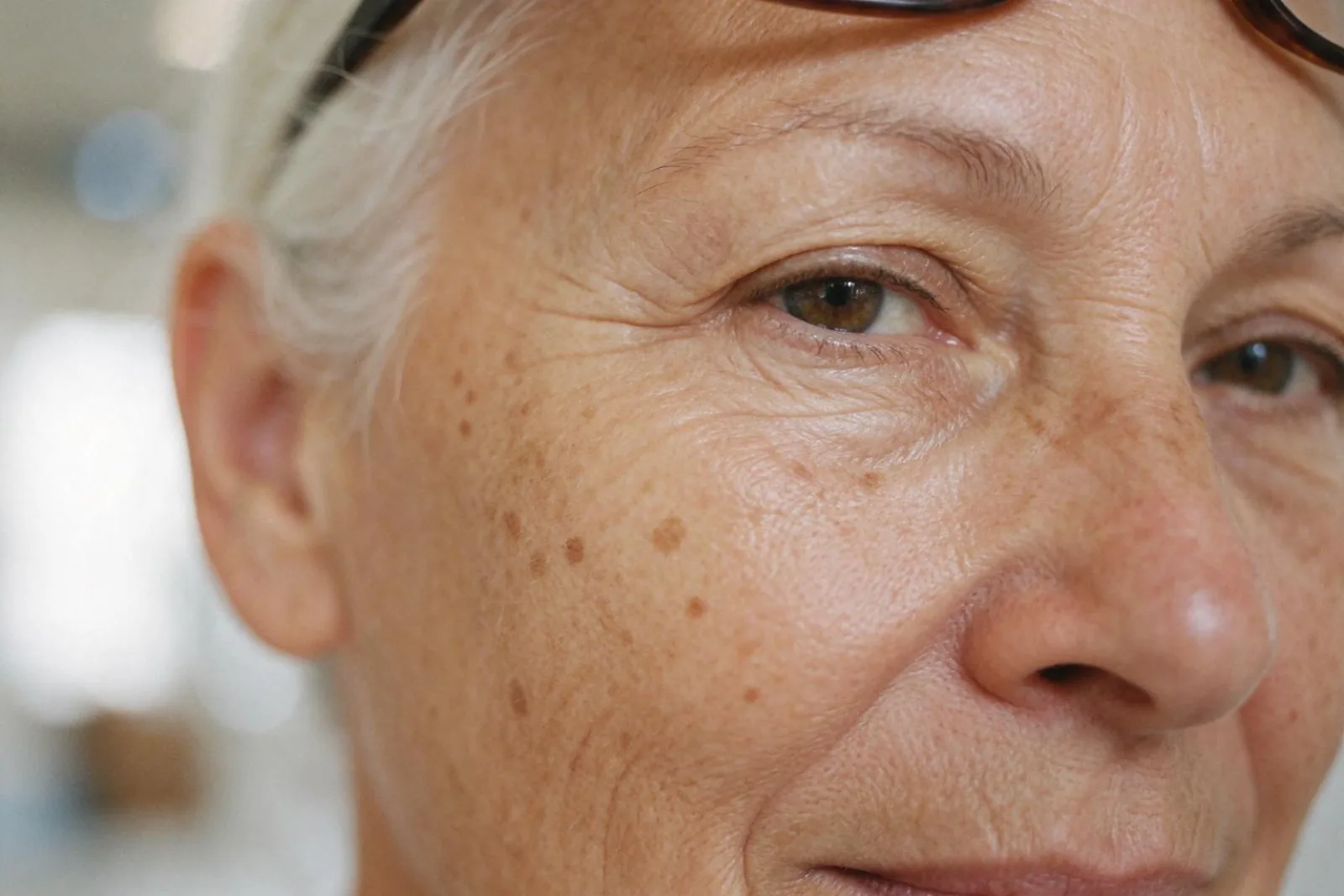
Flat, clearly bordered brown spots where the skin gets a lot of sun.
Illustration
Do people with dark skin get age spots?
Yes. On darker skin types, sun spots can be harder to spot. A spot that barely stands out from its surroundings may only catch your eye late. Look for three clues: the spot is flat, it sits on skin that gets a lot of sun, such as the back of your hand, and it stays in winter too. A spot exactly where a pimple, eczema or an injury used to be points more towards a mark after inflammation. If you are unsure, a visit to a dermatologist is a good idea.
A review from a New York laser clinic shows they occur there too. Among 42 people with skin types III to VI, meaning medium to very dark skin, who were treated with lasers for pigment disorders, solar lentigines were the second most common diagnosis, at 23.8 percent. Only nevus of Ota, a different pigment condition, was more common. The skin type scale goes up to VI, the darkest level.
Dark spots on dark skin often have other causes, such as inflammation after acne, eczema, psoriasis or injuries, or irritating products. How this looks on melanin-rich skin is covered in hyperpigmentation on dark skin.
[S1][S7][S3]
On dark skin a sun spot often barely stands out.
Illustration
When should a doctor look at a brown spot?
An age spot is benign, but it can look like skin cancer, so an early melanoma, the most serious type of skin cancer, can be missed. Other changes, such as lentigo maligna, an early form of skin cancer, can also sit within the same spot. Check your spots now and then with these five questions, the ABCDE rule:
- Asymmetry: is one half of the spot unlike the other half?
- Border: is the edge irregular, scalloped or blurred?
- Colour: does the spot have different shades?
- Diameter: is it larger than 6 millimetres, about the size of a pencil eraser?
- Evolving: does it look different from your other spots, or change in size, shape or colour?
If any of these fit, if you notice new spots, or if a spot itches or bleeds, have it checked by a dermatologist soon.
People of all skin colours get skin cancer, including those with brown and black skin. A melanoma can also begin in places the sun rarely reaches, such as the foot, so check your nails too. Found early, melanoma is highly treatable.
[S1][S2][S4]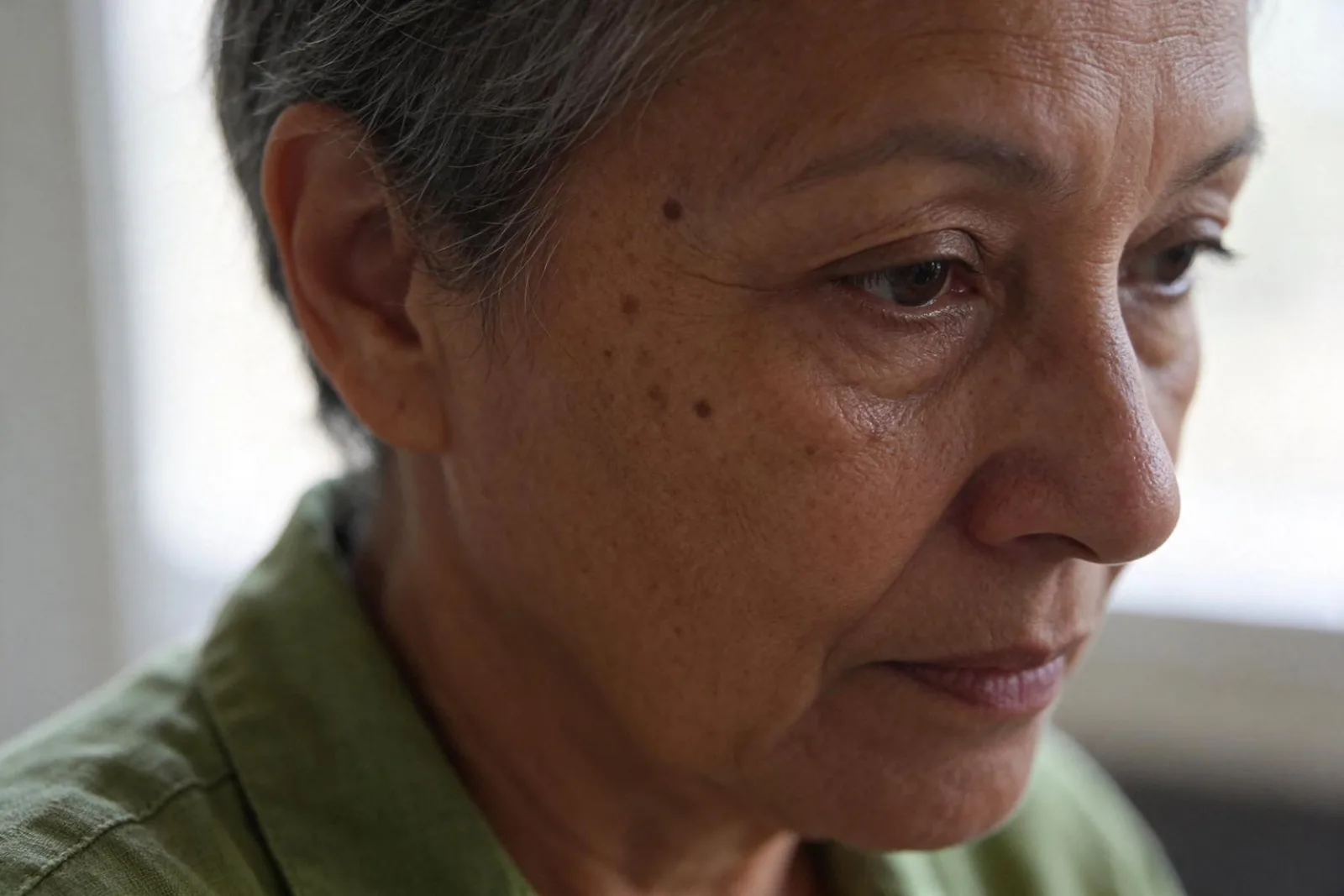
- 01Small, flat spots on the cheek
If a spot changes, a dermatologist can check it.
Illustration
What helps with existing age spots?
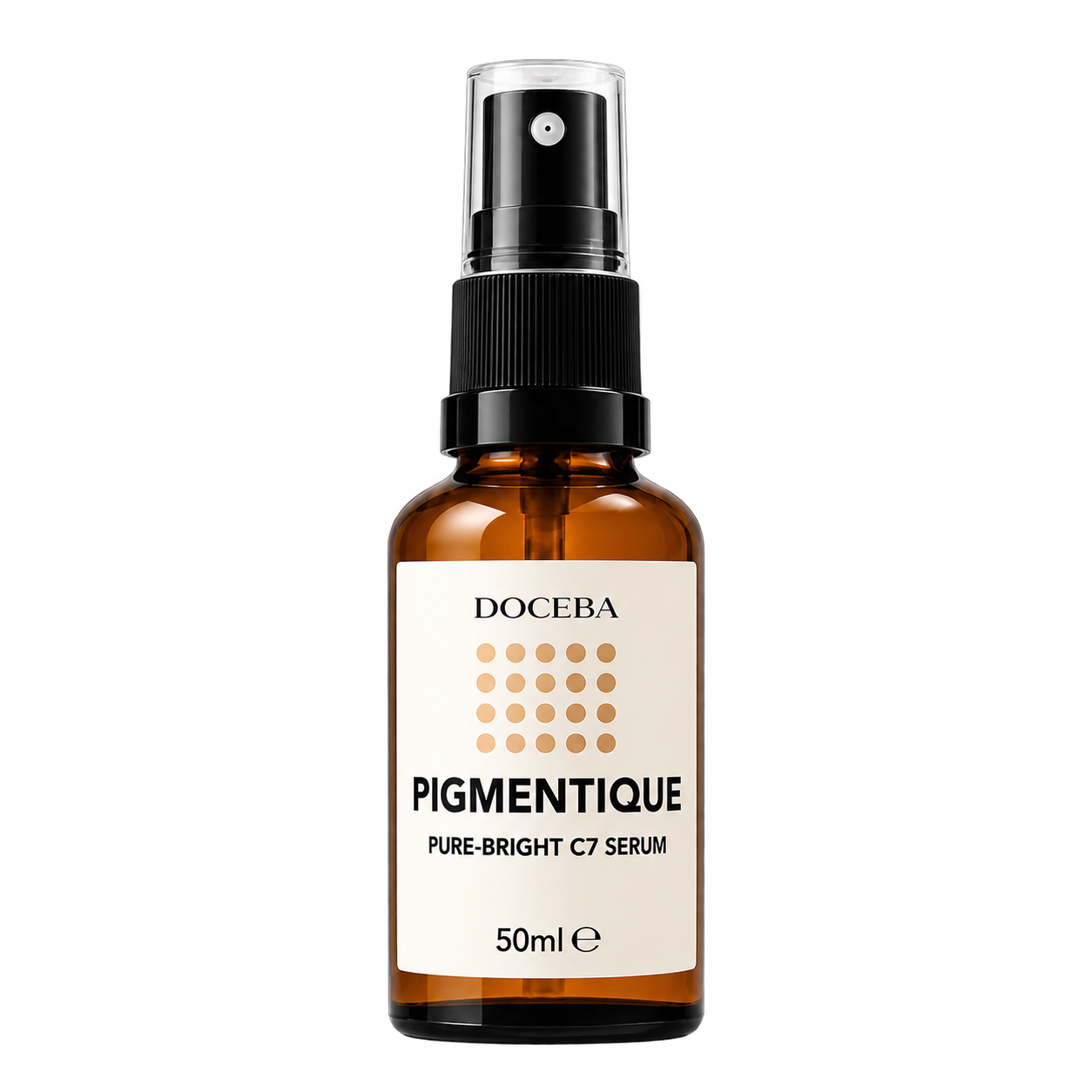
Strict sun protection helps prevent sun spots. For spots you already have, some ingredients can help them fade, among them vitamin C, retinoids (vitamin A derivatives), azelaic acid, glycolic acid and kojic acid. We do not carry azelaic acid, glycolic acid, kojic acid or retinol. Our serums are built around vitamin C.
There is data on vitamin C for age spots specifically. In a clinical study, people applied a lotion with 6 percent of a vitamin C derivative, ascorbate-2-phosphate. The skin became measurably lighter, more so on the spots than beside them. The derivative in our serum is a different one, 3-O-Ethyl Ascorbic Acid, so the study does not prove our product. For more on how to use it, see vitamin C serum for dark spots.
The Pure Bright C7 Serum is for the face, the Pure Bright C7 Body Serum for the backs of the hands, forearms and body. A face serum does not belong on the body, and body products do not belong on the face.
[S1][S3][S5]Which sunscreen keeps new spots from forming?
These points help you choose:
- Pick SPF 30 or higher, broad-spectrum and water resistant.
- Go for a tinted product with iron oxides, because they also block visible light, which can darken spots.
- Apply it to all skin that clothing does not cover, including the backs of your hands, where sun spots typically sit.
We are working on a sunscreen of our own. If you buy one now, choose a tinted one.
For more on choosing, see sunscreen for dark skin.
[S3][S1]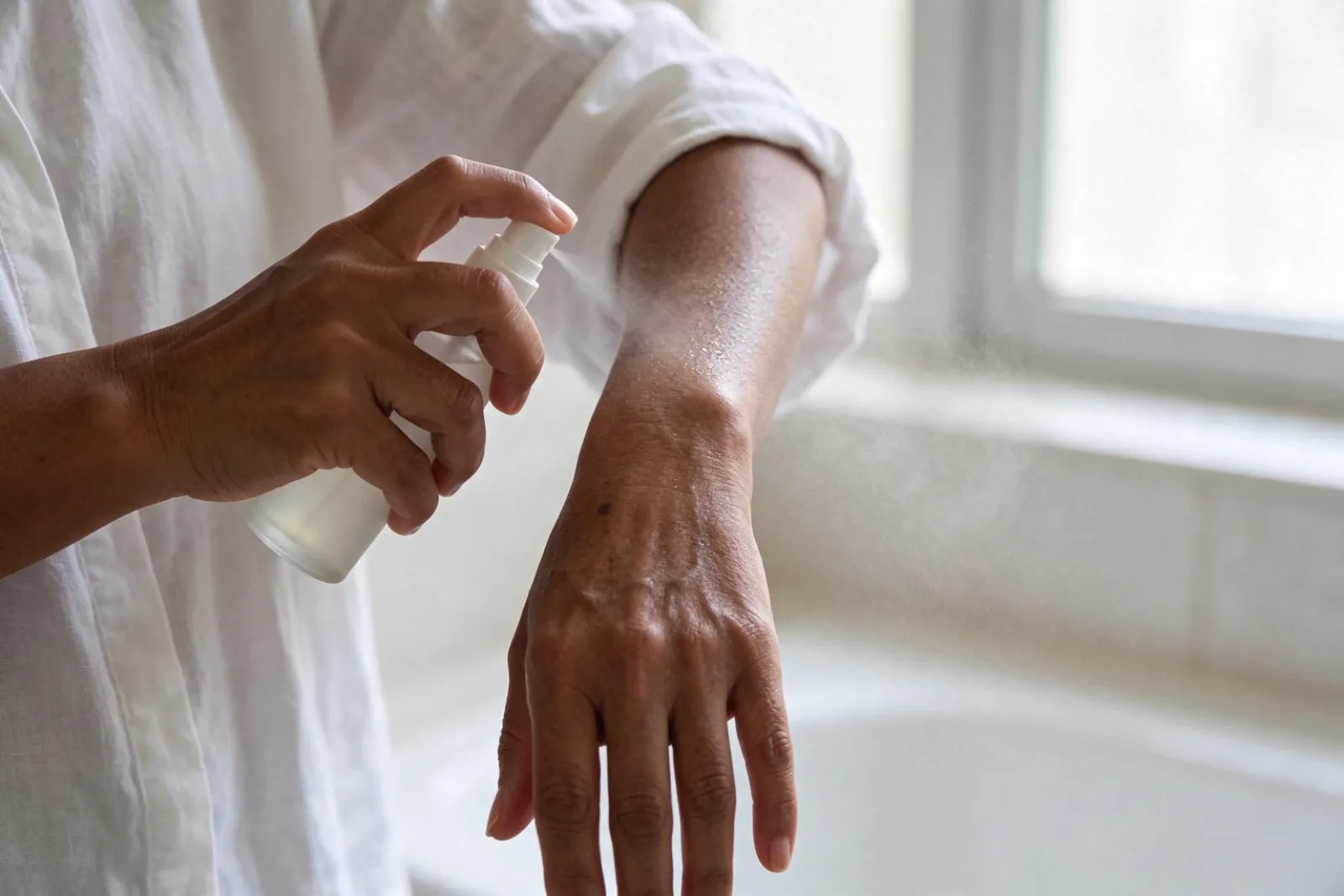
- 01Mist sprayed on the forearm
Body products are meant for arms and hands, face products for the face.
Illustration
What can a dermatologist do about age spots?
A practice can offer cryotherapy (freezing), lasers and prescription lightening creams. Combining two or more methods usually works best. We do not carry these creams, and which one suits you is a decision for the practice.
Freezing and lasers can leave pale or dark patches behind. On dark skin, lasers are challenging, because the risk of pigment changes and scarring is higher. In the New York review of skin types III to VI, all side effects cleared within a month and there were no long-term complications when the lasers were used appropriately.
A systematic review of 5 studies compared lasers with cryotherapy for lentigines. Lasers did somewhat better, with comparable side effects. Four of the studies had a high risk of bias, though, so more trials are needed. Ask beforehand how much experience the practice has with dark skin. For more, see laser and peels on dark skin.
[S1][S6][S7]How do you want to continue?
You can watch and tackle your spots yourself, or have a plan made for you.
- Go through your spots with the ABCDE list and have any spot that changes checked by a doctor.
- Put on a tinted sunscreen with SPF 30 or higher every morning, including the backs of your hands.
- Add a vitamin C step and take a photo every four weeks in the same light. If nothing changes after a while, talk to a dermatologist.
Matching products:
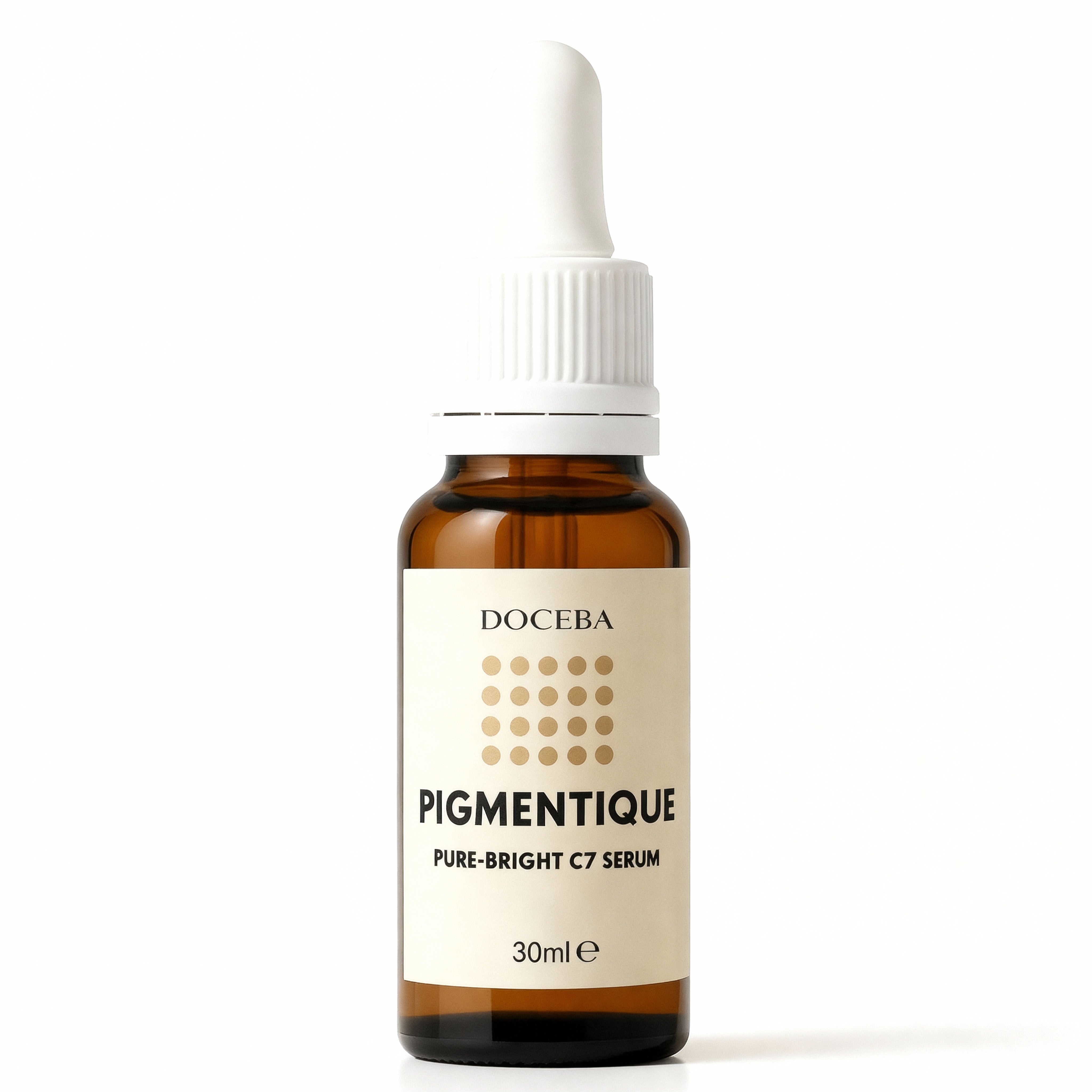
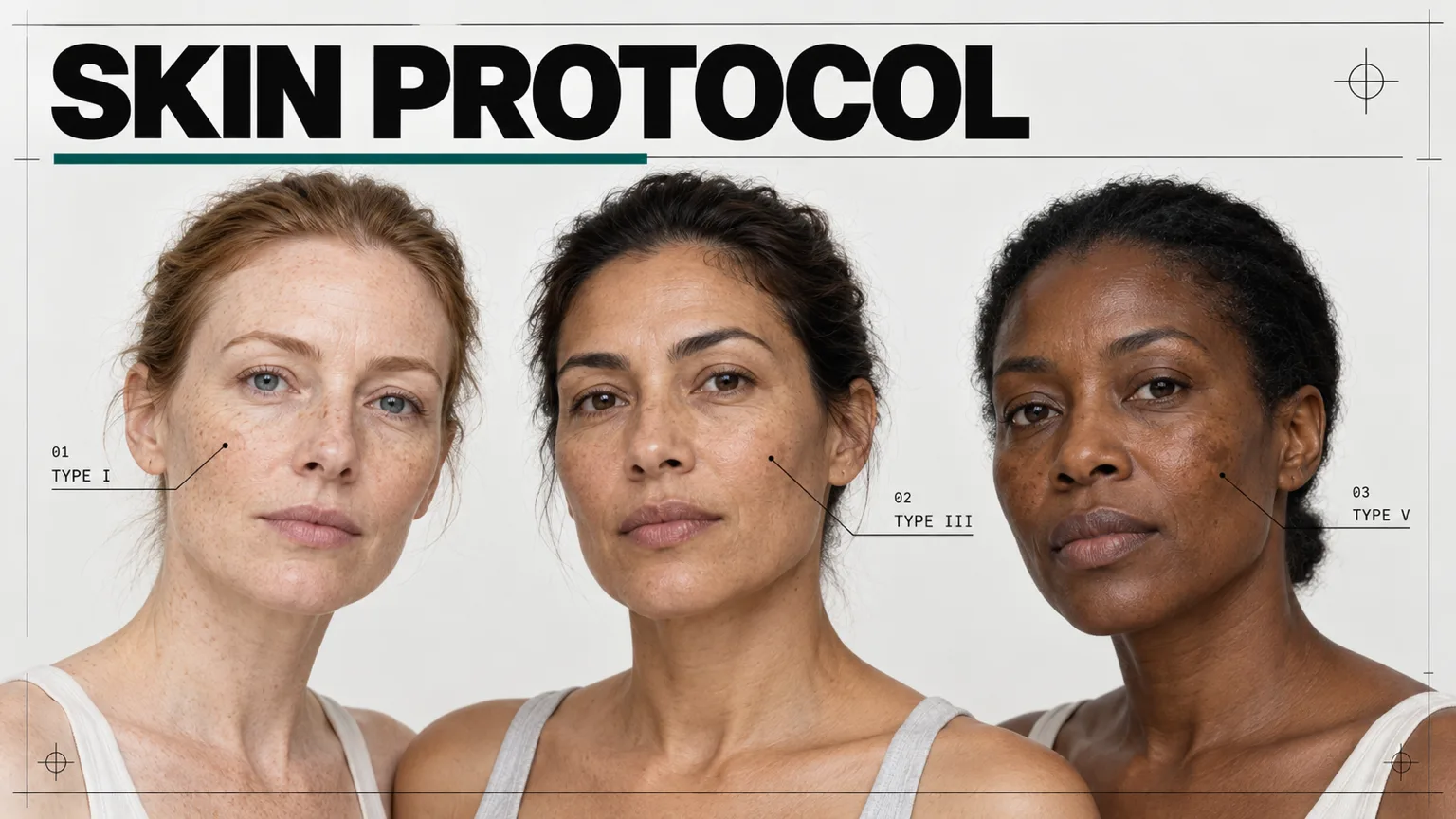
Skin Protocol: a plan for your skin and a team that adjusts it
You get a plan built around your skin and what you've already tried. We check in regularly and adjust products from Anita's lab when your skin needs something different. In English or German.
It starts with a free 20-minute call. We ring you and listen to your skin story, including your routine for dark spots.
Book your free skin callCosmetic advice, not a diagnosis. If you think you have a skin condition, see a doctor first.
Frequently asked questions
Are age spots dangerous?
Sun spots are benign. Because they can resemble an early melanoma, have a spot checked if it meets the ABCDE signs or changes. [S1][S2]
Do age spots go away on their own?
Usually not. Freckles fade in winter, but a sun spot stays visible all year. Sun protection and treatment are ways to tackle it. [S1]
Are lasers safe on dark skin?
Lasers are challenging on dark skin, because the risk of pigment changes and scarring is higher. In a review of skin types III to VI, no long-term complications occurred when they were used appropriately. An experienced practice matters. [S7]
Sources
- [S1] DermNet: Solar lentigo ↗
- [S2] AAD: ABCDEs of melanoma ↗
- [S3] AAD: How to fade dark spots in darker skin tones ↗
- [S4] AAD: Melanoma ↗
- [S5] Imokawa G: Melanocyte Activation Mechanisms and Rational Therapeutic Treatments of Solar Lentigos. Int J Mol Sci 2019;20(15):3666 ↗
- [S6] Almohideb M: Safety and Efficacy of Laser Versus Cryotherapy in the Treatment of Lentigines. Galen Med J 2026;15:e4137 ↗
- [S7] Levin MK et al.: Treatment of pigmentary disorders in patients with skin of color with a novel 755 nm picosecond, Q-switched ruby, and Q-switched Nd:YAG nanosecond lasers. Lasers Surg Med 2016;48(2):181-7 ↗
- [P1] DOCEBA: Pure Bright C7 Serum ↗
- [P2] DOCEBA: Pure Bright C7 Body Serum ↗
General skincare information, not a diagnosis or an individual treatment plan.
Your bag
Review your items before continuing.
Your bag is empty.